AI Content Creation in 2025: 30% Faster with AI Writing Tools

The Rise of AI-Generated Content is transforming content creation, with AI writing tools expected to boost content production speed by 30% in 2025, offering significant advantages in marketing, education, and various industries across the US.
The landscape of content creation is rapidly evolving, and by 2025, the rise of AI-generated content is set to revolutionize how we approach writing and marketing. AI writing tools promise a drastic increase in content generation efficiency, potentially allowing for 30% faster content creation. This article delves into how businesses and individuals can leverage these advancements to stay competitive in the digital age.
Understanding the Current State of AI in Content Creation
AI content creation is no longer a futuristic concept; it’s a present-day reality. The current state of AI in content creation is marked by increased sophistication and accessibility. AI-powered tools are now capable of generating various forms of content, ranging from blog posts and articles to marketing copy and product descriptions.
Evolution of AI Writing Tools
The journey of AI writing tools started with basic text generation algorithms, but today, they have evolved significantly. Newer versions use advanced machine learning techniques, including deep learning and natural language processing (NLP), to understand context, tone, and semantics. This evolution has allowed AI tools to produce content that is more coherent, relevant, and engaging.
Benefits and Limitations
The advantages of using AI in content creation are numerous. AI tools can drastically reduce the time spent on writing, allowing creators to focus on strategy, creativity, and other tasks. They also offer consistency in tone and style, which is particularly useful for maintaining brand identity. However, challenges remain. AI-generated content may sometimes lack originality or insight, and human oversight is still necessary to ensure quality and accuracy.
- Speed and Efficiency: Significantly faster content generation.
- Cost Reduction: Lower expenses related to hiring content creators.
- Consistency: Maintain consistent brand messaging.
- Scalability: Easily scale content production to meet demand.
In summary, AI in content creation is rapidly advancing, offering substantial benefits while also posing certain limitations. The key lies in finding the right balance between AI assistance and human involvement to maximize efficiency and quality.
Forecasting the Growth: AI Writing Tools by 2025
Looking ahead, the landscape of AI writing tools is projected to undergo significant transformation by 2025. Forecasts suggest improvements in technology, integration, and adoption rates. Understanding these trends is essential for businesses and individuals looking to take advantage of AI’s potential.
Technological Advancements Expected
By 2025, AI writing tools are expected to incorporate even more sophisticated algorithms, leading to the generation of content that is almost indistinguishable from human-written text. Improvements in NLP will allow AI to better understand nuances in language, cultural context, and audience preferences. Enhanced machine learning models will enable AI to generate more creative and original content.
Increased Integration with Existing Platforms
Expect to see AI writing tools seamlessly integrated with popular content management systems (CMS), social media platforms, and marketing automation software. Enhanced APIs and plugins will facilitate easy incorporation of AI into existing workflows. This level of integration will unlock new possibilities for content creators, marketers, and businesses.
- More Human-like Content: AI-generated content that is more authentic and engaging.
- Better Understanding of Context: Improved NLP for precise and relevant content.
- Increased Personalization: AI tools capable of tailoring content to individual preferences.
In conclusion, by 2025, AI writing tools will not only be technologically advanced but also deeply integrated into the content creation ecosystem. The result will be a more efficient content creation process with greater potential for personalization and impact.
How AI Can Achieve 30% Faster Content Creation
One of the most exciting promises of AI writing tools is the potential to significantly accelerate the content creation process. Achieving 30% faster content creation is not just a lofty goal; it’s a realistic possibility given the current trajectory of AI technology. Here’s how AI may drastically improve content creation speeds.
Automating Repetitive Tasks
AI excels at automating repetitive tasks, and this holds true in writing. AI can handle tasks such as keyword research, headline generation, and even the creation of basic drafts. By automating these processes, AI frees up human writers to focus on more complex and creative tasks.
Streamlining the Content Workflow
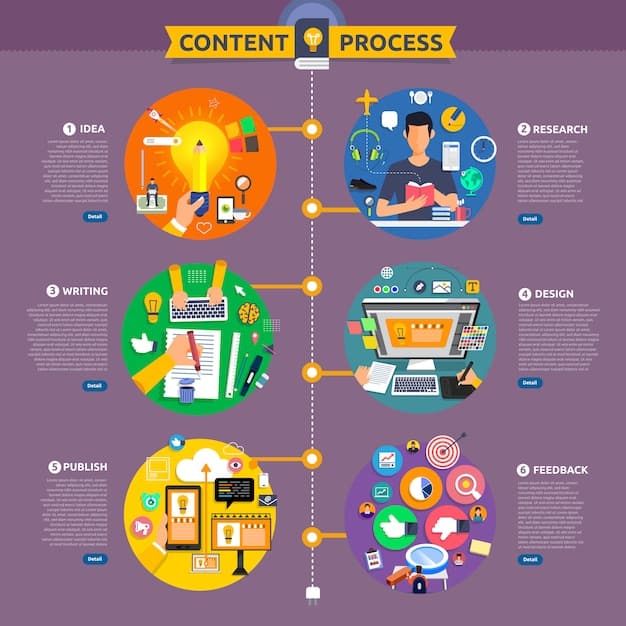
AI can streamline the content workflow by providing support at various stages. From initial research to final editing, AI tools can assist with idea generation, fact-checking, and optimization. This streamlined workflow reduces bottlenecks and allows content to move more quickly through the production pipeline.
- Accelerated Research: Quickly gather insights and data.
- Automated Drafting: AI-generated drafts as a starting point.
- Real-time Optimization: Immediate feedback for improvement.
To summarize, AI’s ability to automate tasks, streamline workflows, and facilitate collaboration are key factors in achieving faster content creation. By 2025, the impact of AI on content velocity is expected to be transformational, enabling businesses and individuals to produce high-quality content at an unprecedented pace.
Practical Applications of AI Writing Tools in 2025
As AI writing tools evolve, their practical applications become more diverse and beneficial. By 2025, expect to see AI widely used across various industries and professional domains. These practical applications extend beyond mere content generation; they redefine how content is created, consumed, and measured.
Marketing and Advertising
In marketing and advertising, AI can automate the creation of ad copy, social media posts, email campaigns, and product descriptions. This enables businesses to launch campaigns faster and scale their marketing efforts. AI can also analyze data to personalize content, creating a more engaging and relevant experience for customers.
Education and Training
The education sector can leverage AI for generating course materials, assessment questions, and personalized learning content. AI can adapt the content to match individual learning styles, making education more effective and accessible. Automated grading systems can also reduce teachers’ workload, allowing them to focus on student support and engagement.
- Customized Customer Experiences: Personalized content that resonates with individual customers.
- Enhanced Educational Resources: AI-generated materials that make learning more engaging.
- Efficient Communication: Automated communications that keep everyone informed and connected.
To conclude, the practical applications of AI writing tools in 2025 are limitless, touching almost every industry and aspect of daily life. From transforming marketing strategies to revolutionizing education, AI is poised to empower creators and businesses alike.
Overcoming Challenges and Concerns
Like any groundbreaking technology, the integration of AI writing tools comes with its own set of challenges and concerns. Understanding these potential issues and developing strategies to mitigate them is essential for responsible and effective utilization of AI in content creation.
Addressing Ethical Considerations
Ethical considerations surrounding AI-generated content include issues like plagiarism, bias, and transparency. It is vital to implement measures to ensure AI tools are used ethically, such as checking content for originality, mitigating biases in algorithms, and disclosing when content is AI-generated.
Ensuring Quality and Accuracy
While AI can produce content quickly, maintaining quality and accuracy requires careful oversight. Human editors should review AI-generated content to ensure it aligns with brand standards, is factually correct, and avoids unintentional errors. Feedback loops should be established to improve AI learning and performance.
- Combating Plagiarism: Always verify the originality of AI-generated content.
- Eliminating Bias: Regularly review and update AI algorithms to remove biases.
- Maintaining Quality: Human oversight is essential for quality assurance.
In summary, addressing the challenges and concerns associated with AI writing tools is crucial for responsible implementation. By focusing on ethical considerations, quality assurance, and legal compliance, businesses and individuals can harness the power of AI while minimizing potential risks.
Preparing for the Future: Skills for Content Creators
As AI takes on more responsibilities in content creation, the role of human content creators evolves. Preparing for this future requires developing new skills and adapting to a new collaborative paradigm. The human element in content creation will focus more on strategy, creativity, and critical thinking.
Focusing on Creativity and Strategy
With AI handling routine writing tasks, content creators can focus on higher-level activities such as developing content strategies, brainstorming new ideas, and designing engaging customer experiences. Creativity becomes even more valuable as humans provide the spark of originality that AI cannot fully replicate.
Developing Technical Proficiency
Content creators will need to become proficient in using AI tools, understanding how they work, and leveraging their capabilities. This includes learning how to provide effective prompts, fine-tune AI outputs, and integrate AI with other systems. Technical skills will be a key differentiator in the content creation landscape.
- Adaptive Learning: Constantly updating skills to keep pace with AI evolution.
- Strategic Thinking: Focusing on big-picture goals and audience engagement.
- Collaborative Skills: Working effectively with AI tools and other content creators.
To conclude, successfully navigating the future of content creation means embracing change, developing new skills, and fostering collaboration between humans and AI. By augmenting AI’s capabilities with human creativity and strategy, content creators can unlock unparalleled opportunities and shape the future of digital communication.
| Key Aspect | Brief Description |
|---|---|
| 🚀 Faster Creation | Achieve content creation up to 30% faster using AI tools. |
| 💡 Practical Use | Apply AI writing for marketing, education, and much more. |
| 🛡️ Overcome Risks | Address issues like plagiarism and ensure top-notch content. |
| ⛑️ Skills to acquire | Elevate skills in creation, strategy and technical knowledge. |
Frequently Asked Questions
▼
AI writing tools are software programs that use artificial intelligence to generate written content. They can provide assistance in various content creation tasks, from crafting ad copy to producing in-depth articles.
▼
AI tools can automate repetitive tasks, streamline workflows, and assist with idea generation, which can significantly reduce the time it takes to create content. Automating tasks, streamlines workflow and makes it possible for a quick support during the process.
▼
While AI tools can produce content quickly, they may sometimes lack originality, nuanced understanding, or critical thinking. Human oversight is often necessary to ensure quality and accuracy.
▼
In the future, content creators will need to focus on creativity, strategy, technical proficiency, and adaptive learning. Human contribution is crucial as they collaborate with AI tools more often.
▼
Addressing ethical challenges includes ongoing originality-checks, mitigating biases, and maintaining transparency of AI-generated content. Ethical usage is a key concern, specifically in creating content.
Conclusion
In conclusion, the integration of AI writing tools is poised to revolutionize content creation by 2025. While challenges exist, the potential for 30% faster content creation and enhanced efficiency makes it essential for content creators to embrace these advancements for greater impact by leveraging new skills.