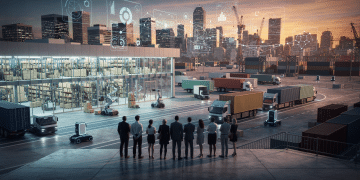
AI-Driven Robotics: US Manufacturing and Logistics Revolution
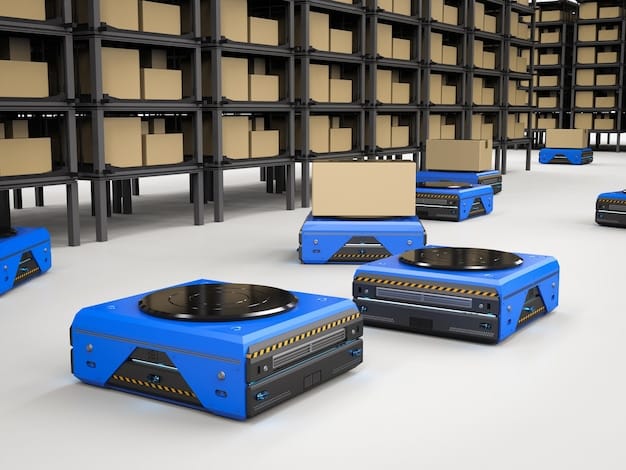
AI-Driven Robotics: Transforming Manufacturing and Logistics in US – Insider Knowledge unveils how artificial intelligence is revolutionizing American industries, enhancing efficiency, and reshaping workflows by automating complex tasks and improving decision-making.
The integration of AI-Driven Robotics: Transforming Manufacturing and Logistics in US – Insider Knowledge is rapidly changing how businesses operate. From automating repetitive tasks to optimizing supply chains, AI-powered robots are becoming indispensable assets in the competitive landscape.
Understanding the Rise of AI in Robotics
Artificial intelligence has found a powerful ally in robotics, resulting in machines that not only perform tasks but also learn and adapt. This synergy is particularly impacting sectors like manufacturing and logistics, where efficiency and precision are paramount.
The ability of AI to process vast amounts of data and make real-time decisions has revolutionized robotic capabilities, paving the way for innovations previously confined to science fiction.
Key Advancements in AI for Robotics
AI’s role in robotics goes beyond simple automation. It involves:
- Machine Learning: Enabling robots to learn from data, improving their performance over time.
- Computer Vision: Allowing robots to “see” and interpret their environment, enhancing their navigation and object recognition abilities.
- Natural Language Processing (NLP): Empowering robots to understand and respond to human commands, improving human-robot collaboration.
These advancements collectively contribute to the development of intelligent robots that can perform complex tasks with minimal human supervision.
In conclusion, the combination of AI and robotics is not just about automating tasks; it’s about creating intelligent systems that can adapt, learn, and improve, driving efficiency and innovation in manufacturing and logistics.
AI-Powered Robots in Manufacturing: A New Era
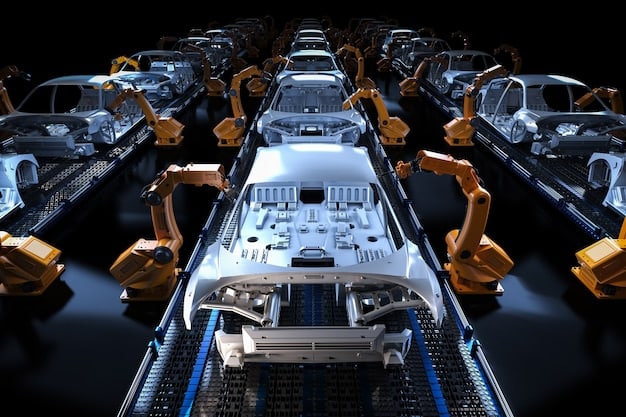
The manufacturing sector has always been at the forefront of technological advancements, and the introduction of AI-powered robots is no exception. These robots are transforming production lines, enhancing quality control, and optimizing resource utilization.
From automotive assembly to electronics manufacturing, AI robots are performing tasks with greater precision and speed than traditional methods ever could, leading to significant increases in productivity and reductions in error rates.
Enhancing Precision and Efficiency
AI-driven robots offer several advantages in manufacturing:
- Improved Accuracy: Minimizing defects and ensuring product consistency.
- Increased Speed: Accelerating production cycles and reducing lead times.
- Enhanced Safety: Performing hazardous tasks, protecting human workers from potential harm.
These benefits translate to lower operational costs and higher profit margins for manufacturers.
The integration of AI robots in manufacturing represents a significant paradigm shift, leading to smarter, faster, and more efficient production processes. This revolution is not just about automation; it’s about optimizing every aspect of the manufacturing value chain.
Streamlining Logistics with AI-Driven Robotics
In the logistics industry, where speed and accuracy are critical, AI-driven robotics are reshaping warehouse operations, delivery systems, and overall supply chain management. The incorporation of AI is enabling companies to meet the demands of today’s fast-paced, consumer-centric market.
From automated guided vehicles (AGVs) in warehouses to drone-based delivery systems, AI robots are streamlining every aspect of the logistics process. This increased efficiency translates to faster delivery times, reduced shipping costs, and improved customer satisfaction.
Applications in Warehousing and Delivery
- Automated Guided Vehicles (AGVs): Moving goods around warehouses and minimizing manual handling.
- Drone Delivery Systems: Facilitating faster and more efficient last-mile deliveries.
- Robotic Sorting and Packing: Streamlining order fulfillment and reducing errors.
These applications are not just about speeding up logistics; they’re about creating a more agile and responsive supply chain capable of meeting the evolving needs of customers.
AI-driven robotics are ushering in a new era of efficiency and reliability in the logistics industry, enabling companies to optimize their operations and deliver superior customer experiences.
Addressing Challenges in AI Robotics Implementation
While the potential of AI-driven robotics is immense, its implementation is not without challenges. Companies must address issues such as high initial investment costs, integration complexities, and workforce adaptation. Overcoming these hurdles is critical to realizing the full benefits of AI in manufacturing and logistics.
Successfully navigating these challenges requires careful planning, strategic investments, and a strong commitment to employee training and development. By addressing these issues head-on, companies can pave the way for a smooth and successful transition to AI-driven operations.
Overcoming Common Obstacles
To address the challenges associated with AI robotics implementation, consider the following:
- Initial Investment: Conduct a comprehensive cost-benefit analysis to justify the investment.
- Integration Complexities: Partner with experienced integrators to ensure seamless integration with existing systems.
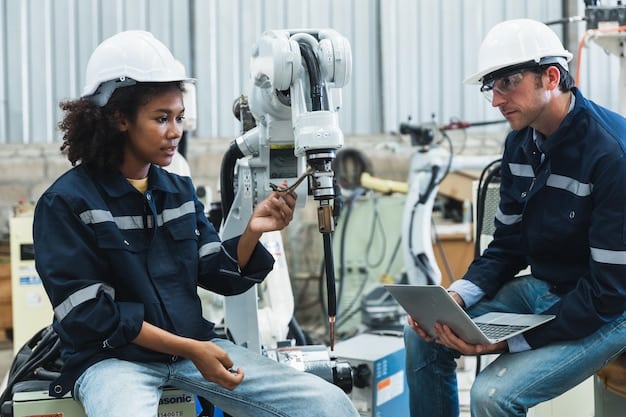
- Workforce Adaptation: Invest in training programs to equip employees with the skills needed to work alongside AI robots.
Taking a proactive approach to these challenges is essential for maximizing the return on investment and ensuring a smooth transition to AI-driven operations.
In summary, while implementing AI-driven robotics presents certain challenges, these obstacles can be overcome with careful planning, strategic investments, and a commitment to workforce development. The long-term benefits of AI in terms of increased efficiency, reduced costs, and improved competitiveness far outweigh the initial challenges.
The Economic Impact of AI Robotics in the US
The deployment of AI-driven robotics in the US is poised to have a significant economic impact, driving growth, creating new jobs, and reshaping the competitive landscape. As companies adopt AI to optimize their operations, the overall economy is expected to benefit from increased productivity and innovation.
From boosting manufacturing output to streamlining logistics networks, AI robots are contributing to a stronger, more resilient US economy. This economic transformation is not just about automation; it’s about creating new opportunities and driving long-term prosperity.
Driving Growth and Innovation
AI robotics are expected to contribute to the US economy by:
- Increasing Productivity: Automating tasks and optimizing processes.
- Creating New Jobs: Requiring skilled workers to design, maintain, and operate AI systems.
- Enhancing Competitiveness: Enabling US companies to compete more effectively in the global marketplace.
These factors collectively contribute to a more robust and dynamic US economy.
The economic impact of AI robotics in the US is far-reaching, spanning numerous industries and creating a wealth of opportunities for businesses and workers alike. As AI continues to evolve and become more integrated into the economy, its positive effects are only expected to grow.
Future Trends in AI-Driven Robotics
The field of AI-driven robotics is constantly evolving, with new technologies and applications emerging at a rapid pace. Looking ahead, we can expect to see even more sophisticated AI robots capable of performing increasingly complex tasks. These future trends hold the potential to further transform manufacturing, logistics, and a wide range of other industries.
From advanced machine learning algorithms to more intuitive human-robot interfaces, the future of AI robotics is full of exciting possibilities. These advancements promise to unlock new levels of efficiency, productivity, and innovation.
Emerging Technologies and Applications
Some of the key trends to watch in AI robotics include:
- Enhanced AI Algorithms: Improving the ability of robots to learn, adapt, and make decisions.
- Improved Human-Robot Collaboration: Developing more intuitive and user-friendly interfaces.
- Expansion into New Industries: Applying AI robots to sectors such as healthcare, agriculture, and construction.
These trends point to a future where AI robots are seamlessly integrated into our daily lives, enhancing productivity and improving the quality of life.
As AI-driven robotics continues to evolve, it will undoubtedly shape the future of work, driving innovation and transforming industries across the globe. Embracing these trends and preparing for the changes they bring is essential for companies and individuals alike.
| Key Aspect | Brief Description |
|---|---|
| 🤖 AI in Manufacturing | Enhances precision, speed, and safety in production processes. |
| 📦 AI in Logistics | Streamlines warehousing, delivery, and supply chain management. |
| 💰 Economic Impact | Drives growth, creates jobs, and enhances competitiveness in the US. |
| 🧑🤝🧑 Challenges | High costs, integration complexities, and workforce adaptation. |
Frequently Asked Questions
▼
AI enhances precision, efficiency, and safety, reducing errors and increasing production speed while protecting human workers from hazards.
▼
AI streamlines warehousing and delivery, optimizing supply chains for faster delivery times and improved customer satisfaction through automation.
▼
Challenges include high initial costs, complexities in integrating with existing systems, and adapting the workforce to collaborate with AI robots.
▼
AI robotics drives economic growth by increasing productivity, creating new job opportunities, and enhancing the competitiveness of US companies.
▼
Future trends include enhanced AI algorithms, improved human-robot collaboration, and expansion into fields like healthcare and agriculture, transforming multiple industries.
Conclusion
The integration of AI-driven robotics in US manufacturing and logistics is transforming industries, enhancing efficiency, and creating new opportunities. While challenges exist in implementation, the economic benefits and future trends point towards a continued expansion and evolution of AI in these critical sectors.