Decoding AI Ethics: Tools for Algorithmic Bias Auditing by 2025

By January 2025, the imperative to understand and mitigate algorithmic bias has driven the development of specialized software tools, pivotal for ensuring fairness and transparency in AI systems across various industries.
The rapid integration of artificial intelligence into every facet of our lives, from loan applications to healthcare diagnostics, has brought forth an urgent need to address its ethical implications. Specifically, the challenge of decoding AI ethics: a review of software tools designed to audit algorithmic bias by January 2025 is paramount, as biased algorithms can perpetuate and even amplify societal inequalities. This article delves into the critical role of these tools in fostering a more equitable and transparent AI future.
The growing imperative for AI ethics and bias detection
As AI systems become more autonomous and influential, the potential for unintended and harmful biases embedded within their algorithms grows significantly. These biases can arise from skewed training data, flawed model design, or even the subtle nuances of deployment contexts. Understanding and actively mitigating these issues is no longer optional but a fundamental requirement for responsible AI development.
Understanding algorithmic bias: sources and impacts
Algorithmic bias manifests in various forms, often stemming from historical data that reflects existing societal prejudices. If an AI system is trained on data where certain groups are underrepresented or negatively stereotyped, it will inevitably learn and replicate those patterns. The consequences can be severe, leading to discriminatory outcomes in critical areas such as:
- Loan approvals, disadvantaging minority groups.
- Hiring processes, filtering out qualified candidates based on non-relevant characteristics.
- Criminal justice, leading to disproportionate sentencing or risk assessments.
- Healthcare, resulting in misdiagnoses or inadequate treatment recommendations.
These impacts highlight the profound need for robust mechanisms to identify and rectify such biases before they cause widespread harm. The very fabric of trust in AI depends on our ability to build and deploy systems that are fair and just.
Regulatory landscape and industry pressure by 2025
Governments and regulatory bodies worldwide are increasingly recognizing the risks associated with unchecked AI. By January 2025, we anticipate a more formalized and stringent regulatory environment, pushing companies to adopt ethical AI practices. Industry leaders are also feeling the pressure from consumers and advocacy groups to prioritize fairness and accountability. This dual pressure from both external regulation and internal ethical considerations is driving the demand for specialized software tools capable of auditing algorithmic bias.
The imperative isn’t just about compliance; it’s about building sustainable, trustworthy AI solutions that benefit everyone. Companies that proactively address AI ethics are likely to gain a competitive advantage and foster greater public confidence in their technological advancements. This proactive approach includes investing in tools and methodologies that ensure their AI systems are not only efficient but also equitable.
Key features of effective AI bias auditing tools
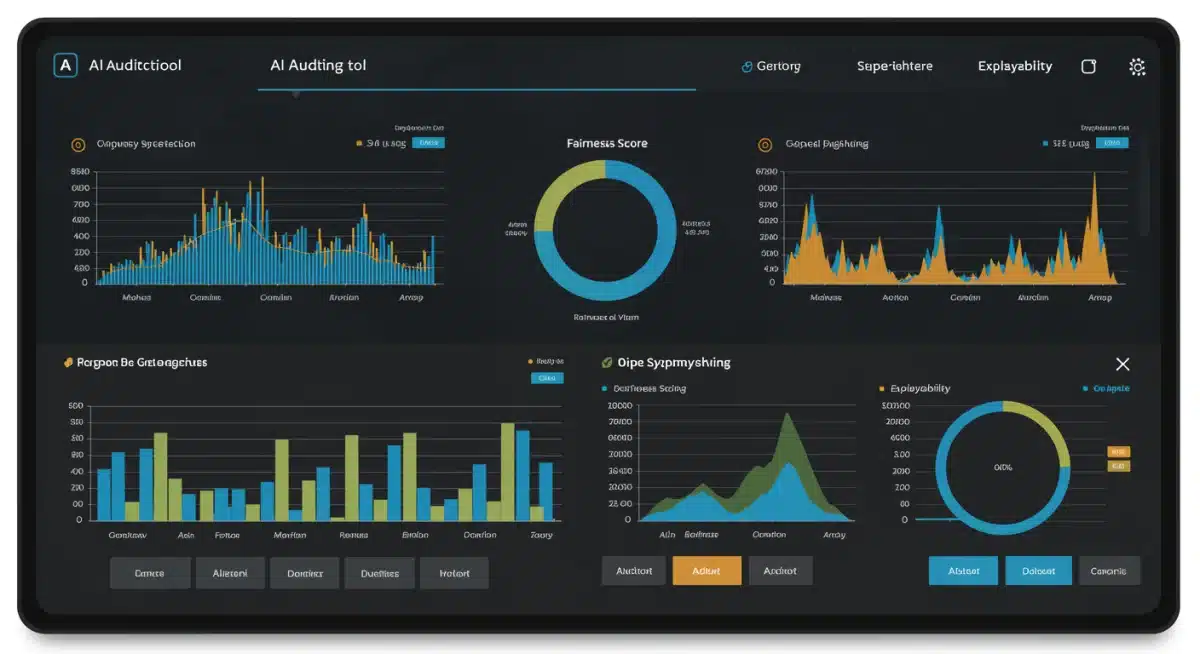
Effective AI bias auditing tools are multifaceted, offering a range of capabilities to identify, measure, and mitigate various forms of bias. These tools go beyond simple performance metrics, delving into the underlying fairness of an algorithm’s decision-making process. They are designed to provide clear, actionable insights for developers and ethicists alike.
Data bias detection and mitigation
One of the primary functions of these tools is to analyze training data for inherent biases. This involves sophisticated statistical methods and visualization techniques to uncover imbalances or skewed representations within datasets. Tools can identify overrepresented or underrepresented groups, along with potential proxies for protected attributes that might inadvertently introduce bias.
- Feature importance analysis: Determining which data inputs disproportionately influence model outcomes.
- Data drift detection: Identifying changes in data distribution over time that could introduce new biases.
- Synthetic data generation: Creating balanced datasets to retrain models and reduce existing biases without compromising data privacy.
By pinpointing data-related issues early in the AI lifecycle, developers can intervene proactively, either by augmenting their datasets or by employing re-weighting techniques to minimize the impact of existing imbalances.
Model explainability and interpretability
A black-box AI model, while potentially powerful, can obscure biased decision-making. Auditing tools therefore emphasize explainability, helping users understand why a model made a particular prediction or decision. This is crucial for identifying biases that might not be immediately apparent from data analysis alone.
Techniques like LIME (Local Interpretable Model-agnostic Explanations) and SHAP (SHapley Additive exPlanations) are often integrated into these tools, providing insights into individual predictions and overall model behavior. These methods allow stakeholders to scrutinize the rationale behind an AI’s output, ensuring that decisions are based on legitimate factors rather than discriminatory ones. Explainability also fosters trust, as users can see that the AI is operating fairly and transparently.
Fairness metrics and bias quantification
Quantifying fairness is complex, as ‘fairness’ itself can have multiple definitions depending on the context. AI bias auditing tools offer a suite of fairness metrics to assess different aspects of equitable treatment. These metrics help determine if an AI system is performing equally well across various demographic groups or if it is exhibiting disparate impact.
- Demographic parity: Ensuring similar prediction rates across different groups.
- Equalized odds: Achieving similar true positive and false positive rates across groups.
- Disparate impact: Measuring if a selection rate for one group is substantially lower than another.
By providing a comprehensive view of fairness, these tools enable organizations to choose the most appropriate metrics for their specific use case and to track improvements over time. This systematic approach to fairness evaluation is vital for demonstrating accountability and commitment to ethical AI practices.
Leading software tools for algorithmic bias auditing (January 2025)
As of January 2025, the market for AI bias auditing tools has matured significantly, with several robust platforms offering comprehensive solutions. These tools vary in their focus, integration capabilities, and target users, but all share the common goal of promoting ethical AI.
IBM AI Fairness 360 (AIF360)
IBM’s AI Fairness 360 is an open-source toolkit that provides researchers and developers with a comprehensive set of metrics for checking for unwanted bias in datasets and machine learning models. It also includes algorithms to mitigate such biases. Its strength lies in its extensive collection of fairness metrics and bias mitigation algorithms, making it a powerful resource for those with strong technical expertise. AIF360 supports multiple frameworks, including TensorFlow, PyTorch, and Scikit-learn, offering flexibility for various development environments.
Google’s What-If Tool (WIT)
Google’s What-If Tool is an interactive visual interface designed to help users understand their machine learning models with minimal code. It allows for quick exploration of model behavior across a large set of inputs and helps identify potential biases in the model’s performance on different subsets of data. WIT is particularly valuable for data scientists and developers who need to intuitively explore model characteristics and test hypothetical scenarios to uncover fairness issues. Its visual nature makes complex concepts more accessible, fostering broader understanding within development teams.
Microsoft’s Fairlearn
Fairlearn is an open-source toolkit that empowers developers of artificial intelligence (AI) systems to assess and improve the fairness of their models. It integrates seamlessly with popular machine learning libraries and provides a range of fairness metrics and mitigation algorithms. Fairlearn focuses on helping developers understand and address fairness concerns throughout the AI lifecycle, from data preparation to model deployment. Its practical approach assists in building more responsible and equitable AI systems directly within existing workflows.
Fiddler AI Explainable Monitoring Platform
Fiddler AI offers a comprehensive platform for model monitoring, explainability, and bias detection. While not solely focused on bias, its robust explainability features naturally lead to identifying and understanding algorithmic unfairness. Fiddler provides a centralized platform to monitor model performance, detect data drift, and uncover biases in real-time, making it suitable for enterprise-level deployments. Its ability to provide continuous insights into model behavior is crucial for maintaining ethical standards post-deployment.
TruEra AI Quality Platform
TruEra specializes in AI quality, offering tools for explainability, debugging, and monitoring of machine learning models. Their platform helps organizations understand why models make certain predictions and identifies potential sources of bias. TruEra emphasizes the importance of data and quality in achieving fair and unbiased AI outcomes. By providing detailed insights into model behavior and data integrity, TruEra supports a holistic approach to building trustworthy AI.

Challenges and future directions in AI bias auditing
Despite the advancements in AI bias auditing tools, significant challenges remain. The dynamic nature of AI systems, the complexity of human biases, and the evolving regulatory landscape present ongoing hurdles. Addressing these challenges will require continuous innovation and collaboration across disciplines.
The evolving nature of bias and AI systems
Bias is not a static phenomenon; it can emerge, evolve, and even shift in subtle ways as AI systems interact with real-world data. A model deemed fair at deployment might develop biases over time due to data drift or changes in user behavior. This necessitates continuous monitoring and re-auditing, a task that current tools are increasingly designed to handle but still presents complexities in terms of scalability and interpretation. The challenge lies in building mechanisms that can adapt to these evolving forms of bias and provide timely alerts.
Standardization and interoperability
The current landscape of AI bias auditing tools is fragmented, with different platforms offering varying metrics and methodologies. A lack of standardization makes it difficult to compare results across different tools or to integrate them seamlessly into existing MLOps pipelines. Future efforts will likely focus on developing common standards and protocols for fairness metrics, explainability techniques, and auditing processes. This will foster greater interoperability and allow organizations to build more robust and comprehensive ethical AI frameworks.
Ethical AI by design and human oversight
While software tools are indispensable, they are not a panacea. The ultimate responsibility for ethical AI lies with human designers, developers, and policymakers. The future of AI ethics auditing will increasingly emphasize ‘ethical AI by design,’ integrating fairness and transparency considerations from the very outset of the development process. This includes:
- Education and training: Equipping AI professionals with the knowledge and skills to identify and mitigate biases.
- Diverse teams: Ensuring that development teams are diverse, bringing a wider range of perspectives to the table.
- Human-in-the-loop systems: Designing AI systems that incorporate human oversight and intervention points to catch and correct errors or biases.
The synergy between advanced auditing tools and robust human ethical frameworks will be crucial for navigating the complexities of AI ethics in the years to come. Technology can provide the insights, but human judgment must guide the ethical choices.
Integrating bias auditing into the AI lifecycle
To truly be effective, bias auditing cannot be an afterthought; it must be an integral part of the entire AI lifecycle, from conception to deployment and ongoing maintenance. This proactive approach ensures that ethical considerations are woven into every stage of AI development.
Pre-training and data preparation
The initial and most critical stage for bias detection is during data preparation. Auditing tools should be employed to analyze datasets for imbalances, missing values, and proxies that could lead to discriminatory outcomes. This includes profiling the data for demographic representation and historical biases. Addressing these issues before model training can prevent many downstream problems, making the entire development process more efficient and ethical.
Model development and validation
During model development, bias auditing tools are essential for evaluating different model architectures and hyperparameter choices for fairness. Developers can use these tools to compare the fairness metrics of various models and select the one that performs best not only in terms of accuracy but also in equity. Validation involves rigorous testing on diverse datasets to ensure the model generalizes well across different groups and does not exhibit disparate impact.
Post-deployment monitoring and continuous improvement
Once an AI model is deployed, continuous monitoring is paramount. Real-world data can introduce new biases that were not present in the training data, or existing biases might manifest differently in live environments. Auditing tools with real-time monitoring capabilities can detect these drifts and alert operators to potential fairness issues. This allows for prompt intervention, model retraining, or adjustment to mitigate new biases, ensuring the AI system remains fair and ethical throughout its operational lifespan.
The impact of ethical AI on trust and innovation
The diligent application of AI bias auditing tools and ethical frameworks has a profound impact beyond mere compliance. It fosters trust, drives innovation, and ultimately contributes to a more responsible technological future. Organizations that prioritize ethical AI are not just avoiding risks; they are building a foundation for sustainable growth and positive societal impact.
Building public trust and brand reputation
In an era where data privacy and algorithmic fairness are increasingly scrutinized, demonstrating a commitment to ethical AI is a powerful way to build public trust. Consumers are more likely to engage with and support companies whose AI systems are perceived as fair and transparent. This trust translates directly into enhanced brand reputation, customer loyalty, and a competitive edge in the market. Conversely, instances of algorithmic bias can severely damage a brand’s image and lead to significant financial and reputational costs.
Fostering responsible innovation
Ethical considerations, far from stifling innovation, can actually drive it. By forcing developers to think critically about the societal implications of their AI systems, bias auditing tools encourage more thoughtful and inclusive design. This leads to the creation of AI solutions that are not only powerful but also equitable, addressing a broader range of human needs and challenges. Responsible innovation ensures that technological advancements serve humanity as a whole, rather than exacerbating existing inequalities or creating new ones.
Long-term sustainability and societal benefit
Ultimately, the goal of decoding AI ethics and utilizing bias auditing tools is to ensure the long-term sustainability of AI as a beneficial technology. An AI ecosystem built on principles of fairness, transparency, and accountability is more likely to be accepted and embraced by society. This leads to AI systems that deliver genuine societal benefits, from improving healthcare outcomes to enhancing educational opportunities, without inadvertently causing harm. The investment in ethical AI today is an investment in a better future for everyone.
| Key Point | Brief Description |
|---|---|
| Algorithmic Bias Impact | Biased AI can perpetuate societal inequalities in critical areas like finance, hiring, and justice. |
| Auditing Tool Features | Includes data bias detection, model explainability, and quantitative fairness metrics. |
| Leading Tools | IBM AIF360, Google WIT, Microsoft Fairlearn, Fiddler AI, and TruEra are prominent by 2025. |
| Integrated Lifecycle | Bias auditing must be integrated across the entire AI lifecycle, from data to deployment. |
Frequently asked questions about AI ethics and bias auditing
Algorithmic bias refers to systematic and unfair discrimination by an AI system against certain individuals or groups. It often arises from skewed or unrepresentative training data, leading to biased outcomes in predictions or decisions.
Auditing for AI bias is crucial to ensure fairness, prevent discrimination, and maintain public trust in AI technologies. It helps identify and mitigate harmful biases that could lead to unfair treatment in critical applications like hiring, finance, and healthcare.
Various software tools exist, including open-source toolkits like IBM AI Fairness 360 and Microsoft Fairlearn, and commercial platforms such as Fiddler AI and TruEra, offering features for data analysis, model explainability, and fairness metrics.
Effective implementation involves integrating bias auditing throughout the AI lifecycle, from data collection and model training to continuous post-deployment monitoring. It also requires clear ethical guidelines and human oversight.
Future trends include greater standardization of fairness metrics, improved interoperability between tools, and a stronger emphasis on ‘ethical AI by design’ principles, alongside ongoing research into evolving forms of bias.
Conclusion
As we navigate the complexities of an AI-driven world, the tools and methodologies for decoding AI ethics: a review of software tools designed to audit algorithmic bias by January 2025 have become indispensable. These advancements empower organizations to build and deploy AI systems that are not only intelligent but also fair, transparent, and accountable. The journey towards truly ethical AI is ongoing, requiring continuous vigilance, technological innovation, and a steadfast commitment to human values. By embracing these tools and fostering a culture of responsible AI, we can harness the transformative power of artificial intelligence to create a more equitable and just future for everyone.