AI in Agriculture: Precision Farming for 10% Higher Yields
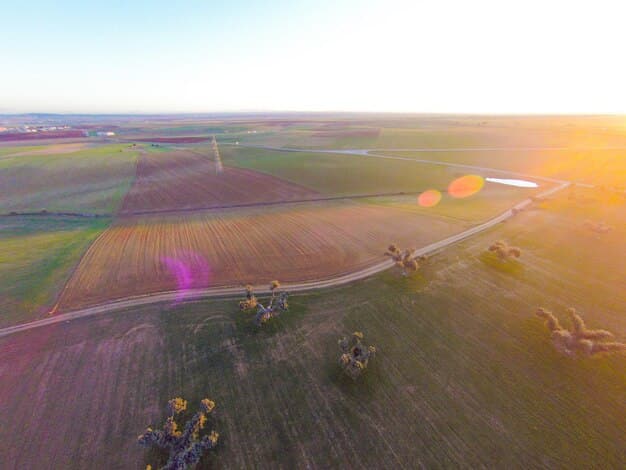
AI in Agriculture revolutionizes farming by leveraging precision techniques and real-time data analysis to optimize crop yields, enhance resource management, and improve overall efficiency, potentially boosting yields by up to 10%.
Agriculture is undergoing a transformative shift thanks to advancements in artificial intelligence. AI in Agriculture: Boost Crop Yields by 10% with Precision Farming Techniques and Real-Time Data Analysis is not just a futuristic concept; it’s a present-day reality revolutionizing how we grow and manage crops, offering promising solutions to increase efficiency and address food security challenges.
How AI is Transforming Modern Agriculture
Artificial intelligence is no longer confined to the realms of science fiction; it’s actively reshaping various industries, and agriculture is no exception. The integration of AI in agriculture represents a significant leap forward, offering farmers unprecedented tools to optimize their operations and enhance productivity.
From precision farming techniques to real-time data analysis, AI is empowering farmers to make informed decisions, minimize waste, and ultimately, boost crop yields. This technological revolution is paving the way for a more sustainable and efficient future for agriculture.
Precision Farming Techniques
Precision farming, powered by AI, involves using data-driven insights to optimize every aspect of crop production. Imagine being able to tailor your farming practices to the specific needs of each section of your field. That is the promise of AI.
AI algorithms analyze data collected from sensors, drones, and satellites to provide farmers with detailed information about soil conditions, weather patterns, and plant health. This data enables them to make precise decisions about irrigation, fertilization, and pest control.
- Variable Rate Application: AI can determine the optimal amount of fertilizer, water, or pesticides needed for different areas of a field.
- Automated Irrigation: Smart irrigation systems use AI to adjust watering schedules based on real-time weather data and soil moisture levels.
- Targeted Pest Control: AI-powered drones can identify and target areas affected by pests, reducing the need for widespread pesticide application.

With precision farming, farmers can maximize resource utilization, reduce environmental impact, and improve crop yields. The results are impressive: healthier crops and more efficient use of resources.
Real-Time Data Analysis for Informed Decisions
One of the most significant advantages of AI in agriculture is its ability to process vast amounts of data in real-time. This capability allows farmers to make informed decisions quickly and efficiently, addressing potential issues before they escalate.
Real-time data analysis transforms raw data into actionable insights, providing farmers with a comprehensive understanding of their operations and enabling them to optimize their strategies for maximum productivity.
Predictive Analytics in Farming
AI algorithms can analyze historical data, weather forecasts, and market trends to predict potential issues and optimize planting schedules. Predictive analytics enables farmers to anticipate challenges and take proactive measures to mitigate risks.
By leveraging AI, farmers can make data-driven decisions that enhance their operational efficiency and improve their bottom line. This shift towards predictive analytics is revolutionizing the agricultural sector, enabling farmers to stay ahead of the curve and adapt to changing conditions.
- Crop Yield Prediction: AI can predict crop yields based on various factors, helping farmers plan their harvesting and marketing strategies.
- Disease Detection: AI algorithms can identify early signs of plant diseases, allowing farmers to take timely action and prevent widespread outbreaks.
- Market Price Forecasting: AI can analyze market trends to forecast price fluctuations, enabling farmers to make informed decisions about when to sell their crops.
By harnessing the power of real-time data analysis, farmers can make more informed decisions, reduce risks, and optimize their operations for maximum profitability and sustainability.
How AI Reduces Waste and Increases Efficiency
The adoption of AI in agriculture is not only about increasing crop yields; it’s also about reducing waste and optimizing resource utilization. By minimizing inefficiencies, AI can help farmers achieve greater sustainability and profitability.
AI-driven technologies reduce waste by ensuring that resources are used only when and where they are needed, optimizing resource allocation and minimizing environmental impact.
Optimizing Resource Allocation
AI can analyze data on soil conditions, weather patterns, and plant health to determine the optimal amount of water, fertilizer, and pesticides needed for each area of a field. This targeted approach reduces the risk of over-application, minimizing waste and environmental impact.
AI-powered irrigation systems, for example, use real-time data to adjust watering schedules based on actual needs. This ensures that crops receive the right amount of water, reducing wastage and conserving precious water resources.
AI can help farmers optimize their resource allocation, reducing waste and enhancing efficiency. This leads to cost savings and a more sustainable approach to agriculture.
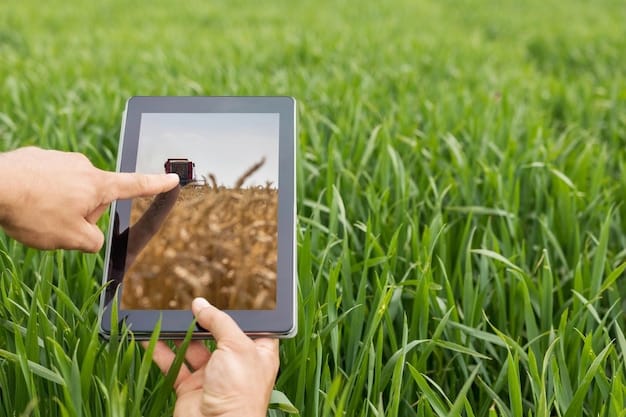
- Reduced Fertilizer Runoff: By applying fertilizer only where it’s needed, AI minimizes the risk of nutrient runoff, protecting water quality and reducing environmental pollution.
- Efficient Water Management: AI-powered irrigation systems ensure that water is used efficiently, reducing wastage and conserving water resources.
- Lower Pesticide Use: AI-driven pest control strategies target affected areas, reducing the need for widespread pesticide application and minimizing environmental impact.
The Role of Drones in AI-Powered Agriculture
Drones have emerged as indispensable tools in modern agriculture, providing farmers with real-time aerial imagery and data collection capabilities.
Equipped with sensors and cameras, drones can capture detailed images of crops, assess plant health, and identify potential issues such as pest infestations or nutrient deficiencies. This data is then analyzed by AI algorithms to provide farmers with actionable insights.
Drone-Based Data Collection
Drones can cover large areas quickly and efficiently, collecting data that would be impossible to obtain through manual inspection. This data is invaluable for making informed decisions about crop management and resource allocation.
AI algorithms process the data collected by drones to provide farmers with detailed reports on crop health, enabling them to take timely action and prevent yield losses.
The integration of drones and AI is transforming agricultural practices, empowering farmers to monitor their crops more effectively and respond to potential issues with greater precision. This combination leads to optimized resource utilization, reduced environmental impact, and improved crop yields.
- Crop Health Monitoring: Drones can assess plant health by analyzing spectral data, identifying areas affected by stress or disease.
- Yield Estimation: Drones can estimate crop yields by counting plants and analyzing their size and density, helping farmers plan their harvesting and marketing strategies.
- Field Mapping: Drones can create detailed maps of fields, providing farmers with valuable information about topography, soil conditions, and vegetation patterns.
Challenges and Opportunities in AI Adoption
While the potential benefits of AI in agriculture are undeniable, there are also challenges that need to be addressed to ensure widespread adoption.
Some of the key challenges include the high initial cost of AI technologies, the need for specialized expertise, and concerns about data privacy and security. However, these challenges also present opportunities for innovation and growth.
Overcoming Adoption Barriers
To overcome the challenges of AI adoption, it’s essential to provide farmers with access to affordable technologies, training programs, and technical support. Collaboration between researchers, technology providers, and agricultural stakeholders is also crucial.
Addressing concerns about data privacy and security is another critical step, requiring the development of robust data governance frameworks and the implementation of secure data storage and transmission protocols.
By addressing these challenges and capitalizing on the opportunities, we can unlock the full potential of AI in agriculture, paving the way for a more sustainable and productive future.
- Affordable Technology: Develop cost-effective AI solutions that are accessible to farmers of all sizes.
- Training and Support: Provide farmers with comprehensive training programs and ongoing technical support to help them use AI technologies effectively.
- Data Governance: Establish clear data governance frameworks to protect farmers’ privacy and ensure the security of their data.
The Future of AI in Agriculture
The future of AI in agriculture is bright, with ongoing advancements in technology and increasing adoption rates worldwide.
As AI algorithms become more sophisticated and data collection methods become more efficient, we can expect even greater improvements in crop yields, resource utilization, and sustainability.
Emerging Trends in AI Agriculture
One of the emerging trends in AI agriculture is the integration of machine learning and computer vision to automate various farming tasks.
AI-powered robots, for example, can be used to plant seeds, harvest crops, and weed fields, reducing the need for manual labor and improving efficiency. We can expect further innovation and wider adoption in the years to come.
AI will play an increasingly important role in ensuring food security and promoting sustainable agricultural practices. By embracing AI-driven technologies, we can create a more resilient and productive agricultural system that benefits both farmers and consumers.
- Automation: AI-powered robots can automate various farming tasks, reducing the need for manual labor and improving efficiency.
- Improved Data Analysis: AI algorithms can analyze data from multiple sources to provide farmers with more comprehensive insights.
- Sustainable Practices: AI can help farmers adopt more sustainable practices, reducing their environmental impact and conserving natural resources.
| Key Point | Brief Description |
|---|---|
| 🌱 Precision Farming | Optimizes resource use via data analysis to improve crop yields. |
| 📊 Real-Time Data | Informs decisions, addressing issues promptly and enhancing farm efficiency. |
| 🤖 AI & Drones | Drones collect data, AI analyzes it for crop monitoring & management. |
| 🛡️ Sustainability | AI reduces waste and promotes sustainable agricultural practices. |
Frequently Asked Questions
▼
Precision farming uses data to optimize resources. AI enhances this by analyzing complex data from sensors, drones, and satellites, allowing for more informed and precise farming practices.
▼
Real-time data analysis allows farmers to make quick, informed decisions about irrigation, fertilization, and pest control, addressing issues before they escalate and optimizing conditions for growth.
▼
Drones equipped with sensors and cameras collect aerial imagery and data, providing insights into crop health and field conditions. AI analyzes this data to offer actionable observations for farmers.
▼
Challenges include the high initial cost of AI technologies, the need for specialized expertise, and concerns about data privacy and security. Affordable solutions and training are vital.
▼
Emerging trends include integrating machine learning and computer vision to automate farming tasks, such as planting, harvesting, and weeding, leading to increased efficiency and sustainability.
Conclusion
AI in Agriculture is poised to transform the farming landscape, offering opportunities to boost crop yields, enhance resource management, and promote sustainability. By investing in AI-driven technologies and addressing the challenges associated with their adoption, we can create a more resilient and efficient agricultural system that benefits both farmers and consumers.