AI in Healthcare: Diagnose Diseases with Machine Learning
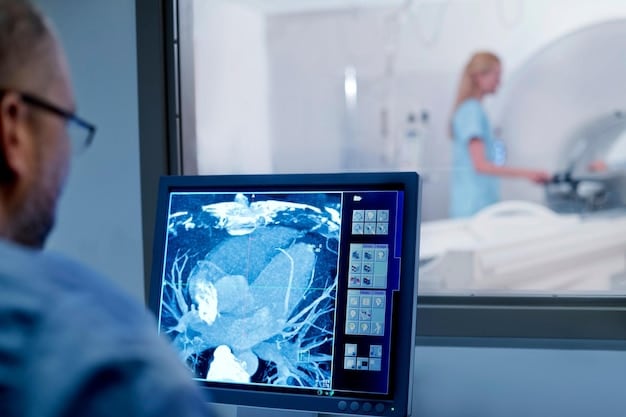
AI in Healthcare is revolutionizing disease diagnosis by utilizing machine learning algorithms to achieve up to 95% accuracy, transforming the speed and precision of medical assessments and treatment plans.
The convergence of AI in Healthcare: Diagnose Diseases with 95% Accuracy Using Machine Learning Algorithms is not just a futuristic concept; it’s a present-day reality reshaping how we approach medical diagnoses. With unprecedented precision, machine learning is empowering healthcare professionals to detect illnesses earlier and with greater accuracy.
The Rise of AI in Medical Diagnosis
Artificial intelligence (AI) is rapidly transforming numerous sectors, and healthcare is no exception. Its ability to process vast amounts of data and identify patterns makes it an invaluable tool in medical diagnosis, offering potential for improved accuracy and efficiency.
The utilization of AI in medical diagnosis is not merely about automating tasks; it’s about enhancing the capabilities of healthcare professionals, providing them with insights that can lead to better patient outcomes.
How AI Enhances Diagnostic Accuracy
AI algorithms can analyze medical images, patient records, and genetic information to detect anomalies and predict potential health issues with remarkable accuracy. This capability stems from their ability to learn from large datasets, improving their diagnostic performance over time.
- Pattern Recognition: AI excels at identifying subtle patterns in medical images that might be missed by the human eye.
- Data Analysis: AI can rapidly analyze large volumes of patient data, revealing correlations and risk factors for various diseases.
- Predictive Modeling: AI can create models that predict the likelihood of a patient developing a specific condition, enabling proactive intervention.
AI’s capacity to process and interpret data far exceeds human capabilities, making it an indispensable tool for accurate and timely medical diagnoses. This leads to quicker treatment and better patient care.

Machine Learning Algorithms: The Core of AI Diagnosis
At the heart of AI’s diagnostic capabilities lie machine learning algorithms, which are trained to recognize patterns and make predictions based on data. These algorithms are continually refined as they are exposed to more data, improving their accuracy and reliability.
Machine learning algorithms are transforming medical diagnosis by providing tools that can assist doctors in identifying diseases with unparalleled precision, leading to better patient outcomes and more effective treatments.
Types of Machine Learning Algorithms Used in Diagnosis
Different types of machine learning algorithms are employed in medical diagnosis, each suited to specific tasks and datasets. Some of the most common include:
- Supervised Learning: Algorithms trained on labeled data to predict outcomes, such as disease presence.
- Unsupervised Learning: Algorithms that identify patterns in unlabeled data, useful for detecting previously unknown correlations.
- Deep Learning: A subset of machine learning that uses neural networks to analyze complex data, excelling at image and speech recognition.
These algorithms play a crucial role in analyzing medical images, patient histories, and other data to diagnose diseases more accurately than ever before. They are the foundational technology driving the AI revolution in healthcare.
Achieving 95% Accuracy: Real-World Examples
The claim of 95% accuracy is not a mere theoretical possibility; it has been demonstrated in various real-world applications of AI in healthcare. These successes highlight the transformative potential of AI in improving diagnostic outcomes.
Through rigorous testing and clinical trials, AI algorithms have proven their ability to diagnose diseases with extraordinary accuracy, rivaling and even surpassing the capabilities of human experts in certain areas. This level of precision is revolutionizing healthcare and saving lives.
Examples of High-Accuracy AI Diagnoses
Several studies and applications have demonstrated the impressive accuracy rates of AI in diagnosing various conditions:
- Cancer Detection: AI algorithms can detect cancerous tumors in medical images with up to 95% accuracy, aiding in early diagnosis and treatment.
- Heart Disease: AI can predict the risk of heart disease by analyzing patient data with similar accuracy rates, enabling preventive measures.
- Eye Diseases: AI can diagnose conditions like diabetic retinopathy with remarkable precision, helping to prevent blindness.
These examples showcase the power of AI in providing accurate and timely diagnoses, leading to better patient care and improved health outcomes. The real-world impact of AI in healthcare is already being felt, and the potential for further advancements is immense.
The Impact on Healthcare Professionals
The introduction of AI into healthcare is not intended to replace healthcare professionals but to augment their capabilities. AI serves as a powerful tool that can assist doctors and nurses in making more informed decisions.
AI enhances the diagnostic process by providing healthcare professionals with deeper insights and more precise assessments, ultimately enhancing the quality of care and improving patient outcomes.
AI as a Collaborative Tool
AI’s role in healthcare is to assist and collaborate with healthcare professionals, not to replace them. By automating routine tasks and providing data-driven insights, AI frees up doctors and nurses to focus on patient interaction and complex decision-making.
Benefits for Healthcare Professionals
- Reduced Workload: AI automates routine tasks, reducing the burden on healthcare professionals.
- Enhanced Decision-Making: AI provides data-driven insights that support informed clinical decisions.
- Improved Accuracy: AI helps reduce diagnostic errors, leading to better patient outcomes.
By embracing AI as a collaborative tool, healthcare professionals can enhance their effectiveness and deliver better care to their patients. The symbiotic relationship between AI and healthcare providers is poised to revolutionize the industry.
Ethical Considerations and Challenges
As AI becomes increasingly prevalent in healthcare, it’s essential to address ethical considerations and potential challenges. Ensuring fairness, transparency, and accountability is crucial to maintain public trust and prevent unintended consequences.
Addressing these ethical concerns and overcoming the challenges associated with AI in healthcare will be critical to realizing its full potential and ensuring that it benefits all members of society.
Maintaining Patient Privacy and Data Security
Protecting patient privacy and ensuring data security are paramount concerns when using AI in healthcare. Robust security measures and strict adherence to privacy regulations are essential to safeguard sensitive information.
Addressing Bias in Algorithms
AI algorithms can inadvertently perpetuate biases present in the data they are trained on. Efforts must be made to identify and mitigate these biases to ensure fair and equitable outcomes for all patients.
Ensuring Transparency and Explainability
AI algorithms can sometimes operate as “black boxes,” making it difficult to understand how they arrive at their decisions. Ensuring transparency and explainability is crucial for building trust and enabling healthcare professionals to validate the results.
The Future of AI in Disease Diagnosis
The future of AI in disease diagnosis is bright, with ongoing advancements promising even greater accuracy and efficiency. As AI technology continues to evolve, it is poised to play an increasingly prominent role in healthcare.
AI’s capacity to analyze medical data and recognize complex patterns makes it a promising tool for early disease detection, personalized medicine, and more effective treatment strategies.
Emerging Trends and Innovations
Several emerging trends and innovations are shaping the future of AI in disease diagnosis:
- Personalized Medicine: AI is being used to tailor treatments to individual patients based on their genetic makeup and other factors.
- Remote Monitoring: AI-powered devices are enabling remote patient monitoring, allowing for early detection of health issues.
- Drug Discovery: AI is accelerating the process of drug discovery by identifying potential drug candidates and predicting their effectiveness.
These advancements hold the potential to transform healthcare, making it more efficient, personalized, and effective.
| Key Point | Brief Description |
|---|---|
| 🔬 AI Accuracy | Machine learning diagnoses diseases with up to 95% accuracy. |
| 📊 Data Analysis | AI algorithms process vast amounts of data to identify anomalies. |
| 🤝 Collaboration | AI collaborates with doctors, enhancing decision-making. |
| 🛡️ Ethical Use | Addressing bias, data security, and transparency is critical. |
Frequently Asked Questions
▼
AI can achieve up to 95% accuracy in diagnosing certain diseases, especially when analyzing medical images and large patient datasets. This high accuracy rate aids in early and precise diagnosis.
▼
No, AI is designed to assist and collaborate with doctors. AI automates routine tasks and provides data-driven insights, enabling doctors to make better-informed decisions.
▼
AI is effective in diagnosing various diseases, including cancer, heart disease, and eye conditions. Its ability to analyze medical images and patient data makes it a powerful tool for early detection.
▼
AI systems in healthcare implement robust security measures and adhere to strict privacy regulations. Encryption, access controls, and anonymization techniques protect sensitive patient information.
▼
Ethical considerations include addressing bias in algorithms, ensuring transparency and explainability, and maintaining patient privacy. Efforts are made to ensure fair and equitable outcomes for all patients.
Conclusion
The integration of AI in Healthcare: Diagnose Diseases with 95% Accuracy Using Machine Learning Algorithms is a game-changer, offering unprecedented capabilities in disease detection and patient care. While challenges remain, the potential benefits of AI in healthcare are immense. By addressing ethical considerations and promoting responsible development, we can harness the power of AI to create a healthier future for all.