AI in Pharma: Unlocking 20% Faster Drug Discovery by 2025

By 2025, Pharmaceutical companies in the US anticipate leveraging Artificial Intelligence (AI) to accelerate clinical trials, achieving up to 20% faster drug discovery through enhanced data analysis, predictive modeling, and streamlined processes.
The pharmaceutical industry is on the cusp of a revolution, driven by the transformative power of artificial intelligence. By 2025, **unlock 20% faster drug discovery: How US pharmaceutical companies are using AI for clinical trials in 2025** promises to reshape how new medicines are developed and brought to market, impacting patient care and industry economics.
The AI Revolution in Pharmaceutical Research
The integration of artificial intelligence into pharmaceutical research is no longer a futuristic concept; it’s a present-day reality rapidly transforming the landscape. AI is being employed across various stages of drug discovery, from target identification to clinical trial optimization.
This section explores the fundamental ways AI is revolutionizing pharmaceutical research, focusing on key areas where AI’s impact is most profound.
Target Identification and Validation
AI algorithms can analyze vast datasets of genomic, proteomic, and clinical data to pinpoint potential drug targets with greater precision and speed than traditional methods.
Drug Design and Optimization
AI-powered tools are used to design and optimize drug molecules, predicting their efficacy, safety, and pharmacokinetic properties, thereby accelerating the drug development process.
- Faster identification of potential drug candidates.
- Improved prediction of drug efficacy and safety.
- Reduced reliance on costly and time-consuming laboratory experiments.
- Enhanced understanding of disease mechanisms.
AI is enabling researchers to make more informed decisions, leading to more effective and targeted therapies. As AI models become increasingly sophisticated, their role in drug discovery will only continue to expand.
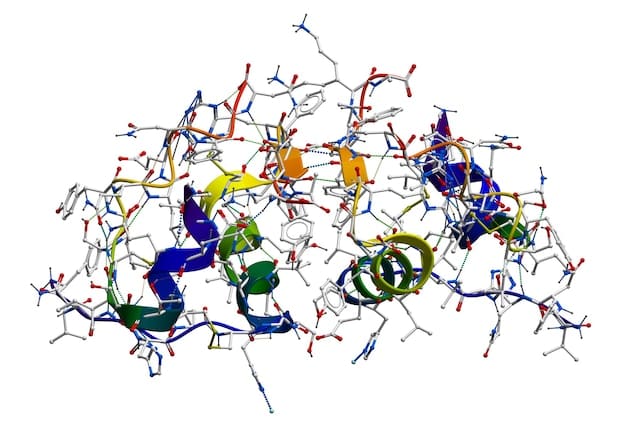
Streamlining Clinical Trials with AI
Clinical trials are a crucial but often lengthy and expensive phase of drug development. AI offers innovative solutions to streamline clinical trials, making them faster, more efficient, and more likely to succeed.
This section delves into how AI is being used to optimize various aspects of clinical trials, from patient recruitment to data analysis.
Patient Recruitment and Selection
AI algorithms can analyze patient data to identify individuals who are most likely to benefit from a specific drug, improving patient recruitment and reducing the risk of trial failures.
Predictive Analytics for Trial Outcomes
AI can predict the effectiveness of a drug in a clinical trial based on patient characteristics and historical data, allowing researchers to make informed decisions about trial design and execution.
- Reduced trial duration and costs.
- Improved patient outcomes through targeted therapies.
- Enhanced data quality and reliability.
- More efficient use of resources.
By leveraging AI, pharmaceutical companies can conduct more effective and efficient clinical trials, bringing new drugs to market faster and improving patient access to life-saving treatments.
US Pharmaceutical Companies Leading the Charge
Several US pharmaceutical companies are at the forefront of adopting AI in their drug discovery and clinical trial processes. These companies are investing heavily in AI technologies and building partnerships with AI startups to accelerate their research efforts.
This section highlights some of the leading US pharmaceutical companies that are pioneering the use of AI in drug discovery.
Pfizer’s AI Partnerships
Pfizer has established partnerships with AI companies to enhance its drug discovery capabilities, focusing on areas such as target identification and drug design.
Merck’s AI-Driven Clinical Trials
Merck is using AI to optimize clinical trial design, patient recruitment, and data analysis, reducing trial costs and accelerating timelines.
- Greater innovation through collaboration.
- Faster adoption of AI technologies.
- Enhanced research and development capabilities.
- Improved competitiveness in the global market.
These companies are demonstrating that AI is not just a theoretical concept but a practical tool that can drive real results in pharmaceutical research, setting the stage for wider adoption across the industry.
Overcoming the Challenges of AI Implementation
While AI offers significant potential for transforming drug discovery, its successful implementation is not without challenges. Pharmaceutical companies face several hurdles in integrating AI into their existing workflows.
This section addresses some of the key challenges and provides insights into how they can be overcome.
Data Integration and Standardization
Integrating diverse datasets from various sources and ensuring data quality and standardization is a significant challenge.
Regulatory and Ethical Considerations
The use of AI in drug discovery raises regulatory and ethical concerns that need to be addressed to ensure responsible innovation.
- Investing in data infrastructure and governance.
- Developing AI-specific training programs for employees.
- Engaging with regulators to establish clear guidelines.
- Prioritizing transparency and ethical considerations.
By proactively addressing these challenges, pharmaceutical companies can unlock the full potential of AI to accelerate drug discovery and improve patient outcomes.
The Future of AI in Drug Discovery: 2025 and Beyond
Looking ahead to 2025 and beyond, the role of AI in drug discovery is expected to continue to grow. As AI technology advances and pharmaceutical companies gain more experience with its implementation, we can anticipate even greater breakthroughs in the field.
This section explores some of the potential future developments and their implications for the pharmaceutical industry.
Personalized Medicine
AI will enable the development of personalized medicines tailored to an individual’s genetic makeup and disease profile, leading to more effective treatments.
Drug Repurposing
AI can identify existing drugs that may be effective against new diseases, accelerating the development of new therapies for unmet medical needs.
- Improved patient outcomes
- Faster development of new therapies
- Reduced healthcare costs
- Enhanced scientific understanding of diseases
The future of AI in drug discovery is bright, with the potential to transform the pharmaceutical industry and improve the lives of millions of patients worldwide. By **unlock 20% faster drug discovery: How US pharmaceutical companies are using AI for clinical trials in 2025**, the healthcare process is changed drastically.
Impact on the Pharmaceutical Industry Landscape
The widespread adoption of AI in drug discovery is poised to significantly alter the pharmaceutical industry landscape. Companies that embrace AI will gain a competitive advantage, while those that lag behind risk falling behind.
This section discusses the potential impact of AI on various aspects of the pharmaceutical industry.
Increased Efficiency and Productivity
AI will automate many tasks, freeing up scientists to focus on more creative and strategic activities, leading to increased efficiency and productivity.
New Business Models
AI will enable new business models, such as AI-driven drug discovery platforms and personalized medicine services, creating new revenue streams for pharmaceutical companies.
- Accelerated drug development cycles
- Reduced costs
- Improved patient outcomes
- Greater innovation and competitiveness
As AI continues to transform the pharmaceutical industry, companies that embrace this technology will be best positioned to thrive in the future.
| Key Point | Brief Description |
|---|---|
| 🚀 AI Acceleration | AI speeds up drug discovery by 20% by 2025 in US. |
| 🎯 Target Precision | AI pinpoints drug targets with more accuracy. |
| 🧪 Trial Efficiency | AI streamlines clinical trials, cuts costs. |
| 📈 Industry Impact | AI reshapes pharma, boosting efficiency and innovation. |
Frequently Asked Questions
▼
AI algorithms analyze vast datasets to identify potential drug targets faster and more accurately than traditional methods, significantly speeding up the discovery process.
▼
AI optimizes clinical trials by improving patient recruitment, predicting trial outcomes, and enhancing data analysis, making the trials more efficient and reliable.
▼
Companies like Pfizer and Merck are at the forefront, investing in AI technologies and partnerships to accelerate drug discovery and streamline clinical trials.
▼
Key challenges include data integration, ensuring data quality, addressing regulatory concerns, and building a skilled workforce capable of working with AI technologies.
▼
AI will enable the development of personalized treatments by analyzing individual patient data to tailor therapies to their specific genetic makeup and disease profile, improving outcomes.
Conclusion
The integration of artificial intelligence into drug discovery promises to accelerate the development of new medicines, reduce costs, and improve patient outcomes. As US pharmaceutical companies continue to embrace AI, 2025 and beyond holds immense potential for transforming the healthcare landscape.