AI in US Agriculture: Boost Crop Yields by 8% with Precision Farming

AI is revolutionizing US agriculture by enabling precision farming techniques, leading to optimized resource use, reduced environmental impact, and, significantly, an estimated 8% increase in crop yields through data-driven insights and automated processes.
The landscape of United States agriculture is undergoing a profound transformation, fueled by the rapid advancements in artificial intelligence. How AI is Transforming US Agriculture: Increasing Crop Yields by 8% with Precision Farming isn’t just a futuristic concept; it’s a present-day reality reshaping how farmers cultivate their land and manage resources.
The Rise of Precision Farming in the US
Precision farming, often called smart farming, has emerged as a game-changing approach in US agriculture. It involves using data-driven insights to optimize every aspect of crop production, from planting to harvesting. This shift contrasts sharply with traditional farming methods, where decisions are often based on generalized practices and historical averages.
What is Precision Farming?
Precision farming leverages technologies like GPS, sensors, drones, and data analytics to gather detailed information about soil conditions, weather patterns, and crop health. This data is then analyzed using AI algorithms to make informed decisions, leading to more efficient and sustainable agricultural practices.
Benefits of Precision Farming Technologies
Adopting precision farming technologies offers numerous advantages. It helps reduce input costs by optimizing the use of fertilizers, pesticides, and water. It also enhances crop quality, increases yields, and minimizes environmental impact through reduced chemical runoff and optimized resource use.
- Optimized Resource Management
- Reduced Environmental Footprint
- Enhanced Crop Quality
- Increased Yields

In conclusion, precision farming represents a fundamental shift in how agriculture is practiced. By embracing data-driven insights and advanced technologies, farmers can achieve greater efficiency, sustainability, and profitability, setting the stage for a more resilient food system.
AI-Powered Crop Monitoring and Analysis
At the heart of AI’s transformative impact on US agriculture lies its ability to monitor and analyze crops in real-time. This capability provides farmers with unprecedented insights into the health and performance of their crops, enabling timely interventions and optimized management strategies.
Using AI for Plant Disease Detection
AI algorithms can be trained to identify early signs of plant diseases by analyzing images captured by drones or sensors. This allows farmers to take swift action, preventing widespread outbreaks and minimizing crop losses. Machine learning models can accurately diagnose diseases before they become visible to the naked eye.
AI Driven Soil Analysis
AI enhances soil analysis by processing vast amounts of data to determine nutrient levels, moisture content, and other critical factors. This information helps farmers tailor their fertilization and irrigation strategies to meet the specific needs of each field, reducing waste and maximizing crop growth.
- Early Disease Detection
- Optimized Fertilization
- Efficient Irrigation Management
- Improved Crop Health
In summary, AI-driven crop monitoring and analysis give farmers the tools they need to make informed decisions based on real-time data. By detecting problems early and optimizing resource allocation, AI ensures crops thrive and produce higher yields, contributing to a more secure and sustainable food supply.
Autonomous Equipment and Robotics in Farming
The integration of autonomous equipment and robotics is revolutionizing farming operations in the US. These advanced technologies automate labor-intensive tasks, improve efficiency, and enable farmers to manage larger areas of land with greater precision.
Self-Driving Tractors and Harvesters
Self-driving tractors and harvesters use GPS and AI to navigate fields and perform tasks like plowing, planting, and harvesting without human intervention. This reduces labor costs, minimizes errors, and allows farmers to focus on other critical aspects of their operations.
Robotic Weed Control and Harvesting
Robots equipped with AI-powered vision systems can identify and remove weeds with exceptional accuracy, reducing the need for herbicides. Similarly, robotic harvesters can selectively pick ripe fruits and vegetables, minimizing damage and maximizing yield. These technologies offer eco-friendly and efficient solutions for weed and pest management.
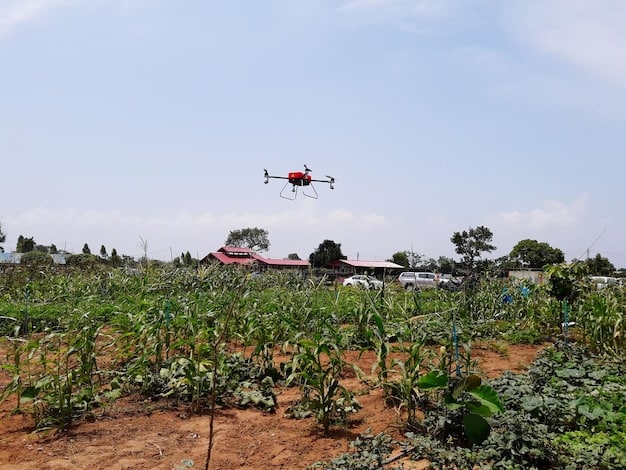
In short, autonomous equipment and robotics are transforming the efficiency and sustainability of farming operations. By automating labor-intensive tasks and enabling precise management of resources, these technologies empower farmers to optimize their operations and achieve greater productivity.
Data Analytics and Predictive Modeling
Data analytics and predictive modeling play a crucial role in harnessing the full potential of AI in US agriculture. By analyzing vast datasets, AI algorithms can identify patterns, predict outcomes, and provide actionable insights that help farmers make better decisions.
Weather Forecasting and Climate Modeling
AI-driven weather forecasting and climate modeling provide farmers with accurate predictions of weather patterns and long-term climate trends. This enables them to plan their planting schedules, irrigation strategies, and pest control measures with greater confidence, minimizing risks associated with unpredictable weather conditions. Sophisticated models predict everything from rainfall to temperature fluctuations.
Yield Prediction and Optimization
AI algorithms can analyze historical data, soil conditions, and weather patterns to predict crop yields with remarkable accuracy. This information helps farmers optimize their planting densities, fertilization rates, and harvesting schedules, maximizing overall productivity. Predictive analytics minimize uncertainty and improve resource allocation.
- Accurate Weather Forecasting
- Optimized Planting Schedules
- Maximized Yields
- Reduced Risks
In essence, data analytics and predictive modeling unlock the hidden potential within agricultural data. By providing farmers with the insights they need to make informed decisions, AI-driven analytics enhances productivity, reduces risks, and promotes sustainable agricultural practices.
Challenges and Opportunities in AI Adoption
While the potential benefits of AI in US agriculture are immense, widespread adoption faces several challenges and presents unique opportunities. Overcoming these hurdles is essential to fully realize AI’s transformative power.
Initial Investment and Infrastructure
The initial investment required to implement AI-powered technologies can be substantial, particularly for small and medium-sized farms. Developing the necessary infrastructure, including high-speed internet and data processing capabilities, can also be a barrier to entry.
Data Privacy and Security Concerns
As farmers increasingly rely on data-driven insights, concerns about data privacy and security have risen. Protecting sensitive agricultural data from cyber threats and ensuring responsible data management practices are crucial to maintaining farmer trust.
Skills Gap and Training Programs
A significant skills gap exists in the agricultural workforce, hindering the effective use of AI technologies. Developing comprehensive training programs to equip farmers and agricultural professionals with the necessary skills is essential for successful AI adoption.
In conclusion, while challenges exist, the opportunities for AI adoption in US agriculture are vast. Addressing these challenges through targeted investments, robust data security measures, and comprehensive training programs will pave the way for a more efficient, sustainable, and resilient agricultural sector.
Case Studies: Successful AI Implementation in US Farms
Examining real-world examples of successful AI implementation in US farms highlights the tangible benefits and practical applications of this transformative technology. These case studies serve as inspiration and demonstrate the potential for AI to revolutionize agriculture.
Smart Irrigation Systems in California
California farmers have successfully implemented AI-powered smart irrigation systems that use real-time data to optimize water usage. These systems analyze soil moisture levels, weather conditions, and plant needs to deliver the precise amount of water required, reducing water waste and improving crop health. Leading to significant water savings and increased yields in water-scarce regions.
Precision Planting in the Midwest
In the Midwest, farmers are using AI-driven precision planting technologies to optimize seeding rates and spacing. These systems analyze soil conditions, weather patterns, and historical data to determine the optimal planting parameters for each field, maximizing germination rates and crop yields. Technologies promote increased yields and reduced input costs for corn and soybean farmers.
- Water Savings
- Increased Yields
- Optimized Seeding
- Reduced Input Costs
Briefly stated, these case studies showcase the diverse ways in which AI is being successfully implemented in US farms. By embracing data-driven insights and advanced technologies, farmers are achieving greater efficiency, sustainability, and profitability, setting the stage for a more resilient and productive agricultural sector.
| Key Point | Brief Description |
|---|---|
| 🌱 Precision Farming | Data-driven approach optimizing crop production. |
| 🤖 Autonomous Equipment | Self-driving tractors and robotic harvesters enhance efficiency. |
| 📊 Data Analytics | Predictive modeling for weather and yield optimization. |
| 🛡️ Challenges | Initial costs, data security, and skills gap hinder adoption. |
Frequently Asked Questions
▼
AI increases crop yields by optimizing resource use, predicting weather patterns, and detecting plant diseases early. This leads to more informed decisions and efficient farming practices.
▼
Precision farming involves using data-driven insights to optimize every aspect of crop production. This contrasts with traditional methods that rely on generalized practices and historical averages.
▼
Autonomous equipment automates labor-intensive tasks, improves efficiency, and enables farmers to manage larger areas of land with greater precision, reducing labor costs and minimizing errors.
▼
Data analytics help farmers by providing insights into weather patterns, soil conditions, and crop health. This enables them to make informed decisions and optimize their farming practices.
▼
Challenges include initial investment costs, data privacy concerns, and the skills gap. Overcoming these hurdles is essential for fully realizing AI’s transformative potential in agriculture.
Conclusion
In conclusion, AI is not just a technological advancement; it’s a fundamental shift in how US agriculture operates. By embracing these innovations, the agricultural sector can achieve new levels of efficiency, sustainability, and resilience, ensuring a more secure food supply for future generations.