AI in US Schools: Personalizing Education for 2026-2027
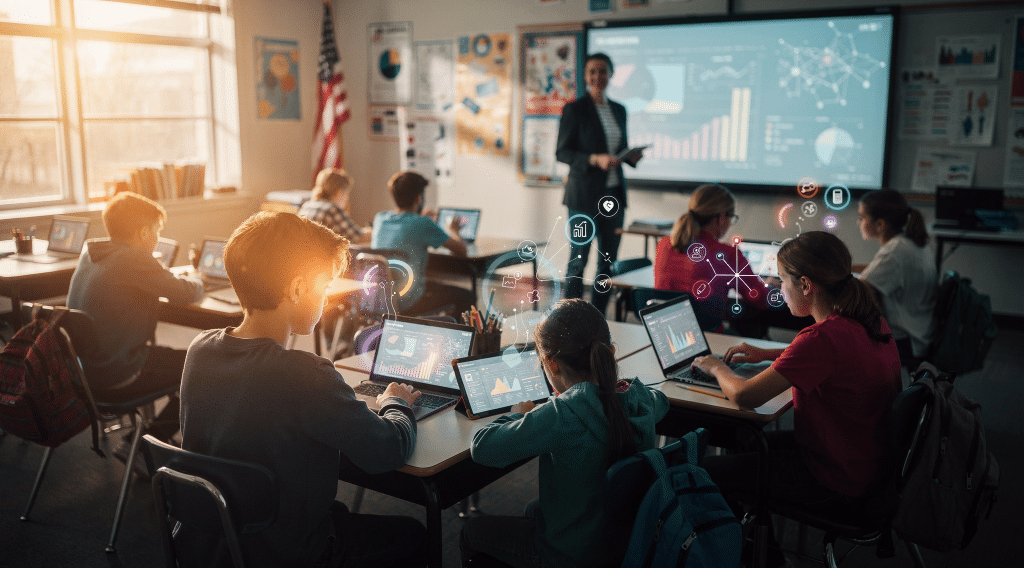
The landscape of education is constantly evolving, and at the forefront of this transformation is Artificial Intelligence (AI). The prospect of AI personalized education in US schools by the 2026-2027 academic year is not a distant dream but a tangible goal. AI offers unprecedented opportunities to tailor learning experiences to individual student needs, fostering deeper engagement, improved outcomes, and a more equitable educational environment. This comprehensive guide explores the strategies US schools can employ to successfully integrate AI for personalized learning, addressing both the exciting potential and the practical considerations.
The Promise of AI Personalized Education
Traditional education often struggles to cater to the diverse learning styles, paces, and interests of every student in a classroom. This is where AI personalized education shines. AI technologies can analyze vast amounts of data to understand each student’s strengths, weaknesses, preferred learning methods, and even emotional states, then adapt content, pace, and instructional strategies accordingly. This paradigm shift moves away from a ‘one-size-fits-all’ approach to a ‘one-size-fits-one’ model, maximizing each student’s potential.
Key Benefits of AI for Personalized Learning
- Adaptive Learning Paths: AI algorithms can dynamically adjust the curriculum, providing more challenging material when a student grasps a concept quickly, or offering additional support and different explanations when they struggle. This ensures optimal cognitive load and prevents both boredom and frustration.
- Individualized Feedback: Beyond just right or wrong, AI can provide instant, constructive feedback that explains why an answer is correct or incorrect, guiding students toward understanding rather than rote memorization. This immediate feedback loop is crucial for effective learning.
- Automated Assessment: AI can grade assignments, quizzes, and even essays, freeing up valuable teacher time. More importantly, it can identify patterns in student errors, helping educators pinpoint common misconceptions and address them proactively.
- Personalized Content Recommendations: Based on a student’s interests and learning history, AI can recommend supplementary materials, videos, articles, and interactive exercises, making learning more engaging and relevant.
- Early Intervention: By continuously monitoring student performance and engagement, AI can flag students who might be falling behind or disengaging, allowing teachers to intervene early and provide targeted support.
- Accessibility Enhancements: AI-powered tools can offer features like text-to-speech, speech-to-text, translation, and customized visual displays, making education more accessible for students with diverse needs and learning disabilities.
- Data-Driven Insights for Educators: AI provides teachers with a wealth of data on student progress, engagement, and learning patterns. This data can inform instructional decisions, personalize lesson plans, and identify areas where the curriculum might need adjustment.
The integration of AI personalized education is not about replacing teachers, but empowering them. It transforms the teacher’s role from a sole dispenser of information to a facilitator, mentor, and guide, equipped with powerful tools to understand and support each student individually.
Strategies for Implementation: 2026-2027 Academic Year
Achieving widespread AI personalized education in US schools by 2026-2027 requires a strategic, phased approach. It’s not merely about adopting technology, but about a holistic transformation involving infrastructure, training, curriculum redesign, and policy development.
1. Develop a Clear Vision and Roadmap
Before any technology is deployed, schools and districts must articulate a clear vision for how AI will enhance personalized learning. This involves:
- Defining Goals: What specific learning outcomes do we aim to improve? (e.g., increased literacy rates, improved STEM performance, enhanced critical thinking).
- Stakeholder Engagement: Involve teachers, administrators, parents, and students in the planning process to build buy-in and gather diverse perspectives.
- Pilot Programs: Start small with pilot programs in a few classrooms or schools to test different AI tools and gather feedback before scaling up. This iterative approach allows for adjustments and improvements.
2. Invest in Robust Infrastructure
AI solutions are data-intensive and require reliable infrastructure:
- High-Speed Internet: Ensure all schools have ubiquitous, high-speed internet access capable of supporting multiple AI applications simultaneously.
- Hardware: Provide students and teachers with appropriate devices (laptops, tablets) that can run AI-powered software effectively.
- Cloud Computing: Leverage cloud services for scalability, data storage, and processing power, which are essential for AI applications.
3. Prioritize Teacher Professional Development
Teachers are the linchpin of successful AI integration. They need to be comfortable and proficient in using AI tools:
- Comprehensive Training Programs: Offer ongoing professional development focused on how to integrate AI into existing pedagogical practices, interpret AI-generated data, and leverage AI to personalize instruction.
- AI Literacy: Educate teachers on the fundamentals of AI, its capabilities, limitations, and ethical considerations.
- Peer Learning Networks: Foster communities of practice where teachers can share best practices, challenges, and solutions related to using AI in the classroom.
4. Curate and Develop AI-Powered Learning Resources
The effectiveness of AI personalized education hinges on the quality of the content:
- Evaluate Existing Tools: Thoroughly research and evaluate AI-powered learning platforms and resources, considering their pedagogical soundness, alignment with curriculum standards, and user-friendliness.
- Content Creation: Develop or adapt curriculum materials to be compatible with AI tools, ensuring they are diverse, engaging, and culturally relevant.
- Open Educational Resources (OER): Explore and integrate OER that can be enhanced with AI features, reducing costs and increasing accessibility.
5. Address Data Privacy and Security
Student data is sensitive and must be protected:
- Robust Data Governance Policies: Establish clear policies for data collection, storage, usage, and sharing, adhering to regulations like FERPA.
- Cybersecurity Measures: Implement strong cybersecurity protocols to protect student data from breaches and unauthorized access.
- Transparency with Parents and Students: Clearly communicate how student data is being used, the benefits it provides, and the measures taken to protect privacy. Obtain informed consent where necessary.
6. Foster Ethical AI Use
The ethical implications of AI in education are paramount:
- Bias Detection and Mitigation: Regularly audit AI algorithms and datasets to identify and mitigate potential biases that could disadvantage certain student groups.
- Human Oversight: Emphasize that AI tools are aids, not replacements, for human judgment. Teachers must retain ultimate control over instructional decisions.
- Digital Citizenship: Educate students on responsible and ethical use of AI, promoting critical thinking about AI-generated content and data privacy.
7. Secure Funding and Partnerships
Implementing AI personalized education requires significant investment:
- Government Grants: Seek federal and state grants dedicated to educational technology and innovation.
- Private Partnerships: Collaborate with technology companies, universities, and non-profit organizations to leverage expertise and resources.
- Budget Allocation: Prioritize funding for AI initiatives within school and district budgets, recognizing the long-term benefits.
Challenges and Considerations for 2026-2027
While the potential of AI personalized education is immense, several challenges must be proactively addressed to ensure successful and equitable implementation.
1. Equity and Access
One of the most significant concerns is ensuring that AI does not exacerbate existing educational inequalities:
- Digital Divide: Not all students have equitable access to devices or reliable internet at home, which could create a gap in AI-enhanced learning opportunities. Schools must provide solutions for off-campus access.
- Bias in Algorithms: If AI algorithms are trained on biased data, they can perpetuate or even amplify existing societal biases, potentially leading to unfair outcomes for certain student demographics. Rigorous testing and auditing are crucial.
- Resource Disparity: Wealthier districts may have an easier time investing in cutting-edge AI tools and training, potentially leaving less-resourced schools behind. Policy interventions and funding models must address this.
2. Teacher Readiness and Resistance
Change can be difficult, and some educators may feel overwhelmed or threatened by AI:
- Lack of Training: Insufficient professional development can lead to teachers feeling unprepared or unwilling to use new technologies.
- Fear of Job Displacement: Teachers may worry that AI will replace their roles. It’s crucial to emphasize that AI is a tool to augment, not supplant, human educators.
- Increased Workload (Initially): Learning new systems and integrating them into existing workflows can initially increase a teacher’s workload. Support mechanisms must be in place to ease this transition.
3. Data Privacy and Security Concerns
The collection of vast amounts of student data raises legitimate privacy concerns:
- Compliance: Schools must navigate complex data privacy regulations (e.g., FERPA, state-specific laws) and ensure full compliance.
- Cybersecurity Threats: Student data is a valuable target for cybercriminals. Robust security measures and constant vigilance are essential.
- Parental Consent and Trust: Building trust with parents regarding how their children’s data is used and protected is paramount. Transparency is key.
4. Cost and Scalability
Implementing AI on a large scale across US schools is a significant financial undertaking:
- Initial Investment: The costs of hardware, software licenses, infrastructure upgrades, and professional development can be substantial.
- Ongoing Maintenance: AI systems require continuous maintenance, updates, and support, which incur ongoing costs.
- Scalability Challenges: What works well in a pilot program with a few dozen students might face significant challenges when scaled to an entire district with thousands of students.
5. Ensuring Pedagogical Soundness
Not all AI tools are created equal. Schools must ensure that the AI solutions they adopt are genuinely effective for learning:
- Evidence-Based Selection: Prioritize AI tools that have been rigorously tested and shown to improve learning outcomes.
- Avoiding ‘Gamification’ Traps: While engagement is good, ensure AI tools are not simply gamified interfaces that lack deep pedagogical value.
- Curriculum Alignment: AI tools must align with established curriculum standards and learning objectives.
6. Ethical Considerations and Accountability
Beyond bias, other ethical dilemmas arise with AI in education:
- Autonomy vs. Guidance: How much should AI guide a student’s learning path versus allowing them to explore independently?
- Impact on Critical Thinking: Will over-reliance on AI diminish students’ ability to think critically or solve problems independently?
- Accountability for Errors: Who is responsible if an AI system provides incorrect information or makes a flawed assessment?
The Path Forward: A Collaborative Effort
The successful integration of AI personalized education by 2026-2027 will require a concerted effort from various stakeholders.
Role of Government and Policymakers
- Funding and Grants: Provide dedicated funding streams for AI integration, especially for underserved communities.
- Policy Frameworks: Develop clear guidelines and regulations regarding data privacy, ethical AI use, and vendor accountability.
- Research and Development: Invest in research to understand the long-term impact of AI on learning and development.
Role of Technology Providers
- Ethical Design: Develop AI tools with ethics, equity, and privacy by design.
- Interoperability: Create platforms that can seamlessly integrate with existing school systems and other educational tools.
- User-Friendly Interfaces: Design tools that are intuitive for both students and teachers, minimizing the learning curve.
Role of Educators and School Leaders
- Embrace Innovation: Be open to exploring new technologies and adapting pedagogical practices.
- Advocate for Resources: Communicate needs to district and state leaders to secure necessary funding and support.
- Lead Professional Development: Champion ongoing training and create a culture of continuous learning among staff.
Role of Parents and Communities
- Engage and Understand: Actively participate in discussions about AI in schools, asking questions and understanding the benefits and risks.
- Support Home Learning: Provide a supportive home environment for technology-enhanced learning, ensuring access where possible.
Looking Beyond 2026-2027: The Future of Learning
The 2026-2027 academic year is an ambitious but achievable milestone for establishing a foundation of AI personalized education. However, the journey doesn’t end there. The field of AI is rapidly evolving, and education must continue to adapt.
Long-Term Vision for AI in Education
- Hyper-Personalization: Moving towards AI systems that understand not just academic needs but also social-emotional learning, mental well-being, and career aspirations, offering holistic support.
- AI as a Creative Partner: AI tools that assist students in creative endeavors, from writing and art to scientific discovery, acting as a collaborative partner rather than just a tutor.
- Lifelong Learning Ecosystems: AI-powered platforms that support learning beyond K-12 and higher education, adapting to individuals’ changing needs throughout their careers and lives.
- Predictive Analytics for System Improvement: AI analyzing broader educational trends and system-level data to inform policy, resource allocation, and curriculum development at a macro level.
The integration of AI into US schools represents a pivotal moment in educational history. By embracing AI personalized education strategically and ethically, we can unlock unprecedented opportunities to create a more engaging, effective, and equitable learning experience for every student. The path to 2026-2027 is about meticulous planning, collaborative effort, and a shared vision for a future where technology empowers human potential.
As we move forward, continuous evaluation and adaptation will be key. The educational community must remain agile, responsive to new advancements in AI, and committed to placing student well-being and learning outcomes at the center of all technological integration. The promise of personalized learning, once a theoretical ideal, is now within reach, and AI is the engine that can drive us there.