AI-Powered Personalized Education: Boost Student Success by 12%

AI-Powered Personalized Education utilizes adaptive learning platforms to tailor educational content and pace to individual student needs, potentially improving student outcomes by 12% through enhanced engagement and targeted instruction.
Imagine a classroom where every student receives an education tailored specifically to their unique learning style, pace, and needs. That’s the promise of AI-powered personalized education. Adaptive learning platforms are revolutionizing how students learn, offering the potential to improve student outcomes by as much as 12%. This article explores the benefits, challenges, and future of this transformative approach.
The Rise of AI in Education: A Personalized Revolution
Artificial intelligence is no longer a futuristic concept confined to science fiction. It’s rapidly transforming various sectors, and education is no exception. The integration of AI into education is paving the way for personalized learning experiences that were once considered impossible.
This personalized approach moves away from the traditional one-size-fits-all education model, acknowledging that students learn at different paces and in different ways. By leveraging the power of AI, educators can better cater to individual student needs, leading to improved engagement, understanding, and ultimately, better academic outcomes.
What is AI-Powered Personalized Education?
At its core, AI-powered personalized education uses algorithms and data analysis to tailor learning experiences to individual students. This goes beyond simply providing different textbooks or assignments. It involves dynamically adjusting the difficulty, content, and delivery method based on a student’s performance and learning patterns.
- Adaptive Learning Platforms: These platforms use AI to assess a student’s knowledge and skills, and then provide customized learning paths and content.
- Intelligent Tutoring Systems: These systems offer personalized feedback and guidance to students, helping them to master specific concepts and skills.
- Automated Assessment: AI can automate the grading of assignments and tests, providing teachers with more time to focus on instruction and student support.

AI-powered personalized education is not about replacing teachers; rather, it’s about augmenting their capabilities and providing them with the tools they need to better support their students. By automating administrative tasks and providing personalized insights, AI can free up teachers to focus on what they do best: inspiring and mentoring students.
How Adaptive Learning Platforms Improve Student Outcomes
Adaptive learning platforms are a key component of AI-powered personalized education. These platforms use sophisticated algorithms to assess a student’s understanding of a subject and then adjust the difficulty and content accordingly.
The goal is to provide each student with a learning experience that is challenging but not overwhelming, ensuring that they are constantly learning and progressing at their own pace.
The 12% Improvement: Understanding the Data
The claim that AI-powered personalized education can improve student outcomes by 12% is based on various studies and research that have examined the effectiveness of adaptive learning platforms. While the exact percentage may vary depending on the specific platform and student population, the overall trend is clear: personalized learning can lead to significant improvements in student performance.
- Increased Engagement: Adaptive learning platforms can make learning more engaging by providing students with content that is relevant and challenging.
- Targeted Instruction: By identifying areas where students are struggling, adaptive learning platforms can provide targeted instruction and support.
- Personalized Feedback: These platforms can provide students with personalized feedback on their progress, helping them to identify areas where they need to improve.
Adaptive learning platforms offer a data-driven approach to education, allowing educators to track student progress and identify areas where they need to provide additional support. This real-time data can be invaluable in helping teachers to tailor their instruction to meet the specific needs of their students.
Benefits of Personalized Learning with AI
The benefits of AI-powered personalized learning extend far beyond just improved test scores. This approach can also have a positive impact on student engagement, motivation, and overall well-being.
By creating a learning environment that is tailored to their individual needs, students are more likely to feel challenged, supported, and motivated to succeed.
Boosting Confidence and Reducing Frustration
One of the key benefits of personalized learning is that it can help to boost student confidence and reduce frustration. When students are challenged appropriately, they are more likely to experience a sense of accomplishment and mastery.
This positive feedback loop can lead to increased motivation and a greater willingness to take on new challenges, while educators can see clear improvement in their students.
Personalized learning also helps students achieve goals, by:
- Reduced Anxiety: By providing students with a learning environment that is tailored to their needs, personalized learning can reduce anxiety and stress.
- Increased Motivation: When students are challenged appropriately and receive personalized feedback, they are more likely to be motivated to learn.
- Improved Self-Esteem: By experiencing success in a personalized learning environment, students can develop a greater sense of self-esteem and confidence.

AI-powered personalized learning has the potential to transform the way we approach education, creating a more equitable and effective learning environment for all students.
Addressing the Challenges of AI Implementation in Education
While the potential benefits of AI-powered personalized education are significant, there are also challenges that need to be addressed to ensure its successful implementation.
These challenges range from data privacy concerns to the need for teacher training and support.
Data Privacy and Security
One of the biggest concerns surrounding AI in education is data privacy. Adaptive learning platforms collect vast amounts of data about student performance and learning patterns.
It is essential to have robust data privacy policies and security measures in place to protect this sensitive information. The security involves:
- Transparency: Schools and educators need to be transparent with students and parents about how their data is being collected and used.
- Security: Strong security measures are needed to protect student data from unauthorized access and cyber threats.
- Ethical Considerations: It is important to consider the ethical implications of using AI in education to ensure that it is used in a fair and equitable manner.
Addressing these challenges is critical to ensuring that AI is used in a responsible way. We also need to promote the ethical use of personalized learning.
The Future of AI-Powered Personalized Education
The future of AI-powered personalized education is bright, with the potential for even more innovative and effective learning experiences. As AI technology continues to evolve, we can expect to see further advancements in adaptive learning platforms, intelligent tutoring systems, and automated assessment.
These advancements will enable educators to better tailor instruction to individual student needs, leading to even greater improvements in student outcomes.
Emerging Trends and Innovations
Several emerging trends and innovations are shaping the future of AI in education. These include:
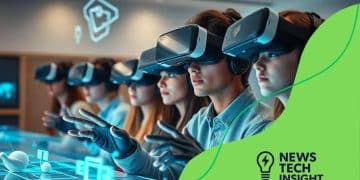
- Virtual Reality (VR) and Augmented Reality (AR): VR and AR technologies can create immersive and engaging learning experiences that can enhance student understanding and retention.
- Natural Language Processing (NLP): NLP can be used to analyze student writing and provide personalized feedback on grammar, style, and content.
- Predictive Analytics: Predictive analytics can be used to identify students and predict outcomes in learning, helping teachers to intervene early and provide support.
There has never been, and will never be, a time like now. The future will hold new opportunities for advancing our education of tomorrow. With continuous development in the field, educators can also improve.
Getting Started with AI-Powered Personalized Education
For schools and educators looking to implement AI-powered personalized education, there are several steps they can take to get started.
It is important to carefully evaluate different adaptive learning platforms and choose one that aligns with their specific needs and goals.
Key Steps for Implementation
Successful implementation of AI in education requires careful planning and execution. Some key steps include:
- Pilot Programs: Start with a small-scale pilot program to test the effectiveness of AI-powered personalized education in a specific subject or grade level.
- Teacher Training: Provide teachers with the training and support they need to use adaptive learning platforms effectively.
- Data Analysis: Track student progress and analyze data to identify areas where the program can be improved
These approaches will help improve personalized education and create an enriched learning environment, that produces significant results.
| Key Point | Brief Description |
|---|---|
| 💡 Personalized Learning | Tailors education to individual student needs. |
| 📈 Outcome Improvement | Aims for a 12% boost in student results. |
| 🤖 Adaptive Platforms | Uses AI to adjust difficulty based on student progress. |
| 🔒 Data Privacy | Emphasizes secure and ethical use of student data. |
How does AI personalize education?
AI algorithms analyze student performance to tailor content difficulty and delivery, providing a customized learning path for each individual.
Adaptive learning platforms are software systems that use AI to adjust the learning experience based on a student’s real-time performance and understanding.
AI can identify knowledge gaps, provide targeted instruction, and offer personalized feedback, leading to improved comprehension and retention.
Challenges include data privacy concerns, the need for teacher training, and ensuring equitable access to technology and resources.
No, AI is intended to augment teachers’ capabilities by automating tasks and providing insights, allowing them to focus on personalized student support.
Conclusion
AI-powered personalized education holds immense potential to transform the way students learn and improve their academic outcomes. While challenges exist that should be taken into account, the benefits of personalized learning are clear. By leveraging the power of AI, educators can create a more engaging, effective, and equitable learning environment for all students.