AI in Software Reviews: Redefining Trust & Transparency by 2026

In an increasingly digital world, software is the backbone of almost every industry and personal endeavor. From productivity tools to entertainment applications, choosing the right software can significantly impact efficiency, security, and satisfaction. For decades, users have relied on software reviews to guide their decisions, but the traditional review landscape has often been fraught with challenges: fake reviews, biased opinions, and an overwhelming volume of information. However, the dawn of Artificial Intelligence (AI) and Machine Learning (ML) is rapidly reshaping this ecosystem. By 2026, the integration of AI software reviews will not just be a trend; it will be the standard, fundamentally redefining trust and transparency in how we evaluate software.
The Current State of Software Reviews: A Pre-AI Landscape
Before delving into the transformative power of AI, it’s crucial to understand the limitations of the conventional software review system. Historically, software reviews have been a mixed bag. While some genuinely offer valuable insights, others suffer from a lack of credibility. The sheer volume of reviews for popular software can be daunting, making it difficult for users to discern authentic feedback from promotional content or malicious attacks. Companies often grapple with managing their online reputation, combating fake reviews, and extracting actionable insights from unstructured text data.
Challenges Faced by Users and Developers:
- Information Overload: Thousands of reviews can make it impossible for users to get a clear picture without spending hours sifting through them.
- Fake Reviews and Bots: The proliferation of fabricated reviews, both positive and negative, erodes trust and misleads potential users.
- Bias and Subjectivity: Human reviews are inherently subjective, influenced by personal experiences, expectations, and even mood.
- Lack of Granularity: Traditional reviews often lack the structured data needed to compare specific features or performance metrics across different software solutions.
- Slow Feedback Loops for Developers: Manually analyzing reviews for product improvement insights is time-consuming and often reactive rather than proactive.
- Reviewer Expertise: Not all reviewers possess the technical knowledge to provide truly informed feedback, leading to potentially misleading advice.
These challenges highlight a critical need for a more sophisticated approach, one that can process vast amounts of data, identify patterns, and deliver objective, trustworthy insights. This is precisely where AI and Machine Learning step in, promising a future where AI software reviews become the cornerstone of informed decision-making.
The Rise of AI and Machine Learning in Review Analysis
The application of AI and ML in analyzing user-generated content, especially reviews, is not entirely new. Sentiment analysis tools have been around for a while, but the advancements in natural language processing (NLP), deep learning, and predictive analytics are pushing the boundaries of what’s possible. By 2026, these technologies will be integrated into nearly every major review platform, fundamentally altering how we perceive and utilize software feedback.
How AI is Transforming Review Analysis:
- Advanced Sentiment Analysis: Beyond merely classifying reviews as positive, negative, or neutral, AI can now understand the nuance, intensity, and specific aspects of sentiment. It can differentiate between sarcasm, irony, and genuine praise or criticism, providing a much richer understanding of user feelings.
- Fake Review Detection: Machine learning algorithms are becoming incredibly adept at identifying patterns indicative of fake reviews. This includes analyzing review frequency, reviewer history, linguistic anomalies, IP addresses, and even behavioral patterns that deviate from genuine user activity. This is a game-changer for enhancing the credibility of AI software reviews.
- Feature Extraction and Topic Modeling: AI can automatically identify key features or topics discussed within reviews, allowing users to quickly see what aspects of a software product are frequently praised or criticized. This moves beyond generic ratings to specific, actionable insights.
- Summarization and Synthesis: Instead of sifting through thousands of individual comments, AI can generate concise summaries of common themes, pros, and cons, saving users immense time and effort. It can synthesize information from diverse sources to present a holistic view.
- Personalized Recommendations: By understanding a user’s past preferences, usage patterns, and specific needs, AI can tailor software recommendations based on aggregated, intelligent review data, making the selection process more efficient and relevant.
- Cross-Platform Data Integration: AI can pull and analyze review data from various sources – app stores, forums, social media, specialized review sites – to create a comprehensive and unbiased picture of a software’s performance and user reception.
Redefining Trust through AI-Powered Verification
Trust is the bedrock of any review system, and AI is poised to rebuild it on a stronger foundation. The ability of ML algorithms to detect and filter out fraudulent reviews is perhaps the most significant contribution to this renewed trust. Imagine a world where you can be reasonably certain that the reviews you read are from actual users with genuine experiences.
Mechanisms for Trust Reinforcement:
- Behavioral Pattern Analysis: AI systems learn what genuine user behavior looks like. Any deviation – such as sudden spikes in reviews from new accounts, repetitive phrasing, or reviews posted in quick succession – can flag a review for further scrutiny.
- Network Analysis: AI can analyze reviewer networks to identify suspicious clusters of accounts that might be coordinating to post fake reviews. This includes looking at shared IP addresses, device fingerprints, or unusual linking patterns.
- Linguistic Fingerprinting: Advanced NLP can identify subtle linguistic cues that differentiate authentic human writing from AI-generated text or coordinated fake review campaigns. This might include analyzing sentence structure, vocabulary diversity, and emotional tone.
- Historical Data Cross-Referencing: By comparing current reviews against a vast database of historical, verified reviews, AI can identify inconsistencies or anomalies that suggest deception.
- Verified User Status: While not solely an AI feature, AI can enhance systems that prioritize reviews from verified purchasers or users, adding an extra layer of credibility.
These sophisticated verification methods mean that by 2026, platforms offering AI software reviews will be significantly more reliable than their predecessors. Users will gain confidence that the feedback they are consuming is legitimate, leading to better purchasing decisions and a healthier software ecosystem.
Enhancing Transparency with Machine Learning Insights
Transparency goes hand-in-hand with trust. AI and ML don’t just filter out the bad; they also illuminate the good and the areas for improvement in a clear, accessible manner. This enhanced transparency benefits both users seeking software and developers striving to build better products.
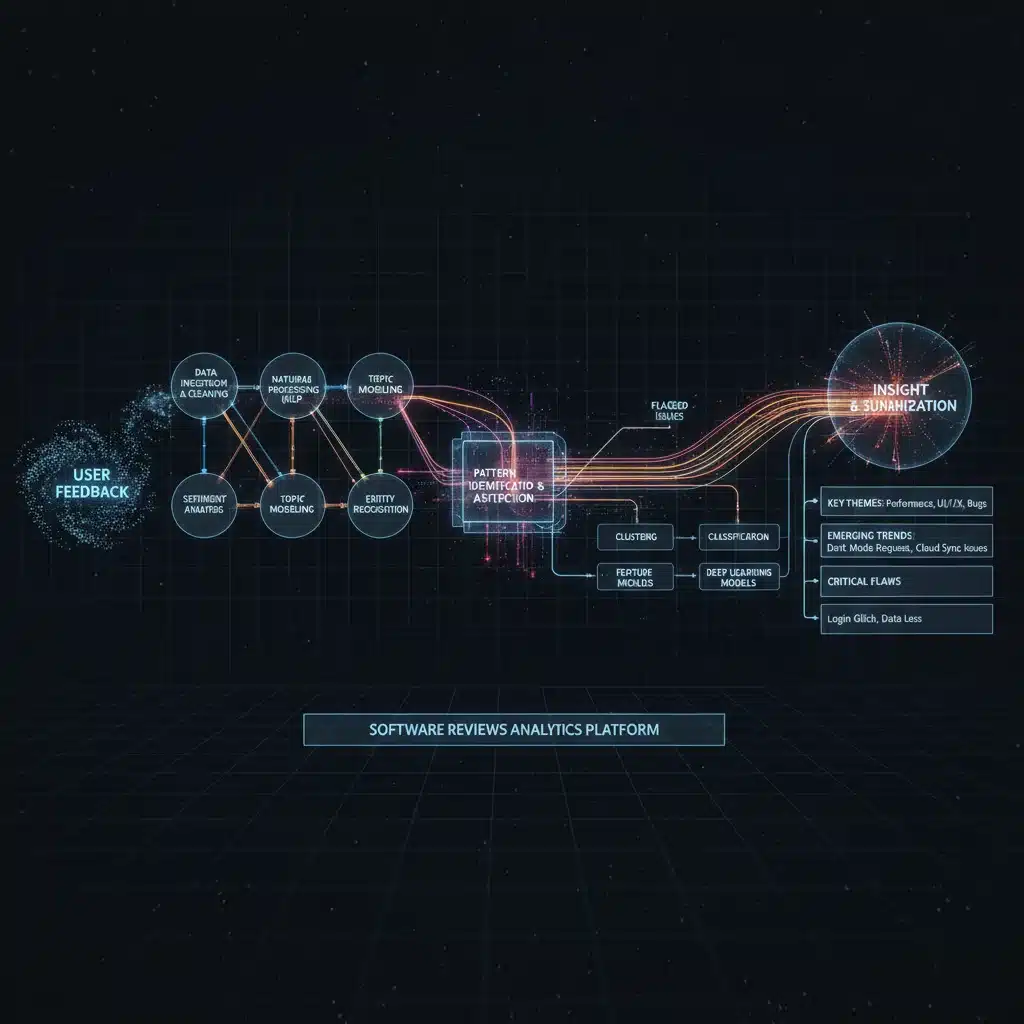
Pillars of AI-Driven Transparency:
- Granular Feature Analysis: Instead of generic ratings, AI can break down a software’s performance by specific features. Users can see, for example, that ‘Customer Support’ has an average rating of 4.5 stars, while ‘User Interface’ scores 3.2 stars, providing detailed insights.
- Comparative Analysis: AI can easily compare different software products based on a multitude of criteria extracted from reviews. This allows for side-by-side comparisons of features, performance, pricing, and user satisfaction, all derived from aggregated review data.
- Trend Identification: ML algorithms can spot emerging trends in user feedback, identifying new bugs, popular feature requests, or shifts in user sentiment over time. This offers a dynamic and up-to-date view of software performance.
- Bias Detection and Mitigation: AI can help identify and, to some extent, mitigate human biases present in reviews. For instance, it can flag reviews that show extreme emotional language without concrete examples or those that appear to be overly influenced by a specific event.
- Explainable AI (XAI) for Review Summaries: The future of AI software reviews will likely include XAI, where the AI not only provides a summary or rating but also explains why it arrived at that conclusion, citing relevant snippets from reviews or identified patterns. This adds another layer of transparency to the AI’s own analytical process.
- Developer Feedback Loop: For developers, AI-powered review analysis means immediate, actionable insights into user pain points and desires. This allows for more responsive development cycles, leading to better software and happier users.
By 2026, the opaque nature of traditional reviews will largely be a thing of the past. Users will have access to a wealth of transparent, data-driven insights, making the process of choosing software far more informed and less reliant on guesswork.
The Ethical Considerations and Challenges Ahead
While the promise of AI software reviews is immense, it’s crucial to acknowledge the ethical considerations and challenges that come with such powerful technology. As AI becomes more sophisticated, so do the methods of those seeking to manipulate it.
Key Ethical and Technical Challenges:
- Adversarial AI: Just as AI learns to detect fake reviews, malicious actors will use AI to generate more sophisticated, undetectable fake reviews. This creates an ongoing arms race between AI detection and AI generation.
- Algorithmic Bias: If the training data for AI models is biased (e.g., skewed towards a certain demographic or type of software), the AI’s analysis and recommendations can perpetuate or even amplify those biases. Ensuring diverse and representative training data is paramount.
- Privacy Concerns: Analyzing vast amounts of user-generated content raises questions about data privacy and how personal information is handled. Robust privacy protocols are essential.
- Over-reliance on AI: While AI is powerful, it’s not infallible. An over-reliance on AI-generated summaries or ratings without critical human oversight could lead to missed nuances or misinterpretations.
- Transparency of AI’s Own Process: For AI to truly foster transparency in reviews, its own decision-making process needs to be as transparent as possible. Users need to understand how the AI arrived at its conclusions.
- Maintaining Human Element: The subjective human experience, while sometimes biased, also offers unique perspectives. The challenge is to integrate AI without completely eliminating the valuable qualitative aspects of human reviews.
Addressing these challenges will require continuous innovation, robust ethical guidelines, and collaboration between AI developers, platform providers, and regulatory bodies. The goal is to harness AI’s power responsibly to create a review ecosystem that is both intelligent and ethical.
The Future User Experience: Navigating AI Software Reviews in 2026
Imagine logging onto a software review platform in 2026. The experience will be vastly different from today. Instead of a scrolling list of individual reviews, you’ll be greeted by an intelligent dashboard powered by AI software reviews.

A Glimpse into the Future:
- Interactive AI Summaries: You won’t just see an average star rating. You’ll see an interactive summary generated by AI, highlighting the top 3 pros and cons, common use cases, and typical user demographics for whom the software is best suited.
- Feature-Specific Deep Dives: Curious about a specific feature like ‘integration capabilities’ or ‘mobile accessibility’? A click will instantly show you an AI-generated summary of reviews pertaining only to that feature, along with sentiment scores and direct quotes from users.
- Credibility Score for Reviews: Each review might come with an AI-generated ‘credibility score,’ indicating the likelihood of it being genuine, based on various behavioral and linguistic analyses. This empowers users to prioritize trustworthy feedback.
- Predictive Insights: AI might even offer predictive insights, such as ‘Users with similar profiles to yours found this feature particularly useful’ or ‘This software is projected to receive a major update addressing common complaints within the next quarter.’
- Voice and Conversational AI: You might be able to simply ask a conversational AI assistant, ‘What’s the best project management software for a small team focusing on agile development, with excellent customer support?’ and receive a highly tailored, data-backed recommendation.
- Dynamic Review Aggregation: Reviews will no longer be static. AI will continuously update and re-evaluate review data, providing real-time insights into software performance and user sentiment changes.
This enhanced user experience will not only save time but also dramatically increase the confidence with which users select software. The guessing game will be replaced by data-driven certainty, making the digital landscape more navigable and reliable.
Impact on Software Developers and Businesses
The transformation brought by AI software reviews isn’t just for end-users; it represents a paradigm shift for software developers and businesses too. The ability to quickly and accurately glean insights from user feedback is invaluable.
Benefits for Developers and Businesses:
- Accelerated Product Development: AI provides instant, categorized feedback on features, bugs, and user satisfaction, allowing developers to prioritize fixes and new features more effectively and rapidly.
- Improved Product-Market Fit: By understanding what users genuinely like and dislike, businesses can refine their products to better meet market demands, reducing development waste and increasing customer satisfaction.
- Enhanced Reputation Management: AI tools can proactively identify emerging negative sentiment or potential PR crises, allowing companies to respond swiftly and strategically, protecting their brand image.
- Competitive Intelligence: Analyzing AI-powered reviews of competitors’ products can reveal their strengths and weaknesses, providing valuable intelligence for strategic planning and differentiation.
- Personalized Marketing and Sales: Insights from AI-analyzed reviews can inform marketing campaigns, allowing businesses to highlight features that resonate most with specific customer segments.
- Better Customer Support: AI can identify common customer support issues mentioned in reviews, enabling companies to create better FAQs, tutorials, or even train support staff on recurring problems.
In essence, AI turns the vast, unstructured ocean of user feedback into a structured, actionable intelligence dashboard. This empowers businesses to be more customer-centric, agile, and ultimately, more successful in a competitive market.
Conclusion: The Dawn of a Transparent Software Ecosystem
The evolution of software reviews, driven by AI and Machine Learning, marks a pivotal moment in the digital age. By 2026, the traditional challenges of information overload, fake reviews, and bias will largely be mitigated by sophisticated AI algorithms designed to enhance credibility and provide granular insights. AI software reviews will become synonymous with trust and transparency, allowing users to make highly informed decisions with unprecedented confidence.
This transformation is not without its challenges, particularly concerning ethical AI development and the ongoing battle against sophisticated manipulation. However, the benefits of a more trustworthy and transparent review ecosystem far outweigh these hurdles. As AI continues to refine its capabilities, we can look forward to a future where choosing the right software is no longer a gamble but a well-informed, data-driven process, fostering innovation and user satisfaction across the board.