AI in Supply Chains 2026: 20% Cost Reduction for US Manufacturers
Artificial intelligence is poised to drive a 20% cost reduction for US manufacturers by 2026 by optimizing supply chains through advanced predictive analytics, autonomous logistics, and intelligent inventory management, reshaping operational efficiency.
The landscape of US manufacturing is on the cusp of a profound transformation, with artificial intelligence emerging as the pivotal force. By 2026, the strategic implementation of AI is projected to achieve significant cost reductions, fundamentally reshaping how goods are produced, moved, and delivered. This shift towards AI supply chain optimization isn’t merely an upgrade; it’s a strategic imperative for manufacturers aiming to stay competitive and resilient in an increasingly complex global market.
The imperative for AI in US manufacturing supply chains
US manufacturers face a myriad of challenges, from fluctuating raw material costs to labor shortages and geopolitical instabilities. Traditional supply chain management, often reactive and siloed, struggles to keep pace with these dynamics. This is where AI steps in, offering a proactive and integrated approach to anticipate disruptions and optimize operations.
Addressing volatility and complexity
The modern supply chain is a web of intricate dependencies. AI’s ability to process vast amounts of data—from weather patterns and global news to market demand and supplier performance—enables manufacturers to gain unprecedented visibility and foresight. This predictive capability is crucial for mitigating risks before they escalate.
- Demand forecasting: AI algorithms analyze historical sales data, promotional activities, economic indicators, and even social media trends to predict future demand with remarkable accuracy. This minimizes overstocking and understocking.
- Risk mitigation: By monitoring global events and supplier health, AI can identify potential disruptions like natural disasters or financial distress, allowing companies to activate contingency plans swiftly.
- Inventory optimization: AI dynamically adjusts inventory levels across multiple warehouses, ensuring optimal stock without tying up excessive capital or risking stockouts.
The integration of AI transforms the supply chain from a cost center into a strategic asset. By moving beyond reactive problem-solving, manufacturers can build more resilient, efficient, and ultimately more profitable operations, laying the groundwork for sustainable growth in the coming years.
Predictive analytics: the cornerstone of AI-driven savings
At the heart of AI’s ability to reduce costs is its prowess in predictive analytics. This isn’t just about forecasting; it’s about understanding future scenarios with a level of detail and accuracy previously unattainable. For US manufacturers, this translates directly into tangible savings across various operational facets.
From historical data to future insights
Predictive analytics leverages machine learning models to sift through historical data patterns, identifying correlations and causal relationships that human analysis might miss. It then applies these learnings to current data, projecting future outcomes with a high degree of confidence. This capability is particularly impactful for managing complex supply chain variables.
- Maintenance predictions: AI can predict when machinery or vehicles in the logistics network are likely to fail, enabling proactive maintenance rather than costly emergency repairs. This minimizes downtime and extends asset lifespans.
- Quality control: By analyzing production data in real-time, AI can identify anomalies that indicate potential quality issues, preventing defects from propagating through the supply chain and reducing rework or recall costs.
- Logistics route optimization: AI continuously analyzes traffic, weather, and delivery schedules to recommend the most efficient routes, reducing fuel consumption, delivery times, and labor costs.
The power of predictive analytics lies in its ability to transform uncertainty into actionable intelligence. Manufacturers can make data-driven decisions that not only prevent losses but also uncover new opportunities for efficiency, directly contributing to the ambitious goal of a 20% cost reduction by 2026.
Automating logistics and warehousing for efficiency
Beyond predictive insights, AI profoundly impacts the physical aspects of the supply chain through automation. From intelligent warehousing to autonomous transportation, these advancements are stripping away inefficiencies and reducing labor-intensive tasks, thereby driving down operational costs significantly.
The rise of intelligent automation
Automation, powered by AI, is evolving beyond simple robotics. It now encompasses systems that can learn, adapt, and make decisions, creating truly intelligent logistics networks. This shift is particularly vital for US manufacturers looking to optimize their internal and external movements of goods.
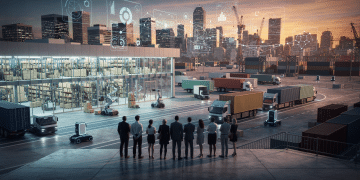
Warehouses are becoming smarter, with AI-driven robots managing inventory, picking orders, and optimizing storage layouts. This not only speeds up operations but also reduces errors and labor costs. Automated guided vehicles (AGVs) and autonomous mobile robots (AMRs) are commonplace, working alongside human employees to create highly efficient environments. These systems can dynamically adjust to changing order volumes and inventory profiles, ensuring maximum throughput.
On the transportation front, AI is enabling the gradual introduction of autonomous vehicles for last-mile delivery and long-haul logistics. While fully autonomous fleets are still some years away, AI-powered systems are already optimizing truck loading, managing driver schedules, and even predicting maintenance needs for vehicles. This reduces fuel consumption, labor costs, and the likelihood of human error.

The integration of AI into logistics and warehousing operations represents a monumental leap forward in efficiency. By automating repetitive and complex tasks, manufacturers can reallocate human resources to more strategic roles, further enhancing productivity and driving towards the targeted cost savings.
Enhancing supplier relationships and procurement with AI
The effectiveness of a supply chain hinges significantly on the strength of its supplier relationships and the efficiency of its procurement processes. AI offers powerful tools to enhance both, ensuring manufacturers acquire the right materials at the best prices, with minimal risk.
Strategic sourcing through data
Traditional procurement often involves manual negotiation and limited visibility into supplier performance. AI transforms this by providing comprehensive, data-driven insights into supplier capabilities, risks, and pricing trends.
- Supplier performance monitoring: AI continuously evaluates suppliers based on factors like on-time delivery, quality, compliance, and responsiveness. This allows manufacturers to identify high-performing partners and address issues with underperforming ones proactively.
- Contract analysis: AI can review complex contracts, identifying key clauses, potential risks, and areas for negotiation, ensuring favorable terms and compliance.
- Spend analysis: By analyzing procurement data, AI identifies spending patterns, potential areas for consolidation, and opportunities to leverage buying power, leading to significant cost reductions in raw materials and components.
Beyond mere cost savings, AI fosters more resilient and collaborative supplier ecosystems. By providing transparency and data-backed insights, manufacturers can build stronger, more strategic partnerships, which are crucial for navigating future disruptions and maintaining a competitive edge in the US market.
Real-time visibility and control: the digital twin advantage
Achieving a 20% cost reduction by 2026 demands not just optimization, but also unparalleled real-time visibility and control over every aspect of the supply chain. This is where the concept of a digital twin, powered by AI, becomes a game-changer for US manufacturers.
Mirroring the physical with the digital
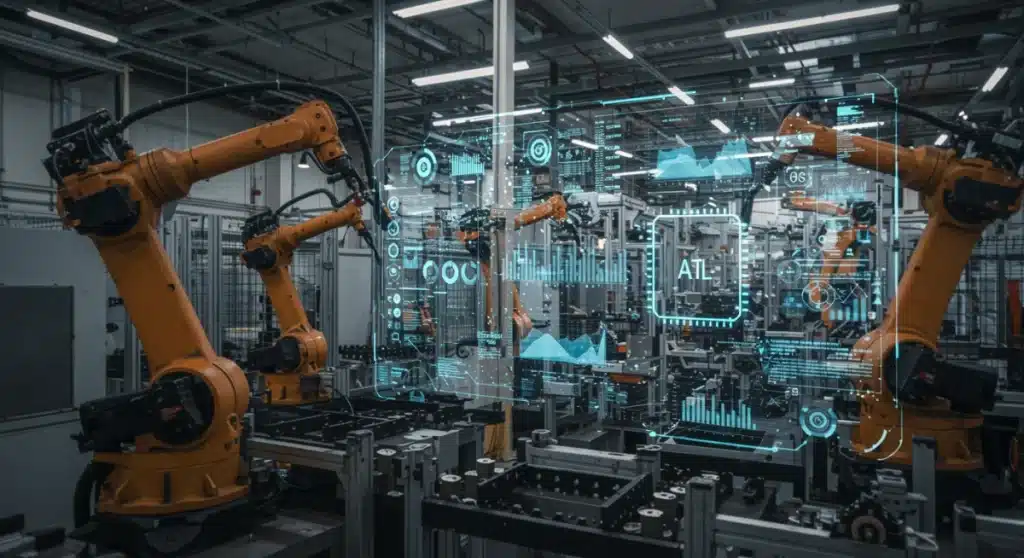
A digital twin is a virtual replica of a physical supply chain, from individual machines to entire networks. AI continuously feeds this digital model with real-time data from sensors, IoT devices, and enterprise systems, allowing manufacturers to simulate scenarios, predict outcomes, and manage operations with precision.
Imagine a manufacturer being able to see the exact location and condition of every product, every truck, and every machine in real-time. This level of granular visibility allows for immediate responses to issues, whether it’s rerouting a shipment due to unexpected traffic or adjusting production schedules based on a sudden surge in demand. The digital twin provides a sandbox for experimentation, allowing companies to test different strategies—like adding a new distribution center or changing a supplier—without physical risk.
Furthermore, AI-driven digital twins can identify bottlenecks before they impact operations, suggest optimal resource allocation, and even predict the impact of external factors like market shifts or regulatory changes. This proactive control minimizes waste, optimizes resource utilization, and prevents costly disruptions, directly contributing to the overarching goal of significant cost reduction.
The digital twin, fueled by AI, transforms supply chain management from a reactive process into a highly proactive and predictive one, giving US manufacturers the agility and insight needed to thrive in a dynamic global economy.
Overcoming implementation challenges and ensuring ROI
While the benefits of AI in supply chain optimization are compelling, realizing a 20% cost reduction by 2026 requires careful planning and execution. US manufacturers must address several key challenges to ensure a successful implementation and a strong return on investment.
Navigating the path to AI integration
Implementing AI is not merely a technological upgrade; it’s a strategic transformation that impacts people, processes, and culture. Successful adoption hinges on a holistic approach.
- Data quality and integration: AI models are only as good as the data they consume. Manufacturers must invest in cleaning, standardizing, and integrating data from disparate sources across their enterprise.
- Talent and skills gap: There’s a growing need for professionals skilled in AI, data science, and supply chain analytics. Companies should invest in upskilling their existing workforce or acquiring new talent.
- Phased implementation: Instead of a ‘big bang’ approach, manufacturers should consider a phased implementation, starting with pilot projects in specific areas like demand forecasting or inventory management, demonstrating value, and then scaling up.
- Ethical considerations: Ensuring fairness, transparency, and accountability in AI decision-making is crucial, especially when dealing with worker scheduling or supplier selection.
By addressing these challenges head-on, US manufacturers can unlock the full potential of AI, transforming their supply chains into highly efficient, resilient, and cost-effective operations. The journey to a 20% cost reduction by 2026 is ambitious, but with strategic AI integration, it is an entirely achievable goal that will redefine manufacturing competitiveness.
| Key Optimization Area | AI’s Impact on Cost Reduction |
|---|---|
| Predictive Demand Forecasting | Minimizes overstocking and understocking, reducing carrying costs and lost sales. |
| Automated Logistics & Warehousing | Reduces labor costs, operational errors, fuel consumption, and delivery times. |
| Supplier Relationship Management | Optimizes procurement, identifies cost-saving opportunities, and mitigates supply risks. |
| Real-time Visibility (Digital Twin) | Enables proactive issue resolution, reduces waste, and optimizes resource allocation. |
Frequently asked questions about AI in supply chain optimization
AI reduces inventory costs by providing highly accurate demand forecasts, minimizing both excess stock and stockouts. It analyzes various data points to predict optimal inventory levels, reducing carrying costs, obsolescence, and the need for expedited shipping, resulting in significant savings for US manufacturers.
Key barriers include poor data quality, a lack of skilled AI professionals, the complexity of integrating AI with legacy systems, and initial investment costs. Overcoming these requires strategic planning, data governance, workforce training, and a phased implementation approach to ensure successful integration.
AI enhances resilience by predicting potential disruptions (e.g., weather, geopolitical events, supplier failures) and recommending alternative strategies. It provides real-time visibility across the entire network, allowing for quick adaptation and rerouting of logistics or sourcing, minimizing the impact of unforeseen events on operations.
Absolutely. While large enterprises may have more resources, cloud-based AI solutions and specialized platforms are making AI more accessible and affordable for SMEs. These solutions offer scalable benefits in areas like demand forecasting, inventory management, and logistics optimization, leveling the playing field.
Achieving a 20% cost reduction is an ambitious but realistic goal by 2026 for US manufacturers. Initial benefits can be seen within 6-12 months of implementation, with continuous improvements leading to the target within 2-3 years as AI models mature and integration deepens across the supply chain.
Conclusion
The journey towards optimizing supply chains with AI in 2026 is not just about adopting new technology; it’s about fundamentally rethinking how US manufacturers operate. The promise of a 20% cost reduction is a powerful motivator, driving a shift towards more intelligent, resilient, and efficient production and distribution networks. By embracing predictive analytics, intelligent automation, and enhanced visibility, manufacturers can navigate the complexities of the modern global market with unprecedented agility. While challenges exist, the strategic integration of AI offers a clear pathway to sustainable competitive advantage and a more prosperous future for American industry.