AI Supply Chains: Cut Logistics Costs by 12% in US by 2025

AI-enhanced supply chains are poised to revolutionize logistics for US businesses, potentially reducing costs by 12% by 2025 through improved efficiency, predictive analytics, and automation across various supply chain operations.
Discover how AI-enhanced supply chains: reducing logistics costs by 12% for US businesses in 2025 is no longer a futuristic concept, but a rapidly approaching reality, transforming how goods move and businesses operate within the United States.
The Rise of AI in Supply Chain Management
Artificial intelligence (AI) is rapidly transforming various industries, and supply chain management is no exception. The integration of AI into supply chains is driving unprecedented levels of efficiency, accuracy, and cost savings. Let’s delve into the key aspects of this technological revolution.
The impact of AI stems from its ability to analyze vast amounts of data, identify patterns, and make intelligent decisions in real-time. This capability is particularly valuable in supply chains, which are inherently complex and generate enormous datasets encompassing everything from supplier performance to demand forecasts and transportation logistics.
Benefits of AI Integration
Integrating AI into supply chains offers a wide array of benefits, improving various aspects of the process. Here are some key advantages:
- Improved Demand Forecasting: AI algorithms can analyze historical data, market trends, and external factors to predict future demand with greater accuracy, minimizing inventory costs and stockouts.
- Optimized Logistics: AI can optimize transportation routes, warehouse operations, and delivery schedules, reducing transportation costs and improving delivery times.
- Enhanced Risk Management: AI can identify potential disruptions in the supply chain, such as supplier bankruptcies or natural disasters, allowing businesses to take proactive measures.
- Increased Operational Efficiency: AI can automate repetitive tasks, freeing up human employees to focus on more strategic activities and improving overall productivity.
In conclusion, the integration of AI in supply chain management represents a significant step toward more efficient, resilient, and cost-effective operations. As AI technology continues to evolve, its impact on supply chains will only become more profound, enabling businesses to thrive in an increasingly competitive global market.
Predictive Analytics: Forecasting the Future of Logistics
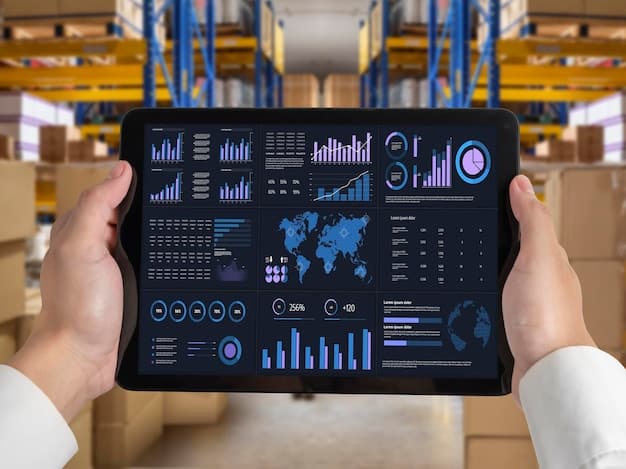
Predictive analytics, powered by AI, lies at the heart of the transformation of supply chain management. By leveraging machine learning algorithms, predictive analytics can forecast future events and trends, allowing businesses to make proactive decisions and optimize their operations. The impact of this technology on logistics is profound.
Unlike traditional forecasting methods that rely on historical data and simple statistical models, AI-driven predictive analytics can incorporate vast amounts of structured and unstructured data from various sources, including social media, weather forecasts, and economic indicators. This holistic approach provides a more accurate and comprehensive view of future demand and potential disruptions.
Use Cases in Logistics
Predictive analytics unlocks several capabilities for logistics professionals. Here are a few key use cases:
- Demand Forecasting: Accurately predict future demand for products, enabling businesses to optimize inventory levels, reduce stockouts, and minimize excess inventory costs.
- Predictive Maintenance: Anticipate equipment failures and schedule maintenance proactively, reducing downtime and improving asset utilization.
- Route Optimization: Optimize transportation routes in real-time based on traffic conditions, weather forecasts, and delivery schedules, reducing transportation costs and improving delivery times.
- Risk Management: Identify potential disruptions in the supply chain, such as supplier bankruptcies or natural disasters, allowing businesses to take proactive measures to mitigate risks.
In summary, predictive analytics is revolutionizing logistics operations by providing businesses with the ability to anticipate future events and make data-driven decisions. As AI technology continues to advance, predictive analytics will become even more powerful, enabling businesses to build more resilient, efficient, and cost-effective supply chains.
Automation and Robotics: Reshaping Warehouse Operations
Automation and robotics are playing an increasingly critical role in optimizing warehouse operations and driving significant cost savings. The integration of these technologies enables businesses to streamline processes, improve efficiency, and reduce labor costs. The impact is transformative.
Traditional warehouse operations are often labor-intensive and prone to errors. Automation and robotics address these challenges by automating repetitive tasks, such as picking, packing, and sorting, and by providing greater accuracy and speed. These technologies also enable warehouses to operate more efficiently in demanding environments, such as cold storage facilities or hazardous materials handling, where human workers may face safety risks.
Key Automation Technologies
Several automation technologies are transforming warehouse operations. Here are some prominent examples:
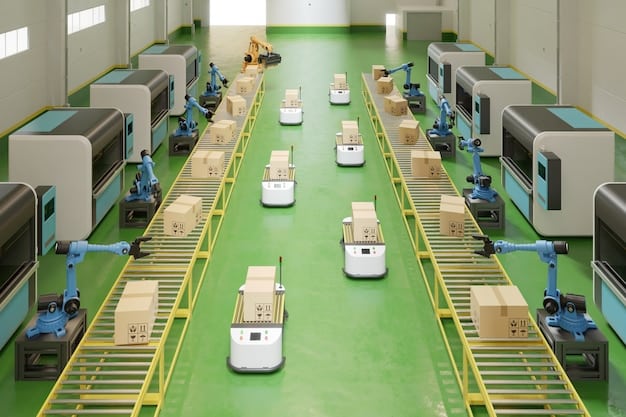
- Automated Guided Vehicles (AGVs): These driverless vehicles transport goods within the warehouse, reducing labor costs and improving safety.
- Robotic Picking Systems: These robots pick and pack items from shelves, improving speed and accuracy compared to manual picking.
- Automated Sorting Systems: These systems automatically sort packages based on destination, reducing labor costs and improving delivery times.
- Drones: Drones are being used for inventory management, conducting inspections, and even delivering small packages within the warehouse, improving efficiency and reducing costs.
In conclusion, automation and robotics are reshaping warehouse operations by streamlining processes, improving efficiency, and reducing costs. As these technologies continue to evolve, they will become even more prevalent in warehouses across the United States, transforming the way goods are stored, managed, and shipped.
Real-Time Visibility: Tracking Shipments End-to-End
Real-time visibility is a crucial component of AI-enhanced supply chains, providing businesses with end-to-end tracking of shipments and enabling them to respond quickly to disruptions. The ability to monitor goods in transit and have insights into their status and location is immensely valuable.
Traditional supply chains often lack real-time visibility, making it difficult to track shipments and identify potential delays. This lack of transparency can lead to inefficiencies, increased costs, and customer dissatisfaction. AI-powered real-time visibility solutions address these challenges by leveraging IoT (Internet of Things) sensors, GPS tracking, and machine learning algorithms to provide continuous monitoring of shipments from origin to destination.
Benefits of Real-Time Tracking
Real-time visibility delivers several key benefits for businesses managing complex supply chains:
Data-Driven Insights
This approach provides opportunities to gather and analyze data, leading to:
- Improved Supply Chain Efficiency: By tracking shipments in real-time, businesses can identify bottlenecks and inefficiencies in the supply chain and take corrective actions.
- Reduced Transportation Costs: Real-time visibility enables businesses to optimize transportation routes and delivery schedules, minimizing fuel consumption and improving delivery times.
- Enhanced Customer Service: By providing customers with real-time tracking information, businesses can improve customer satisfaction and build stronger relationships.
- Proactive Disruption Management: Real-time visibility enables businesses to identify potential disruptions in the supply chain, such as weather delays or port congestions, and take proactive measures to mitigate risks.
Overall, real-time visibility is transforming supply chain management by providing businesses with the ability to track shipments end-to-end, respond quickly to disruptions, and improve efficiency, reduce costs, and enhance customer service. As AI technology continues to evolve, real-time visibility solutions will become even more sophisticated, providing businesses with deeper insights into their supply chain operations.
The Impact on US Businesses: A 12% Cost Reduction in 2025
The adoption of AI-enhanced supply chains is projected to have a significant impact on US businesses, with estimates suggesting a potential 12% reduction in logistics costs by 2025. This substantial cost saving is driven by the various benefits of AI integration, including improved efficiency, optimized logistics, and enhanced risk management.
The increasing adoption of AI in supply chain management reflects a growing recognition among US businesses of the transformative potential of this technology. Companies are investing in AI-powered solutions to address challenges such as rising transportation costs, increasing customer expectations, and the need for greater resilience in the face of global disruptions.
Strategies
To achieve this significant cost reduction, US businesses are focusing on several key strategies:
- Investing in AI-Powered Solutions: Businesses are investing in AI-powered solutions for demand forecasting, logistics optimization, warehouse automation, and real-time visibility to improve efficiency and reduce costs.
- Building Data-Driven Cultures: Companies are building data-driven cultures by investing in data analytics tools, training employees on data analysis techniques, and fostering collaboration between data scientists and domain experts.
- Forming Strategic Partnerships: Businesses are forming strategic partnerships with AI technology providers, logistics service providers, and other supply chain stakeholders to leverage expertise and resources.
In conclusion, the projected 12% reduction in logistics costs for US businesses by 2025 is a testament to the transformative potential of AI-enhanced supply chains. By embracing AI technologies, building data-driven cultures, and forming strategic partnerships, US businesses can unlock significant cost savings, improve efficiency, and gain a competitive edge in an increasingly globalized market.
Challenges and Considerations for AI Implementation
While the benefits of AI implementation in supply chains are undeniable, US businesses need to be aware of the challenges and considerations associated with deploying these technologies. Overcoming these obstacles is crucial for successful AI adoption and maximizing the return on investment.
One of the primary challenges is the lack of readily available data. AI algorithms require vast amounts of high-quality data to train effectively and deliver accurate predictions. Businesses need to ensure that they have sufficient data available and that the data is clean, consistent, and relevant to their specific use cases. Another challenge is the shortage of skilled AI professionals.
Key Considerations
For successful implementation, companies should consider these points:
Here are some additional key considerations for AI implementation in supply chains:
- Data Privacy and Security: Businesses need to prioritize data privacy and security by implementing robust data governance policies and security measures to protect sensitive information.
- Integration with Existing Systems: Integrating AI-powered solutions with existing legacy systems can be complex and costly. Businesses need to carefully plan the integration process and ensure compatibility between different systems.
- Ethical Considerations: Businesses need to address ethical considerations related to AI implementation, such as bias in algorithms, job displacement, and the potential for unintended consequences.
Effectively addressing these challenges and considerations will allow US businesses to unlock the full potential of AI-enhanced supply chains and achieve substantial cost savings, improved efficiency, and greater resilience. As AI technology continues to evolve, businesses that embrace a proactive and strategic approach to AI implementation will be best positioned to thrive in the future.
| Key Aspect | Brief Description |
|---|---|
| 💡 AI in Supply Chains | AI usage boosts efficiency, accuracy, and cost savings by analyzing data and automating tasks. |
| 📈 Predictive Analytics | AI forecasts trends, optimizes inventory, and anticipates disruptions using machine learning. |
| 🤖 Automation in Warehouses | Robots and AGVs streamline processes, reduce labor costs, and improve warehouse efficiency. |
| 📍 Real-Time Visibility | Tracking shipments in real-time enables swift responses to disruptions and enhances supply chain management. |
FAQ Section
▼
AI uses algorithms to analyze historical data, market trends, and external factors, providing more accurate demand predictions to optimize inventory levels.
▼
Robots and automated systems can streamline picking, packing, sorting, and internal transport, improving speed and reducing errors in these key warehouse processes.
▼
Real-time tracking enables optimization of routes and delivery schedules, minimizing fuel consumption and improving delivery times, leading to transportation cost savings.
▼
Key challenges include the need for large data sets, integration with existing systems, and addressing ethical considerations related to privacy and potential job displacement.
▼
AI can identify potential disruptions, such as supplier issues or natural disasters, by analyzing data and alerting businesses to take proactive mitigation steps.
Conclusion
The integration of AI into supply chains presents a transformative opportunity for US businesses to reduce logistics costs by an estimated 12% by 2025. Embracing AI-powered solutions, building data-driven cultures, and addressing the associated challenges will be critical for companies seeking to optimize their supply chain operations and maintain a competitive edge in the evolving global market.