Cloud Security Best Practices: Keep Your Data Safe

Cloud security best practices are crucial for safeguarding sensitive data, ensuring compliance, and maintaining business continuity in an increasingly digital world by leveraging encryption, access controls, and continuous monitoring.
In today’s digital landscape, securing data in the cloud is paramount. The shift to cloud computing offers numerous benefits, but it also introduces unique security challenges. Understanding and implementing robust cloud security best practices is essential for protecting sensitive information and ensuring business continuity.
Understanding the Cloud Security Landscape
The cloud security landscape is constantly evolving, with new threats and vulnerabilities emerging regularly. It’s crucial to stay informed about the latest trends and challenges to effectively protect your data. Let’s delve into the core aspects of this landscape.
Shared Responsibility Model
One of the fundamental concepts in cloud security is the shared responsibility model. This model outlines the security responsibilities between the cloud provider and the customer. Understanding this division of labor is crucial for ensuring comprehensive security.
Common Cloud Security Threats
Identifying potential threats is the first step in mitigating them. Common cloud security threats include data breaches, malware infections, denial-of-service attacks, and misconfigurations. Each of these threats requires a specific approach to prevention and mitigation.
- Data Breaches: Unauthorized access to sensitive data stored in the cloud.
- Malware Infections: Malicious software infiltrating cloud environments.
- Denial-of-Service Attacks: Overwhelming cloud resources to disrupt services.
- Misconfigurations: Errors in cloud settings leading to security vulnerabilities.
The cloud security landscape is complex and dynamic, requiring constant vigilance and adaptation to new threats. By understanding the shared responsibility model and common threats, organizations can take proactive steps to secure their cloud environments.

Implementing Strong Access Controls
Access control forms the bedrock of cloud security. By carefully managing who can access what, organizations can dramatically reduce the risk of unauthorized access and data breaches. Here’s how to implement robust access controls.
Multi-Factor Authentication (MFA)
MFA adds an extra layer of security by requiring users to provide multiple forms of identification before granting access. This significantly reduces the risk of compromised credentials being used to gain unauthorized access.
Role-Based Access Control (RBAC)
RBAC assigns permissions based on a user’s role within the organization. This streamlines access management and ensures that users only have access to the resources they need to perform their job duties.
- Principle of Least Privilege: Granting users only the minimum level of access necessary.
- Regular Access Reviews: Periodically reviewing and updating access permissions.
- Strong Password Policies: Enforcing complex password requirements and regular password changes.
Strong access controls are essential for protecting sensitive data in the cloud. By implementing MFA, RBAC, and other best practices, organizations can significantly reduce the risk of unauthorized access and data breaches.
Data Encryption: Protecting Data at Rest and in Transit
Data encryption is a critical security measure that protects data both when it’s stored in the cloud (at rest) and when it’s being transmitted (in transit). By scrambling the data, encryption renders it unreadable to unauthorized parties.
Encryption keys are essential for both encrypting and decrypting your data, so make sure that they are properly safe-guarded. This means following industry-approved procedures and always making sure you are using strong security practices. Take time to develop a plan for security, because you do not want to lose or compromise these keys.
Encryption at Rest
Encryption at rest protects data stored in the cloud. This includes databases, file storage, and other forms of persistent storage. Using encryption at rest ensures that even if unauthorized access occurs, the data remains unreadable.
Encryption in transit safeguards data as it moves between systems and networks. This is particularly important when transmitting data over the internet. Using protocols like HTTPS and TLS ensures that data is encrypted during transmission.
- Key Management: Securely storing and managing encryption keys.
- Regular Key Rotation: Periodically changing encryption keys to reduce the risk of compromise.
- End-to-End Encryption: Encrypting data from source to destination, ensuring complete protection.
Data encryption is a fundamental security measure that protects data both at rest and in transit. By implementing robust encryption practices, organizations can significantly reduce the risk of data breaches and ensure the confidentiality of their data.
Network Security: Securing Your Cloud Infrastructure
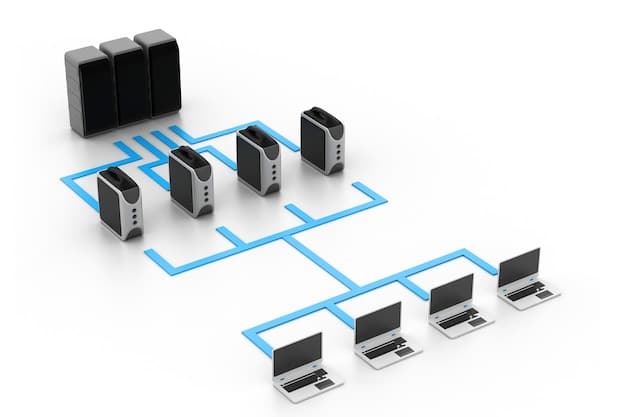
Network security in the cloud is essential for protecting your infrastructure from unauthorized access and attacks. Implementing robust network security measures helps to create a secure perimeter around your cloud resources.
Virtual Private Clouds (VPCs)
VPCs provide a private and isolated network environment within the cloud. This allows organizations to control network access and implement security policies tailored to their specific needs.
Security Groups and Firewalls
Security groups and firewalls control network traffic, allowing only authorized connections and blocking unauthorized ones. These are essential for preventing unauthorized access to cloud resources.
- Intrusion Detection and Prevention Systems (IDPS): Monitoring network traffic for malicious activity.
- Regular Security Audits: Periodically reviewing network security configurations.
- Network Segmentation: Dividing the network into isolated segments to limit the impact of breaches.
Network security is vital for maintaining a secure cloud environment. By implementing VPCs, security groups, firewalls, and other best practices, organizations can protect their cloud infrastructure from unauthorized access and attacks.
Monitoring and Logging: Detecting and Responding to Security Incidents
Continuous monitoring and logging are essential for detecting and responding to security incidents in the cloud. By collecting and analyzing logs, organizations can identify suspicious activity and take timely action to mitigate potential threats.
Centralized Logging
Centralized logging involves collecting logs from all cloud resources into a central repository. This makes it easier to analyze logs and identify patterns of suspicious activity.
Security Information and Event Management (SIEM)
SIEM systems aggregate and analyze security logs to detect potential threats and trigger alerts. These systems provide real-time visibility into the security posture of the cloud environment.
- Incident Response Plans: Having pre-defined procedures for responding to security incidents.
- Regular Security Drills: Practicing incident response procedures to ensure readiness.
- Threat Intelligence: Staying informed about the latest threats and vulnerabilities.
Continuous monitoring and logging are crucial for maintaining a secure cloud environment. By implementing centralized logging, SIEM systems, and incident response plans, organizations can detect and respond to security incidents promptly and effectively.
Compliance and Governance: Meeting Regulatory Requirements
Compliance and governance are essential for ensuring that cloud security practices align with regulatory requirements and industry standards. This helps organizations avoid penalties and maintain a strong security posture. Many regulations require you to keep regular backups of your information, be prepared to prove such backups and the security of your data.
Regulatory Compliance
Many industries are subject to specific regulatory requirements, such as HIPAA, PCI DSS, and GDPR. Organizations must ensure that their cloud security practices comply with these regulations.
Security Policies and Procedures
Developing and implementing clear security policies and procedures is essential for ensuring consistent security practices across the organization. These policies should outline roles, responsibilities, and security requirements.
- Regular Compliance Audits: Periodically assessing compliance with regulatory requirements.
- Data Residency: Ensuring that data is stored in compliance with data sovereignty laws.
- Vendor Risk Management: Assessing the security practices of third-party cloud providers.
Compliance and governance are essential for ensuring that cloud security practices align with regulatory requirements and industry standards. By implementing these practices, organizations can avoid penalties and maintain a strong security posture.
| Key Point | Brief Description |
|---|---|
| 🛡️ Access Controls | Implement MFA and RBAC to limit unauthorized access. |
| 🔒 Data Encryption | Encrypt data at rest and in transit to protect confidentiality. |
| 🌐 Network Security | Use VPCs and firewalls to secure the cloud infrastructure. |
| 🚨 Monitoring & Logging | Monitor logs to detect and respond to security incidents. |
FAQ
▼
The shared responsibility model defines the security roles of the cloud provider and the customer. The provider secures the cloud infrastructure, while the customer secures what they put in the cloud.
▼
MFA adds an extra layer of security by requiring multiple forms of verification, making it harder for attackers to gain unauthorized access even if they have stolen credentials.
▼
Data encryption protects data at rest and in transit by scrambling it so that it is unreadable to unauthorized parties, ensuring confidentiality and compliance with regulations.
▼
VPCs provide a private and isolated network within the cloud, allowing organizations to control network access and implement security policies tailored to their specific needs, enhancing security.
▼
Continuous monitoring and logging help detect suspicious activity and security incidents in real-time, allowing organizations to respond quickly to mitigate potential threats and maintain a strong security posture.
Conclusion
Securing data in the cloud requires a comprehensive approach that encompasses access controls, data encryption, network security, monitoring, and compliance. By implementing these cloud security best practices, organizations can mitigate risks, protect sensitive information, and ensure business continuity. Staying proactive and informed is key to navigating the ever-evolving cloud security landscape.