Cloud Security Best Practices: 99.9% Data Protection by 2026

Achieving 99.9% data protection by 2026 demands US enterprises adopt robust cloud security best practices, integrating advanced threat intelligence, stringent compliance, and proactive incident response strategies.
In an increasingly digital world, the imperative for US enterprises to fortify their cloud environments has never been more critical. The goal of achieving cloud security best practices and 99.9% data protection by year-end 2026 is not merely aspirational; it’s a foundational requirement for sustained business operations and customer trust. This article delves into the strategies and methodologies necessary to meet this ambitious target, ensuring your enterprise remains resilient against the evolving threat landscape.
understanding the evolving cloud threat landscape
The digital frontier is constantly shifting, presenting both unprecedented opportunities and sophisticated challenges. For US enterprises, understanding the nuances of the cloud threat landscape is the first step toward building impenetrable defenses. Cybercriminals are always innovating, leveraging new technologies and vulnerabilities to bypass traditional security measures. This requires a proactive and adaptive approach to cloud security.
common cloud vulnerabilities
Cloud environments, while offering immense flexibility and scalability, also introduce unique vulnerabilities. Misconfigurations are a leading cause of data breaches, often stemming from human error or inadequate understanding of cloud service provider settings. Identity and access management (IAM) shortcomings can also provide easy entry points for malicious actors. Without proper controls, compromised credentials can lead to unauthorized access to critical data and systems.
- Inadequate access controls and weak authentication mechanisms.
- Misconfigured cloud services and storage buckets.
- API vulnerabilities and insecure interfaces.
- Lack of visibility into cloud activity and shadow IT.
emerging cyber threats in the cloud
Beyond known vulnerabilities, new threats are continuously emerging. Ransomware, once primarily targeting on-premise systems, has evolved to specifically target cloud data stores and backup systems. Supply chain attacks, where attackers compromise a trusted vendor to gain access to their clients’ systems, are also a growing concern. Furthermore, the rise of advanced persistent threats (APTs) means organizations face highly sophisticated, long-term attacks designed to evade detection.
The sheer volume and complexity of data stored in the cloud make it an attractive target. Enterprises must recognize that traditional perimeter-based security is insufficient in a distributed cloud environment. Instead, a defense-in-depth strategy, incorporating multiple layers of security controls, is essential to mitigate these evolving risks.
In conclusion, staying ahead of the curve in cloud security requires continuous vigilance and an understanding of both established and emerging threats. Enterprises must invest in ongoing education and robust security tools to protect their valuable assets effectively.
foundational pillars for robust cloud security
Building a resilient cloud security posture for US enterprises involves establishing foundational pillars that support comprehensive data protection. These pillars are not isolated components but rather interconnected elements that collectively create a strong defense against cyber threats. Without a solid foundation, even the most advanced security tools can fall short.
identity and access management (IAM)
IAM is the cornerstone of cloud security. It ensures that only authorized individuals and services can access specific resources, at the right time, and with the appropriate permissions. Implementing robust IAM involves more than just strong passwords; it requires multi-factor authentication (MFA), role-based access control (RBAC), and continuous monitoring of access patterns. Least privilege principles should be strictly enforced, granting users only the minimum access necessary to perform their duties.
- Implement multi-factor authentication (MFA) for all users and services.
- Utilize role-based access control (RBAC) to define granular permissions.
- Regularly audit and review user access privileges.
- Enforce the principle of least privilege across all cloud accounts.
data encryption and integrity
Data encryption is non-negotiable for safeguarding sensitive information in the cloud, both at rest and in transit. Encrypting data at rest protects it from unauthorized access even if storage devices are compromised. Encryption in transit ensures that data remains confidential as it moves between cloud services, on-premise systems, and end-user devices. Data integrity measures, such as hashing and digital signatures, further ensure that data has not been tampered with during storage or transmission.
Choosing appropriate encryption algorithms and managing encryption keys securely are critical aspects of this pillar. Enterprises should consider hardware security modules (HSMs) or cloud key management services (KMS) to protect their encryption keys. Regular data integrity checks are also vital to detect any unauthorized modifications.
Establishing these foundational pillars creates a strong baseline for cloud security. They are the essential building blocks upon which more advanced security strategies can be developed, ensuring that data protection is integrated into every aspect of the cloud environment.
implementing advanced threat detection and response
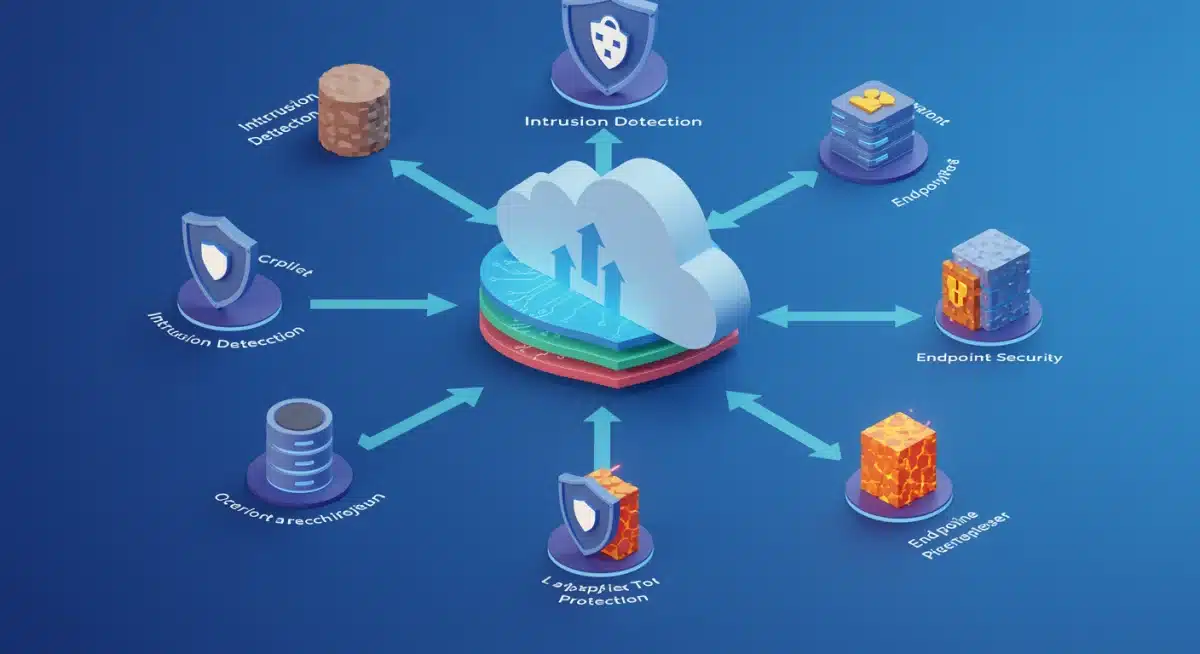
Even with strong foundational security, the dynamic nature of cyber threats necessitates advanced capabilities for detecting and responding to incidents swiftly. For US enterprises aiming for 99.9% data protection by 2026, a proactive and automated approach to threat detection and response is paramount. This involves leveraging cutting-edge technologies and integrating them into a cohesive security operations framework.
security information and event management (SIEM)
A robust SIEM solution is crucial for aggregating and analyzing security logs from various cloud services, applications, and infrastructure components. SIEM systems can identify anomalies, correlate events, and detect potential threats that might otherwise go unnoticed. Modern SIEM platforms leverage machine learning and artificial intelligence to enhance threat detection, reducing false positives and accelerating incident identification.
Effective SIEM implementation involves careful planning, including defining log sources, establishing correlation rules, and configuring alerts. The insights gained from SIEM are invaluable for understanding the overall security posture and identifying areas for improvement.
cloud security posture management (CSPM) and cloud workload protection platforms (CWPP)
CSPM tools continuously monitor cloud environments for misconfigurations, compliance violations, and security risks. They provide visibility into the security posture across multiple cloud providers, helping organizations ensure their configurations align with best practices and regulatory requirements. CWPPs, on the other hand, focus on protecting workloads running in the cloud, offering capabilities like vulnerability management, runtime protection, and application control for virtual machines, containers, and serverless functions.
- Continuously monitor cloud configurations for deviations from security policies.
- Automate remediation of common misconfigurations.
- Protect cloud workloads with advanced threat prevention and detection.
- Integrate CSPM and CWPP insights into a centralized security dashboard.
Integrating these advanced tools into a unified security framework allows enterprises to gain comprehensive visibility and control over their cloud environments. This holistic approach ensures that potential threats are not only detected early but also responded to effectively, minimizing their impact.
ensuring compliance and governance in the cloud
For US enterprises, adhering to a complex web of regulatory requirements and industry standards is not optional; it’s a legal and ethical obligation. Achieving 99.9% data protection by 2026 necessitates a strong focus on compliance and governance within the cloud environment. This involves understanding the relevant frameworks, implementing necessary controls, and continuously auditing for adherence.
navigating regulatory frameworks
Enterprises must be well-versed in regulations such as HIPAA, PCI DSS, GDPR (when dealing with EU data), CCPA, and various state-specific privacy laws. Each framework imposes specific requirements for data handling, storage, and protection. Cloud environments introduce additional complexities, as data may traverse different geographical regions and be subject to multiple jurisdictions. A thorough understanding of these requirements is essential to avoid penalties and maintain trust.
Developing a robust compliance strategy involves mapping regulatory requirements to cloud security controls and documenting how these controls are implemented and maintained. Regular legal and compliance reviews are critical to ensure ongoing adherence as regulations evolve.
establishing cloud governance policies
Effective cloud governance provides the structure and processes necessary to manage cloud resources securely and efficiently. This includes defining clear roles and responsibilities for cloud security, establishing security policies, and implementing change management procedures. Governance policies should cover aspects such as data classification, incident response, vendor management, and employee training.
- Define clear roles and responsibilities for cloud security and compliance.
- Develop and enforce comprehensive cloud security policies.
- Implement robust change management processes for cloud configurations.
- Regularly conduct internal and external compliance audits.
Automated compliance tools can significantly aid in this process by continuously monitoring cloud configurations against predefined policies and regulatory benchmarks. These tools can identify non-compliant resources and provide recommendations for remediation, streamlining the auditing process and reducing manual effort.
By prioritizing compliance and governance, US enterprises can build a secure cloud environment that not only protects data but also withstands scrutiny from regulators and customers, reinforcing their commitment to data protection.
proactive incident response and recovery planning
Despite the most stringent security measures, incidents can and do occur. For US enterprises committed to 99.9% data protection by year-end 2026, a well-defined and frequently tested incident response and recovery plan is indispensable. This plan ensures that when a security breach happens, the organization can respond effectively, minimize damage, and restore operations swiftly.
developing a comprehensive incident response plan
An effective incident response plan outlines the steps to be taken before, during, and after a security incident. It should cover detection, analysis, containment, eradication, recovery, and post-incident activities. Key elements include defining communication protocols, assigning roles and responsibilities, and establishing clear escalation paths. The plan should be tailored to the specific cloud environment and integrated with the overall enterprise incident response framework.
Regular training for security teams and other relevant personnel is crucial to ensure everyone understands their role in the event of an incident. This preparedness can significantly reduce the impact and recovery time of a cyberattack.
disaster recovery and business continuity in the cloud
Cloud environments offer inherent advantages for disaster recovery (DR) and business continuity (BC) due to their distributed nature and scalability. Enterprises should leverage these capabilities to design robust DR strategies that ensure data availability and operational resilience. This includes implementing geographically dispersed backups, automated failover mechanisms, and redundant infrastructure.
- Establish clear communication protocols for incident reporting and updates.
- Define roles and responsibilities for the incident response team.
- Regularly test the incident response plan through simulations and tabletop exercises.
- Implement automated backup and recovery solutions for cloud data.
Testing the DR plan regularly through simulations and drills is critical to identify any weaknesses and refine procedures. A well-executed DR plan can mean the difference between a minor disruption and a catastrophic business failure. By investing in proactive incident response and robust recovery planning, US enterprises can significantly enhance their resilience and achieve their data protection goals.
cultivating a security-first culture and continuous improvement
Achieving 99.9% data protection by 2026 extends beyond technology and processes; it fundamentally relies on fostering a security-first culture within the organization. For US enterprises, this means embedding security considerations into every aspect of operations and promoting continuous improvement in security practices. A strong security culture empowers employees to be the first line of defense.
employee training and awareness
Human error remains a significant factor in security breaches. Comprehensive and ongoing employee training is essential to mitigate this risk. Training programs should cover topics such as phishing awareness, secure coding practices, data handling policies, and the importance of reporting suspicious activities. These programs should be engaging, relevant, and regularly updated to reflect the latest threats and best practices.
Beyond formal training, fostering a culture where security is everyone’s responsibility encourages employees to proactively identify and address potential risks. This collective vigilance forms a powerful defense mechanism against various cyber threats.
security audits and vulnerability management
Regular security audits, penetration testing, and vulnerability assessments are critical for identifying weaknesses in the cloud environment before attackers can exploit them. These activities provide an objective evaluation of the security posture and highlight areas requiring remediation. A robust vulnerability management program ensures that identified vulnerabilities are tracked, prioritized, and patched in a timely manner.
- Conduct regular security awareness training for all employees.
- Implement secure coding practices for developers.
- Perform frequent vulnerability assessments and penetration testing.
- Establish a clear process for patching and remediating vulnerabilities.
The concept of continuous improvement in security means constantly reviewing, adapting, and enhancing security controls and processes. The threat landscape is dynamic, and security measures must evolve in tandem. By embracing a security-first culture and committing to continuous improvement, US enterprises can build a highly resilient cloud environment capable of achieving and maintaining superior data protection.
| Key Practice | Brief Description |
|---|---|
| Robust IAM | Implement MFA and least privilege for strict access control. |
| Data Encryption | Encrypt data at rest and in transit with secure key management. |
| Threat Detection | Utilize SIEM, CSPM, and CWPP for advanced monitoring and protection. |
| Incident Response | Develop and test comprehensive plans for quick recovery and business continuity. |
frequently asked questions about cloud security
Achieving 99.9% data protection is crucial for maintaining customer trust, ensuring business continuity, and complying with increasingly stringent data privacy regulations. It significantly reduces the risk of costly data breaches and reputational damage in a competitive digital landscape.
IAM is fundamental as it controls who can access cloud resources and what actions they can perform. By implementing strong authentication, least privilege, and continuous monitoring, IAM prevents unauthorized access, a leading cause of cloud breaches.
CSPM (Cloud Security Posture Management) identifies and remediates misconfigurations and compliance issues across cloud environments. CWPP (Cloud Workload Protection Platforms) secure individual workloads (VMs, containers) against vulnerabilities and threats, offering deep protection at the workload level.
An effective plan includes clear detection, analysis, containment, eradication, recovery, and post-incident review steps. It defines communication protocols, roles, and responsibilities, and is regularly tested to ensure rapid and efficient handling of security breaches.
A security-first culture ensures that every employee understands their role in protecting data. It promotes continuous awareness, secure practices, and vigilance against threats, turning the entire workforce into an active defense layer against cyberattacks.
conclusion
Achieving 99.9% data protection for US enterprises by year-end 2026 is an ambitious yet attainable goal, demanding a concerted effort across technological, procedural, and cultural fronts. By understanding the evolving threat landscape, fortifying foundational security pillars like IAM and encryption, implementing advanced threat detection and response mechanisms, ensuring stringent compliance and governance, and cultivating a pervasive security-first culture, organizations can build a resilient cloud environment. The journey toward this level of protection is continuous, requiring constant vigilance, adaptation, and investment in both cutting-edge solutions and human capital. Ultimately, prioritizing these cloud security best practices will not only safeguard invaluable data but also secure the future and reputation of US enterprises in an increasingly interconnected world.