Data Breach Cost US: Reduce Financial Impact by 20% Proactively
Understanding the financial repercussions of a data breach in the US is crucial for businesses aiming to bolster their defenses; proactive measures can significantly reduce these costs by at least 20%.
In today’s interconnected digital landscape, the threat of cyberattacks looms large, making the discussion around the cost of a data breach in the US more critical than ever. Businesses are grappling with not only the immediate financial fallout but also the long-term damage to reputation and customer trust. This article explores strategies to reduce this financial impact by a significant 20% through proactive cybersecurity measures.
Understanding the True Financial Landscape of Data Breaches in the US
The financial implications of a data breach extend far beyond the immediate remediation efforts. For organizations in the US, these costs are often multifaceted, encompassing direct expenditures, regulatory fines, and intangible losses that can cripple a business. Grasping the full scope of these expenses is the first step toward building a robust defense strategy.
Direct Costs: The Immediate Financial Hit
When a data breach occurs, companies face a barrage of immediate expenses. These include forensic investigations to determine the breach’s origin and scope, legal fees for counsel and potential litigation, and the cost of notifying affected individuals as mandated by various state and federal laws. These initial costs can quickly escalate into millions of dollars, depending on the scale and sensitivity of the compromised data.
- Forensic investigation services to identify the breach’s root cause.
- Legal consultation and representation for regulatory compliance and potential lawsuits.
- Customer notification expenses, including mailings and call center support.
- Credit monitoring and identity theft protection services for affected individuals.
Indirect Costs: Long-Term Repercussions
The indirect costs of a data breach are often more damaging and harder to quantify. These include significant reputational damage, loss of customer trust, and a subsequent decline in sales. There’s also the potential for increased insurance premiums and a devaluation of intellectual property if sensitive information is stolen. These long-term effects can erode a company’s market position and profitability for years.
Moreover, the operational disruptions caused by a breach can lead to productivity losses and further financial setbacks. Rebuilding trust and recovering from brand damage requires substantial marketing and public relations efforts, adding another layer of expense to an already costly incident. It’s a complex web of financial strain that demands proactive mitigation.
The Rising Tide: Why Data Breach Costs are Increasing in the US
Data breach costs in the US have been on a steady upward trajectory, driven by a confluence of factors including increasingly sophisticated cyber threats, stringent regulatory environments, and the growing volume of sensitive data organizations handle. Businesses must recognize these trends to effectively prepare and protect their assets.
Evolving Threat Landscape and Attack Sophistication
Cybercriminals are constantly refining their tactics, employing advanced techniques such as AI-powered phishing, ransomware-as-a-service, and supply chain attacks. These sophisticated methods make detection and prevention more challenging, leading to more successful breaches and, consequently, higher remediation costs. The sheer ingenuity of these threats means that static security measures are no longer sufficient.
The proliferation of new attack vectors, particularly with the rise of remote work and cloud-based infrastructures, also contributes to this increase. Each new endpoint or cloud service presents a potential vulnerability that attackers can exploit, expanding the attack surface for many organizations. Staying ahead requires continuous adaptation and investment in cutting-edge security solutions.
Regulatory Scrutiny and Heavier Penalties
The regulatory landscape surrounding data privacy and security in the US is becoming increasingly complex and punitive. Laws like the California Consumer Privacy Act (CCPA) and various state-specific data breach notification laws impose significant fines for non-compliance and inadequate data protection. These regulations compel organizations to invest more in compliance, but also expose them to greater financial risk in the event of a breach.
- Increased fines for non-compliance with data privacy regulations.
- Mandatory, costly data breach notification requirements across states.
- Enhanced focus on accountability for executive leadership in cybersecurity incidents.
- Potential for class-action lawsuits stemming from regulatory violations.
Proactive Measures: The Cornerstone of Cost Reduction
Reducing the financial impact of a data breach by 20% or more is an ambitious yet achievable goal, primarily through the implementation of robust proactive measures. These strategies shift the focus from reactive damage control to preventive defense, minimizing both the likelihood and severity of a breach.
Strengthening Your Cybersecurity Posture
A strong cybersecurity posture begins with a comprehensive risk assessment, identifying vulnerabilities and potential entry points for attackers. Implementing multi-factor authentication (MFA), regular security audits, and penetration testing are fundamental steps. Employee training on cybersecurity best practices is also critical, as human error remains a leading cause of breaches.
Investing in advanced threat detection and prevention technologies, such as Security Information and Event Management (SIEM) systems and Endpoint Detection and Response (EDR) solutions, provides real-time visibility and rapid response capabilities. These tools are essential for identifying and neutralizing threats before they can cause significant damage, thereby reducing potential costs.
Developing a Robust Incident Response Plan
A well-defined and regularly tested incident response plan is paramount for mitigating the financial fallout of a breach. This plan should outline clear roles and responsibilities, communication protocols, and technical steps for containment, eradication, and recovery. The faster an organization can respond to and contain a breach, the less costly it will be.
- Clear definition of roles and responsibilities for the incident response team.
- Pre-approved communication templates for internal and external stakeholders.
- Detailed steps for containment, eradication, and system recovery.
- Regular drills and simulations to test the effectiveness of the plan.
Leveraging Technology to Fortify Defenses and Cut Costs
Modern cybersecurity technologies offer powerful tools to bolster defenses and directly contribute to reducing the cost of a data breach. From AI-driven analytics to advanced encryption, these solutions provide layers of protection that can prevent breaches or significantly limit their impact.
AI and Machine Learning in Threat Detection
Artificial intelligence and machine learning are revolutionizing threat detection by identifying anomalous patterns and behaviors that human analysts might miss. These technologies can process vast amounts of data in real-time, enabling faster detection of sophisticated attacks like zero-day exploits and insider threats. Early detection is a critical factor in minimizing breach costs.
By automating threat analysis and response, AI/ML systems reduce the need for extensive manual intervention, freeing up security teams to focus on more complex strategic tasks. This efficiency translates directly into cost savings through reduced labor hours and faster incident resolution.
Encryption and Data Loss Prevention (DLP)
Implementing strong encryption for data at rest and in transit ensures that even if data is compromised, it remains unreadable and unusable to unauthorized parties. Data Loss Prevention (DLP) solutions, on the other hand, prevent sensitive information from leaving the organization’s control, whether accidentally or maliciously. These technologies are crucial for protecting sensitive customer and proprietary data.
- End-to-end encryption for all sensitive data communications.
- Database encryption for data stored on servers and in the cloud.
- DLP policies configured to monitor and block unauthorized data transfers.
- Regular audits of encryption keys and DLP effectiveness.
The Human Element: Training and Culture as a Shield
While technology plays a vital role, the human element remains a significant factor in cybersecurity. Cultivating a security-aware culture and providing continuous training to employees can drastically reduce the risk of breaches caused by human error, directly contributing to cost reduction.
Comprehensive Employee Training Programs
Many data breaches originate from phishing attacks or employees falling victim to social engineering schemes. Regular and comprehensive training programs, including simulated phishing exercises, can equip employees with the knowledge and skills to identify and report suspicious activities. This proactive approach transforms employees from potential vulnerabilities into a strong line of defense.
Training should cover various topics, from password hygiene and secure browsing practices to recognizing common cyber threats. Making these sessions engaging and relevant ensures better retention and application of security principles in daily operations. A well-informed workforce is a less vulnerable workforce.
Fostering a Security-First Culture
Beyond formal training, fostering a security-first culture within the organization is crucial. This involves making cybersecurity a shared responsibility, where every employee understands their role in protecting sensitive information. Leadership buy-in and consistent reinforcement of security policies are key to embedding this culture.
Encouraging open communication about security concerns and providing accessible channels for reporting potential threats creates an environment where issues are addressed promptly. A strong security culture not only prevents breaches but also enhances the organization’s resilience in the face of evolving cyber threats, ultimately reducing the overall cost of a data breach in the US.
Measuring Success: Quantifying Your 20% Reduction
To truly understand the impact of proactive measures, organizations must establish clear metrics and regularly assess their cybersecurity posture. Quantifying the reduction in potential breach costs allows businesses to demonstrate ROI on security investments and continually refine their strategies.
Key Performance Indicators for Cybersecurity
Tracking KPIs such as mean time to detect (MTTD), mean time to respond (MTTR), and the number of averted incidents provides tangible data on the effectiveness of security controls. A reduction in these metrics directly correlates to lower potential breach costs, as faster detection and response minimize damage.
Additionally, monitoring employee security awareness scores and the success rate of phishing simulations can indicate improvements in the human element of security. These metrics offer a holistic view of the organization’s security health and highlight areas for further improvement. Consistent measurement is vital for continuous improvement and demonstrating the value of proactive security.
- Mean Time To Detect (MTTD) cyber threats.
- Mean Time To Respond (MTTR) to security incidents.
- Number of successful phishing attempts against employees.
- Reduction in the number of critical vulnerabilities identified in audits.
Calculating Potential Cost Savings
Organizations can estimate potential cost savings by comparing the average cost of a data breach in their industry with the reduced risk achieved through proactive measures. For example, if the average breach costs $10 million, a 20% reduction translates to $2 million in savings. This calculation helps justify investments in cybersecurity and provides a clear target for improvement.
By conducting regular risk assessments and quantifying the financial exposure associated with identified vulnerabilities, businesses can tailor their security investments to address the most significant threats. This data-driven approach ensures that resources are allocated efficiently, maximizing the impact on cost reduction and overall security posture.
| Key Proactive Measure | Benefit for Cost Reduction |
|---|---|
| Robust Incident Response Plan | Minimizes breach containment time, directly lowering investigation and recovery costs. |
| Employee Security Training | Reduces human error, a primary cause of breaches, preventing costly incidents. |
| Advanced Threat Detection (AI/ML) | Enables faster identification and neutralization of threats, limiting financial damage. |
| Data Encryption & DLP | Protects sensitive data from unauthorized access, reducing regulatory fines and reputational harm. |
Frequently Asked Questions About Data Breach Costs
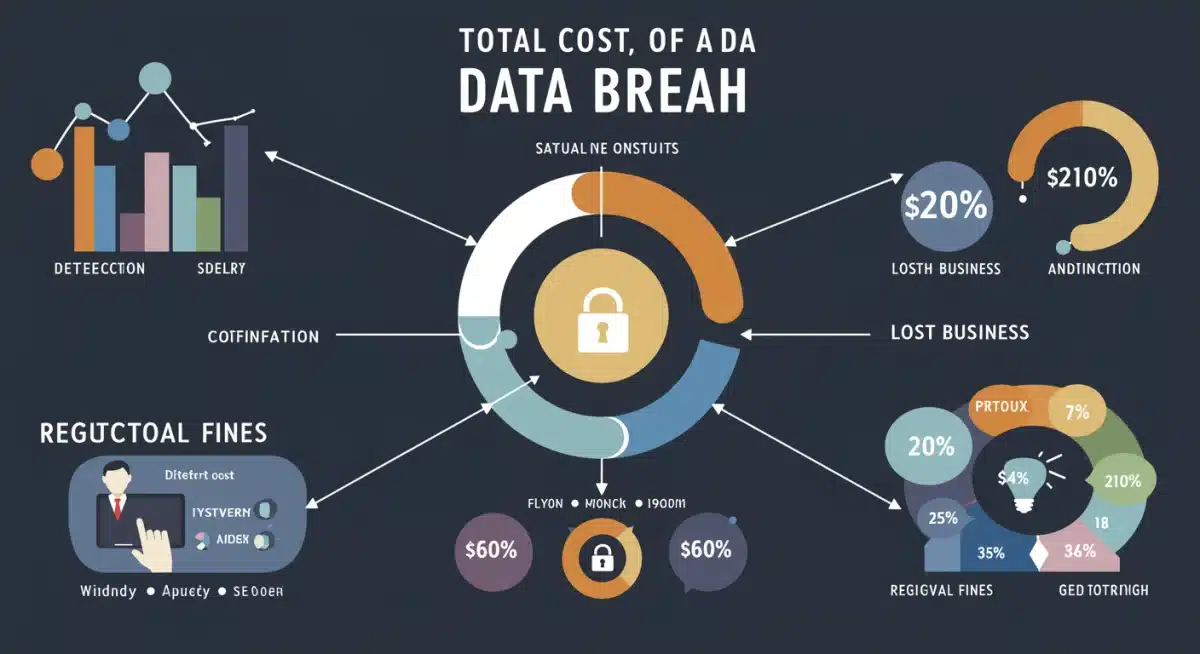
The primary components include detection and escalation, notification, lost business, and post-breach response. These encompass forensic investigations, legal fees, customer support, regulatory fines, and reputational damage leading to revenue loss. Understanding these elements is key to effective risk management.
A well-practiced incident response plan reduces the mean time to identify and contain a breach. Faster containment directly translates to lower costs by limiting data compromise, reducing operational disruption, and minimizing potential regulatory penalties and legal expenses. Preparedness is crucial for cost control.
Employee training is vital as human error is a leading cause of breaches. Educated employees are better equipped to recognize and avoid phishing, social engineering, and other threats. This proactive defense significantly reduces the likelihood of a breach, thereby preventing substantial financial losses from remediation and recovery.
Absolutely. AI and machine learning enhance threat detection by analyzing vast datasets for suspicious patterns in real-time, often identifying threats far faster than traditional methods. This early detection and automated response capabilities are critical for minimizing the scope and financial consequences of a cyberattack.
Long-term consequences include significant reputational damage, loss of customer trust and loyalty, decreased sales, increased cybersecurity insurance premiums, and potential devaluation of intellectual property. These indirect costs can erode market share and profitability for extended periods, making proactive prevention essential.
Conclusion
Navigating the complex and costly landscape of data breaches in the US requires a strategic and unwavering commitment to proactive cybersecurity. By understanding the multifaceted financial implications, investing in robust technologies like AI-driven threat detection and strong encryption, and empowering employees through continuous training and a security-first culture, organizations can significantly reduce their exposure. The goal of cutting the financial impact by 20% is not merely aspirational; it is an achievable benchmark for businesses dedicated to safeguarding their data and their future. Embracing these proactive measures transforms potential vulnerabilities into resilient defenses, securing both financial stability and stakeholder trust in an increasingly digital world.