AI Integration: 2 Leading CRM Software Updates for 2026

The early 2026 updates for two prominent CRM software platforms are set to revolutionize customer relationship management through advanced AI integration, promising significant enhancements in data analysis, predictive capabilities, and operational efficiency for businesses.
As we approach early 2026, the landscape of customer relationship management (CRM) is on the cusp of a significant transformation, driven by the profound capabilities of artificial intelligence. This article offers a deep dive into how two leading CRM software providers are integrating advanced AI into their platforms, promising to redefine how businesses interact with and understand their customers. The focus is on how these updates will enhance efficiency, personalize customer journeys, and provide unprecedented insights, making CRM AI Integration 2026 a pivotal moment for businesses aiming to stay competitive.
The Evolution of CRM with AI at its Core
Customer Relationship Management (CRM) systems have long been the backbone of sales, marketing, and customer service operations. However, the true potential of CRM is now being unlocked by the seamless integration of artificial intelligence. This evolution moves beyond mere data storage, transforming CRM into a proactive, intelligent assistant that anticipates customer needs and optimizes business processes. The early 2026 updates from key players in the CRM market are poised to showcase this shift, emphasizing predictive analytics, hyper-personalization, and automated workflows.
The journey from basic contact management to an AI-driven ecosystem has been gradual but accelerating. Early CRM versions focused on digitizing customer records and streamlining communication. Over time, features like marketing automation and sales forecasting were added. Now, with sophisticated AI models, CRM platforms are becoming predictive engines, capable of identifying patterns, predicting behaviors, and suggesting optimal actions, fundamentally altering how businesses engage with their clientele. This next generation of CRM is not just about managing relationships; it’s about intelligently nurturing them.
Predictive Analytics and Proactive Engagement
One of the most impactful advancements in AI-integrated CRM is the leap in predictive analytics. Businesses will no longer just react to customer actions but will be able to anticipate their needs and potential issues before they arise. This proactive approach fosters deeper customer loyalty and significantly improves satisfaction rates.
- Anticipating Churn: AI models analyze historical data and current interactions to identify customers at risk of churning, allowing businesses to intervene with targeted retention strategies.
- Sales Opportunity Scoring: AI assigns a probability score to leads and opportunities, guiding sales teams to focus on the most promising prospects, thereby increasing conversion rates.
- Personalized Product Recommendations: Based on browsing history, purchase patterns, and demographic data, AI can suggest highly relevant products or services, enhancing the customer’s buying experience.
The integration of AI into CRM platforms represents a monumental shift from reactive to proactive customer management. These systems are becoming indispensable tools for businesses looking to gain a significant competitive edge by truly understanding and serving their customers in a hyper-personalized manner.
Leading CRM Software A: Unveiling Its Intelligent Assistant
One of the eagerly awaited updates in early 2026 comes from a leading CRM provider, let’s call it CRM Software A. This update introduces a significantly enhanced AI-powered intelligent assistant, designed to optimize every facet of the customer journey. The core philosophy behind this advancement is to empower sales, marketing, and service teams with actionable insights and automation capabilities that were previously unattainable. This intelligent assistant moves beyond simple chatbots, offering sophisticated data interpretation and strategic recommendations.
The new iteration of CRM Software A’s AI assistant leverages deep learning algorithms to process vast amounts of customer data, including interaction history, social media sentiment, and demographic information. This comprehensive analysis allows the assistant to generate highly accurate predictions about customer behavior, identify cross-selling and up-selling opportunities, and even draft personalized communication. The goal is to reduce manual effort, allowing human teams to focus on complex problem-solving and relationship building.
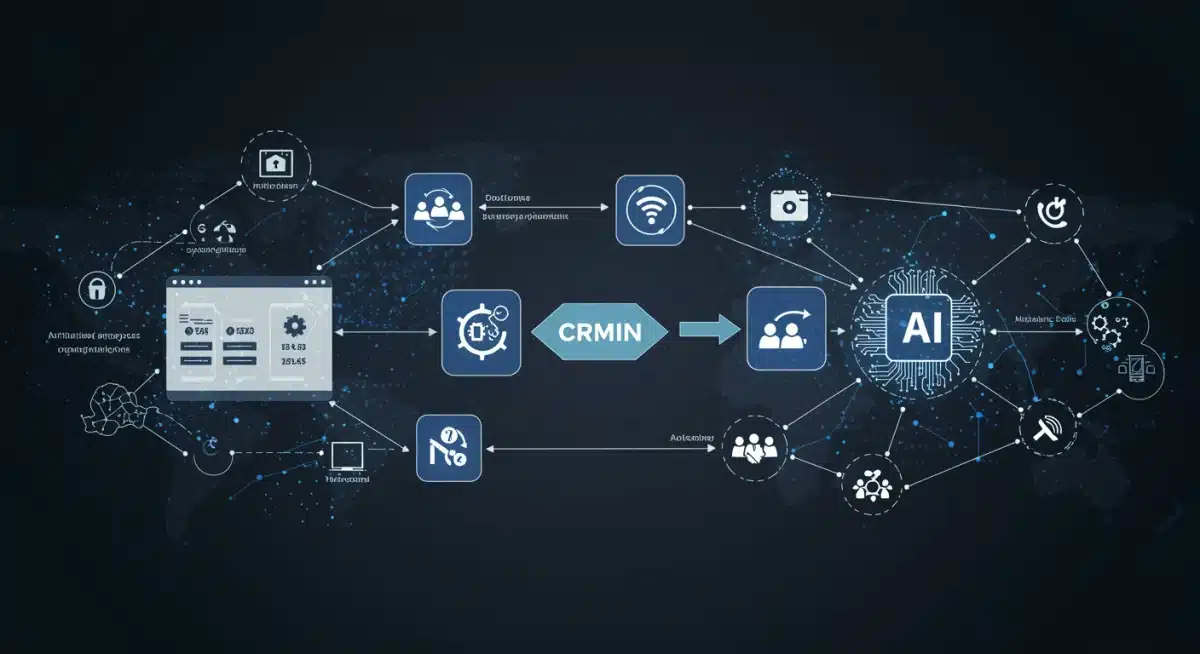
The new intelligent assistant is not just about making processes faster; it’s about making them smarter. For instance, in sales, it can analyze conversation transcripts and email exchanges to pinpoint customer pain points and suggest the most effective next steps. In marketing, it can segment audiences with unprecedented precision, ensuring that campaigns resonate deeply with their intended recipients. For customer service, it offers real-time recommendations for troubleshooting and issue resolution, making every interaction more efficient and satisfying.
Key Enhancements in CRM Software A’s AI Assistant
The update brings several groundbreaking features that underscore the platform’s commitment to AI-driven excellence. These enhancements are designed to provide a holistic view of the customer and automate complex tasks, freeing up valuable human resources.
- Hyper-Personalized Customer Journeys: AI algorithms dynamically adjust marketing messages and product offerings based on real-time customer behavior and preferences.
- Automated Lead Qualification: The assistant can score and qualify leads with high accuracy, prioritizing those most likely to convert and passing them to sales teams.
- Sentiment Analysis for Service: AI monitors customer communications across channels, identifying emotional tones and urgent issues to ensure prompt and empathetic responses.
In essence, CRM Software A’s intelligent assistant is set to transform CRM from a record-keeping system into a dynamic, predictive, and highly personalized customer engagement platform. This update signifies a major leap forward in how businesses can leverage AI for competitive advantage.
Leading CRM Software B: Advancing Customer Experience with Generative AI
Simultaneously, another significant player in the CRM arena, CRM Software B, is rolling out its early 2026 update with a strong emphasis on generative AI. This pivotal development aims to push the boundaries of customer experience by enabling highly personalized and contextually aware interactions at scale. While CRM Software A focuses on an intelligent assistant for internal teams, CRM Software B is leveraging generative AI to directly enhance customer-facing communication and content creation, making every touchpoint feel uniquely tailored and human-like.
Generative AI in CRM Software B’s update means that the system can now create original content, such as personalized email responses, dynamic website content, and even tailored sales pitches, all based on a deep understanding of individual customer profiles and past interactions. This capability goes far beyond template-based communication, offering a level of customization that truly resonates with the customer. The objective is to foster stronger relationships by ensuring that every piece of communication is relevant, timely, and engaging.
The implications for customer experience are vast. Imagine a customer service chatbot that not only answers questions but also generates follow-up emails that summarize the conversation and offer proactive solutions. Or a marketing platform that creates unique ad copy for different segments, optimizing for engagement and conversion in real-time. CRM Software B’s generative AI is designed to make these scenarios a reality, providing a consistent, high-quality, and deeply personalized experience across all channels. This heralds a new era where machines assist in crafting compelling narratives that drive customer loyalty.
Revolutionizing Content and Communication
The integration of generative AI introduces several transformative features, primarily aimed at enriching customer interactions and streamlining content creation processes.
- Dynamic Content Generation: AI automatically creates personalized email marketing content, website copy, and social media posts, adapting them to individual customer preferences and journey stages.
- Enhanced Chatbot Capabilities: Customer service chatbots powered by generative AI can hold more natural and nuanced conversations, providing comprehensive and contextually relevant answers.
- Automated Sales Proposal Drafting: Sales teams can leverage AI to generate customized sales proposals and presentations, significantly reducing preparation time and increasing personalization.
CRM Software B’s foray into generative AI for customer experience marks a crucial step towards automating and elevating personalized communication. By enabling the creation of unique and relevant content at scale, this update positions businesses to cultivate deeper, more meaningful relationships with their customers.
Impact on Sales and Marketing Strategies
The early 2026 updates in CRM AI integration are set to profoundly reshape sales and marketing strategies. For sales teams, the intelligent assistants and generative AI capabilities translate into higher efficiency, more qualified leads, and significantly improved conversion rates. Sales professionals will spend less time on administrative tasks and more time building relationships, armed with deeper customer insights and personalized communication tools. The ability to predict customer needs and tailor pitches dynamically will be a game-changer, moving sales from a reactive to a highly proactive discipline.
In marketing, these advancements usher in an era of hyper-personalization and precision targeting. AI-driven segmentation allows for campaigns that speak directly to individual customer preferences, reducing wasted ad spend and boosting engagement. Generative AI will revolutionize content creation, enabling marketers to produce a vast array of personalized content pieces, from email subject lines to entire campaign narratives, all optimized for maximum impact. This means marketers can focus on strategic planning and creative direction, leaving the heavy lifting of content generation and optimization to AI.
Optimizing the Sales Funnel with AI
AI’s role in the sales funnel is expanding dramatically, from initial lead generation to post-purchase engagement.
- Lead Prioritization: AI scores leads based on their likelihood to convert, guiding sales teams to focus on high-potential prospects.
- Automated Follow-ups: AI can schedule and even draft personalized follow-up emails, ensuring timely engagement without manual oversight.
- Deal Progression Analysis: AI identifies stalled deals and suggests interventions, helping to push opportunities through the pipeline more effectively.
Transforming Marketing Engagement
Marketing efforts become more targeted and effective with AI at the helm, moving beyond broad strokes to individual conversations.
- Dynamic Content Personalization: Websites and emails adapt content in real-time based on visitor behavior and preferences.
- Optimal Campaign Timing: AI analyzes data to determine the best times to send marketing communications for maximum open and click-through rates.
- Predictive Customer Lifetime Value: AI forecasts the potential long-term value of customers, allowing marketers to allocate resources more strategically.
Ultimately, these AI integrations empower sales and marketing teams to operate with unprecedented precision and personalization. The result is a more efficient, effective, and customer-centric approach that drives growth and fosters lasting relationships.
Enhancing Customer Service and Support
Beyond sales and marketing, the early 2026 CRM AI integration updates are poised to dramatically enhance customer service and support operations. The goal is to provide faster, more accurate, and more empathetic assistance, reducing resolution times and significantly boosting customer satisfaction. Both CRM Software A’s intelligent assistant and CRM Software B’s generative AI play crucial roles here, albeit with slightly different focuses. CRM Software A prioritizes internal efficiency for agents, while CRM Software B elevates direct customer interaction.
For customer service agents, AI acts as a powerful co-pilot. CRM Software A’s intelligent assistant can instantly retrieve relevant customer history, suggest knowledge base articles, and even recommend optimal responses based on the query at hand. This reduces the cognitive load on agents, allowing them to handle more complex cases and provide higher-quality support. The system can also monitor ongoing conversations, flagging emotionally charged interactions for immediate human intervention, ensuring that no customer feels unheard or frustrated.
CRM Software B’s generative AI, on the other hand, directly impacts customer-facing support. Imagine chatbots that don’t just follow a script but can generate nuanced, context-aware answers in real-time, even summarizing complex issues and proposing solutions in natural language. This leads to a seamless, almost human-like interaction for the customer, often resolving issues without the need for human intervention. When human agents are required, the generative AI can pre-populate response drafts, saving time and ensuring consistency.
AI-Driven Service Efficiency
The benefits of AI in customer service are manifold, leading to both operational improvements and enhanced customer experiences.
- Faster Issue Resolution: AI provides agents with immediate access to information and suggested actions, speeding up problem-solving.
- 24/7 Support: AI-powered chatbots and virtual assistants offer round-the-clock support, addressing common queries outside business hours.
- Proactive Support: AI identifies potential issues before customers even report them, allowing businesses to reach out with solutions proactively.
These AI advancements are transforming customer service from a cost center into a powerful driver of customer loyalty and brand reputation. By making support more efficient, personalized, and accessible, businesses can build stronger, more enduring relationships with their clientele.
Challenges and Ethical Considerations in AI CRM
While the promise of AI integration in CRM is immense, it’s crucial to address the challenges and ethical considerations that accompany such advanced technology. The deployment of AI, particularly generative AI, raises significant questions regarding data privacy, algorithmic bias, and the need for human oversight. Businesses embracing these early 2026 CRM updates must navigate these complexities carefully to ensure responsible and equitable use of AI.
Data privacy is paramount. AI systems require access to vast amounts of customer data to function effectively, which necessitates robust security measures and strict adherence to privacy regulations like GDPR and CCPA. Customers must be assured that their personal information is protected and used ethically. Algorithmic bias is another critical concern; if the data used to train AI models reflects existing societal biases, the AI might inadvertently perpetuate or even amplify those biases in its decision-making, leading to unfair or discriminatory outcomes. This demands continuous monitoring and auditing of AI models.
Furthermore, the increasing autonomy of AI in customer interactions requires a clear understanding of when and how human intervention is necessary. While AI can automate many tasks, complex or highly sensitive customer issues still benefit from human empathy and judgment. Striking the right balance between automation and human touch is vital to maintaining customer trust and ensuring a positive experience. Transparency in AI’s role is also important, so customers understand when they are interacting with an AI versus a human.
Addressing Key Challenges
Responsible AI deployment involves proactive strategies to mitigate risks and ensure ethical practices.
- Data Security and Compliance: Implementing stringent data encryption, access controls, and regular audits to protect sensitive customer information and comply with privacy laws.
- Bias Detection and Mitigation: Regularly evaluating AI models for biases in training data and output, and implementing strategies to correct and prevent discriminatory outcomes.
- Human-in-the-Loop Design: Ensuring that human agents can easily override or take over from AI systems when necessary, especially in critical or emotionally charged interactions.
The journey with AI in CRM is not without its hurdles, but by proactively addressing these ethical and practical challenges, businesses can harness the full potential of these powerful tools responsibly and sustainably.
The Future Landscape of Customer Relationships
Looking beyond early 2026, the AI integration in CRM software updates paints a vivid picture of the future landscape of customer relationships. We are moving towards an ecosystem where every customer interaction is not just managed but intelligently optimized, personalized, and even anticipated. The boundaries between sales, marketing, and customer service will continue to blur, as AI provides a unified, holistic view of the customer across all touchpoints. This seamless integration will foster unprecedented levels of customer satisfaction and loyalty, transforming transactional relationships into enduring partnerships.
The continuous evolution of AI, particularly in areas like emotional intelligence and contextual understanding, will make CRM systems even more sophisticated. Future updates might include AI that can detect subtle emotional cues in customer voices or text, allowing for even more nuanced and empathetic responses. The ability of generative AI to create increasingly complex and creative content will also evolve, potentially leading to fully AI-designed marketing campaigns or personalized customer experiences that adapt in real-time to individual moods and preferences. The future promises a truly adaptive and intuitive customer journey.
Anticipated Advancements
- Hyper-Contextual AI: Systems that understand not just what a customer says, but also the underlying context, intent, and emotional state, leading to more profound interactions.
- Proactive Problem Solving: AI that can predict and resolve potential issues even before the customer becomes aware of them, creating a truly frictionless experience.
- Adaptive Learning CRM: CRM platforms that continuously learn and adapt to evolving customer behaviors and market trends, ensuring perpetual relevance and effectiveness.
The future of customer relationships, powered by advanced AI, is one of unparalleled personalization, efficiency, and predictive capability. Businesses that embrace and strategically leverage these technologies will be best positioned to thrive in an increasingly competitive and customer-centric market.
| Key Aspect | Description of Update |
|---|---|
| CRM Software A AI Assistant | Enhanced intelligent assistant for internal teams, focusing on predictive analytics and actionable insights for sales, marketing, and service efficiency. |
| CRM Software B Generative AI | Utilizes generative AI for direct customer experience, creating personalized content and communication at scale, enhancing engagement and satisfaction. |
| Sales & Marketing Impact | Drives hyper-personalization, automated lead qualification, dynamic content generation, and predictive deal progression, optimizing strategies and increasing conversions. |
| Ethical Considerations | Challenges include data privacy, algorithmic bias, and the importance of human oversight to ensure responsible and equitable AI use in CRM. |
Frequently Asked Questions About CRM AI Integration in 2026
The primary focus is on enhancing predictive analytics, hyper-personalization, and automation across sales, marketing, and customer service. This aims to create more efficient and proactive customer relationship management, moving beyond reactive data handling to intelligent, anticipatory engagement.
CRM Software A’s intelligent assistant will empower internal teams with actionable insights and automation. It will optimize sales by qualifying leads, personalize marketing through dynamic content, and improve customer service by suggesting optimal responses and identifying urgent issues, boosting overall efficiency.
Generative AI in CRM Software B focuses on directly enhancing customer experience by creating personalized and contextually aware content. This includes dynamic email responses, tailored website content, and customized sales pitches, leading to more natural and engaging customer interactions at scale.
Key ethical concerns include ensuring robust data privacy and security, mitigating algorithmic bias to prevent discriminatory outcomes, and maintaining appropriate human oversight. Businesses must address these to build trust and ensure responsible AI deployment.
AI integration will lead to a future where customer relationships are hyper-personalized, predictive, and highly efficient. It will foster deeper loyalty by anticipating needs, automating routine tasks, and providing seamless, intelligent interactions across all touchpoints, transforming transactional engagements into lasting partnerships.
Conclusion
The early 2026 updates to leading CRM software, driven by sophisticated AI integration, mark a pivotal moment in the evolution of customer relationship management. From CRM Software A’s intelligent assistant empowering internal teams with predictive insights to CRM Software B’s generative AI revolutionizing direct customer communication, the focus is squarely on creating hyper-personalized, efficient, and proactive customer journeys. While challenges surrounding data privacy and ethical AI deployment remain crucial considerations, the transformative potential for businesses to foster deeper customer loyalty, optimize operations, and achieve unprecedented growth is undeniable. Embracing these AI-driven advancements will be key for companies aiming to thrive in the competitive landscape of tomorrow.