
The 5 Most Critical Cybersecurity Threats Facing US Businesses in 2026: A Proactive Defense Guide
In the rapidly evolving digital landscape, the phrase “staying ahead of the curve” has never been more pertinent for businesses. As technology advances, so too does the sophistication and audacity of cybercriminals. For US businesses, understanding and preparing for future cyber threats isn’t just good practice; it’s an imperative for survival and sustained growth. The year 2026 is on the horizon, and with it comes a new wave of challenges that demand proactive and robust cybersecurity strategies. This comprehensive guide will delve into the five most critical Cybersecurity Threats 2026 will present to US businesses, offering actionable insights and defense mechanisms to safeguard your digital assets, reputation, and customer trust.
The digital transformation accelerated by recent global events has created an expanded attack surface, making businesses of all sizes more vulnerable than ever before. From small startups to multinational corporations, no entity is immune to the relentless barrage of cyberattacks. The financial implications of a data breach can be catastrophic, leading to hefty fines, legal battles, reputational damage, and ultimately, a significant loss of revenue. Beyond the monetary costs, the erosion of customer trust can be irreparable, hindering future business opportunities and market standing. Therefore, a forward-thinking approach to cybersecurity, one that anticipates emerging threats and fortifies defenses, is not merely an option but a foundational requirement for any successful enterprise in the modern era.
Our focus here is not just to identify these looming threats but to equip you with the knowledge and strategies necessary to build a resilient defense. We will explore the nuances of each threat, explain why they pose a significant risk, and provide practical steps US businesses can take to mitigate these dangers. By understanding the mind of the attacker and the vulnerabilities within your systems, you can transform your cybersecurity posture from reactive to proactive, ensuring your business is prepared for the challenges that lie ahead in 2026 and beyond. Let’s embark on this crucial journey to secure your digital future.
1. The Escalation of AI-Powered Cyberattacks and Deepfakes
Artificial Intelligence (AI) is a double-edged sword. While it offers immense potential for innovation and efficiency, it also provides cybercriminals with unprecedented tools to launch more sophisticated and evasive attacks. In 2026, the proliferation of AI-powered cyberattacks is expected to reach new heights, posing a significant challenge to traditional security measures. Attackers will leverage AI and machine learning (ML) to automate and refine their tactics, making their assaults faster, more targeted, and harder to detect. This is one of the most significant Cybersecurity Threats 2026 will bring.
How AI Enhances Cyberattacks:
- Automated Phishing Campaigns: AI can generate highly convincing phishing emails, messages, and even voice calls that mimic legitimate communications, making it incredibly difficult for employees to discern real from fake. These AI-generated spear-phishing attempts will be tailored to individual targets based on publicly available information, increasing their success rate.
- Advanced Malware Development: AI can be used to create polymorphic malware that constantly changes its code to evade detection by antivirus software. It can also analyze target systems to identify vulnerabilities and adapt its attack vectors in real-time.
- Deepfake Technology: Deepfakes, AI-generated convincing but fake audio, video, and images, will become a major tool for social engineering and disinformation campaigns. Imagine a CEO’s voice being faked to authorize fraudulent financial transfers or a video of a senior executive making false statements to damage a company’s stock value or reputation.
- Evasion of Detection Systems: AI can help attackers learn and adapt to security measures, finding new ways to bypass intrusion detection systems, firewalls, and other security protocols.
Proactive Defense Strategies Against AI-Powered Threats:
- Invest in AI-Driven Security Solutions: Combat AI with AI. Deploy security tools that leverage AI and ML for anomaly detection, threat intelligence, and predictive analytics. These tools can identify patterns and behaviors indicative of AI-powered attacks that traditional methods might miss.
- Enhanced Employee Training: Regular and sophisticated training on recognizing phishing attempts, deepfakes, and social engineering tactics is crucial. This should include simulations and real-world examples of AI-generated threats.
- Multi-Factor Authentication (MFA) Everywhere: Implement MFA across all systems and applications to add an extra layer of security, making it harder for attackers to gain unauthorized access even if they compromise credentials.
- Strong Verification Protocols: Establish stringent verification processes for sensitive requests, especially those involving financial transactions or critical data access. This includes verbal verification via a pre-approved contact method, not just a call or email from an unknown source.
- Threat Intelligence Sharing: Participate in industry-specific threat intelligence sharing networks to stay informed about the latest AI-driven attack methodologies and indicators of compromise.
2. Ransomware 2.0: Double Extortion and Beyond
Ransomware has been a persistent and devastating threat for years, but in 2026, it will evolve into a more insidious and multi-faceted weapon. The concept of “Ransomware 2.0” will primarily revolve around double extortion, where attackers not only encrypt data but also exfiltrate it, threatening to publish sensitive information if the ransom isn’t paid. This escalates the pressure on victims significantly, as data recovery alone is no longer sufficient to mitigate the damage. This evolution makes it one of the most pressing Cybersecurity Threats 2026 for businesses.
The Evolution of Ransomware Tactics:
- Triple Extortion: Beyond encrypting and exfiltrating data, attackers might add a third layer of extortion, such as launching DDoS attacks to disrupt operations or directly contacting customers, partners, or the media to pressure the victim into paying.
- Supply Chain Targeting: Ransomware groups will increasingly target weak links in supply chains to gain access to multiple organizations simultaneously, maximizing their impact and potential payouts.
- Targeted Attacks on Critical Infrastructure: As businesses become more reliant on digital infrastructure, ransomware attacks will increasingly focus on disrupting critical services, potentially causing widespread chaos and higher ransoms.
- Ransomware-as-a-Service (RaaS): The RaaS model will continue to thrive, lowering the barrier to entry for aspiring cybercriminals and leading to an even greater volume of attacks.
Proactive Defense Strategies Against Ransomware 2.0:
- Robust Backup and Recovery Plan: Implement a comprehensive, immutable backup strategy with regular offsite and offline backups. Test your recovery plan frequently to ensure business continuity in the event of an attack.
- Endpoint Detection and Response (EDR) & Extended Detection and Response (XDR): Deploy advanced EDR/XDR solutions to detect and respond to suspicious activities on endpoints and across your entire IT environment, offering better visibility and faster incident response.
- Network Segmentation: Segment your network to limit the lateral movement of ransomware within your systems. This can contain an attack to a smaller portion of your network, reducing its overall impact.
- Principle of Least Privilege: Enforce the principle of least privilege, ensuring users and applications only have access to the resources absolutely necessary for their function. This minimizes the potential damage if an account is compromised.
- Regular Vulnerability Management: Continuously scan for and patch vulnerabilities in your systems and applications. Many ransomware attacks exploit known vulnerabilities that have not been addressed.
- Incident Response Plan: Develop and regularly practice a detailed incident response plan specifically for ransomware attacks, outlining roles, responsibilities, and communication protocols.
3. Supply Chain Attacks: Exploiting the Weakest Link
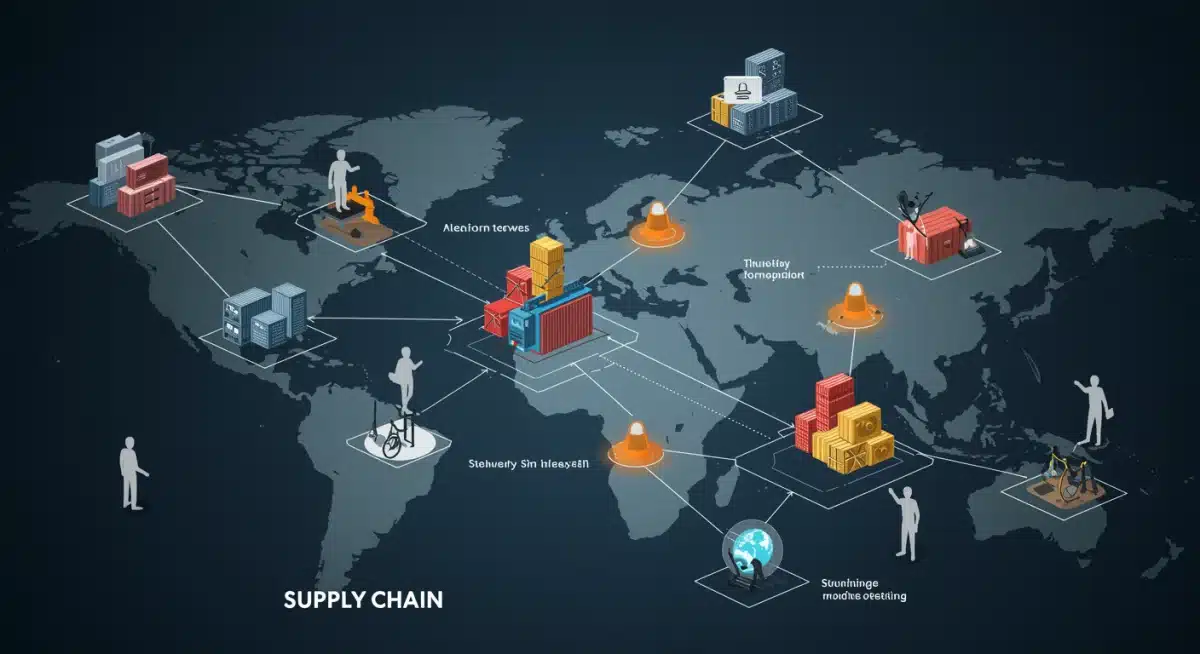
The interconnected nature of modern business means that an organization’s security is only as strong as its weakest link – often found within its supply chain. In 2026, supply chain attacks are predicted to become even more prevalent and devastating. Attackers will increasingly target third-party vendors, suppliers, and software providers to gain access to their ultimate targets. This method allows them to bypass robust internal defenses by compromising a less secure partner. This is a critical point when considering Cybersecurity Threats 2026.
Why Supply Chains are Prime Targets:
- Trust Relationships: Businesses often extend a high degree of trust to their suppliers, making it easier for attackers to masquerade as legitimate entities once they compromise a vendor.
- Software and Hardware Integrations: Compromised software updates or hardware components can introduce backdoors into countless organizations that use those products.
- Lack of Visibility: Many organizations have limited visibility into the security practices of their third-party vendors, creating blind spots that attackers can exploit.
- Concentrated Impact: Compromising one supplier can grant access to numerous downstream customers, amplifying the attack’s impact.
Proactive Defense Strategies Against Supply Chain Attacks:
- Comprehensive Vendor Risk Management: Implement a robust program to assess and manage the cybersecurity risks posed by all third-party vendors. This includes due diligence before onboarding and continuous monitoring.
- Contractual Security Requirements: Include specific cybersecurity requirements and clauses in contracts with all suppliers, detailing their responsibilities and expected security posture.
- Software Bill of Materials (SBOM): Demand and utilize SBOMs from software vendors to understand all components, libraries, and dependencies within the software you use, allowing for better vulnerability tracking.
- Network Segmentation and Zero Trust: Isolate critical systems and implement a Zero Trust architecture, where no entity, inside or outside the network, is trusted by default. Verify everything and segment access to third-party integrations.
- Regular Audits and Penetration Testing: Conduct regular security audits and penetration tests on your own systems and, where possible, require your critical vendors to do the same, sharing the results.
4. The Expanding Attack Surface of IoT and OT Devices
The Internet of Things (IoT) and Operational Technology (OT) environments are rapidly expanding, integrating countless smart devices, sensors, and industrial control systems into business operations. While these technologies offer significant benefits in terms of efficiency and data collection, they also introduce a massive and often unsecured attack surface. In 2026, the exploitation of vulnerabilities in IoT and OT devices will become a major vector for cyberattacks, leading to disruptions, data breaches, and even physical damage. This is another critical component of Cybersecurity Threats 2026.
Vulnerabilities in IoT and OT:
- Insecure by Design: Many IoT devices are designed with convenience over security, lacking basic security features, proper authentication, or encryption.
- Lack of Patching and Updates: Manufacturers often fail to provide timely security updates, and users often neglect to apply them, leaving devices vulnerable to known exploits.
- Default Credentials: Many devices ship with easily guessable or default credentials that are rarely changed by users.
- Physical Access Vulnerabilities: Some IoT devices are physically accessible, making them susceptible to tampering.
- Interconnectedness: A compromised IoT device can serve as a pivot point to gain access to the broader corporate network, including sensitive IT and OT systems.
Proactive Defense Strategies Against IoT and OT Threats:
- Comprehensive Asset Inventory: Maintain a detailed inventory of all IoT and OT devices within your network, including their firmware versions, configurations, and network connections.
- Network Segmentation and Isolation: Isolate IoT and OT networks from your main corporate IT network. Use firewalls and VLANs to create secure zones, limiting the impact of a compromise.
- Strong Authentication and Access Control: Implement strong, unique passwords or multi-factor authentication for all IoT/OT devices. Enforce strict access control policies based on the principle of least privilege.
- Regular Vulnerability Assessments: Conduct regular security assessments and penetration tests specifically targeting your IoT and OT environments to identify and remediate vulnerabilities.
- Secure Configuration Management: Ensure all devices are configured securely, disabling unnecessary services, ports, and protocols.
- Continuous Monitoring: Deploy specialized security solutions for IoT and OT environments that can monitor device behavior, detect anomalies, and alert security teams to potential threats.

5. The Rise of State-Sponsored Cyber Espionage and Critical Infrastructure Attacks
While financially motivated cybercrime remains a significant threat, 2026 will likely see an intensification of state-sponsored cyber espionage and attacks targeting critical infrastructure. Nation-states and sophisticated Advanced Persistent Threat (APT) groups will continue to invest heavily in cyber capabilities, aiming to steal intellectual property, conduct political interference, disrupt essential services, or prepare for future conflicts. These attacks are characterized by their stealth, persistence, and the vast resources available to the attackers, making them exceptionally difficult to detect and defend against. This represents a top-tier threat among the Cybersecurity Threats 2026.
Characteristics of State-Sponsored Threats:
- High Sophistication: These attacks often employ zero-day exploits, custom malware, and highly sophisticated social engineering techniques.
- Long-Term Persistence: APT groups often aim for long-term presence within target networks, exfiltrating data covertly over extended periods.
- Strategic Objectives: The goals extend beyond financial gain to include intelligence gathering, sabotage, and geopolitical advantage.
- Targeting Critical Infrastructure: Energy grids, water treatment plants, transportation systems, and healthcare facilities are prime targets due to their societal impact.
Proactive Defense Strategies Against State-Sponsored Threats:
- Advanced Threat Detection and Response: Implement advanced security analytics, behavioral analysis, and threat hunting capabilities to detect subtle indicators of compromise that often characterize state-sponsored attacks.
- Zero Trust Architecture: Adopt a Zero Trust model across your entire IT environment, assuming no user or device is inherently trustworthy, and continuously verifying access.
- Enhanced Endpoint Security: Deploy robust endpoint protection platforms (EPP) and EDR solutions with strong behavioral analysis capabilities to detect and block sophisticated malware.
- Strict Access Management and Privileged Access Management (PAM): Implement stringent controls over privileged accounts, regular audits of access rights, and multi-factor authentication for all administrative access.
- Active Threat Intelligence: Leverage high-quality, actionable threat intelligence feeds, particularly those focused on state-sponsored activities and APT groups relevant to your industry.
- Collaborate with Government Agencies: For critical infrastructure operators, establishing strong communication channels and collaboration with government cybersecurity agencies (e.g., CISA in the US) is vital for intelligence sharing and coordinated defense.
Building a Resilient Cybersecurity Posture for 2026
Addressing the Cybersecurity Threats 2026 effectively requires a holistic and adaptive approach. It’s no longer enough to simply react; businesses must cultivate a culture of proactive security that permeates every level of the organization. Here are some overarching strategies to build a truly resilient cybersecurity posture:
- Continuous Security Awareness Training: Human error remains a leading cause of security breaches. Regular, engaging, and updated security awareness training for all employees is non-negotiable. This includes phishing simulations, deepfake recognition training, and best practices for data handling.
- Robust Incident Response Planning and Testing: A well-defined and regularly tested incident response plan is crucial. It should cover detection, containment, eradication, recovery, and post-incident analysis. Practice drills help ensure your team can respond effectively under pressure.
- Investment in Advanced Security Technologies: As threats evolve, so must your defenses. Invest in next-generation firewalls, EDR/XDR, Security Information and Event Management (SIEM) systems, Security Orchestration, Automation, and Response (SOAR) platforms, and AI-driven security tools.
- Regular Vulnerability Management and Penetration Testing: Continuously scan your networks and applications for vulnerabilities. Engage third-party experts for regular penetration testing to identify weaknesses before attackers do.
- Zero Trust Architecture Implementation: Move away from perimeter-based security models. Adopt a Zero Trust framework where every user, device, and application is verified before being granted access, regardless of its location.
- Data Encryption Everywhere: Encrypt data at rest and in transit. This ensures that even if data is breached, it remains unreadable and unusable to unauthorized parties.
- Third-Party Risk Management: Extend your security scrutiny to your entire ecosystem. Vet all third-party vendors, suppliers, and partners for their cybersecurity posture and ensure they adhere to your security standards.
- Compliance and Governance: Stay abreast of evolving regulatory requirements (e.g., GDPR, CCPA, HIPAA) and industry standards. Build a strong governance framework that ensures continuous compliance and accountability.
- Cyber Insurance: While not a preventive measure, comprehensive cyber insurance can help mitigate the financial impact of a successful cyberattack, covering costs associated with data breaches, legal fees, and business interruption.
- Security by Design: Integrate security considerations into every stage of the software development lifecycle (SDLC) and system design. Building security from the ground up is far more effective and cost-efficient than trying to bolt it on later.
Conclusion: Securing Your Digital Future Against Cybersecurity Threats 2026
The landscape of cyber threats is dynamic and unforgiving. For US businesses, 2026 will bring forth sophisticated challenges demanding an equally sophisticated and proactive defense. The escalation of AI-powered attacks, the evolution of ransomware, the vulnerabilities in supply chains, the expanding IoT/OT attack surface, and the persistent threat of state-sponsored espionage collectively paint a complex picture. However, by understanding these critical Cybersecurity Threats 2026 and implementing the proactive strategies outlined in this guide, businesses can significantly enhance their resilience.
The key to navigating this challenging environment lies in continuous adaptation, education, and investment in robust security measures. Cybersecurity is not a one-time project but an ongoing commitment. By fostering a security-conscious culture, leveraging advanced technologies, and collaborating with experts, US businesses can not only defend against the threats of tomorrow but also thrive securely in an increasingly interconnected world. Your proactive approach today will define your security posture tomorrow.