Data Breach Costs 2025: Save Millions with Proactive Cybersecurity

Proactive cybersecurity investments are crucial for U.S. businesses in 2025, offering the potential to save over $4 million annually by significantly reducing the financial impact of data breaches.
The digital landscape is evolving at an unprecedented pace, and with it, the threats faced by businesses. Understanding the cost of a data breach in 2025: how proactive cybersecurity investments can save U.S. businesses over $4 million annually is no longer just good practice; it’s a critical strategic imperative.
The escalating threat landscape for U.S. businesses
In an increasingly interconnected world, U.S. businesses face a constantly evolving array of cyber threats. From sophisticated ransomware attacks to subtle phishing campaigns, the methods employed by malicious actors are becoming more advanced, making robust cybersecurity defenses absolutely essential. The sheer volume and complexity of these attacks mean that no organization, regardless of size or industry, is truly immune.
This escalating threat landscape is driven by several factors, including the proliferation of IoT devices, the widespread adoption of cloud computing, and the increasing value of data itself. Cybercriminals are motivated by financial gain, industrial espionage, and even state-sponsored motives, making their pursuit relentless. Businesses must recognize that the question is no longer if they will face a cyberattack, but when, and how well prepared they will be to respond.
The implications of this heightened risk extend beyond just financial losses. Reputational damage, loss of customer trust, and potential regulatory fines can have long-term devastating effects. Therefore, understanding the nuances of the current threat environment is the first step in building an effective defense strategy, one that emphasizes prevention over reaction.
Understanding the financial impact of data breaches
Data breaches are not merely technical incidents; they are economic disasters. The financial ramifications of a data breach extend far beyond the immediate costs of detection and containment, encompassing a wide range of direct and indirect expenses that can cripple a business. For U.S. businesses, these costs are projected to continue their upward trajectory into 2025, making the need for preventative measures more urgent than ever.
The direct costs often include forensic investigations, legal fees, regulatory fines, and the expense of notifying affected individuals. However, the indirect costs can be even more substantial and insidious, impacting long-term viability. These include reputational damage, customer churn, loss of intellectual property, and diminished stock value. The complexity of calculating these costs often leads to underestimation, leaving businesses vulnerable.
Hidden costs and long-term consequences
Beyond the immediate financial outlay, data breaches inflict a series of hidden costs that can plague an organization for years. These often go unmeasured in initial assessments but contribute significantly to the overall financial burden.
- Loss of customer trust: Once trust is broken, it is incredibly difficult and expensive to rebuild, often leading to a permanent reduction in customer base.
- Brand damage: A tarnished brand reputation can deter new business and make it harder to attract top talent, impacting future growth prospects.
- Operational disruption: The time and resources diverted to managing a breach can significantly impact normal business operations, leading to lost productivity and revenue.
- Increased insurance premiums: Following a breach, cybersecurity insurance premiums are likely to skyrocket, adding another recurring expense.
These long-term consequences underscore the importance of a comprehensive strategy that not only addresses immediate threats but also fortifies the organization against future vulnerabilities. A holistic understanding of these financial impacts is crucial for making informed decisions about cybersecurity investments.
The average cost of a data breach in 2025
Projections for 2025 indicate a significant increase in the average cost of a data breach for U.S. businesses. While specific figures can vary based on industry, size, and the nature of the breach, current trends suggest that this average could easily exceed $4 million, with larger enterprises facing even steeper penalties. This figure includes not only the immediate response costs but also the long-term impact on revenue and reputation.
Several factors contribute to this rising average. The increasing sophistication of cyberattacks, the growing volume of sensitive data handled by businesses, and the tightening regulatory landscape all play a role. Furthermore, the time it takes to identify and contain a breach remains a critical cost driver; the longer a breach goes undetected, the more expensive it becomes to mitigate.
Understanding this projected average cost provides a crucial benchmark for businesses to evaluate their current cybersecurity posture. It highlights the stark reality that inaction or insufficient investment can lead to catastrophic financial outcomes, far outweighing the cost of proactive measures.
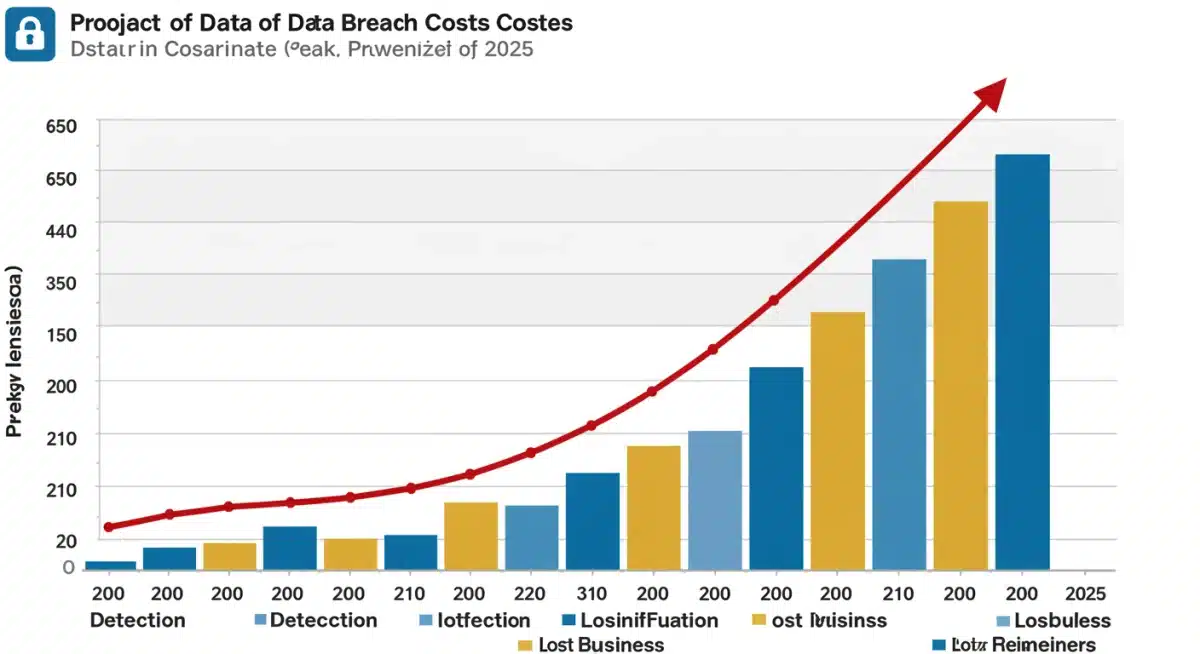
The rising average cost is also influenced by the growing complexity of IT environments. Hybrid cloud infrastructures, remote workforces, and the proliferation of third-party vendors all expand the attack surface, making it more challenging to secure data effectively. Each new technology or operational shift introduces potential vulnerabilities that cybercriminals are quick to exploit.
Moreover, the increasing demand for specialized cybersecurity talent adds to the cost. Businesses often struggle to find and retain skilled professionals, leading to reliance on expensive consultants or understaffed security teams. This human element, or lack thereof, can significantly impact a company’s ability to prevent and respond to breaches, further driving up the overall financial burden.
Proactive cybersecurity investments: a strategic imperative
Given the escalating costs and pervasive nature of cyber threats, proactive cybersecurity investments are no longer an option but a strategic imperative for U.S. businesses. Shifting from a reactive posture to one that prioritizes prevention and early detection can dramatically reduce the likelihood and impact of a data breach. This strategic approach involves a combination of technology, processes, and people, all working in concert to build a resilient defense.
Investing in advanced threat detection systems, employee training programs, and robust incident response plans are foundational elements of a proactive strategy. These investments not only help prevent breaches but also minimize the damage when an incident does occur, ultimately saving millions in potential losses. The return on investment (ROI) for these measures is increasingly clear, demonstrating that an ounce of prevention is indeed worth a pound of cure.
Key areas for proactive investment
To effectively mitigate cyber risks, businesses should focus their proactive investments on several critical areas. These areas represent the most common entry points for attackers and the most impactful ways to bolster defenses.
- Advanced threat intelligence: Utilizing up-to-date threat intelligence helps organizations anticipate and prepare for emerging attack vectors.
- Employee cybersecurity training: Human error remains a leading cause of breaches, making regular, engaging training essential for all staff.
- Endpoint detection and response (EDR): EDR solutions provide continuous monitoring and rapid response capabilities for devices connected to the network.
- Multi-factor authentication (MFA): Implementing MFA significantly reduces the risk of unauthorized access due to compromised credentials.
By strategically allocating resources to these key areas, businesses can create multiple layers of defense, making it significantly harder for attackers to penetrate their systems. This layered approach is a hallmark of effective proactive cybersecurity.
Saving millions: the ROI of robust defenses
The argument for robust cybersecurity investments goes beyond mere risk mitigation; it presents a clear financial return on investment. By preventing a single major data breach, U.S. businesses can realistically save millions of dollars that would otherwise be spent on recovery, legal fees, reputational damage control, and lost business. The initial outlay for sophisticated security measures pales in comparison to the potential costs of an unmitigated cyberattack.
Consider the scenario where a company avoids a breach that would have cost $5 million. If their proactive cybersecurity investment was $500,000, the ROI is immediately apparent. This isn’t just about avoiding losses; it’s about preserving capital that can be reinvested into growth, innovation, and other strategic initiatives. Businesses that view cybersecurity as an enabler rather than just an expense are better positioned for long-term success.
Furthermore, a strong security posture can be a competitive differentiator, attracting customers who prioritize data privacy and trust. In an era where data protection is paramount, demonstrating a commitment to security can enhance brand value and market position. This makes the ROI of cybersecurity multifaceted, impacting both the bottom line and broader business opportunities.
The long-term benefits of a strong security posture also include reduced insurance premiums and improved compliance standing. Regulators are increasingly scrutinizing how businesses protect data, and those with robust defenses are less likely to face hefty fines or legal challenges. Maintaining a clean compliance record can save significant amounts in potential penalties and legal fees.
Implementing effective cybersecurity strategies for 2025
Implementing effective cybersecurity strategies for 2025 requires a holistic and adaptive approach. It’s not enough to simply purchase a few security tools; businesses must integrate security into every facet of their operations, from initial design to ongoing maintenance. This means fostering a culture of security awareness, regularly updating technologies, and continuously assessing vulnerabilities.
One critical aspect is the development of a comprehensive incident response plan that is regularly tested and refined. Knowing exactly what to do before, during, and after a breach can significantly reduce its impact and recovery time. This plan should involve cross-functional teams, clear communication protocols, and predefined steps for containment and eradication.
Another key strategy involves embracing zero-trust architecture, where no user or device is inherently trusted, regardless of their location relative to the network perimeter. This approach minimizes the impact of a breach by limiting lateral movement within the network, making it harder for attackers to access sensitive data even if they gain initial entry. It’s a fundamental shift in how security is structured.
Essential components of a robust strategy
A truly effective cybersecurity strategy for 2025 will incorporate several essential components, designed to provide layered defense and continuous protection.
- Regular security audits and penetration testing: Proactively identify weaknesses before attackers can exploit them.
- Data encryption: Protect sensitive data both in transit and at rest, rendering it useless if intercepted.
- Supply chain security: Extend security measures to third-party vendors and partners, as they often represent significant vulnerabilities.
- Automated security tools: Leverage AI and machine learning to detect and respond to threats faster than humanly possible.
By focusing on these components, businesses can build a resilient security framework that is capable of defending against the sophisticated threats projected for 2025 and beyond. This proactive investment is the cornerstone of long-term digital safety.
Future-proofing your business: beyond 2025
While focusing on 2025 is crucial, the nature of cyber threats demands a forward-looking perspective that extends beyond immediate horizons. Future-proofing a business involves not just reacting to current trends but anticipating future challenges and building adaptable security frameworks. This means embracing continuous learning, staying abreast of emerging technologies, and fostering a culture of innovation within cybersecurity teams.
The rapid advancements in artificial intelligence and quantum computing, for example, present both new opportunities for defense and new vectors for attack. Businesses must invest in research and development, partnering with experts and leveraging cutting-edge solutions to stay ahead of the curve. This proactive stance ensures that security measures remain effective against threats that have yet to fully emerge.
Furthermore, future-proofing involves building resilience into the very fabric of the organization, ensuring that even if a breach occurs, the business can quickly recover and continue operations with minimal disruption. This is achieved through robust backup and recovery systems, comprehensive business continuity plans, and a flexible, adaptable security architecture. The goal is to create an organization that is not only secure but also antifragile in the face of cyber adversity.
| Key Point | Brief Description |
|---|---|
| Escalating Threat Landscape | Cyber threats are growing in sophistication and volume, making all businesses vulnerable. |
| High Breach Costs | Data breaches for U.S. businesses are projected to exceed $4 million annually by 2025. |
| Proactive Investment ROI | Investing in cybersecurity offers significant financial returns by preventing costly breaches. |
| Strategic Implementation | Effective strategies include incident response, zero-trust, and continuous audits for robust defense. |
Frequently asked questions about data breach costs
The projected average cost of a data breach for U.S. businesses in 2025 is expected to exceed $4 million annually. This figure encompasses direct costs like forensic investigations and regulatory fines, as well as indirect costs such as reputational damage and lost business opportunities, making prevention paramount.
Proactive cybersecurity investments, such as advanced threat detection, employee training, and robust incident response plans, significantly reduce the likelihood and impact of data breaches. By preventing costly incidents, businesses avoid massive expenses related to recovery, legal fees, and lost revenue, thus saving millions annually.
Beyond immediate expenses, hidden costs of a data breach include long-term loss of customer trust, significant brand damage, operational disruptions, and increased cybersecurity insurance premiums. These often unmeasured costs can have a lasting negative impact on a business’s financial health and market standing.
Effective cybersecurity strategies for 2025 should include a comprehensive incident response plan, adoption of zero-trust architecture, regular security audits, data encryption, and robust supply chain security. Continuous employee training and leveraging automated security tools are also crucial for a layered defense.
Cybersecurity is a strategic imperative because it directly impacts a business’s financial stability, reputation, and competitive advantage. Proactive investments not only prevent catastrophic losses but also build customer trust, ensure compliance, and free up capital for growth, positioning the business for long-term success in the digital economy.
Conclusion
The escalating financial burden of data breaches in 2025 presents a stark reality for U.S. businesses: proactive cybersecurity investments are no longer optional, but essential for survival and growth. By strategically allocating resources to advanced defenses, comprehensive training, and robust incident response, organizations can realistically save millions of dollars annually. This shift from reactive damage control to proactive prevention not only mitigates significant financial risks but also strengthens brand integrity, fosters customer trust, and ensures long-term operational resilience in an increasingly hostile digital landscape. Embracing this strategic imperative is the clearest path to safeguarding assets and securing a competitive edge in the years to come.