Smart Home Security Systems: Top DIY Options for 2026
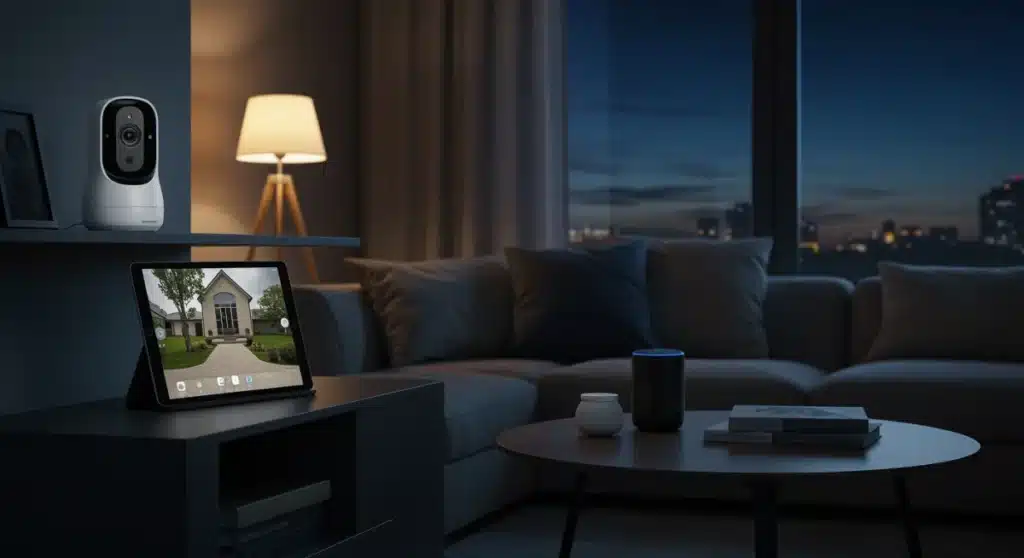
The landscape of smart home security systems for DIY enthusiasts in 2026 offers advanced features, user-friendly installation, and enhanced integration, making robust home protection more accessible than ever.
As we navigate into 2026, the demand for reliable and accessible home security solutions continues to grow, with Smart Home Security Systems: A 2026 Comparison of the Top 3 DIY Options becoming a crucial resource for homeowners. These systems empower individuals to take control of their safety without incurring hefty professional installation fees, offering peace of mind through cutting-edge technology and intuitive interfaces.
The evolving landscape of DIY home security in 2026
The year 2026 marks a significant evolution in the realm of DIY home security. Gone are the days when sophisticated security meant complex wiring and specialized technicians. Today’s market is characterized by seamless integration, advanced AI-driven analytics, and an emphasis on user autonomy. Homeowners are no longer just consumers of security services; they are active participants in designing and managing their protective ecosystems.
This shift is largely driven by advancements in wireless technology, miniaturization of components, and the increasing computational power of edge devices. These innovations allow for more compact, powerful, and easier-to-install systems that don’t compromise on security efficacy. Furthermore, the growing awareness of data privacy and local processing capabilities has influenced system designs, giving users more control over their personal data.
Key technological advancements driving DIY security
- AI-Powered Threat Detection: Systems now leverage AI for more accurate motion detection, differentiating between pets and intruders, and reducing false alarms.
- Enhanced Wireless Protocols: Next-generation Wi-Fi 6E and emerging low-power wide-area network (LPWAN) technologies offer more reliable and extended range connectivity for sensors.
- Edge Computing for Privacy: Increasingly, video analytics and facial recognition are processed on the device itself, rather than solely on cloud servers, enhancing privacy and speed.
- Modular and Scalable Designs: Modern DIY systems are designed to be easily expanded with additional sensors, cameras, and smart home devices as needs evolve.
The convenience of self-monitoring, combined with affordable subscription options for professional monitoring, presents a compelling package for a wide demographic. This blend of innovation and accessibility makes 2026 an exciting time for anyone considering a DIY approach to home security.
In conclusion, the DIY home security market in 2026 is defined by intelligence, flexibility, and user empowerment. These systems are not just about deterring crime; they are about providing a comprehensive, adaptable shield for your home, all managed directly by you.
Simplisafe: a robust and customizable choice
Simplisafe has long been a frontrunner in the DIY home security sector, and its 2026 offerings continue to impress with a blend of reliability, customizability, and user-friendliness. The system is renowned for its straightforward installation process, making it an ideal choice for those who prefer a truly hands-on approach without the need for professional assistance.
At its core, Simplisafe operates on a modular principle, allowing users to select precisely the components they need, from entry sensors and motion detectors to glass break sensors and environmental monitors like smoke and carbon monoxide detectors. This à la carte approach ensures that every homeowner can build a system tailored to their specific property and security concerns.
Installation and setup experience
Setting up a Simplisafe system is remarkably simple. The base station acts as the central hub, communicating wirelessly with all other devices. Each sensor and component comes pre-paired, often requiring nothing more than peeling off an adhesive backing and placing it in the desired location. The user-friendly mobile app guides you through every step, offering clear instructions and visual aids.
- Wireless Connectivity: All components connect wirelessly to the base station, eliminating complex wiring.
- Pre-Paired Devices: Sensors are typically pre-configured, simplifying the pairing process.
- Mobile App Guidance: Step-by-step instructions and visual cues in the app facilitate a smooth setup.
- No Drilling Required: Most sensors utilize adhesive, making installation damage-free and renter-friendly.
While the initial setup is designed for ease, Simplisafe doesn’t skimp on professional-grade features. The system includes a cellular connection for monitoring, ensuring continued protection even if internet or power goes out. This redundancy is a critical aspect of reliable home security, providing peace of mind during unexpected outages.
Overall, Simplisafe in 2026 maintains its reputation as a highly adaptable and dependable DIY security system. Its ease of installation, combined with a comprehensive range of sensors and robust monitoring options, makes it a top contender for homeowners seeking a customizable and effective security solution.
Ring Alarm Pro: integrating security with smart home ecosystems
Ring Alarm Pro, by 2026, has solidified its position as a compelling option for those deeply embedded in the Amazon ecosystem or seeking a security system that doubles as a powerful smart home hub. This system stands out by integrating a robust security alarm with a built-in Eero Wi-Fi 6 router, offering not just protection but also enhanced network reliability and coverage throughout the home.
The core philosophy behind Ring Alarm Pro is convergence: bringing security, internet connectivity, and smart home control under one unified platform. This integration simplifies management and reduces reliance on multiple apps or devices, streamlining the user experience. For existing Ring camera users, the Alarm Pro is a natural and powerful upgrade, centralizing all Ring devices.
Advanced features and integration capabilities
Beyond traditional security sensors, Ring Alarm Pro offers features that leverage its advanced networking capabilities. The built-in Eero router provides a secure and fast Wi-Fi network, which is crucial for supporting numerous smart home devices and high-definition security camera feeds. This also enables features like network-based motion detection, adding an extra layer of security.
- Integrated Eero Wi-Fi 6 Router: Provides robust and secure internet connectivity for the entire home.
- Local Video Storage: With a Ring Protect Pro subscription, users can store video recordings locally on a microSD card, enhancing privacy and reducing reliance on cloud storage.
- Alexa Integration: Seamless voice control and automation capabilities through Amazon Alexa, allowing for hands-free management of security and smart home devices.
- Professional Monitoring with Cellular Backup: Offers 24/7 professional monitoring with an instant cellular backup if internet goes down, ensuring continuous protection.
The ability to integrate with a vast array of third-party smart home devices through Alexa, coupled with its robust security features, makes Ring Alarm Pro a versatile choice. It’s particularly appealing for tech-savvy users who appreciate a cohesive smart home environment where security is just one facet of an interconnected system.
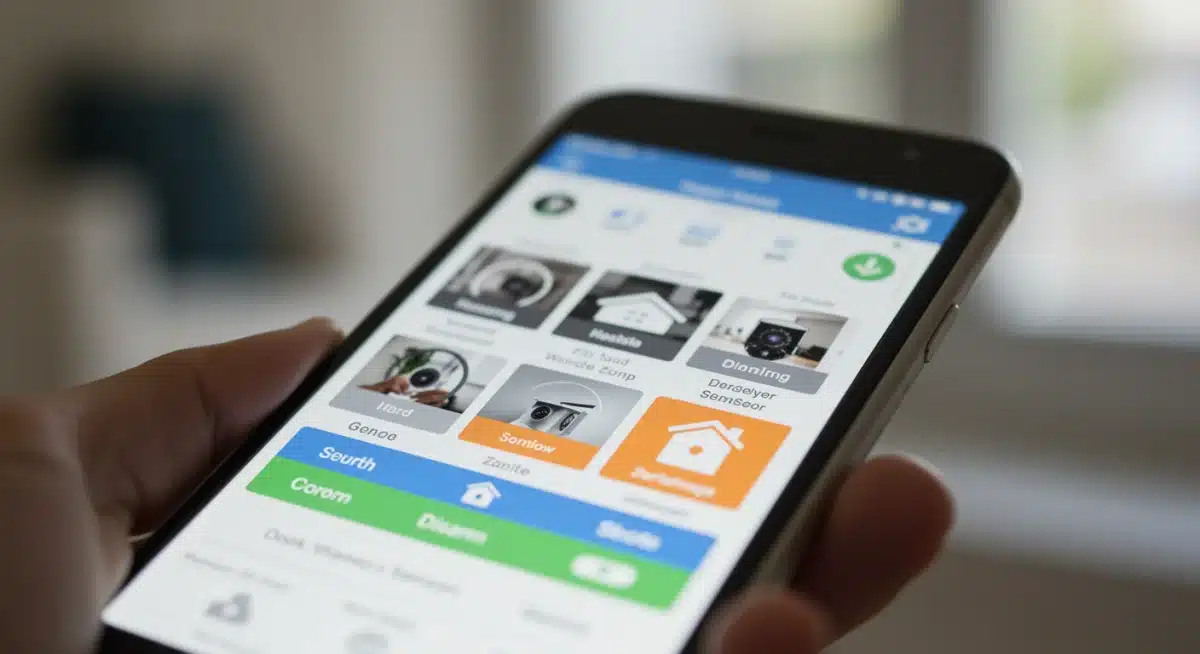
In summary, Ring Alarm Pro in 2026 is more than just a security system; it’s a foundational element for a connected smart home. Its strength lies in its integrated approach, offering comprehensive security alongside advanced networking and smart home control, making it an excellent option for tech-forward homeowners.
Arlo Security System: premium surveillance and smart detection
The Arlo Security System, by 2026, has solidified its reputation as a premium choice, particularly for homeowners prioritizing advanced video surveillance and intelligent detection capabilities. Arlo’s heritage in high-quality wireless cameras translates directly into its comprehensive security system, offering unparalleled insight into your home’s surroundings.
What sets Arlo apart is its focus on smart cameras that go beyond basic motion detection. Utilizing sophisticated AI, Arlo cameras can differentiate between people, vehicles, animals, and packages, significantly reducing irrelevant alerts. This intelligent filtering helps homeowners focus on genuine threats, enhancing the system’s effectiveness and user satisfaction.
Cutting-edge camera technology and features
Arlo’s cameras are known for their crystal-clear video quality, often supporting 2K or even 4K HDR resolution, providing forensic-level detail. Their wire-free design and long-lasting batteries offer flexible placement options, both indoors and outdoors, without the constraints of power outlets. This makes installation adaptable to virtually any home layout.
- Advanced Object Detection: AI-driven analysis distinguishes between different types of movement, reducing false alarms.
- High-Resolution Video: Offers superior clarity with 2K or 4K HDR video, ensuring every detail is captured.
- Wire-Free Design: Battery-powered cameras allow for flexible placement without the need for power outlets.
- Integrated Spotlight and Siren: Many cameras include built-in spotlights and sirens to deter intruders and provide clear night vision.
Beyond the cameras, the Arlo Security System integrates traditional sensors like door/window sensors and motion detectors, all managed through a highly intuitive mobile app. The seamless interaction between cameras and sensors allows for sophisticated automation, such as triggering a floodlight or siren when a door sensor is tripped after hours.
For those who consider video surveillance paramount to their security strategy, the Arlo Security System in 2026 represents the pinnacle of DIY options. Its combination of advanced camera technology, intelligent detection, and robust feature set provides a comprehensive and high-performance security solution.
Comparing features: a closer look at the top contenders
When evaluating Smart Home Security Systems: A 2026 Comparison of the Top 3 DIY Options, a detailed feature comparison becomes essential. Each system—Simplisafe, Ring Alarm Pro, and Arlo Security System—brings its unique strengths to the table, catering to different homeowner priorities and budgets. Understanding these nuances is key to making an informed decision.
While all three offer core security functionalities like entry sensors and professional monitoring options, their approaches to integration, smart home compatibility, and advanced features diverge significantly. This section breaks down the critical differentiators to help you align a system with your specific needs.
Feature breakdown: Simplisafe vs. Ring vs. Arlo
Simplisafe excels in its straightforward, no-frills security approach, prioritizing ease of installation and reliable core protection. Its strength lies in its simplicity and effectiveness as a dedicated security system. On the other hand, Ring Alarm Pro shines for those already invested in the Amazon ecosystem, offering deep integration with Alexa and a built-in Eero router that enhances both security and network performance.
Arlo, conversely, targets users for whom high-definition video surveillance and intelligent AI detection are paramount. Its superior camera technology and advanced analytics provide a level of visual monitoring that stands out. Each system also offers different pricing models for equipment and monitoring subscriptions, which is a significant factor in long-term cost.
- Ease of Installation: Simplisafe often leads here with its fully wireless, pre-paired components. Ring and Arlo are also DIY-friendly but may involve more setup for advanced features.
- Smart Home Integration: Ring Alarm Pro is deeply integrated with the Alexa ecosystem, offering extensive smart home control. Arlo offers good integration, especially within its own camera ecosystem. Simplisafe has more limited third-party smart home integration.
- Camera Quality & Analytics: Arlo is the undisputed leader in camera resolution and AI-driven object detection. Ring also offers quality cameras, while Simplisafe’s camera offerings are more basic but functional.
- Connectivity & Reliability: All offer cellular backup for professional monitoring. Ring Alarm Pro’s integrated Eero router provides a distinct advantage for home network stability.
The choice ultimately hinges on what you value most. Is it simplicity and core security? Deep smart home integration? Or state-of-the-art video surveillance? Each of these top DIY options in 2026 offers a compelling answer to one of these questions.
In conclusion, a thorough feature comparison reveals that while all three systems provide excellent DIY home security, their specialized strengths mean that the ‘best’ option is truly subjective, depending on individual homeowner preferences and existing smart home infrastructure.
Installation and user experience: DIY made easy
The promise of DIY smart home security systems is rooted in their accessibility, and by 2026, the installation and user experience have become incredibly streamlined across the top contenders. The goal is to empower homeowners to secure their property without requiring specialized technical skills or professional installers, transforming a complex task into an achievable project.
Each of the top three systems—Simplisafe, Ring Alarm Pro, and Arlo Security System—has invested heavily in creating intuitive setup processes and user-friendly interfaces. This focus ensures that from unboxing to full operational status, the journey is as smooth and frustration-free as possible, making robust home protection a reality for everyone.
A step-by-step guide to typical DIY setup
Most DIY systems follow a similar installation philosophy: wireless components, adhesive mounting, and guided app-based setup. This approach minimizes the need for tools or permanent alterations to your home, making them ideal for both homeowners and renters. The process typically begins with setting up the main hub, followed by placing and activating individual sensors and cameras.
The mobile application serves as the central command center, not only for daily management but also for the initial setup. These apps often feature interactive guides, video tutorials, and live chat support, ensuring that help is always at hand. Firmware updates are typically handled automatically in the background, keeping your system secure and up-to-date with the latest features.
- Base Station Placement: Position the central hub strategically for optimal wireless coverage.
- Sensor Installation: Attach door/window sensors and motion detectors using adhesive pads in key areas.
- Camera Setup: Mount cameras in desired locations, connect to Wi-Fi, and adjust viewing angles via the app.
- App Configuration: Customize settings, set up monitoring plans, and test all devices through the intuitive mobile application.
Beyond initial installation, the daily user experience is designed for convenience. Arming and disarming the system, checking live camera feeds, and receiving alerts are all managed effortlessly through the app or via voice commands with integrated smart assistants. This ease of use ensures that homeowners can confidently manage their security without it becoming a chore.
In conclusion, the DIY aspect of smart home security systems in 2026 is truly ‘made easy.’ The emphasis on intuitive installation and a seamless user experience ensures that robust home protection is not only accessible but also enjoyable to manage for every homeowner.
Cost analysis: equipment, subscriptions, and long-term value
A comprehensive cost analysis is paramount when considering Smart Home Security Systems: A 2026 Comparison of the Top 3 DIY Options. Beyond the initial equipment purchase, understanding the recurring subscription fees and the long-term value each system offers is crucial for making an economically sound decision. The total cost of ownership can vary significantly between Simplisafe, Ring Alarm Pro, and Arlo.
Initial equipment costs are often the most visible expense, but professional monitoring and cloud storage subscriptions can add up over time. Some systems offer basic self-monitoring for free, while others require a paid plan for essential features like cellular backup or video recording. This section delves into the financial aspects, helping you budget effectively.
Understanding equipment and subscription models
Simplisafe typically offers various starter packages, which can then be expanded with individual components. Their monitoring plans are flexible, with options for self-monitoring or 24/7 professional monitoring at competitive monthly rates. Ring Alarm Pro also has starter kits, but its value proposition significantly increases with the Ring Protect Pro plan, which unlocks features like local video storage and cellular internet backup.
Arlo’s initial camera costs can be higher, reflecting their premium video capabilities. While some basic features are available without a subscription, maximizing Arlo’s intelligent detection and cloud recording capabilities necessitates an Arlo Secure plan. These plans are often tiered, offering different levels of video resolution, cloud storage duration, and advanced features.
- Initial Equipment Cost: Varies by system and chosen package. Simplisafe and Ring often have more accessible entry points, while Arlo can be a higher initial investment.
- Monthly Monitoring Fees: Ranges from free self-monitoring (with limited features) to 24/7 professional monitoring, typically between $15-$30 per month.
- Cloud Storage: Essential for accessing recorded video footage. Often bundled with monitoring plans or available as a separate subscription.
- Additional Features: Costs associated with extended warranties, cellular internet backup (Ring Protect Pro), or advanced AI analytics (Arlo Secure).
When evaluating long-term value, consider not just the financial outlay but also the peace of mind and convenience each system provides. A slightly higher monthly fee might be justified if it offers superior protection, better integration with your smart home, or features that genuinely enhance your security posture.
In conclusion, thoroughly analyzing the initial equipment costs, recurring subscription fees, and the overall value proposition is vital. Each of the top DIY smart home security systems in 2026 offers different financial models, and the ‘best’ option will depend on your budget and the features you prioritize for your home’s long-term security.
| Key Aspect | Brief Description |
|---|---|
| Simplisafe | Known for ease of installation, reliability, and customizable, modular components. Excellent for core security needs. |
| Ring Alarm Pro | Integrates security with a powerful Eero Wi-Fi 6 router, ideal for Amazon ecosystem users and smart home enthusiasts. |
| Arlo Security System | Leads in high-resolution video surveillance and AI-driven smart detection for discerning camera users. |
Frequently asked questions about DIY smart security
The average initial cost for a basic DIY smart home security system in 2026 ranges from $150 to $400, depending on the brand and included components. Advanced systems with more cameras and sensors can go up to $800 or more. Monthly monitoring subscriptions typically add $15-$30.
Many modern DIY security systems, especially those offering professional monitoring and cellular backup, are highly reliable. Technological advancements in wireless communication and AI detection have significantly closed the gap, offering comparable security at a lower overall cost and greater user control.
While some DIY systems offer basic self-monitoring features for free, most advanced functionalities like 24/7 professional monitoring, cellular backup, and cloud video storage typically require a monthly subscription. These plans enhance the system’s effectiveness and provide greater peace of mind.
Yes, many DIY smart home security systems offer robust integration with popular smart home ecosystems like Amazon Alexa, Google Home, and Apple HomeKit. This allows for voice control, automation routines, and centralized management of various smart devices alongside your security system for a cohesive smart home experience.
Key considerations include your budget (initial and recurring), the size and layout of your home, desired features (e.g., video quality, smart detection), existing smart home devices for integration, and your comfort level with self-installation. Reading reviews and comparing monitoring plans are also crucial steps.
Conclusion
The 2026 landscape for DIY smart home security systems presents an exciting array of sophisticated yet user-friendly options for homeowners. Simplisafe, Ring Alarm Pro, and Arlo Security System each offer unique strengths, catering to different priorities whether it’s straightforward reliability, comprehensive smart home integration, or unparalleled video surveillance. The continuous evolution of AI, wireless technology, and edge computing ensures that these systems are not only easier to install but also more intelligent and effective than ever before. By carefully weighing features, installation ease, and long-term costs, homeowners can confidently select a system that provides robust protection and peace of mind, truly putting the power of security in their hands.