Future of Audio: Breakthrough Headphone Technologies 2026
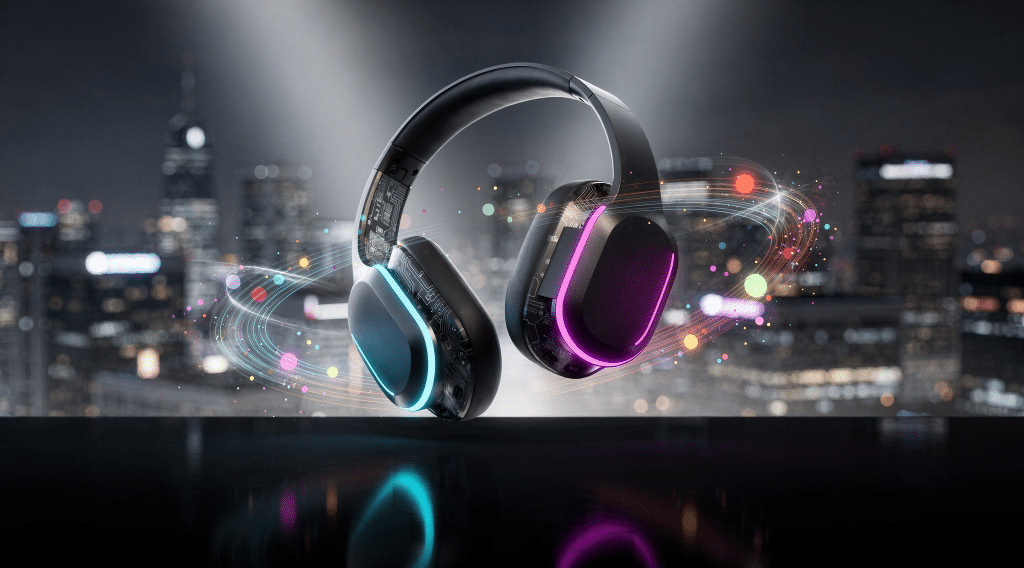
The world of audio technology is perpetually in motion, constantly pushing the boundaries of what’s possible. As we inch closer to 2026, the whispers of groundbreaking innovations are growing louder, promising a revolution in how we experience sound. From the subtle nuances of a symphony to the explosive impact of a gaming soundscape, our headphones are about to become infinitely more intelligent, immersive, and integrated into our daily lives. This article delves into the most anticipated headphone technologies 2026 will bring, exploring how these advancements will redefine our auditory reality.
For decades, headphones have been a staple for personal audio, evolving from bulky over-ear devices to discreet in-ear monitors. However, the next few years are set to witness a paradigm shift, moving beyond mere sound reproduction to a holistic sensory experience. Imagine headphones that not only deliver pristine audio but also adapt to your environment, monitor your health, and even predict your preferences. This isn’t science fiction; it’s the near future, driven by relentless research and development in acoustics, materials science, artificial intelligence, and connectivity.
The push for innovation in headphone technologies 2026 is fueled by several factors. Consumers demand greater personalization, seamless integration with smart ecosystems, and unparalleled audio fidelity. Furthermore, the rise of immersive content, such as virtual reality (VR), augmented reality (AR), and spatial audio, necessitates audio devices capable of delivering truly three-dimensional soundscapes. Manufacturers are investing heavily to meet these demands, leading to exciting breakthroughs that will soon be available to the public.
1. Hyper-Personalized Adaptive Audio: Sound Tailored to You
One of the most significant advancements expected in headphone technologies 2026 is the advent of hyper-personalized adaptive audio. Current noise-canceling headphones are impressive, but they offer a one-size-fits-all approach to environmental sound management. The next generation will be far more sophisticated. Imagine headphones that not only cancel out unwanted noise but also intelligently adapt the audio profile to your unique hearing capabilities, the specific environment you’re in, and even your current mood.
This personalization will be achieved through a combination of advanced sensors and artificial intelligence. Microphones embedded in the headphones will continuously analyze ambient sounds, identifying specific frequencies and amplitudes. AI algorithms will then process this data in real-time, dynamically adjusting noise cancellation levels and sound transparency modes. For example, if you’re walking near a busy street, the headphones might selectively reduce traffic noise while allowing you to hear important alerts like car horns or vocal announcements. In a quiet office, they might offer complete silence, but instantly switch to a ‘conversation mode’ when someone speaks to you.
Beyond environmental adaptation, hyper-personalization will extend to your individual hearing profile. Audiometric testing, traditionally performed by specialists, could be integrated directly into your headphones. During an initial setup, the headphones might play a series of tones at varying frequencies and volumes, mapping your hearing sensitivity across the audio spectrum. This data would then be used to create a custom EQ curve that compensates for any deficiencies, ensuring you hear every detail of your music or podcast as intended. This level of personalized audio will be a game-changer for individuals with mild hearing loss, allowing them to enjoy rich, full sound without the need for traditional hearing aids.
Furthermore, AI will learn your listening habits and preferences over time. If you frequently boost bass for certain genres, the headphones might automatically suggest that profile. If you prefer a more neutral sound for podcasts, they’ll remember. This intelligent adaptation will move beyond simple presets, creating a truly bespoke listening experience that evolves with you. The goal is an audio experience so seamless and intuitive that you barely notice the technology working in the background, only the pristine, perfectly tailored sound.
2. Neural Interface & Brain-Computer Integration: Beyond Buttons and Touch
Perhaps the most futuristic of all emerging headphone technologies 2026 is the integration of neural interfaces and brain-computer interaction. While full-fledged mind control might still be a few decades away, early forms of neuro-sensing technology are already making their way into consumer devices. By 2026, we can expect headphones that can interpret basic brain signals, allowing for more intuitive control and deeper personalization.
Imagine pausing your music with a subtle thought, adjusting volume by focusing your attention, or even selecting tracks based on your emotional state. This will be made possible by integrating electroencephalography (EEG) sensors into headphone earcups or headbands. These tiny sensors can detect the faint electrical activity produced by your brain. AI algorithms will then interpret these patterns, translating them into commands or insights.
Beyond basic controls, neural interfaces could revolutionize focus and productivity. Headphones equipped with EEG sensors could monitor your cognitive load and attention levels. If you’re struggling to concentrate on a task, the headphones might automatically adjust ambient soundscapes to promote focus, or even play binaural beats designed to enhance concentration. Conversely, if you’re stressed, they might suggest calming audio or guide you through a short meditation session.
Another exciting application is in the realm of biofeedback. By monitoring brainwave patterns, headphones could provide real-time feedback on your mental state, helping you to understand and potentially regulate your emotions. This could be particularly beneficial for stress management, sleep improvement, and even enhancing learning capabilities. The ethical considerations around brain data privacy will, of course, be paramount, and manufacturers will need to implement robust security measures and transparent data handling policies.
This technology represents a significant leap from current control methods, moving beyond physical interactions to a more seamless, thought-driven experience. While still in its nascent stages, the potential of neural interface headphones to augment our cognitive abilities and improve our well-being is immense, making it one of the most exciting headphone technologies 2026 will introduce.
3. Augmented Reality Audio & Spatial Sound Mapping: Blurring Realities
The rise of augmented reality (AR) and virtual reality (VR) has created an urgent need for equally immersive audio experiences. By 2026, headphones will be at the forefront of delivering truly believable AR audio, where digital sounds seamlessly blend with and react to your physical environment. This goes far beyond traditional stereo or even surround sound; we’re talking about sounds that appear to emanate from specific points in your real-world space, responding to your head movements and interactions.
Key to this will be advanced spatial sound mapping and head-tracking technologies. Headphones will incorporate precise motion sensors (accelerometers, gyroscopes, magnetometers) to accurately track the orientation and position of your head. This data, combined with real-time environmental scanning (possibly through integrated cameras or lidar sensors in the headphones or connected devices), will allow for the creation of a ‘sound map’ of your surroundings. Digital audio objects can then be placed within this map, remaining fixed in apparent space even as you move your head.
Imagine walking through a park and hearing a virtual bird singing from a specific tree, or receiving navigation instructions that sound like they’re coming from the exact turn you need to make. For gaming, this means unparalleled immersion, where enemy footsteps are precisely localized, giving you a tactical advantage. In professional settings, AR audio could enable virtual meetings where participants sound like they are sitting around a real table, regardless of their physical location.
Furthermore, these headphones will likely integrate with AR glasses or smart contact lenses, creating a truly multi-sensory augmented reality experience. The audio will not just be spatialized; it will be context-aware. If you’re looking at a specific object, related audio information might be delivered directly to your ears, enhancing your understanding and interaction with the world around you. This merging of digital sound with the physical world represents a monumental leap in how we perceive and interact with our environment, making AR audio a cornerstone of headphone technologies 2026.
4. Self-Healing Materials & Sustainable Design: Durability Meets Eco-Consciousness
As consumers become more environmentally aware and demand greater longevity from their devices, manufacturers are responding with innovations in materials science and design. By 2026, we can expect to see headphones incorporating self-healing materials and embracing truly sustainable manufacturing practices. This means less electronic waste and more durable, long-lasting products.
Self-healing materials are a fascinating area of research, where polymers and composites are engineered to repair minor scratches, scuffs, and even small cracks autonomously. Imagine a headphone headband that can ‘mend’ itself overnight after a minor abrasion, or earcups that resist wear and tear far more effectively than current plastics. This technology could significantly extend the lifespan of headphones, reducing the need for frequent replacements and thereby lessening their environmental impact.
Beyond self-healing, the focus on sustainable design will intensify. This includes using recycled and recyclable materials for components, reducing reliance on rare earth minerals, and designing headphones for easier repairability and component replacement. Modular designs, where individual parts like batteries, ear pads, or even drivers can be easily swapped out by the user, will become more common. This ‘right to repair’ movement is gaining traction, and headphone manufacturers will need to adapt.
Furthermore, energy efficiency will be a key design principle. Headphones will feature ultra-low power consumption for extended battery life, reducing the frequency of charging. The charging mechanisms themselves might become more sustainable, perhaps utilizing kinetic energy harvesting or more efficient solar charging solutions for portable cases. Packaging will also undergo a transformation, moving away from plastics and non-recyclable materials towards biodegradable and compostable alternatives.
The combination of self-healing materials and sustainable design principles represents a holistic approach to product development, addressing both durability and environmental responsibility. These advancements in materials and manufacturing will ensure that the cutting-edge headphone technologies 2026 are also kind to our planet.
5. Bio-Integrated Health Monitoring: Your Wellness Companion
Headphones are already a personal device, spending hours in close contact with our bodies. This intimate connection makes them ideal candidates for integrating advanced health monitoring capabilities. By 2026, expect headphones to evolve beyond audio devices into sophisticated wellness companions, capable of tracking a range of physiological metrics with medical-grade accuracy.
The most immediate applications will likely involve heart rate monitoring, similar to smartwatches, but potentially with greater accuracy due to the proximity of the ear to major blood vessels. Beyond basic heart rate, headphones could measure heart rate variability (HRV), a key indicator of stress and recovery. Integrated temperature sensors could track body temperature, providing early warnings for illness or monitoring performance during exercise.
More advanced sensors could incorporate pulse oximetry, measuring blood oxygen saturation, which is crucial for athletes and individuals with certain health conditions. Even more ambitiously, some research is exploring the integration of electrodermal activity (EDA) sensors, which measure skin conductivity changes related to stress and emotional response. This could offer real-time insights into your mental state, much like the neural interface technology, but through physiological markers.
The data collected by these bio-integrated headphones would be seamlessly integrated with health apps on your smartphone or smartwatch, providing a comprehensive overview of your well-being. Imagine receiving a notification that your stress levels are rising during a busy workday, accompanied by a suggestion for a short mindfulness exercise delivered directly through your headphones. Or, during a workout, your headphones could provide real-time feedback on your exertion levels and hydration status.
Of course, accuracy and data privacy will be paramount. Manufacturers will need to ensure that these health monitoring features are reliable and that user data is protected with the highest level of security. The potential to transform headphones into proactive health management tools is immense, making bio-integrated health monitoring one of the most impactful headphone technologies 2026 will bring to the mainstream.
The Road Ahead: Challenges and Opportunities for Headphone Technologies 2026
While the future of headphone technologies 2026 looks incredibly promising, there are significant challenges to overcome. Miniaturization of advanced sensors, power efficiency for extended battery life, and the development of robust, secure data processing algorithms are all critical. Furthermore, ensuring that these complex technologies remain user-friendly and affordable for the mass market will be a key hurdle for manufacturers.
Ethical considerations, particularly concerning data privacy and the potential for misuse of highly personal information (like health metrics and brainwave data), will also need careful navigation. Transparent policies and strong regulatory frameworks will be essential to build user trust and ensure responsible innovation.
However, the opportunities are even greater. These breakthrough headphone technologies 2026 will not only enhance our audio experience but will also integrate seamlessly into our smart homes, health ecosystems, and professional lives. They will become indispensable tools for communication, entertainment, productivity, and personal well-being. The convergence of AI, advanced sensing, and innovative materials promises a future where headphones are far more than just sound output devices; they will be intelligent, adaptive, and deeply personal companions.
The Evolution of Sound: From Consumption to Interaction
The journey from early gramophones to today’s wireless earbuds has been remarkable. The next frontier, powered by the headphone technologies 2026, moves us from passive consumption of sound to active interaction with our auditory world. This shift will redefine how we work, play, connect, and even understand ourselves. The future of audio is not just about clearer sound; it’s about a more intelligent, intuitive, and integrated listening experience that truly adapts to the individual.
Impact on Different Sectors
The advancements in headphone technologies 2026 will have a ripple effect across various industries. In entertainment, immersive audio will elevate gaming, movies, and music concerts to unprecedented levels of realism. For professionals, particularly in remote work environments, enhanced clarity and adaptive noise cancellation will improve focus and communication. The healthcare sector stands to benefit immensely from integrated health monitoring, offering new avenues for preventative care and personal wellness management. Even in education, personalized adaptive audio could create more engaging and effective learning environments.
User Experience at the Core
Ultimately, the success of these new headphone technologies 2026 will hinge on their ability to deliver a superior user experience. This means not just cutting-edge features, but also comfort, reliability, and ease of use. Manufacturers will need to strike a delicate balance between innovation and practicality, ensuring that the technology enhances, rather than complicates, our daily lives. The headphones of the future will be designed to disappear, allowing us to focus entirely on the rich, personalized, and immersive soundscapes they create.
In conclusion, the next few years promise an exhilarating transformation in personal audio. The headphone technologies 2026 are poised to deliver a level of immersion, personalization, and intelligence that was once confined to the pages of science fiction. Get ready to experience sound in ways you never thought possible.