Smartwatch Revolution: The Future of Wearable Tech in 2026
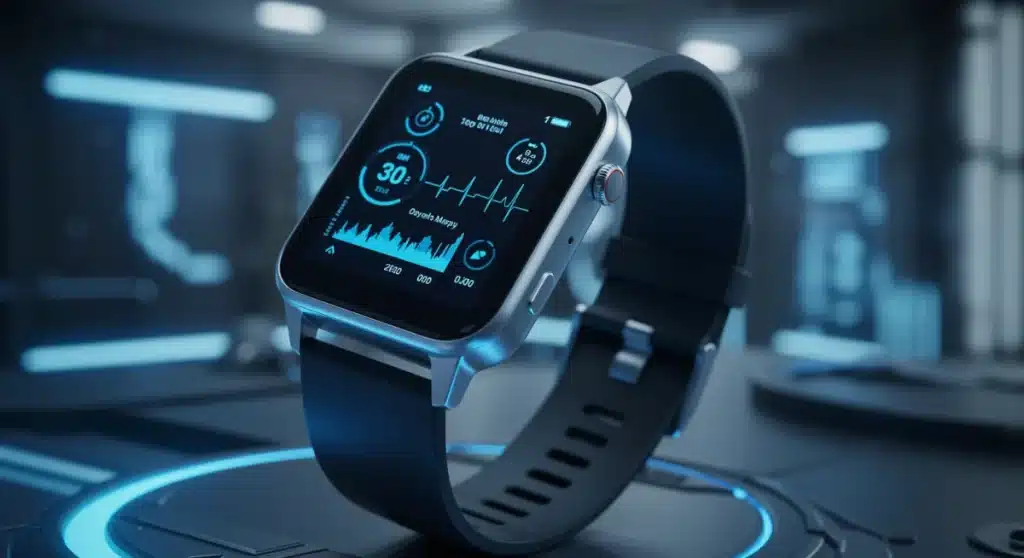
The next 12 months will redefine wearable tech, with smartwatches leading the charge through advanced health sensors, smarter AI integration, extended battery life, and enhanced connectivity, transforming how we interact with our digital and physical worlds.
The landscape of personal technology is constantly evolving, and at its heart lies the captivating world of wearables. Specifically, the future of wearable tech, particularly smartwatches, is poised for significant breakthroughs in the next 12 months, promising to integrate even more seamlessly into our daily lives and offer unprecedented functionalities. What innovations can we truly anticipate?
Advanced Health Monitoring: Beyond Heart Rate
Smartwatches have already cemented their role as personal health companions, but the upcoming year will push these capabilities further than ever before. We’re moving beyond basic heart rate tracking to a more holistic and proactive approach to personal well-being.
Expect to see a surge in non-invasive sensing technologies, allowing smartwatches to monitor a wider array of physiological markers. This means more comprehensive data for users and, potentially, earlier detection of health issues.
Continuous Glucose Monitoring (CGM)
One of the most anticipated advancements is the integration of non-invasive continuous glucose monitoring. This technology holds immense promise for millions of people managing diabetes, offering real-time insights without the need for traditional, often painful, finger pricks.
- Non-invasive sensors for discreet monitoring.
- Real-time data for better blood sugar management.
- Alerts for critical highs and lows.
- Integration with dietary and activity tracking.
Enhanced Sleep Tracking and Analysis
While current smartwatches offer sleep tracking, the next generation will provide more granular data and actionable insights. This includes deeper analysis of sleep stages, detection of sleep disorders like apnea, and personalized recommendations for improving sleep quality.
The focus will shift from merely logging sleep to actively guiding users toward healthier sleep patterns, recognizing the profound impact sleep has on overall health and cognitive function. This will involve more sophisticated algorithms and potentially new sensor types.
In summary, health monitoring on smartwatches is evolving from simple data collection to sophisticated, proactive health management tools, offering users a much deeper understanding of their physical state and empowering them to make informed decisions about their physical state and empowering them to make informed decisions about their well-being.
AI Integration and Predictive Analytics
Artificial intelligence is no longer a buzzword; it’s becoming an integral part of how our devices function. In the context of smartwatches, AI will transform raw data into intelligent, personalized insights and predictive capabilities.
The next 12 months will see smartwatches leveraging AI to offer more than just summaries of your day. They will become proactive assistants, anticipating your needs and offering tailored advice based on your unique patterns and goals.
Personalized Health Coaching
Imagine a smartwatch that not only tracks your steps but also understands your fitness level, dietary habits, and stress triggers. AI will enable smartwatches to act as personalized health coaches, offering real-time encouragement and suggesting adjustments to your routine.
- Adaptive workout recommendations based on recovery and performance.
- Dietary suggestions aligned with health goals.
- Stress management techniques triggered by biometric data.
- Proactive alerts for potential health risks.
Predictive Health Insights
Beyond coaching, AI will empower smartwatches to identify subtle changes in your health metrics that might indicate an impending illness or a need for rest. This predictive capability could revolutionize preventative healthcare, allowing users to take action before symptoms become severe.
By analyzing long-term trends and cross-referencing various data points, smartwatches will be able to offer warnings or suggest consulting a physician, moving from reactive to proactive health management. This level of insight will be a game-changer for many users.
Ultimately, AI integration will make smartwatches far more intelligent and intuitive, transforming them from mere data loggers into truly personalized digital health and lifestyle companions, capable of learning and adapting to individual user needs.
Battery Life and Energy Efficiency Breakthroughs
One of the perennial challenges for wearable tech, especially smartwatches, has been battery life. Users often find themselves charging their devices daily, limiting their utility and convenience. The coming year promises significant strides in this area.
Innovations in battery technology, coupled with more energy-efficient processors and operating systems, are set to extend the time between charges dramatically, making smartwatches more practical for continuous use and multi-day adventures.
Advanced Battery Chemistries
New battery materials and designs are emerging that offer higher energy density without increasing size. This means more power packed into the same small form factor, directly translating to longer operational times for smartwatches.
Researchers are exploring solid-state batteries and other novel chemistries that promise not only extended life but also faster charging capabilities and improved safety, addressing some of the core limitations of current lithium-ion technology.
Optimized Software and Hardware Integration
Beyond the battery itself, significant gains in efficiency will come from tighter integration between hardware and software. Chip manufacturers are designing processors specifically for wearables that consume less power, even when performing complex tasks.
Operating systems are also becoming smarter, managing background processes and sensor usage more intelligently to conserve energy. This holistic approach to power management is crucial for achieving multi-day battery life without sacrificing functionality.
The focus on battery life and energy efficiency will make smartwatches truly ‘always-on’ devices, capable of continuous monitoring and notification without the constant anxiety of running out of power, thereby enhancing their overall value proposition.
Enhanced Connectivity and Standalone Capabilities
While many smartwatches currently rely heavily on a paired smartphone, the trend for the next 12 months is toward greater independence. Enhanced connectivity will enable smartwatches to perform more functions autonomously, offering true freedom from your phone.
This shift will make smartwatches more versatile, allowing users to leave their phones behind more often while still staying connected and accessing essential features. It’s about empowering the watch to be a primary device in its own right.
5G and Advanced LTE Integration
The rollout of 5G networks will play a significant role in empowering standalone smartwatches. With faster speeds and lower latency, smartwatches will be able to handle more data-intensive tasks directly, from streaming music to making high-quality video calls.
- Direct streaming of music and podcasts.
- Improved voice call quality without a phone.
- Faster data synchronization for cloud-based apps.
- More reliable emergency calling features.
Seamless Ecosystem Integration
Smartwatches will become even more central to integrated smart home ecosystems and broader digital services. Expect enhanced interoperability with smart appliances, vehicle systems, and public transport networks, all controlled from your wrist.
This means your smartwatch could unlock your front door, adjust your thermostat, or even pay for your groceries, all without needing to pull out your phone. The watch becomes a universal remote for your connected life, simplifying daily interactions.
The drive for enhanced connectivity and standalone capabilities will transform smartwatches into truly independent and powerful hubs for personal communication, entertainment, and control, offering unparalleled convenience and flexibility to users.
Innovative Display Technologies and User Interfaces
The visual and interactive experience of a smartwatch is paramount, and the next year will bring significant advancements in display technology and user interface design. These improvements will make smartwatches more aesthetically pleasing, functional, and intuitive to use.
From brighter, more vibrant screens to more responsive and personalized interactions, the focus is on creating a seamless and enjoyable user experience that encourages sustained engagement with the device throughout the day.
Micro-LED and Flexible Displays
Expect to see more smartwatches incorporating Micro-LED technology, offering superior brightness, contrast, and energy efficiency compared to current OLED displays. This will result in clearer visuals, even in direct sunlight, and potentially longer battery life.
Furthermore, flexible and even rollable display technologies are on the horizon, which could lead to entirely new form factors and design possibilities for smartwatches, allowing for larger screens that can adapt to different uses or even wrap around the wrist more organically.
Gesture Control and Haptic Feedback
Beyond touchscreens, smartwatches will increasingly incorporate advanced gesture controls, allowing users to interact with their devices through subtle hand or wrist movements without touching the screen. This enhances convenience, especially when hands are occupied.
Haptic feedback will also become more sophisticated, providing nuanced and informative vibrations that can convey different types of notifications or even guide users through navigation without needing visual cues, making interactions more immersive and discreet.
These innovations in display and user interface design will make smartwatches not only more beautiful and durable but also significantly more intuitive and engaging to use, cementing their place as a central piece of personal technology.
Privacy and Security Enhancements
As smartwatches collect increasingly sensitive personal data, concerns about privacy and security naturally grow. The next 12 months will see a concerted effort by manufacturers to implement robust safeguards, building greater trust with users.
With health data, location information, and financial transactions all handled by these devices, ensuring the highest level of protection against breaches and unauthorized access is absolutely critical for the continued growth and acceptance of wearable tech.
Biometric Authentication Advancements
Beyond traditional PINs or patterns, smartwatches will utilize more advanced biometric authentication methods. This could include continuous heart rate verification, unique wrist vein patterns, or even subtle gait analysis to ensure only the authorized user can access sensitive information or make payments.
- Continuous heart rate monitoring for user authentication.
- Wrist vein pattern recognition for enhanced security.
- Secure element hardware for encrypted data storage.
- Two-factor authentication integrated directly on the device.
End-to-End Encryption for Data Transmission
All data transmitted from the smartwatch, whether to a smartphone, cloud service, or medical provider, will increasingly be protected by end-to-end encryption. This ensures that personal information remains private and secure from interception.
Manufacturers are also focusing on transparency regarding data usage, clearly outlining what data is collected, how it’s used, and who it’s shared with, giving users more control over their digital footprint and fostering greater confidence in the device’s security protocols.
The emphasis on privacy and security enhancements will be foundational for the widespread adoption of advanced smartwatch features, particularly those related to health and financial transactions, ensuring users feel safe and confident entrusting their personal data to these devices.
| Key Trend | Brief Description |
|---|---|
| Advanced Health Monitoring | Beyond heart rate to include non-invasive CGM and enhanced sleep analysis for proactive health. |
| AI and Predictive Analytics | Smartwatches as personalized health coaches offering tailored insights and predictive health warnings. |
| Extended Battery Life | Breakthroughs in battery chemistry and software optimization for multi-day usage. |
| Enhanced Connectivity | Greater standalone capabilities with 5G integration and seamless ecosystem control. |
Frequently Asked Questions About Future Smartwatches
The biggest innovations include non-invasive continuous glucose monitoring, more accurate blood pressure sensing, and advanced sleep apnea detection. These will provide users with a much more comprehensive and proactive view of their health, moving beyond basic fitness tracking to preventative care.
AI will transform smartwatches into personalized assistants, offering tailored health coaching, predictive insights into well-being, and more intuitive interactions. It will move from simply presenting data to actively helping users make informed decisions and adapt their routines for better health outcomes.
Yes, significant improvements in battery life are anticipated. Advances in battery chemistry, coupled with more energy-efficient processors and optimized software, are expected to enable multi-day usage, reducing the need for daily charging and enhancing overall convenience for users.
Absolutely. The trend is towards greater independence for smartwatches. Enhanced 5G and advanced LTE integration will allow them to handle more tasks autonomously, from streaming and calls to controlling smart home devices, making them less reliant on a paired smartphone.
Expect to see Micro-LED displays for superior brightness and efficiency, along with flexible and potentially rollable screen technologies. These innovations will lead to more vibrant visuals, new form factors, and improved durability, enhancing the overall user experience and design.
Conclusion
The next 12 months promise to be a pivotal period for wearable tech, particularly for smartwatches. We are on the cusp of an era where these devices transcend their current capabilities, becoming indispensable tools for health, connectivity, and daily convenience. From sophisticated health monitoring that borders on medical-grade accuracy to AI-driven personalized insights, extended battery life, and true standalone connectivity, smartwatches are evolving into powerful, intelligent companions. As display technologies advance and privacy measures strengthen, the integration of these devices into our lives will become even more seamless and trustworthy, fundamentally reshaping our interaction with technology and our approach to personal well-being. The future of wearable tech is not just about what these devices can do, but how they empower us to live healthier, more connected, and more informed lives.