Insider Threat Detection: Advanced Techniques & Mitigation

Advanced insider threat detection involves employing sophisticated technologies and methodologies to identify, assess, and neutralize internal risks, playing a pivotal role in preventing significant data loss for organizations.
In the evolving landscape of cybersecurity, the threat from within has become increasingly complex and potent. Insider threat detection, focusing on advanced techniques to identify and mitigate internal risks, is no longer just a best practice but a critical necessity for preventing over 30% of data loss in 2025. Organizations face a constant battle to protect their most valuable assets, and often, the greatest vulnerabilities lie within their own ranks, whether through malicious intent or unwitting error.
Understanding the Evolving Insider Threat Landscape
The nature of insider threats has shifted dramatically over the past decade. It’s no longer solely about disgruntled employees intentionally stealing data; it now encompasses a broader spectrum of risks, including negligence, compromised credentials, and sophisticated social engineering attacks targeting internal personnel. Recognizing these multifaceted threats is the first step toward building a resilient defense.
The digital transformation has expanded attack surfaces, making it easier for insiders, both malicious and unintentional, to access and potentially compromise sensitive information. This necessitates a proactive and adaptive approach to security that moves beyond traditional perimeter defenses.
The Rise of Unintentional Insider Threats
Many data breaches attributed to insiders stem not from malice, but from human error or negligence. Employees might inadvertently click on phishing links, misconfigure systems, or share sensitive information through unsecured channels. These actions, while not intentional, can have devastating consequences for an organization’s data integrity and reputation.
- Phishing and social engineering attacks targeting employees
- Misconfigurations or accidental data exposure
- Use of unauthorized or unsecured personal devices
- Lack of awareness regarding data handling policies
Malicious Insider Activities
While less frequent, malicious insider threats pose a significant danger due to their deliberate nature and often deep understanding of organizational systems and vulnerabilities. These actors might seek financial gain, competitive advantage, or simply aim to cause disruption. Their actions are meticulously planned and often executed to evade detection.
Identifying such threats requires a combination of advanced monitoring, behavioral analytics, and a deep understanding of potential motivations. Organizations must be vigilant in observing unusual patterns of behavior or data access that deviate from an employee’s normal activities.
Effectively addressing the evolving insider threat landscape demands a comprehensive strategy that combines technological solutions with robust policy enforcement and continuous employee education. Understanding the ‘why’ behind insider actions, whether malicious or accidental, is crucial for developing targeted prevention and detection measures.
Leveraging User Behavior Analytics (UBA) for Early Detection
User Behavior Analytics (UBA) has emerged as a cornerstone of modern insider threat detection. By establishing a baseline of normal user activity, UBA systems can identify deviations that may indicate a potential threat. This approach moves beyond simple rule-based alerts, offering a more nuanced and predictive capability.
UBA solutions analyze a wide array of user activities, such as login times, access patterns to sensitive files, email communications, and application usage. This holistic view allows security teams to spot anomalies that might otherwise go unnoticed, providing early warning signs of suspicious behavior.
Establishing Behavioral Baselines
The effectiveness of UBA hinges on its ability to accurately define what constitutes ‘normal’ behavior for each user and peer group. This involves collecting and analyzing vast amounts of historical data over time. As users’ roles and responsibilities change, these baselines must also adapt to remain relevant and accurate.
- Monitoring login locations and times
- Analyzing file access and modification patterns
- Tracking email and communication activities
- Assessing application usage and installed software
Detecting Anomalies and Outliers
Once baselines are established, UBA systems continuously monitor user actions for any significant deviations. These could include accessing data outside of working hours, attempting to access restricted systems, or downloading an unusually large volume of files. Such anomalies trigger alerts, prompting further investigation by security personnel.
The goal is to differentiate between benign unusual activity and genuine threats, minimizing false positives while ensuring critical incidents are not missed. This often involves machine learning algorithms that learn and refine their detection capabilities over time, improving accuracy and reducing the burden on security analysts.
UBA is an indispensable tool in the fight against insider threats, providing a dynamic and intelligent layer of security. By focusing on behavior rather than just static rules, organizations can significantly enhance their ability to detect and respond to internal risks before they escalate into full-blown data breaches.
Implementing Data Loss Prevention (DLP) Strategies
Data Loss Prevention (DLP) is a critical component of any comprehensive insider threat program. DLP solutions are designed to identify, monitor, and protect sensitive data wherever it resides – whether at rest, in motion, or in use. By enforcing policies, DLP prevents unauthorized access, transfer, or use of confidential information, both intentionally and unintentionally.
Effective DLP implementation requires a deep understanding of an organization’s data assets, their classification, and the regulatory requirements governing their protection. It’s not merely about blocking transfers but about creating an intelligent fabric of data protection.
Classifying and Tagging Sensitive Data
Before any DLP solution can be truly effective, organizations must accurately classify their sensitive data. This involves identifying what data is critical, where it is stored, and who should have access to it. Data classification can be manual, automated, or a hybrid approach, often leveraging machine learning to identify patterns and content.
Once classified, data can be tagged with metadata that indicates its sensitivity level and associated handling policies. This tagging enables DLP systems to apply the correct protective measures automatically, ensuring consistency across different platforms and applications.
Enforcing Data Handling Policies
DLP solutions enforce granular policies that dictate how sensitive data can be used, shared, and stored. For instance, a policy might prevent employees from emailing certain types of financial data outside the organization or from uploading proprietary source code to personal cloud storage services. These policies are crucial for maintaining control over information flow.
The enforcement mechanisms can range from simple alerts to blocking actions entirely, depending on the severity of the policy violation and the sensitivity of the data involved. Continuous monitoring and policy refinement are essential to adapt to new threats and evolving business needs.
Integrating DLP with other security tools, such as UBA and security information and event management (SIEM) systems, creates a more robust defense. This integrated approach provides a holistic view of data security, enabling quicker detection and response to potential insider threats, ultimately safeguarding valuable information.
The Role of AI and Machine Learning in Threat Detection
Artificial intelligence (AI) and machine learning (ML) are revolutionizing insider threat detection by enabling systems to learn, adapt, and identify complex patterns that human analysts might miss. These technologies move beyond static rules, offering predictive capabilities and significantly reducing false positives, which can overwhelm security teams.
By processing vast amounts of data from various sources, AI and ML algorithms can identify subtle anomalies in user behavior, network traffic, and data access patterns that indicate a potential insider threat. This proactive approach allows for intervention before significant damage occurs.
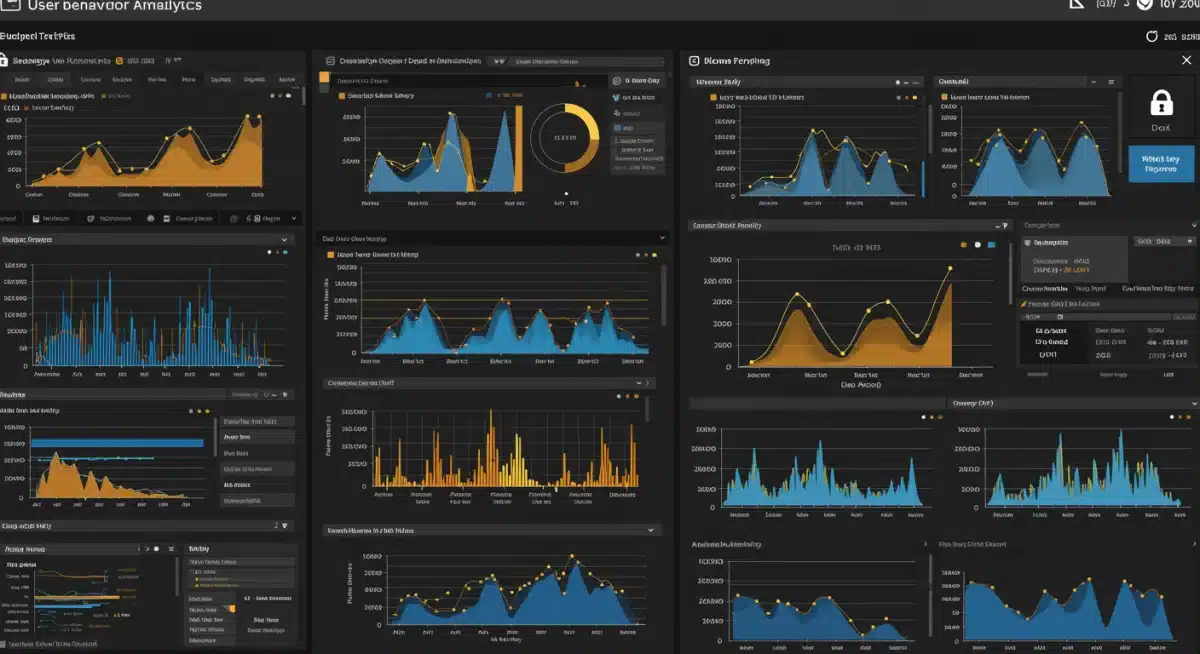
Predictive Analytics for Proactive Security
ML models can analyze historical data to predict future insider threat risks. For example, by identifying patterns associated with past incidents, the system can flag employees who exhibit similar risk indicators. This predictive capability allows organizations to implement preventative measures or increase monitoring for at-risk individuals, significantly enhancing security posture.
- Identifying high-risk user profiles based on historical data
- Predicting potential data exfiltration attempts
- Forecasting vulnerabilities based on past incident trends
- Proactive flagging of unusual access patterns
Reducing False Positives with Advanced Algorithms
One of the biggest challenges in cybersecurity is the sheer volume of alerts, many of which are false positives. AI and ML algorithms excel at filtering out irrelevant noise by learning what constitutes legitimate activity versus actual threats. This reduces alert fatigue for security analysts, allowing them to focus on genuine incidents.
These algorithms continuously improve over time, adapting to new behaviors and attack vectors. This adaptive learning ensures that the detection system remains effective against evolving insider threats, providing a more accurate and efficient security operation.
The integration of AI and ML into insider threat detection systems represents a significant leap forward in cybersecurity. These technologies empower organizations with the ability to not only detect but also predict and prevent internal risks more effectively, safeguarding critical assets in an increasingly complex threat landscape.
Building a Robust Insider Threat Program
Developing a robust insider threat program goes beyond deploying technology; it requires a holistic strategy encompassing policy, people, and processes. A well-structured program establishes clear guidelines, educates employees, and integrates various security solutions to create a multi-layered defense against internal risks.
Such a program ensures that all aspects of an organization are aligned in mitigating insider threats, from initial hiring to ongoing monitoring and incident response. It’s about fostering a culture of security awareness and accountability.
Establishing Clear Policies and Procedures
Clear, enforceable policies are the backbone of any effective insider threat program. These policies should define acceptable use of company resources, data handling protocols, and the consequences of policy violations. Employees must be aware of these guidelines and understand their role in maintaining security.
Procedures for reporting suspicious activity, incident response, and disciplinary actions should also be well-documented and regularly reviewed. Consistency in policy enforcement is crucial for maintaining trust and deterring potential malicious actors.
Employee Training and Awareness
Employees are often considered the weakest link in cybersecurity, but they can also be the strongest defense. Regular, engaging training programs can significantly reduce the risk of unintentional insider threats. Training should cover topics such as phishing awareness, secure data handling, and the importance of reporting suspicious activities.
Fostering a security-conscious culture where employees feel comfortable reporting concerns without fear of reprisal is paramount. This proactive engagement turns every employee into a potential sensor for unusual activities, strengthening the overall security posture.
A comprehensive insider threat program integrates technological tools with human elements, creating a formidable defense. By combining clear policies, continuous education, and advanced detection systems, organizations can significantly reduce their vulnerability to internal risks and protect their valuable data assets.
Mitigating Risks and Ensuring Compliance
Effective insider threat detection not only prevents data loss but also plays a crucial role in ensuring regulatory compliance. Many industry standards and government regulations mandate specific controls for protecting sensitive data, and a strong insider threat program directly addresses these requirements. Non-compliance can lead to hefty fines, reputational damage, and legal repercussions.
Beyond compliance, mitigating insider risks involves continuous improvement and adaptation. The threat landscape is constantly evolving, requiring organizations to regularly review and update their security strategies to stay ahead of new challenges.
Adhering to Regulatory Frameworks
Organizations operate under a myriad of regulatory frameworks, such as GDPR, HIPAA, PCI DSS, and CCPA, all of which have strict requirements for data protection. An insider threat program helps demonstrate due diligence in safeguarding personal and sensitive information, directly supporting compliance efforts.
- GDPR for personal data protection
- HIPAA for healthcare information security
- PCI DSS for payment card data security
- CCPA for California consumer privacy rights
Continuous Monitoring and Incident Response
Mitigation is an ongoing process that requires continuous monitoring of systems and user activities. This includes regular audits, vulnerability assessments, and penetration testing to identify and address potential weaknesses. A well-defined incident response plan is also essential for quickly and effectively addressing any detected insider threats.
The incident response plan should outline clear roles and responsibilities, communication protocols, and steps for containment, eradication, recovery, and post-incident analysis. Learning from each incident helps refine the program and strengthen future defenses.
By proactively mitigating insider risks and ensuring compliance, organizations can not only protect their data but also build trust with customers and stakeholders. A robust insider threat program is an investment in long-term security and operational resilience, critical for navigating the complex digital world of 2025.
| Key Aspect | Brief Description |
|---|---|
| Evolving Threats | Insiders pose risks from malicious intent and unintentional errors, expanding beyond traditional notions. |
| UBA Importance | User Behavior Analytics establishes baselines to detect anomalous activities, crucial for early detection. |
| DLP Strategy | Data Loss Prevention classifies and protects sensitive data, enforcing policies to prevent unauthorized transfer. |
| AI/ML Integration | AI and Machine Learning enhance detection accuracy, providing predictive analytics and reducing false positives. |
Frequently Asked Questions About Insider Threat Detection
An insider threat refers to a security risk that originates from within the targeted organization. This can include current or former employees, contractors, or business associates who have access to the organization’s systems and data, and who misuse that access, either intentionally or unintentionally, to compromise security.
UBA establishes a baseline of normal activity for each user. By continuously monitoring and analyzing user actions, such as login times, data access, and application usage, UBA systems can detect deviations from these baselines, signaling potential insider threats that warrant further investigation by security teams.
DLP solutions are crucial for preventing sensitive data from leaving the organization’s control. They work by identifying, monitoring, and protecting data across various states (at rest, in motion, in use) and enforcing policies that prevent unauthorized transfer, ensuring that confidential information remains secure and compliant with regulations.
Yes, AI and Machine Learning significantly enhance insider threat detection by analyzing vast datasets to identify complex patterns and anomalies that might go unnoticed by human analysts. They offer predictive capabilities, reduce false positives, and adapt to evolving threats, making detection more efficient and accurate over time.
A robust insider threat program includes clear policies, continuous employee training and awareness, advanced technological solutions like UBA and DLP, and a well-defined incident response plan. It requires a holistic approach that integrates people, processes, and technology to effectively protect an organization’s assets.
Conclusion
The imperative for robust insider threat detection has never been clearer, especially as organizations strive to prevent significant data loss in the coming years. By embracing advanced techniques such as User Behavior Analytics, implementing comprehensive Data Loss Prevention strategies, and leveraging the power of AI and Machine Learning, businesses can build formidable defenses against internal risks. A holistic approach, combining technology with clear policies, continuous employee education, and stringent compliance measures, is essential for safeguarding sensitive data and maintaining operational integrity in an increasingly complex digital landscape. Proactive and adaptive security postures are no longer optional, but fundamental to survival and success.