Insider Threats: Mitigating Risks in US Companies by 2027

US companies face increasing risks from insider threats, necessitating a robust 3-month action plan to identify and mitigate these dangers effectively before 2027.
Insider threats: Identifying and mitigating risks in US companies before 2027 – a 3-month action plan is no longer a distant concern but an immediate imperative for businesses across the United States. As digital landscapes evolve and work environments become more interconnected, the potential for harm from within an organization grows. Understanding and addressing these internal vulnerabilities is paramount to safeguarding sensitive data, intellectual property, and overall operational integrity.
Understanding the Evolving Landscape of Insider Threats
The concept of an insider threat has broadened significantly beyond the stereotypical disgruntled employee. Today, it encompasses a wide array of behaviors, from malicious data exfiltration to unintentional errors that expose critical systems. For US companies, the challenge lies in distinguishing between these varied scenarios and implementing effective preventative and detective measures.
Recent shifts in remote work and cloud adoption have further complicated this landscape, extending the traditional perimeter of enterprise security. Organizations must now contend with data access from diverse locations and devices, increasing the attack surface for potential insider exploits. This necessitates a more nuanced approach to security that integrates technology with human behavior analysis.
Defining Different Types of Insider Threats
Insider threats are not monolithic; they manifest in various forms, each requiring a distinct response. Recognizing these categories is the first step toward building a comprehensive mitigation strategy:
- Malicious Insiders: Individuals intentionally seeking to harm the organization through data theft, sabotage, or espionage. Their motives can range from financial gain to personal vendettas.
- Negligent Insiders: Employees who, due to carelessness, lack of awareness, or poor judgment, inadvertently expose sensitive information or create vulnerabilities. This often includes falling for phishing scams or misconfiguring systems.
- Compromised Insiders: Accounts or credentials belonging to legitimate employees that have been hijacked by external attackers. These external actors then exploit the trusted access to perpetrate malicious activities.
Understanding these distinctions is crucial because the detection and mitigation strategies for each type vary. For instance, behavioral analytics might be effective for identifying malicious insiders, while robust training programs are essential for addressing negligence.
The evolving nature of these threats demands continuous vigilance and adaptation. Companies cannot afford to rely on outdated security paradigms; a proactive, multi-layered approach is indispensable. This includes fostering a culture of security where every employee understands their role in protecting the organization’s assets.
Phase 1: Comprehensive Risk Assessment and Policy Review (Month 1)
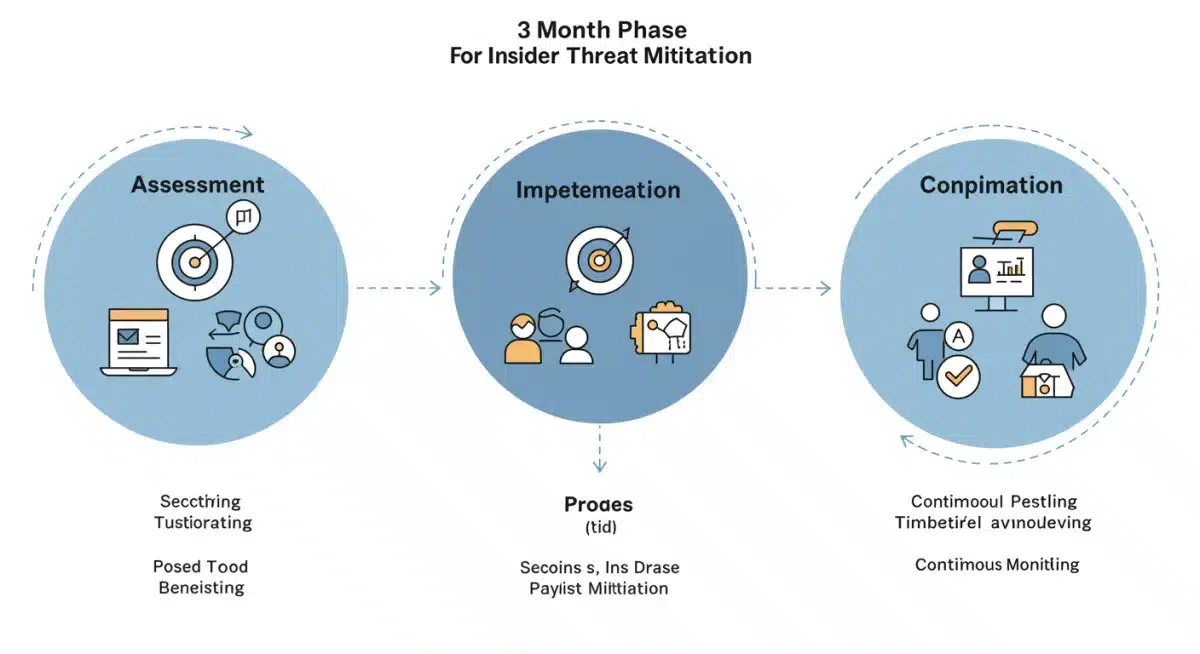
The initial month of our 3-month action plan focuses on establishing a solid foundation through thorough assessment and policy refinement. Without a clear understanding of current vulnerabilities and existing controls, any mitigation efforts will be akin to shooting in the dark. This phase is critical for identifying potential weak points and understanding the scope of the challenge.
Organizations must begin by mapping their critical assets – identifying what data, systems, and intellectual property are most valuable and therefore most attractive to potential insiders. This asset inventory informs the subsequent risk assessment, helping to prioritize efforts and allocate resources effectively.
Conducting a Thorough Vulnerability Scan
A comprehensive vulnerability scan goes beyond technical systems to include human elements and processes. It involves analyzing access controls, employee behavior patterns, and the effectiveness of existing security training. The goal is to uncover gaps that an insider could exploit.
- Technical Vulnerability Scan: Reviewing network configurations, software vulnerabilities, and system logs for unusual activity.
- Access Control Audit: Examining who has access to what, when, and why. This includes reviewing privileged accounts and ensuring the principle of least privilege is enforced.
- Behavioral Analysis Review: Assessing current monitoring capabilities for anomalous employee behavior, such as unusual data access or work patterns.
Alongside the technical scan, a critical review of existing security policies and procedures is essential. Are they clear, comprehensive, and regularly updated? Do employees understand their responsibilities regarding data security? This policy review should also consider legal and regulatory compliance, especially given the strict data protection laws in the US.
By the end of Month 1, US companies should have a detailed report outlining their current insider threat posture, including identified vulnerabilities, potential impact, and a clear understanding of policy gaps. This information forms the basis for developing targeted mitigation strategies.
Phase 2: Implementing Enhanced Security Controls and Training (Month 2)
Building on the insights gained from the initial assessment, Month 2 is dedicated to implementing tangible improvements in security controls and significantly bolstering employee awareness. This phase moves from theoretical understanding to practical application, directly addressing the identified risks. It’s about fortifying defenses and empowering the workforce to be part of the solution.
The implementation should be strategic, prioritizing high-risk areas first while ensuring a holistic approach to security. This often involves a combination of technological upgrades and human-centric interventions, recognizing that insider threats are rarely purely technical problems.
Deploying Advanced Monitoring and Data Loss Prevention (DLP) Tools
Modern cybersecurity tools offer powerful capabilities for detecting and preventing insider threats. The deployment of these tools should be carefully planned to integrate seamlessly with existing infrastructure and minimize disruption.
- User and Entity Behavior Analytics (UEBA): Implementing systems that establish baselines of normal user behavior and flag deviations that could indicate malicious activity or compromise.
- Data Loss Prevention (DLP): Rolling out solutions that monitor, detect, and block sensitive data from leaving the organizational perimeter through unauthorized channels.
- Privileged Access Management (PAM): Strengthening controls over accounts with elevated permissions, reducing the risk of abuse or compromise.
Parallel to technological deployments, a robust security awareness training program is paramount. Employees are often the first line of defense, and their understanding of security protocols and potential threats is invaluable. This training should be engaging, relevant, and regularly updated to reflect new threats and company policies.
The training should cover topics such as identifying phishing attempts, understanding data classification, secure remote work practices, and the reporting mechanisms for suspicious activities. Emphasizing the importance of security as a shared responsibility can significantly reduce the likelihood of negligent insider incidents.
By the end of Month 2, US companies should have a significantly enhanced security posture, with new tools in place and a more security-aware workforce. The focus shifts from identifying problems to actively preventing them.
Phase 3: Continuous Monitoring, Incident Response, and Refinement (Month 3)
The final month of the action plan is not an endpoint but the beginning of an ongoing process. Cybersecurity is a continuous endeavor, and insider threat mitigation is no exception. This phase establishes mechanisms for sustained vigilance, rapid response, and constant improvement. The goal is to build a resilient security framework that can adapt to evolving threats.
Continuous monitoring ensures that the implemented controls remain effective and that new vulnerabilities are identified promptly. An effective incident response plan is crucial for minimizing the impact of any security breach, whether internal or external.
Developing and Testing an Insider Threat Incident Response Plan
An incident response plan specifically tailored for insider threats is essential. This plan should clearly define roles, responsibilities, and procedures for detecting, containing, eradicating, and recovering from an insider-driven incident. Regular testing of this plan is vital to ensure its effectiveness.
- Establish Clear Reporting Channels: Ensure employees know how and where to report suspicious activities without fear of reprisal.
- Define Forensic Procedures: Outline steps for collecting and preserving evidence in a legally sound manner, crucial for potential disciplinary or legal action.
- Practice Tabletop Exercises: Conduct simulated insider threat scenarios to test the response team’s readiness and identify areas for improvement.
Beyond incident response, the third month also involves establishing a framework for continuous improvement. This includes regular reviews of security policies, technology effectiveness, and employee training programs. Feedback loops from incident analysis and threat intelligence should inform these refinements.
Regular performance metrics should be established to measure the effectiveness of the insider threat program. These metrics could include the number of detected anomalous activities, the speed of incident resolution, and employee compliance rates with security policies. This data-driven approach allows for informed adjustments and demonstrates the ROI of security investments.
By the conclusion of Month 3, US companies should have a mature insider threat program that not only features robust preventative and detective controls but also includes a well-defined incident response capability and a commitment to continuous improvement. This proactive stance is vital for maintaining security in an ever-changing threat landscape.
Legal & Compliance Considerations for US Companies
Navigating insider threats in the US involves a complex web of legal and compliance obligations. Companies must ensure their mitigation strategies adhere to various federal and state laws, respecting employee privacy while effectively protecting organizational assets. A misstep in this area can lead to significant legal repercussions, reputational damage, and financial penalties.
Understanding the legal framework is not just about avoiding penalties; it’s about building trust and maintaining ethical standards within the workplace. Balancing security needs with employee rights requires careful consideration and expert legal counsel.
Key US Regulations and Employee Privacy Rights
Several regulations directly or indirectly impact how US companies can monitor and respond to insider threats. Compliance with these laws is non-negotiable:
- State Data Breach Notification Laws: Almost all US states have laws requiring companies to notify individuals when their personally identifiable information (PII) has been compromised. Insider threats often lead to such breaches.
- HIPAA (Health Insurance Portability and Accountability Act): For healthcare organizations, HIPAA strictly regulates the protection of protected health information (PHI), making insider threats a severe compliance risk.
- GDPR (General Data Protection Regulation): While a European regulation, GDPR impacts US companies that process data of EU citizens, often requiring higher standards for data protection and employee monitoring.
- Employee Monitoring Laws: Various state laws govern the extent to which employers can monitor employee communications and activities. Companies must be transparent about their monitoring practices, typically through clear policies and employee consent.
Furthermore, US common law principles regarding employee privacy, while not codified in a single federal statute, provide a framework that companies must consider. This often involves a reasonable expectation of privacy in certain contexts, even within the workplace.
Companies should work closely with legal counsel to develop privacy-preserving monitoring strategies, ensuring that data collection is justified, proportional, and communicated clearly to employees. This proactive legal review minimizes risks and builds a more ethical security program.
Ultimately, a robust insider threat program in the US must integrate strong legal and compliance oversight. This ensures that security measures are not only effective but also ethically sound and legally defensible, protecting both the company and its employees.
Building a Security-Conscious Culture
While technology and policies form the backbone of any insider threat mitigation strategy, the human element—the organizational culture—is arguably the most critical factor. A truly secure environment is one where every employee understands their role in protecting the company and feels empowered to act responsibly. This goes beyond mere compliance; it fosters a shared sense of ownership and vigilance.
Cultivating a security-conscious culture requires consistent effort, clear communication, and leadership buy-in. It’s about integrating security into the daily fabric of the organization, making it a natural part of how business is conducted.
The Role of Leadership and Communication
Leadership plays a pivotal role in shaping a security culture. When senior management actively champions security initiatives and demonstrates their commitment, it sends a powerful message throughout the organization. This commitment should be reflected in resource allocation, policy enforcement, and public communication.
- Lead by Example: Leaders adhering to security protocols sets a positive example for all employees.
- Transparent Communication: Clearly communicating the reasons behind security measures, the risks involved, and the benefits of a strong security posture helps gain employee buy-in.
- Regular Updates: Keeping employees informed about new threats, policy changes, and security best practices reinforces the importance of continuous vigilance.
Effective communication also involves creating safe channels for employees to report concerns or suspicious activities without fear of retaliation. An open-door policy regarding security issues can uncover potential threats before they escalate into significant incidents.
Beyond formal training, fostering a culture where security is discussed openly and regularly, perhaps through internal newsletters, town halls, or team meetings, keeps it top of mind. Encouraging employees to ask questions and seek clarification on security matters further strengthens the collective defense.
Ultimately, a strong security culture transforms employees from potential weak links into active participants in the company’s defense against insider threats. This collective responsibility is invaluable in creating a resilient and secure operating environment for US companies striving to mitigate risks before 2027.
Future-Proofing Against Emerging Insider Threat Vectors
The landscape of insider threats is dynamic, constantly evolving with technological advancements and changes in work paradigms. Therefore, any effective mitigation strategy must be forward-looking, anticipating new vectors and preparing for future challenges. Relying solely on current defenses is a recipe for obsolescence and increased vulnerability. US companies must embrace a proactive, adaptive approach to future-proof their security posture.
This involves not only staying abreast of the latest cybersecurity trends but also investing in research and development, and fostering innovation within their security teams. The goal is to build a program that is inherently flexible and scalable, capable of responding to unforeseen threats.
Anticipating AI-Driven Threats and Behavioral Shifts
Artificial intelligence (AI) is rapidly transforming various industries, and cybersecurity is no exception. While AI offers powerful tools for defense, it also presents new opportunities for malicious actors, including insiders.
- AI-Enhanced Data Exfiltration: Insiders could potentially use AI tools to more efficiently identify, categorize, and exfiltrate sensitive data, making detection more challenging.
- Deepfake Social Engineering: The rise of deepfake technology could enable sophisticated social engineering attacks by insiders or external actors impersonating trusted individuals, blurring the lines of authenticity.
- Automated Insider Attacks: AI could be leveraged to automate parts of an insider attack, making it faster, more scalable, and harder to trace.
Furthermore, as new technologies like quantum computing and advanced biometrics emerge, they will introduce both new security capabilities and new vulnerabilities. Companies must continuously assess how these advancements might impact their insider threat posture. This includes considering how changes in employee expectations regarding privacy and monitoring might influence behavioral shifts that could create new risks.
Future-proofing also entails an investment in continuous learning and skill development for security teams. As threats evolve, so too must the expertise of those tasked with defending the organization. This proactive stance ensures that US companies are not just reacting to threats but are prepared to anticipate and neutralize them before they can cause significant harm, well before 2027.
| Key Phase | Brief Description |
|---|---|
| Month 1: Assessment | Identify critical assets, audit access controls, and review existing security policies. |
| Month 2: Implementation | Deploy UEBA, DLP, and PAM tools; conduct comprehensive employee security training. |
| Month 3: Monitoring & Response | Establish continuous monitoring, develop and test incident response plans, and refine strategies. |
| Continuous Improvement | Regularly review policies, update training, and adapt to emerging threat vectors. |
Frequently Asked Questions About Insider Threat Mitigation
A malicious insider intentionally seeks to harm the organization, often for personal gain or revenge. A negligent insider, however, inadvertently causes harm due to carelessness, human error, or a lack of security awareness, without malicious intent.
A 3-month plan provides a structured, urgent approach to address insider threats systematically. It allows for rapid assessment, implementation of critical controls, and establishment of continuous monitoring, significantly reducing risk exposure in a short timeframe before 2027.
Employee training is vital as it empowers staff to recognize and report suspicious activity, understand security policies, and avoid common pitfalls like phishing. It transforms employees into an active defense layer, reducing instances of negligent insider breaches.
US companies must balance security measures with employee privacy rights and various state and federal regulations like HIPAA or data breach notification laws. Programs must be legally vetted to ensure compliance, transparency, and ethical monitoring practices.
Emerging threats include AI-driven data exfiltration, deepfake-enhanced social engineering, and automated insider attacks. Companies need to continuously adapt their defenses and monitor for new technological capabilities that could be exploited by insiders.
Conclusion
The journey to effectively counter insider threats: identifying and mitigating risks in US companies before 2027 – a 3-month action plan is both urgent and continuous. By systematically performing a comprehensive risk assessment, implementing advanced security controls and robust training, and establishing a rigorous framework for continuous monitoring and incident response, US businesses can significantly fortify their defenses. This proactive, multi-faceted approach, underpinned by a strong security culture and adherence to legal mandates, is not merely a defensive strategy but a fundamental investment in the long-term resilience and trustworthiness of any organization operating in today’s complex digital environment. The time to act is now, to ensure a secure future well beyond 2027.