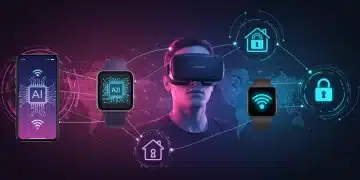
Metaverse and Consumer Tech: Innovations in the Next 24 Months

The metaverse is poised to transform consumer tech in the next 24 months through augmented reality, virtual reality, and blockchain applications, creating immersive experiences that blend digital and physical worlds and reshape how consumers interact with technology.
The next 24 months promise a whirlwind of innovation as the metaverse continues to intertwine with consumer tech. Get ready for a deeper dive into how this convergence will reshape our digital experiences, from gaming and entertainment to social interactions and commerce. The Metaverse and Consumer Tech: What to Expect in the Next 24 Months is a landscape marked by rapid evolution.
The Metaverse: A Quick Recap
Before we look ahead, let’s ensure we’re all on the same page regarding what the metaverse actually is. It’s not just a single platform or technology, but rather a convergence of technologies creating persistent, shared, 3D virtual worlds accessible via the internet.
Think of it as a digital extension of our physical reality, where users can interact with each other, with digital objects, and with the environment itself, often through avatars. The metaverse relies on technologies like virtual reality (VR), augmented reality (AR), blockchain, and artificial intelligence (AI).
Key Technologies Driving the Metaverse
Several key technologies enable and propel the metaverse, contributing to its immersive and interactive nature.
- Virtual Reality (VR): Offers fully immersive experiences, transporting users to entirely digital environments.
- Augmented Reality (AR): Overlays digital information onto the real world, enhancing the user’s perception.
- Blockchain: Enables secure and transparent transactions within the metaverse, facilitating digital ownership.
- Artificial Intelligence (AI): Powers intelligent avatars, personalized experiences, and dynamic environment creation.
Understanding these fundamentals is crucial to appreciating the upcoming advancements and their impact on consumer tech. As processing power increases and network latency decreases, these technologies will become even more integrated and seamless, blurring the lines between the real and virtual.
In summary, the metaverse is a digital frontier powered by a medley of technologies, promising to revolutionize how we interact with technology and each other. It serves as a fertile ground for innovation and consumer tech, and its convergence will undoubtedly shape the next 24 months.
Augmented Reality (AR) Glasses: The Next Big Thing
Augmented reality (AR) glasses are primed to be one of the hottest consumer tech products in the next two years. These aren’t just souped-up versions of Google Glass; they promise a seamless integration of digital information into our daily lives.
Imagine walking down the street and seeing restaurant reviews pop up as you pass by, or having turn-by-turn navigation displayed directly in your field of vision. This is the promise of AR glasses, and it’s closer than you think.

The Evolution of AR Technology
AR technology has come a long way, with advancements in display technology, processing power, and miniaturization making it possible to create stylish and functional glasses.
We’re moving beyond clunky prototypes to devices that are more akin to regular eyewear, boasting impressive capabilities and features.
- Improved Display Technology: Clearer, brighter, and wider field-of-view displays for a more immersive experience.
- Enhanced Processing Power: Faster processors capable of handling complex AR applications and real-time data processing.
- Sleek Designs: More fashionable and comfortable designs that appeal to a wider consumer base.
Major tech companies are heavily invested in AR, and we can expect to see significant product launches and advancements in the coming months. The early adoption phase will likely target specific use cases, such as gaming, navigation, and remote assistance, before becoming a mainstream consumer product.
In conclusion, AR glasses are set to redefine how we perceive and interact with the world around us, transforming everyday moments into digitally enhanced experiences. Their evolution into sleek, functional devices promises to be a defining trend in consumer technology over the next 24 months.
Virtual Reality (VR) Beyond Gaming
For years, virtual reality (VR) has been primarily associated with gaming. While gaming will undoubtedly remain a significant application, VR is rapidly expanding into other areas, offering immersive experiences for education, training, and even social interaction.
The next 24 months will see VR headsets becoming more affordable, more accessible, and more versatile, significantly broadening their appeal and utility.
VR Applications in Education and Training
VR offers immersive learning experiences that go far beyond traditional methods, revolutionizing how people learn and acquire new skills.
From virtual field trips to simulated training environments, VR provides unparalleled opportunities to engage and retain knowledge.
- Virtual Field Trips: Explore historical sites, distant lands, and even the human body, all from the comfort of the classroom.
- Simulated Training Environments: Train surgeons, pilots, and other professionals in realistic, risk-free scenarios.
- Interactive Learning: Engage with course material in a hands-on, immersive way, improving retention and comprehension.
VR is also transforming the way companies train their employees. Simulated environments can replicate real-world challenges, allowing employees to practice their skills in a safe and controlled setting. As VR technology matures, more industries are recognizing its potential for enhancing training and education.
Virtual reality is moving beyond gaming to transform industries, offering immersive learning experiences for education and training. As the technology becomes more affordable and versatile, its application in education and training is set to expand exponentially.
The Rise of Metaverse Avatars and Digital Identity
As our digital lives become increasingly intertwined with the metaverse, the importance of digital identity and personalized avatars is growing. These avatars are far more than simple representations; they are extensions of ourselves in the digital world.
In the next 24 months, we’ll see significant advancements in avatar customization, realism, and utility, transforming them into an integral part of the metaverse experience.

Advancements in Avatar Technology
Creating highly realistic and personalized avatars is becoming more accessible, with new technologies and platforms emerging to simplify the process.
From AI-powered avatar generators to sophisticated customization tools, users have more control over their digital identities than ever before.
- AI-Powered Avatar Generators: Create realistic avatars from photos or descriptions, simplifying the creation process.
- Advanced Customization Tools: Fine-tune every aspect of your avatar’s appearance, from facial features to clothing and accessories.
- Dynamic Avatars: Avatars that can express emotions and react to their environment in real-time, enhancing the sense of presence.
Digital identity is also becoming more secure and verifiable, with blockchain technology playing a crucial role in establishing ownership and authenticity. These advancements are essential for building trust and fostering meaningful interactions within the metaverse.
The rise of personalized avatars and secure digital identities are set to transform the metaverse, blurring the lines between our digital and physical selves. As these technologies evolve, they’ll play an ever-greater role in how we connect, collaborate, and express ourselves in the digital world.
Blockchain and NFTs in the Metaverse
Blockchain technology and non-fungible tokens (NFTs) are fundamental to the metaverse, enabling digital ownership, secure transactions, and new economic models.
Over the next 24 months, we’ll witness further integration of blockchain and NFTs into the metaverse, unlocking unprecedented opportunities for creators, consumers, and businesses alike.
The Role of NFTs in Digital Ownership
NFTs provide a way to prove digital ownership, allowing users to buy, sell, and trade unique digital assets within the metaverse.
From virtual land to digital art to in-game items, NFTs are creating new markets and empowering creators to monetize their work directly.
The rise of NFTs has led to the formation of vibrant virtual economies within the metaverse, attracting investors, artists, and collectors from around the world.
Blockchain technology ensures the security and transparency of these transactions, building trust and fostering sustainable growth. As more companies and individuals embrace NFTs, their influence on the metaverse will only continue to increase.
The integration of blockchain and NFTs is revolutionizing digital ownership and commerce within the metaverse. Its emergence has created new economic opportunities and empowered creators, setting the stage for the growth and evolution of digital markets within virtual realities.
Socializing and Collaboration in Virtual Spaces
The metaverse is evolving into a social hub, where people can connect, collaborate, and build communities in shared virtual spaces. These spaces offer unique opportunities for interaction beyond physical limitations.
In the next 24 months, we’ll see more sophisticated social platforms within the metaverse, offering tools for communication, collaboration, and creative expression. From virtual concerts to collaborative workspaces, the possibilities are endless.
New Ways to Connect and Collaborate
Virtual spaces are fostering new forms of social interaction, enabling people to connect across distances and participate in shared experiences.
These spaces offer tools for communication, collaboration, and creative expression, empowering users to build relationships and communities in new ways.
- Virtual Concerts and Events: Attend live performances and other events in immersive virtual environments.
- Collaborative Workspaces: Work on projects with colleagues in shared virtual spaces, improving communication and productivity.
- Social Games and Activities: Participate in a variety of social games and activities, fostering camaraderie and teamwork.
These social platforms offer a sense of belonging and community that is often lacking in traditional online interactions. As the metaverse becomes more accessible, it will continue to attract people seeking new ways to connect and collaborate.
The rise of social platforms within the metaverse is transforming how people connect, collaborate, and build communities. The increased accessibility to the Metaverse creates new opportunities for interaction, creativity, and expression.
| Key Point | Brief Description |
|---|---|
| 👓 AR Glasses | Augmented reality glasses will blend digital info with real-world views. |
| 🎮 VR Education | Virtual reality is expanding beyond gaming to education and training. |
| 🎭 Metaverse Avatars | Avatars become integral, with AI enhancing customization and realism. |
| 💰 NFTs | NFTs enable digital ownership, creating new economies within the metaverse. |
FAQ
▼
The metaverse refers to persistent, shared, 3D virtual worlds that are accessible via the internet. It involves the convergence of technologies, including VR, AR, and blockchain, blurring the lines between digital and physical realities.
▼
AR glasses will integrate digital information into everyday life, overlaying data onto the real world for navigation, entertainment, and productivity. This seamless integration transforms experiences and expands the utility of consumer tech.
▼
Beyond gaming, VR offers immersive applications for education, training, and virtual tourism. From interactive learning to risk-free training environments, VR transforms learning.
▼
Avatars represent users in the metaverse, extending digital identities. They become increasingly personalized with advanced customization tools and AI-powered generation, influencing online interactions and creating new opportunities.
▼
NFTs enable digital ownership, while blockchain ensures secure, transparent transactions. This empowers creators, fosters digital marketplaces, creating new opportunities in virtual economies within the metaverse.
Conclusion
In conclusion, the intersection of the metaverse and consumer tech promises groundbreaking advancements in the next 24 months. From the widespread adoption of AR glasses transforming daily life to VR redefining education, and the rise of blockchain that empowers digital ownership, consumers can anticipate incredible changes.