Software Review: New Accounting Platforms Save US Small Businesses 15% Annually

Three cutting-edge accounting platforms are projected to save small US businesses up to 15% annually by 2026 by optimizing financial processes and reducing operational overhead.
The financial landscape for small businesses in the United States is constantly evolving, with technology playing an increasingly pivotal role in driving efficiency and profitability. A recent software review: how 3 new accounting platforms can save small US businesses 15% annually by 2026 suggests a significant shift in how these enterprises manage their finances. This article delves into the transformative power of these platforms, offering insights into their features, benefits, and the substantial impact they are set to have on the bottom line of countless American small businesses.
The Evolving Landscape of Small Business Accounting
Small businesses often grapple with complex financial management tasks, from daily bookkeeping to annual tax preparation. Traditional methods, while familiar, can be time-consuming, prone to error, and ultimately costly. The advent of advanced accounting software has begun to change this narrative, offering solutions that streamline operations and provide greater financial clarity.
In recent years, the market has seen an influx of innovative platforms designed specifically to address the unique challenges faced by small and medium-sized enterprises (SMEs). These tools go beyond basic ledger management, incorporating features like AI-powered reconciliation, integrated payroll, and robust reporting. The goal is not just to record transactions, but to transform financial data into actionable insights that drive strategic decisions.
The shift towards cloud-based solutions has been a game-changer, providing accessibility and scalability that on-premise software simply cannot match. This allows small business owners and their teams to manage finances from anywhere, at any time, fostering a more agile and responsive approach to financial health. The promise of significant annual savings, as high as 15% by 2026, is a compelling reason for small businesses to re-evaluate their current accounting practices and consider adopting these new technologies.
Platform 1: “FinFlow Pro” – Streamlining Operations with AI
FinFlow Pro emerges as a frontrunner in the new wave of accounting solutions, distinguishing itself through its sophisticated use of artificial intelligence to automate and optimize financial processes. This platform is designed to minimize manual input, drastically reducing the time spent on routine tasks and freeing up valuable resources for strategic growth initiatives.
Its core strength lies in its intelligent automation capabilities. From transaction categorization to invoice matching, FinFlow Pro’s AI engine learns from user behavior, continually refining its accuracy and efficiency. This not only speeds up workflows but also significantly reduces the potential for human error, a common source of financial discrepancies for small businesses.
Key AI-Powered Features
- Automated Transaction Categorization: AI algorithms automatically categorize expenses and income, ensuring accurate financial records without manual tagging.
- Smart Invoice Processing: The platform intelligently extracts data from invoices, reconciles them with payments, and flags any discrepancies for review.
- Predictive Cash Flow Analysis: By analyzing historical data, FinFlow Pro offers insights into future cash flow, helping businesses anticipate needs and avoid shortfalls.
Beyond automation, FinFlow Pro offers a user-friendly interface that simplifies complex accounting principles. Its intuitive design means that even business owners without extensive financial backgrounds can navigate the system with ease, gaining a clear understanding of their financial position. The platform’s robust reporting tools provide customizable dashboards, allowing users to visualize key metrics pertinent to their specific business model. This comprehensive approach to financial management positions FinFlow Pro as a powerful tool for small businesses aiming to enhance operational efficiency and achieve substantial cost savings.
Platform 2: “LedgerLink” – Integrated Solutions for Comprehensive Management
LedgerLink stands out for its commitment to providing an all-in-one integrated financial management experience. Recognizing that small businesses often use disparate systems for various financial functions, LedgerLink aims to consolidate these into a single, cohesive platform. This integration is key to eliminating data silos and ensuring a holistic view of a business’s financial health.
The platform seamlessly combines core accounting functionalities with essential business operations, such as payroll, inventory management, and CRM. This means that financial data flows effortlessly across different departments, minimizing the risk of errors and improving overall data accuracy. For instance, sales data can automatically update inventory levels and trigger invoicing, reducing manual intervention at multiple points.
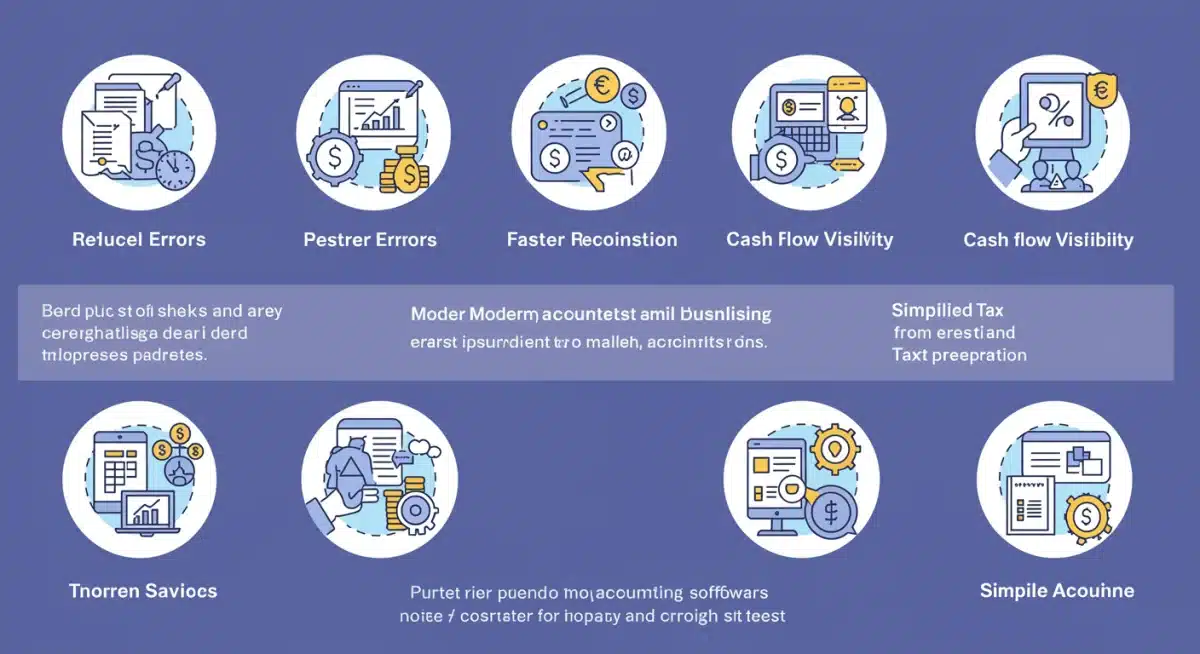
One of LedgerLink’s most praised features is its robust integration with third-party applications. Small businesses can connect their existing banking services, e-commerce platforms, and payment gateways directly to LedgerLink, creating a centralized hub for all financial activities. This level of connectivity not only saves time but also provides a more accurate and up-to-date financial picture.
Benefits of Integrated Financial Management
- Reduced Data Duplication: A single source of truth for all financial data eliminates the need for manual data entry across multiple systems.
- Improved Workflow Efficiency: Automated data flow between modules streamlines processes like order-to-cash and procure-to-pay.
- Enhanced Decision Making: Comprehensive, real-time financial reporting provides deeper insights for strategic planning and operational adjustments.
LedgerLink’s focus on integration empowers small businesses to manage their entire financial ecosystem from one dashboard. This unified approach is particularly beneficial for growing businesses that require scalable solutions without the complexity of managing multiple software subscriptions. By streamlining these interconnected processes, LedgerLink contributes significantly to the projected annual savings, allowing businesses to operate more leanly and effectively.
Platform 3: “AccuLedger” – User-Centric Design and Scalability
AccuLedger distinguishes itself with a strong emphasis on user experience and flexible scalability, making it an ideal choice for small businesses with varying needs and growth trajectories. The platform’s design prioritizes ease of use, ensuring that even those new to digital accounting can quickly become proficient and leverage its full capabilities without a steep learning curve.
The intuitive interface minimizes clutter and provides clear pathways for common tasks, from invoicing and expense tracking to generating financial reports. This user-centric approach not only reduces training time but also encourages consistent use, leading to more accurate and timely financial record-keeping. AccuLedger understands that small business owners wear many hats, and their accounting software should simplify, not complicate, their daily operations.
Moreover, AccuLedger is built with scalability in mind. As a small business grows, its financial needs become more complex. AccuLedger offers various tiers and add-ons that allow businesses to expand their functionality as required, without needing to migrate to an entirely new system. This flexibility ensures that the platform remains a viable solution throughout different stages of business development.
Scalability and Customization Options
- Modular Features: Businesses can select specific modules, such as advanced inventory or project accounting, as their needs evolve.
- Flexible Pricing Tiers: Subscription plans are designed to grow with the business, offering more features and capacity as required.
- Customizable Reports: Users can tailor financial reports to focus on the metrics most critical to their business performance and growth.
AccuLedger’s combination of user-friendliness and scalability makes it a powerful ally for small businesses aiming for sustainable growth. By providing a platform that adapts to changing requirements and simplifies complex tasks, AccuLedger helps businesses maintain strong financial control while minimizing overhead costs associated with software upgrades or transitions. Its ability to support businesses from startup to established entity is a key factor in its potential to deliver significant long-term savings.
Projected Impact and Annual Savings for US Small Businesses
The introduction and widespread adoption of FinFlow Pro, LedgerLink, and AccuLedger are not merely incremental improvements; they represent a fundamental shift in how small US businesses can manage their financial health. The projected 15% annual savings by 2026 is a conservative estimate that factors in multiple avenues of cost reduction and efficiency gains.
These savings stem from several key areas. Firstly, automation significantly reduces the need for manual data entry and reconciliation, which in turn cuts down on labor costs and the potential for expensive errors. Secondly, improved accuracy in financial reporting leads to better decision-making, allowing businesses to optimize spending, identify cost-saving opportunities, and avoid financial pitfalls.
Furthermore, the integrated nature of these platforms simplifies tax preparation and compliance, which can be a major headache and expense for small businesses. By having all financial data organized and readily accessible, businesses can reduce accounting fees and minimize the risk of audits or penalties. The real-time visibility into cash flow also empowers businesses to manage their working capital more effectively, potentially reducing reliance on short-term loans or overdrafts.
The overall impact extends beyond just monetary savings. Small business owners will experience a reduction in stress and a greater sense of control over their financial destinies. This newfound efficiency allows them to focus more on core business activities, innovation, and customer satisfaction, ultimately fostering stronger, more resilient small businesses across the United States. The investment in these advanced accounting platforms is not just about saving money; it’s about investing in the future viability and growth of the enterprise.
Choosing the Right Accounting Platform for Your Business
Selecting the ideal accounting platform requires careful consideration of a business’s unique needs, size, industry, and growth projections. While FinFlow Pro, LedgerLink, and AccuLedger offer compelling advantages, the best fit will depend on specific operational requirements and strategic goals. It is crucial for small business owners to conduct thorough due diligence before committing to a particular solution.
Begin by assessing your current financial processes. Identify pain points, areas of inefficiency, and functionalities that are missing from your existing setup. Do you struggle with manual data entry? Is payroll a constant challenge? Do you need better inventory tracking? A clear understanding of your problems will guide you toward a solution that directly addresses them.
Factors to Consider When Choosing
- Specific Business Needs: Evaluate whether the platform offers features critical to your industry, such as project accounting for service businesses or robust inventory for retailers.
- Integration Capabilities: Ensure compatibility with existing tools like CRM, POS systems, or e-commerce platforms to avoid data silos.
- Scalability: Choose a platform that can grow with your business, offering advanced features as your financial complexity increases.
- User Interface and Support: Opt for an intuitive interface and reliable customer support to minimize learning curves and resolve issues quickly.
- Cost-Benefit Analysis: Compare subscription fees with the projected savings and efficiency gains to ensure a positive return on investment.
Many platforms offer free trials or demos, which are invaluable opportunities to test the software in a real-world scenario with your own data. Engage your team in the evaluation process, as their daily interaction with the software will be instrumental in its successful adoption. By carefully weighing these factors, small businesses can make an informed decision that will not only lead to significant annual savings but also establish a solid foundation for future financial success.
| Key Platform | Primary Benefit for Small US Businesses |
|---|---|
| FinFlow Pro | AI-powered automation for significant time and error reduction in financial tasks. |
| LedgerLink | Comprehensive integration of accounting with other business operations for a holistic view. |
| AccuLedger | User-centric design and flexible scalability to adapt to business growth and evolving needs. |
Frequently Asked Questions
Small US businesses can realistically save up to 15% annually by 2026. These savings come from reduced manual labor, fewer errors, optimized financial processes, and improved tax preparation efficiency, allowing businesses to reallocate resources more strategically.
AI in platforms like FinFlow Pro automates repetitive tasks such as transaction categorization and invoice processing. This automation reduces human error, speeds up reconciliation, and provides predictive insights, leading to more accurate and efficient financial management.
Integrated solutions like LedgerLink are highly beneficial for businesses seeking to unify various operational aspects, such as payroll and inventory, with their accounting. While suitable for many, businesses with very simple needs might find specific modules unnecessary, but the scalability often accommodates diverse requirements.
Scalability is crucial as small businesses evolve. Platforms like AccuLedger allow businesses to add features and capacity as they grow without having to switch systems. This flexibility saves significant time and resources in the long run, ensuring continuous financial support.
A small business should prioritize its specific needs, integration requirements, ease of use, and potential for scalability. Conducting a thorough cost-benefit analysis and utilizing free trials will help ensure the chosen platform aligns perfectly with operational and financial goals.
Conclusion
The emergence of advanced accounting platforms like FinFlow Pro, LedgerLink, and AccuLedger marks a pivotal moment for small businesses across the United States. These innovative solutions are not just about managing numbers; they are about empowering entrepreneurs with the tools to gain unprecedented financial control, streamline operations, and unlock significant cost savings. The projected 15% annual savings by 2026 is a testament to the transformative potential of these technologies, offering a clear path towards greater efficiency and profitability. By embracing these modern platforms, small businesses can navigate the complexities of today’s economic landscape with confidence, ensuring a more secure and prosperous future.