NIST Compliance Cost: Navigating Updates for Federal Contractors by Q4 2026

NIST Compliance Cost: Navigating Updates for Federal Contractors by Q4 2026
The landscape of cybersecurity compliance for US federal contractors is constantly evolving, and a significant milestone looms on the horizon: Q4 2026. This deadline represents a critical juncture for businesses holding or aspiring to hold federal contracts, as the National Institute of Standards and Technology (NIST) frameworks continue to be refined and enforced. Understanding the true NIST compliance cost and strategically planning for these updates is not merely a best practice; it’s an imperative for survival and continued eligibility in the federal supply chain.
For many federal contractors, the journey towards robust cybersecurity has been ongoing, driven by regulations such as DFARS (Defense Federal Acquisition Regulation Supplement) and the foundational NIST Special Publication 800-171. However, the introduction and phased implementation of the Cybersecurity Maturity Model Certification (CMMC) program, which directly builds upon NIST 800-171, has amplified the stakes. As we approach Q4 2026, the expectations around demonstrating and maintaining compliance will become even more stringent, directly impacting the financial and operational health of contractors.
This comprehensive guide will delve deep into the multifaceted aspects of NIST compliance cost. We will explore not only the direct financial outlays but also the indirect expenses, resource allocation, and strategic shifts required to meet the enhanced cybersecurity requirements. Our aim is to provide federal contractors with a clear roadmap to anticipate, budget for, and effectively implement the necessary changes, ensuring they remain competitive and compliant.
The Evolving Regulatory Landscape: Why Q4 2026 Matters
The federal government’s commitment to protecting Controlled Unclassified Information (CUI) and safeguarding national security has led to a progressive strengthening of cybersecurity mandates. NIST 800-171 has long been the bedrock, outlining 110 security controls for protecting CUI in non-federal systems. However, the CMMC program was introduced to provide a more rigorous and verifiable assessment mechanism, moving beyond self-attestation to requiring third-party assessments for certain maturity levels.
The phased rollout of CMMC, culminating in its full implementation, means that by Q4 2026, many federal contracts will likely mandate specific CMMC levels. This shift significantly impacts the NIST compliance cost because it introduces new requirements for formal assessments, stricter documentation, and potentially more sophisticated security controls. Contractors who have previously relied on less formal compliance approaches will find themselves facing a steeper climb to meet these new benchmarks.
Understanding the interplay between NIST 800-171, DFARS, and CMMC is crucial. CMMC essentially formalizes and standardizes the assessment of a contractor’s implementation of NIST 800-171 controls, adding process maturity requirements across different levels. This means that simply having the controls in place is no longer enough; contractors must also demonstrate their institutionalization and optimization. The impending deadline intensifies the need for proactive engagement, as achieving CMMC certification can be a lengthy process, involving readiness assessments, remediation, and the official CMMC assessment itself.
Failure to meet these evolving requirements by Q4 2026 can have severe consequences, ranging from being ineligible for new contracts to potential contract termination or even legal repercussions. Therefore, a thorough understanding of the regulations and a realistic assessment of the associated NIST compliance cost are paramount for any federal contractor.
Deconstructing the NIST Compliance Cost: Direct and Indirect Expenses
When federal contractors consider the NIST compliance cost, it’s easy to focus solely on the most apparent financial outlays. However, the true cost is far more expansive, encompassing a wide array of direct and indirect expenses that must be meticulously planned for. Neglecting any of these components can lead to budget overruns, delays, and ultimately, non-compliance.
Direct Costs: Tangible Investments
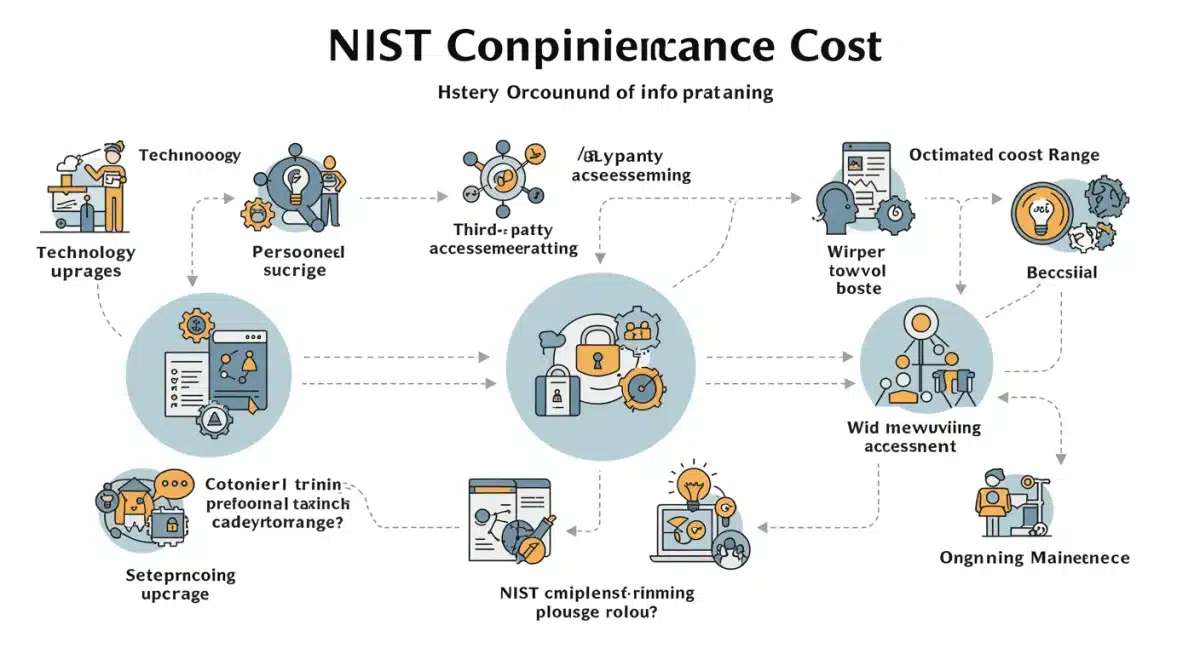
- Technology Upgrades and Software Licenses: A significant portion of the NIST compliance cost often stems from necessary investments in new hardware, software, and cybersecurity tools. This can include advanced firewalls, intrusion detection/prevention systems (IDPS), security information and event management (SIEM) solutions, multi-factor authentication (MFA) systems, data encryption tools, secure configuration management software, and endpoint detection and response (EDR) platforms. Many existing systems may lack the capabilities required to meet specific NIST controls, necessitating upgrades or replacements.
- Personnel Training and Certification: Human error remains a leading cause of security breaches. Therefore, comprehensive cybersecurity awareness training for all employees is a mandatory control. Furthermore, specialized training and certifications for IT and cybersecurity staff (e.g., CISSP, CompTIA Security+, CISM) are often required to manage and maintain compliant systems. These training programs and certification fees contribute directly to the NIST compliance cost.
- Third-Party Assessment and Certification Fees: With CMMC, the shift from self-attestation to third-party assessments introduces a substantial new direct cost. Contractors will need to engage CMMC Third-Party Assessment Organizations (C3PAOs) to conduct official assessments. The fees for these assessments can vary widely based on the CMMC level sought, the complexity of the contractor’s environment, and the chosen C3PAO. These are non-negotiable expenses for achieving certification.
- Consulting Services: Many contractors, especially small and medium-sized businesses (SMBs), may lack the internal expertise to navigate the intricacies of NIST frameworks and CMMC. Engaging cybersecurity consultants to perform readiness assessments, gap analyses, develop System Security Plans (SSPs), Plans of Action and Milestones (POAMs), and assist with implementation can be a significant, though often essential, part of the NIST compliance cost.
- Infrastructure and Facility Enhancements: Some NIST controls pertain to physical security. This might involve upgrades to physical access controls, surveillance systems, environmental controls for server rooms, and secure storage for physical CUI.
Indirect Costs: Hidden but Impactful
- Opportunity Cost of Internal Resources: Diverting internal IT staff and other personnel to focus on compliance activities means they are not working on other revenue-generating or core business functions. This opportunity cost is a critical, often overlooked, component of the NIST compliance cost. The time spent on documentation, policy development, control implementation, and preparing for assessments can be substantial.
- Process Changes and Operational Disruptions: Implementing new security controls often necessitates changes to existing business processes. This could include new procedures for data handling, access management, incident response, and vendor management. While these changes are necessary, they can initially lead to inefficiencies, requiring employees to adapt and potentially impacting productivity.
- Loss of Productivity During Implementation: The deployment of new security tools, system upgrades, and staff training sessions can temporarily disrupt normal operations. Downtime for system patching, software installations, or mandatory training can lead to a short-term dip in productivity, contributing to the overall NIST compliance cost.
- Ongoing Maintenance and Monitoring: Compliance is not a one-time event. It requires continuous monitoring, regular audits, vulnerability assessments, penetration testing, and ongoing maintenance of security controls. These activities demand dedicated resources and budget, forming a recurring indirect NIST compliance cost.
- Insurance Premiums: While not a direct compliance expense, achieving higher levels of cybersecurity maturity and compliance (like CMMC) can potentially lead to lower cyber insurance premiums, or at least ensure insurability. Conversely, non-compliance can make obtaining adequate cyber insurance more difficult and expensive.
Strategies to Mitigate NIST Compliance Cost
While the NIST compliance cost can be substantial, there are strategic approaches contractors can employ to mitigate these expenses and make the process more manageable. Proactive planning and smart resource allocation are key.
1. Conduct a Thorough Gap Analysis and Risk Assessment
Before embarking on any major investments, perform a comprehensive gap analysis against NIST 800-171 and the relevant CMMC level. Identify exactly where your current security posture falls short. A detailed risk assessment will help prioritize which gaps pose the greatest threat and require immediate attention, allowing for more targeted and cost-effective remediation efforts. This prevents unnecessary spending on controls that are already adequately addressed or are not critical for your target compliance level.
2. Leverage Existing Investments and Cloud Solutions
Review your current IT infrastructure and security tools. Can any existing investments be optimized or reconfigured to meet NIST controls? For example, your current antivirus solution might have additional features that can be activated for better endpoint protection. Additionally, consider leveraging cloud service providers (CSPs) that are already compliant with NIST and CMMC requirements (e.g., FedRAMP authorized). Migrating CUI to a secure, compliant cloud environment can significantly reduce the burden and NIST compliance cost associated with building and maintaining an on-premise secure enclave.
3. Implement a Phased Approach
Don’t try to tackle all compliance requirements at once. Break down the NIST controls into manageable phases. Prioritize controls based on risk, ease of implementation, and their impact on achieving foundational compliance. A phased approach allows for better budget allocation, more efficient resource utilization, and continuous improvement, rather than a rushed, costly, and potentially ineffective overhaul. This also helps spread the NIST compliance cost over time.
4. Focus on Documentation and Policy Development
Many NIST controls and CMMC practices revolve around robust documentation, policies, and procedures. While developing these takes time, it’s often less expensive than extensive technology upgrades initially. Clear policies, a well-defined System Security Plan (SSP), and detailed Plans of Action and Milestones (POAMs) are foundational. Investing in thorough documentation upfront can streamline the assessment process and reduce potential remediation costs later.
5. Invest in Employee Training and Awareness
As mentioned, human error is a significant vulnerability. A strong, ongoing cybersecurity awareness program for all employees is a cost-effective way to mitigate risks. Educated employees are the first line of defense and can prevent incidents that would otherwise incur significant response and recovery costs. This investment in human capital is a crucial, yet often underestimated, aspect of managing the overall NIST compliance cost.
6. Seek Expert Guidance When Necessary
While engaging consultants adds to the direct NIST compliance cost, their expertise can prevent costly mistakes and accelerate the compliance journey. For SMBs lacking in-house cybersecurity specialists, a fractional CISO or a reputable consulting firm can provide invaluable guidance, ensuring that investments are made wisely and compliance efforts are aligned with regulatory requirements. They can help avoid common pitfalls that lead to wasted resources.
The Long-Term ROI of NIST Compliance
Viewing NIST compliance cost solely as an expense is a narrow perspective. In reality, achieving and maintaining compliance offers a significant return on investment (ROI) for federal contractors. These benefits extend far beyond simply retaining eligibility for government contracts.
Enhanced Cybersecurity Posture
The primary benefit of NIST compliance is a demonstrably stronger cybersecurity posture. By implementing the robust controls outlined in NIST 800-171, organizations become inherently more resilient to cyber threats. This reduced risk of breaches translates directly into avoided costs associated with incident response, data recovery, reputational damage, and potential legal penalties.
Competitive Advantage
As the Q4 2026 deadline approaches and CMMC becomes more prevalent, contractors with certified compliance will have a distinct competitive advantage. Government agencies will increasingly favor partners who can demonstrate adherence to these standards, making compliance a powerful differentiator in a crowded marketplace. This can lead to securing more contracts and larger contract values, effectively offsetting the initial NIST compliance cost.
Improved Operational Efficiency
Implementing NIST controls often requires standardizing processes, improving data governance, and streamlining IT operations. While there might be initial friction, these changes invariably lead to greater operational efficiency, better data management, and reduced long-term operational costs. For instance, robust access control policies not only enhance security but also improve how employees manage and access information.
Increased Trust and Reputation
Demonstrating a commitment to cybersecurity through NIST compliance builds trust with federal clients, partners, and even commercial customers. A strong security reputation can open doors to new business opportunities and reinforce existing relationships. In an era where data breaches are common, being a trusted, secure partner is invaluable.
Reduced Risk of Legal and Financial Penalties
Non-compliance can result in severe financial penalties, contract termination, and even debarment from future federal contracts. The Department of Justice’s Civil Cyber-Fraud Initiative highlights the government’s intent to pursue contractors who knowingly misrepresent their cybersecurity posture. Investing in compliance, even with the associated NIST compliance cost, is a far less expensive alternative to facing these legal and financial repercussions.
Key Steps for Federal Contractors to Prepare for Q4 2026
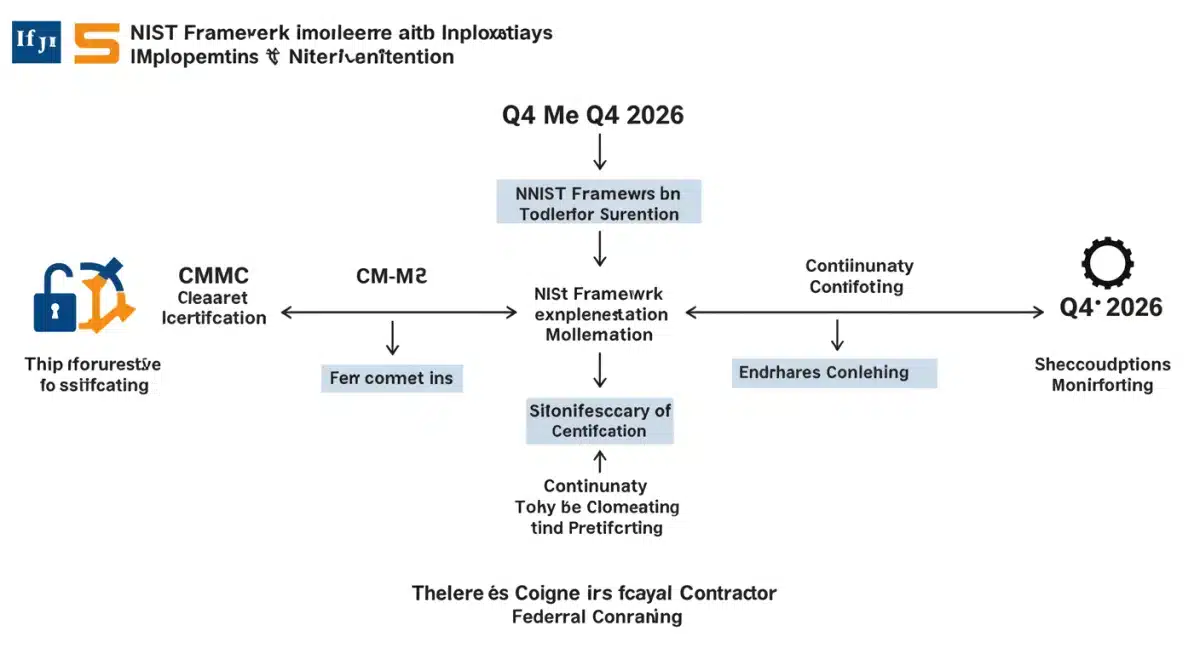
The clock is ticking towards Q4 2026, and federal contractors must take concrete steps now to prepare for the full impact of NIST framework updates and CMMC implementation. Procrastination will only escalate the NIST compliance cost and increase the risk of non-compliance.
1. Establish a Dedicated Compliance Team
Designate a cross-functional team responsible for overseeing compliance efforts. This team should include representatives from IT, legal, operations, and senior management. Clear leadership and accountability are essential for driving the compliance initiative forward.
2. Understand Your CUI Footprint
Identify all systems, networks, and processes that store, process, or transmit Controlled Unclassified Information (CUI). This is the scope of your compliance efforts and will define the boundaries of your security environment. Misidentifying or underestimating your CUI footprint can lead to significant compliance gaps and increased NIST compliance cost later on.
3. Develop or Update Your System Security Plan (SSP) and POAMs
These documents are central to demonstrating NIST 800-171 compliance. An SSP describes your system boundaries, how CUI is protected, and how each NIST control is implemented. A Plan of Action and Milestones (POAM) outlines any deficiencies and the plan to address them. These documents will be critical for CMMC assessments.
4. Budget for the Full Scope of NIST Compliance Cost
Create a realistic budget that accounts for all direct and indirect costs discussed previously. This should include technology upgrades, training, consulting, and assessment fees. Factor in recurring costs for continuous monitoring and maintenance. Present this budget to senior leadership to secure the necessary financial commitment.
5. Engage with CMMC Experts and C3PAOs Early
Don’t wait until the last minute to find an assessor. Engage with CMMC experts and C3PAOs (CMMC Third-Party Assessment Organizations) early in the process. They can provide valuable insights, conduct pre-assessments, and help you understand the assessment process. Early engagement can help streamline the certification process and potentially reduce overall NIST compliance cost by identifying issues proactively.
6. Prioritize Supply Chain Risk Management
NIST and CMMC emphasize supply chain security. Ensure your subcontractors and vendors also meet appropriate cybersecurity requirements. Your compliance can be undermined by a weak link in your supply chain. This means extending your compliance efforts, and potentially your NIST compliance cost, to include vendor due diligence and contractual obligations.
7. Implement Continuous Monitoring
Compliance is an ongoing journey, not a destination. Implement robust continuous monitoring processes to ensure that security controls remain effective, vulnerabilities are identified and remediated promptly, and your security posture evolves with the threat landscape. This proactive approach will help maintain compliance and manage the long-term NIST compliance cost more effectively.
Conclusion: Investing in a Secure Future
The Q4 2026 deadline for NIST framework updates and the full implementation of CMMC represent a significant challenge, but also a crucial opportunity for US federal contractors. While the NIST compliance cost may seem daunting at first glance, it is an essential investment in securing sensitive government information, maintaining eligibility for lucrative federal contracts, and building a more resilient and trustworthy business.
By understanding the direct and indirect expenses, adopting strategic mitigation techniques, and embracing a proactive, phased approach, contractors can navigate this complex landscape successfully. The ROI on this investment extends beyond mere compliance, fostering a stronger cybersecurity posture, gaining a competitive edge, and ensuring long-term operational integrity. Federal contractors who start planning and executing their compliance strategies now will be well-positioned to thrive in the evolving federal contracting environment, safeguarding their future and contributing to national security.