NIST Cybersecurity Framework 2.0: Updates for US Enterprises
The NIST Cybersecurity Framework 2.0 introduces crucial updates focusing on governance, supply chain risk, and continuous improvement, providing U.S. enterprises with enhanced guidance for navigating complex cyber threats in 2025.
The digital landscape is constantly evolving, presenting new and complex challenges for businesses across the United States. In this dynamic environment, Navigating the New NIST Cybersecurity Framework 2.0: Essential Updates and Compliance Strategies for U.S. Enterprises in 2025 has become an imperative for robust security postures. This updated framework offers a refined approach to managing cyber risks, providing actionable guidance for organizations of all sizes. Understanding its nuances is not just about compliance; it’s about safeguarding critical assets and maintaining operational resilience in an increasingly interconnected world.
Understanding the Evolution of NIST Cybersecurity Framework
The National Institute of Standards and Technology (NIST) Cybersecurity Framework has long served as a cornerstone for managing cybersecurity risks. Its evolution to version 2.0 reflects the changing threat landscape and the growing complexity of digital ecosystems. This new iteration moves beyond its initial focus on critical infrastructure, broadening its applicability to all organizations, regardless of sector or size. It emphasizes a more proactive and adaptive approach to cybersecurity, recognizing that static defenses are no longer sufficient against sophisticated adversaries. The framework’s updates underscore the need for continuous improvement and a holistic view of cyber risk management.
From 1.1 to 2.0: Key Changes and Additions
The leap from Framework 1.1 to 2.0 introduces several significant enhancements. While retaining the five core functions (Identify, Protect, Detect, Respond, Recover), version 2.0 adds a sixth crucial function: Govern. This new addition highlights the importance of integrating cybersecurity risk management into an organization’s overall enterprise risk management strategy. It reinforces the idea that cybersecurity is not solely an IT problem but a fundamental business concern that requires leadership involvement and strategic oversight. The update also clarifies and expands upon existing categories and subcategories, providing more granular guidance.
- New Govern Function: Establishes organizational cybersecurity strategy, policy, and oversight.
- Expanded Scope: Applicable to all organizations, not just critical infrastructure.
- Improved Implementation Tiers: More detailed guidance for assessing and improving cybersecurity maturity.
- Enhanced Supply Chain Risk Management: Greater emphasis on managing risks introduced by third-party vendors.
These changes are designed to make the framework more accessible, actionable, and adaptable for a wider range of users. They acknowledge the interconnectedness of modern business operations and the cascading effects of cyber incidents. By incorporating governance at the highest level, NIST 2.0 aims to ensure that cybersecurity is a strategic priority, not an afterthought. The framework’s evolution is a direct response to the lessons learned from past breaches and the anticipated challenges of future cyber threats.
In essence, the transition to NIST Cybersecurity Framework 2.0 represents a maturation of cybersecurity best practices. It’s a move towards a more integrated, comprehensive, and forward-looking approach to protecting digital assets. Organizations that embrace these updates will be better positioned to understand, manage, and mitigate their cyber risks effectively. This proactive stance is vital for maintaining trust and operational continuity in today’s digital economy.
The New Govern Function: A Strategic Imperative for Enterprises
The introduction of the Govern function is perhaps the most impactful change in the NIST Cybersecurity Framework 2.0. This new core function elevates cybersecurity from a technical concern to a strategic business imperative. It mandates that organizations establish and monitor their cybersecurity risk management strategy, ensuring it aligns with their overall mission, objectives, and legal requirements. This means involving executive leadership and the board of directors in cybersecurity discussions, fostering a culture where security is everyone’s responsibility.
Integrating Cybersecurity into Enterprise Risk Management
For U.S. enterprises, the Govern function necessitates a fundamental shift in how cybersecurity is perceived and managed. It calls for integrating cybersecurity risk management into the broader enterprise risk management (ERM) framework. This ensures that cyber risks are assessed, prioritized, and addressed alongside other business risks, such as financial, operational, and reputational risks. Such integration provides a holistic view of an organization’s risk profile, enabling more informed decision-making and resource allocation.
- Executive Buy-in: Securing commitment from senior leadership and the board.
- Policy Development: Establishing clear cybersecurity policies and procedures.
- Roles and Responsibilities: Defining accountability for cybersecurity across the organization.
- Risk Management Strategy: Developing a comprehensive strategy for identifying, assessing, and mitigating cyber risks.
The Govern function also emphasizes the importance of establishing a clear organizational structure for cybersecurity, including defining roles, responsibilities, and authorities. This clarity helps prevent ambiguity and ensures that there are designated individuals and teams accountable for specific aspects of cybersecurity. Moreover, it promotes effective communication channels between technical teams and executive leadership, enabling timely reporting and strategic adjustments.
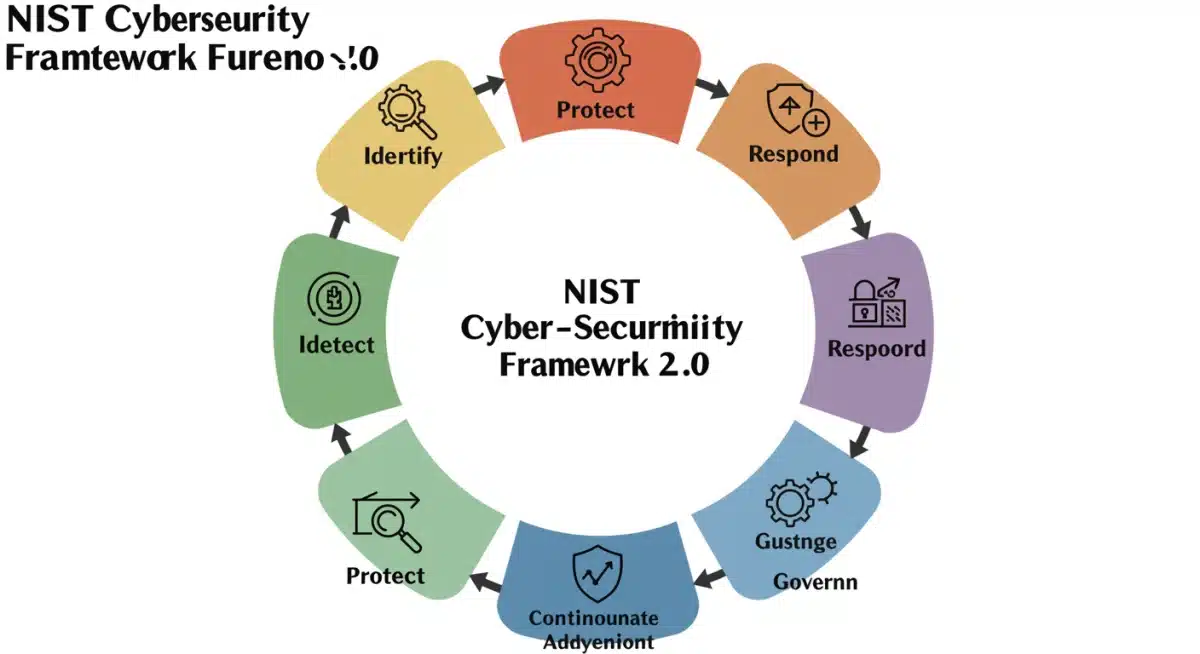
Ultimately, the Govern function is about creating a resilient and secure organizational culture from the top down. It ensures that cybersecurity is not just a checklist item but an ongoing, strategic process that continually adapts to new threats and business needs. Enterprises that successfully implement this function will demonstrate a strong commitment to protecting their assets, customers, and reputation, building greater trust and confidence among stakeholders. This strategic approach is crucial for long-term success in the digital age.
Enhanced Focus on Supply Chain Risk Management
The interconnected nature of modern business means that an organization’s cybersecurity posture is only as strong as its weakest link, often found within its supply chain. The NIST Cybersecurity Framework 2.0 significantly enhances its focus on supply chain risk management, recognizing the increasing vulnerability introduced by third-party vendors, partners, and suppliers. This updated emphasis aims to help U.S. enterprises better understand, assess, and mitigate the cybersecurity risks that originate outside their direct control.
Strategies for Mitigating Third-Party Cyber Risks
Managing supply chain risks requires a multi-faceted approach, starting with thorough due diligence during vendor selection. Organizations must evaluate their suppliers’ cybersecurity practices, not just their products or services. This involves assessing their adherence to security standards, their incident response capabilities, and their overall security culture. Contractual agreements should include clear cybersecurity requirements and expectations, ensuring accountability throughout the supply chain.
- Vendor Due Diligence: Thoroughly vet third-party cybersecurity practices before engagement.
- Contractual Agreements: Include specific cybersecurity clauses and requirements.
- Continuous Monitoring: Regularly assess vendor compliance and security posture.
- Information Sharing: Establish protocols for sharing threat intelligence with key suppliers.
Beyond initial assessments, continuous monitoring of third-party security postures is vital. This can involve regular audits, security questionnaires, and leveraging specialized tools that provide insights into vendor vulnerabilities. Establishing clear communication channels for incident reporting and response is also critical, ensuring that any security incidents affecting a supplier can be quickly addressed and contained before they impact the enterprise. The framework encourages a collaborative approach, where organizations work with their suppliers to collectively enhance security.
The heightened focus on supply chain risk in NIST 2.0 is a direct response to numerous high-profile breaches that originated through third-party vulnerabilities. It underscores that an enterprise’s digital perimeter extends far beyond its own network infrastructure. By proactively managing these external risks, U.S. enterprises can significantly reduce their exposure to cyber threats and build a more resilient operational environment. This proactive stance protects not only the enterprise but also its entire ecosystem of partners and customers.
Implementing NIST 2.0: Practical Steps for U.S. Enterprises
Adopting the NIST Cybersecurity Framework 2.0 is not a one-time project but an ongoing journey of continuous improvement. For U.S. enterprises, successfully implementing the framework requires a structured approach, starting with a clear understanding of its components and how they apply to their specific operational context. The framework provides a flexible, risk-based methodology, allowing organizations to tailor their cybersecurity efforts to their unique risk appetite and resource availability.
Roadmap for Adoption and Continuous Improvement
The first step in implementing NIST 2.0 is to conduct a thorough assessment of the organization’s current cybersecurity posture against the framework’s categories and subcategories. This baseline assessment helps identify gaps and areas for improvement. Following this, enterprises should develop a prioritized action plan, focusing on addressing the most critical risks first. The Govern function plays a pivotal role here, ensuring that executive leadership is involved in setting priorities and allocating resources effectively.
- Baseline Assessment: Evaluate current cybersecurity against NIST 2.0 guidelines.
- Prioritized Action Plan: Develop a roadmap for addressing identified gaps.
- Resource Allocation: Secure necessary funding and personnel for implementation.
- Training and Awareness: Educate employees on their role in cybersecurity.
Continuous monitoring and regular reviews are essential to ensure the framework’s effectiveness. Cybersecurity threats evolve rapidly, meaning that an organization’s defenses must also adapt. Enterprises should establish metrics to measure their progress and regularly report on their cybersecurity posture to leadership. This iterative process allows for adjustments and refinements, ensuring that the cybersecurity strategy remains relevant and robust in the face of emerging threats. Engaging employees through regular training and awareness programs is also critical, as human error remains a significant vulnerability.
Successful implementation of NIST 2.0 also involves leveraging available resources, such as NIST’s own guidance documents, industry best practices, and cybersecurity experts. Collaboration with peer organizations and participation in information-sharing initiatives can provide valuable insights and support. By taking these practical steps, U.S. enterprises can systematically enhance their cybersecurity capabilities, moving towards a more resilient and secure operational environment that aligns with the latest industry standards.
Compliance Strategies and Regulatory Alignment
For many U.S. enterprises, cybersecurity is not just a best practice but a regulatory requirement. The NIST Cybersecurity Framework 2.0, while voluntary, serves as a powerful tool for achieving compliance with various industry-specific regulations and legal mandates. Its comprehensive nature and risk-based approach make it an excellent foundation for demonstrating due diligence and adherence to security standards, providing a unified strategy for navigating a complex regulatory landscape.
Leveraging NIST 2.0 for Regulatory Adherence
The framework’s structure aligns well with many regulatory requirements, such as those found in HIPAA, GDPR (though primarily for EU, its principles impact global operations), PCI DSS, and various state-specific privacy laws. By implementing NIST 2.0, organizations can often address multiple compliance obligations simultaneously, streamlining their efforts and reducing the burden of managing disparate security controls. The Govern function, in particular, aids in establishing the necessary policies and oversight to meet regulatory expectations.
- Unified Approach: Address multiple compliance requirements with a single framework.
- Demonstrable Due Diligence: Provide evidence of robust cybersecurity practices.
- Risk-Based Compliance: Prioritize compliance efforts based on identified risks.
- Streamlined Audits: Simplify the process of external and internal security audits.
Enterprises should map their regulatory obligations to the specific categories and subcategories within NIST 2.0. This mapping exercise helps identify where the framework’s guidance directly supports compliance efforts and where additional, specific controls might be needed. Utilizing the framework’s implementation tiers also allows organizations to communicate their level of cybersecurity maturity to regulators and stakeholders, demonstrating a commitment to continuous improvement.
Furthermore, NIST 2.0 provides a common language for discussing cybersecurity risks and controls, which can facilitate better communication with auditors and regulatory bodies. This shared understanding helps in articulating the organization’s security posture and justifying its chosen risk management strategies. By strategically leveraging the NIST Cybersecurity Framework 2.0, U.S. enterprises can not only enhance their security but also achieve and maintain a strong compliance stance, thereby avoiding potential penalties and reputational damage. This dual benefit makes the framework an invaluable asset for any organization operating in regulated sectors.
Future Outlook: Cybersecurity in 2025 and Beyond
As we look towards 2025 and beyond, the challenges in cybersecurity are only expected to intensify. The rapid advancements in artificial intelligence, quantum computing, and the proliferation of IoT devices will introduce new attack vectors and sophisticated threats. The NIST Cybersecurity Framework 2.0 is designed to be adaptable to these future challenges, providing a flexible and scalable foundation for managing evolving cyber risks. Its emphasis on continuous improvement and strategic governance positions U.S. enterprises for long-term resilience.
Preparing for Emerging Threats and Technological Shifts
The framework’s principles encourage organizations to anticipate future threats and integrate foresight into their cybersecurity strategies. This means investing in research and development, staying abreast of emerging technologies, and fostering a culture of innovation within security teams. For example, as AI-powered attacks become more prevalent, enterprises will need to leverage AI-driven defense mechanisms. Similarly, the rise of quantum computing necessitates exploring quantum-resistant cryptography. The framework provides the organizational structure to support these proactive measures.
- AI-Driven Defenses: Utilize artificial intelligence for threat detection and response.
- Quantum-Resistant Cryptography: Investigate and implement future-proof encryption methods.
- IoT Security: Secure the expanding attack surface presented by interconnected devices.
- Talent Development: Invest in training and recruiting skilled cybersecurity professionals.
Moreover, the human element will remain a critical factor in cybersecurity. Continuous training and awareness programs will be paramount to ensure that employees are equipped to recognize and respond to new forms of social engineering and phishing attacks. The framework’s Govern function supports the development of robust training initiatives, reinforcing the idea that a strong security culture is built on informed and vigilant personnel. Collaboration and information sharing among organizations will also become increasingly important, enabling a collective defense against global cyber threats.
In essence, the NIST Cybersecurity Framework 2.0 is not merely a set of guidelines for today; it is a strategic blueprint for the future of cybersecurity. By embracing its principles and continuously adapting their security postures, U.S. enterprises can build robust defenses that stand the test of time, protecting their digital assets and maintaining trust in an ever-changing threat landscape. The journey ahead will demand vigilance, adaptability, and strategic foresight, all of which are central to the framework’s core tenets.
| Key Aspect | Brief Description |
|---|---|
| Govern Function | Establishes organizational cybersecurity strategy, policies, and oversight at the executive level. |
| Supply Chain Risk | Enhanced focus on managing cybersecurity risks introduced by third-party vendors and partners. |
| Expanded Applicability | Framework is now applicable to all organizations, beyond critical infrastructure. |
| Continuous Improvement | Encourages ongoing assessment and adaptation of cybersecurity practices to evolving threats. |
Frequently Asked Questions about NIST 2.0
The primary new addition in NIST Cybersecurity Framework 2.0 is the ‘Govern’ function. This function emphasizes the critical role of organizational leadership in establishing and overseeing the cybersecurity strategy, ensuring it aligns with business objectives and risk management processes.
NIST 2.0 significantly strengthens the focus on supply chain risk management. It provides enhanced guidance for U.S. enterprises to assess, monitor, and mitigate cybersecurity risks introduced by their third-party vendors and partners, fostering more secure business ecosystems.
No, the NIST Cybersecurity Framework 2.0 remains a voluntary set of guidelines. However, it is widely adopted as a best practice and can help organizations meet various regulatory compliance requirements and demonstrate due diligence in cybersecurity practices.
Even for small U.S. businesses, adopting NIST 2.0 offers clearer, adaptable guidance for managing cyber risks. It helps establish a structured approach to security, improves resilience against attacks, and can enhance trust with customers and partners, regardless of size.
Continuous compliance with NIST 2.0 involves regular self-assessments, ongoing monitoring of security controls, periodic reviews of the risk management strategy, and adapting to new threats. The framework emphasizes an iterative approach, ensuring security practices evolve with the threat landscape.
Conclusion
The release of the NIST Cybersecurity Framework 2.0 marks a pivotal moment in cybersecurity best practices, offering U.S. enterprises a more robust and adaptable guide for managing digital risks. Its enhanced focus on governance, comprehensive supply chain risk management, and broader applicability underscores the evolving nature of cyber threats. By embracing these essential updates and implementing strategic compliance measures, organizations can significantly strengthen their defenses, protect critical assets, and foster a culture of cybersecurity resilience. Navigating this new framework effectively will be key to maintaining trust, ensuring operational continuity, and securing a competitive edge in the digital economy of 2025 and beyond.