Paid sick leave for low-wage workers: why it matters

Paid sick leave for low-wage workers enables them to take necessary time off for health reasons without losing income, promoting overall community health and employee well-being.
Paid sick leave for low-wage workers is more than just a benefit; it’s a necessity that impacts their health and livelihood. Have you thought about what happens when these workers can’t afford to take a day off? Let’s dive into this important conversation.
Understanding paid sick leave benefits
Understanding paid sick leave benefits is crucial for ensuring the well-being of employees, especially for those in low-wage jobs. It’s not just about time off; it’s about health and security.
What is Paid Sick Leave?
Paid sick leave allows employees to take time off when they are ill without losing their income. This is vital for workers who might otherwise be forced to choose between their health and their paycheck.
Why Does It Matter?
When low-wage workers can’t take time off, they can spread illness to coworkers and customers. This can lead to larger health issues in the community. Ensuring that employees can take paid sick leave not only protects their health but also promotes a healthier work environment.
- Reduces the spread of contagious diseases.
- Helps workers recover faster without financial stress.
- Improves overall employee morale and productivity.
- Contributes to a positive workplace culture.
Employers benefit as well. When employees feel supported, they are likely to be more loyal and productive. Additionally, providing paid sick leave can enhance a company’s reputation, making it more attractive to potential hires.
Moreover, studies have shown that paid sick leave decreases healthcare costs. By allowing employees to receive proper care without financial worry, companies can help reduce emergency health issues.
Current policies affecting low-wage workers
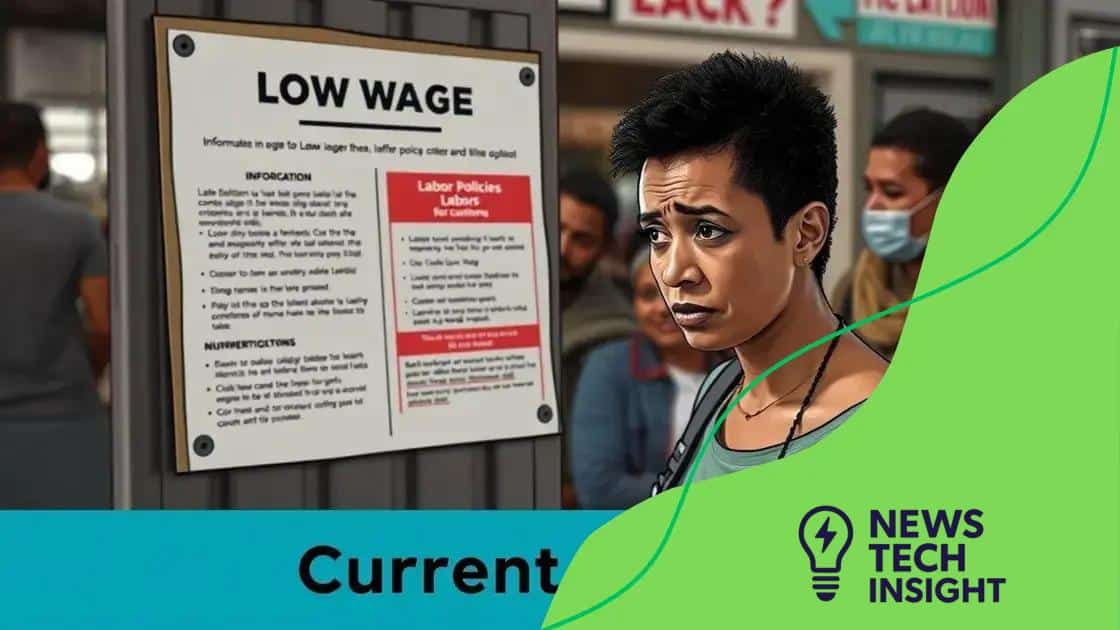
Current policies regarding low-wage workers play a significant role in their ability to access paid sick leave. Understanding these policies sheds light on the challenges many workers face today.
Overview of Existing Policies
In the United States, policies around paid sick leave vary widely by state and city. Some areas have embraced laws that require employers to provide a certain number of sick days, while others lag significantly behind.
State-by-State Variations
For instance, states like California and New York have implemented strong policies, aiming to protect low-wage workers. However, many states do not have such protections, leaving numerous workers vulnerable to financial instability during sickness.
- California mandates a minimum of three paid sick days per year.
- New York City requires up to 40 hours of paid sick leave annually.
- Many states lack any legislation for mandatory sick leave.
- Workers in states without protections may risk job loss if they take unpaid time off.
The lack of uniformity creates confusion for both employers and employees. Understanding local regulations is essential for low-wage workers so they can make informed decisions about their employment rights.
Furthermore, changes at the federal level could reshape the landscape for paid sick leave. Current discussions in Congress could lead to more comprehensive policies, aiming to ensure that all workers, regardless of their position, can take necessary time off without fear.
Impact of paid sick leave on public health
The impact of paid sick leave on public health is profound and far-reaching. When workers have access to paid sick leave, the overall health of the community improves.
Reducing Disease Spread
One of the primary benefits of paid sick leave is that it helps reduce the spread of contagious diseases. When workers are able to take time off when they are sick, they are less likely to infect coworkers and customers. This is particularly crucial during flu season or in outbreak situations.
The Economic Benefits
Investing in paid sick leave can lead to long-term economic benefits. Healthier workers mean fewer days lost due to illness and lower health care costs for both employers and taxpayers. When employees are encouraged to stay home, they recover faster, which boosts productivity in the long run.
- Increased productivity: Healthy workers are more productive and engaged.
- Lower healthcare costs: Reduced emergency room visits and hospitalizations.
- Stronger communities: Greater overall public health leads to thriving communities.
Moreover, paid sick leave contributes to mental well-being. When workers don’t have to choose between their health and a paycheck, they experience less stress. This psychological benefit further enhances job satisfaction and workplace morale.
Furthermore, research has shown that regions with robust paid sick leave policies have lower rates of illness and better health outcomes. This illustrates not only the necessity of such policies but also their effectiveness in promoting public health.
How workers can advocate for their rights

Workers can play an important role in advocating for their rights, especially when it comes to paid sick leave. Understanding how to effectively voice their needs can empower them and lead to positive changes.
Educate Yourself
The first step in advocating for rights is to become informed. Workers should learn about their rights under current laws regarding paid sick leave. Knowing what protections are in place helps individuals understand their entitlements and responsibilities.
Join Forces with Others
Advocacy can be more effective when workers come together. Joining labor unions or community organizations can amplify voices. Together, workers can share their experiences and push for changes that benefit all.
- Attend meetings: Engage in discussions about workplace policies.
- Share stories: Personal experiences can highlight the need for change.
- Support local leaders: Encourage representatives who advocate for paid sick leave.
Furthermore, communication with employers is crucial. It’s important for workers to express their needs directly. When discussing paid sick leave, workers should be clear about how it benefits not only them but also the workplace overall.
Building relationships with management can create a more open dialogue around issues of health and employee rights. Having supportive colleagues who understand the importance of paid sick leave can also help strengthen an employee’s case.
Lastly, utilizing social media is a powerful tool for advocacy. Workers can raise awareness about the challenges they face and mobilize support. This modern approach allows for widespread engagement and visibility of issues surrounding paid sick leave.
The ability of workers to advocate for paid sick leave is essential for their well-being and health. Knowing their rights and effectively communicating their needs can lead to significant changes in the workplace. By educating themselves, joining forces with others, and utilizing modern communication tools, workers can make their voices heard. Ultimately, it is crucial for everyone to recognize the importance of paid sick leave and work together to create supportive environments that prioritize health and productivity.
FAQ – Frequently Asked Questions about Paid Sick Leave for Low-Wage Workers
What is paid sick leave?
Paid sick leave allows employees to take time off from work when they are ill without losing their income.
Why is paid sick leave important for low-wage workers?
It protects their health, prevents the spread of illness, and ensures they do not have to choose between their job and their well-being.
How can workers advocate for their right to paid sick leave?
Workers can educate themselves about their rights, join supportive communities, and communicate directly with employers about the need for sick leave policies.
What are the benefits of paid sick leave for public health?
Paid sick leave leads to healthier communities by reducing the spread of contagious diseases and improving overall employee well-being.