Project Management Software Updates 2025: Boost Productivity

The 2025 landscape for project management software introduces groundbreaking updates focused on AI-driven insights, enhanced collaboration, and automation, poised to significantly elevate team efficiency and project outcomes across industries.
In today’s fast-paced business environment, staying ahead means constantly optimizing how teams work. The 2025 iterations of leading project management software are not just incremental improvements; they represent a significant leap forward in boosting team efficiency. This article dives deep into six pivotal project management software updates that are set to redefine how projects are managed and delivered, promising a true productivity power-up for organizations.
AI-Driven Predictive Analytics and Resource Optimization
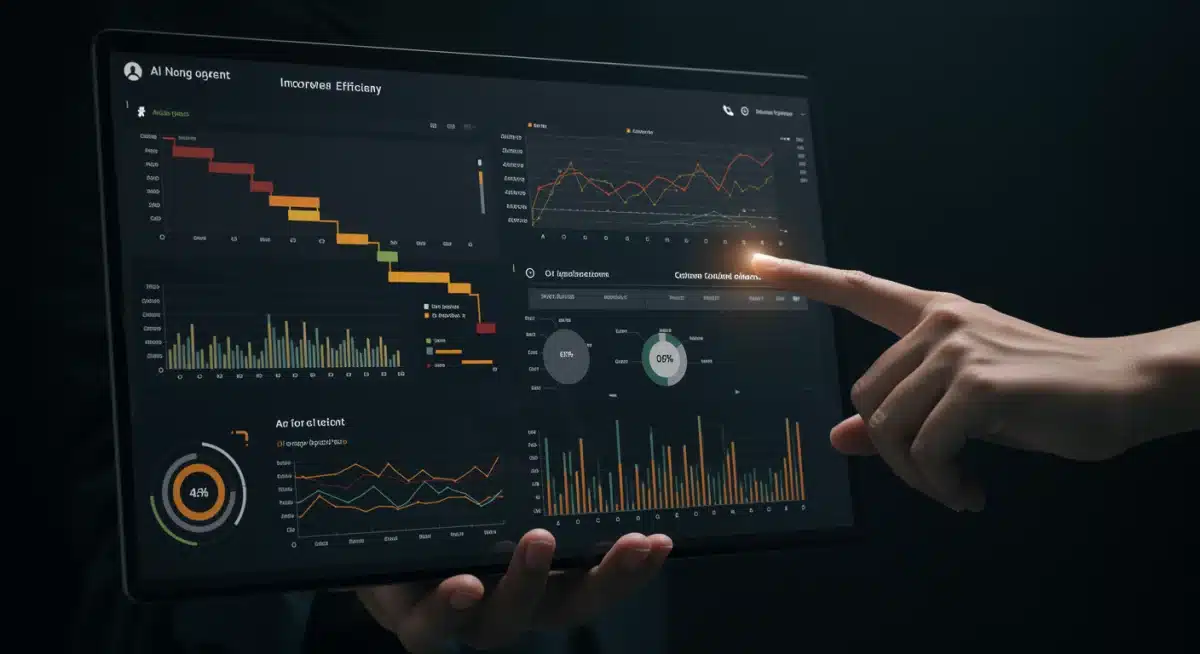
The integration of advanced Artificial Intelligence (AI) and machine learning into project management platforms marks a transformative shift. These aren’t just buzzwords; they are now tangible tools offering predictive analytics capabilities that were once the realm of science fiction. Teams can now anticipate potential roadblocks before they materialize, making proactive adjustments rather than reactive fixes.
This evolution in AI allows for a more intelligent allocation of resources. By analyzing historical data and current project trajectories, the software can suggest optimal team assignments, identify skill gaps, and even forecast budget overruns with remarkable accuracy. This leads to not only smoother project execution but also a more efficient use of human and financial capital.
Enhanced Forecasting Accuracy
Predictive analytics in 2025 goes beyond simple trend analysis. It incorporates complex algorithms that learn from every project, every task, and every team interaction. This continuous learning refines its forecasting models, providing project managers with an unprecedented level of insight into future project performance.
- Identify potential delays in critical path activities.
- Forecast resource demand based on project milestones.
- Predict budget deviations with early warning systems.
- Optimize task dependencies for faster project completion.
The ability to look into the future with such clarity empowers decision-makers to intervene strategically, preventing small issues from escalating into major crises. This proactive approach significantly reduces risks and improves overall project success rates, fostering a culture of predictability and control.
Hyper-Personalized Workflows and Adaptive Methodologies
One size no longer fits all in project management. The 2025 updates emphasize hyper-personalization, allowing teams to tailor workflows to their specific needs and adapt methodologies on the fly. This flexibility is crucial for diverse projects, from agile software development to waterfall construction projects, ensuring that the software adapts to the team, not the other way around.
These platforms now offer highly configurable interfaces and rule-based automation that can be customized down to the individual user level. Project managers can define specific triggers and actions, automating routine tasks and freeing up valuable time for more strategic work. This level of customization fosters a more intuitive and efficient user experience.
Dynamic Workflow Automation
The new generation of project management tools comes equipped with sophisticated automation engines. These engines can automate a wide array of tasks, from sending reminders and updating statuses to generating reports and initiating follow-up actions. This reduces manual effort and minimizes the chances of human error.
- Automate task assignments based on predefined rules.
- Trigger notifications for critical deadlines or dependencies.
- Generate automated progress reports for stakeholders.
- Streamline approval processes with automated routing.
By embracing adaptive methodologies, teams can seamlessly switch between Kanban, Scrum, Waterfall, or a hybrid approach without changing their core software. This fluidity supports organizational agility and responsiveness to changing project requirements, enhancing both productivity and team morale.
Advanced Collaboration Tools and Integrated Communication Hubs
Effective communication is the cornerstone of successful project management. The 2025 updates significantly enhance collaboration features, transforming project management software into integrated communication hubs. These platforms now offer seamless integration with various communication channels, ensuring that all project-related discussions, documents, and decisions are centralized and easily accessible.
Real-time co-editing of documents, integrated video conferencing, and threaded discussions directly linked to tasks are becoming standard. This eliminates the need to switch between multiple applications, reducing context switching and improving information flow. The result is a more cohesive and productive team environment, regardless of geographical location.
Unified Communication Experience
The goal is to create a single source of truth for all project communications. This means that whether a team member is commenting on a task, sharing a file, or participating in a video call, all interactions are logged and accessible within the project’s context. This dramatically improves transparency and accountability.
- Real-time chat and direct messaging within tasks.
- Integrated video and audio conferencing capabilities.
- Centralized file sharing and version control.
- Activity feeds that provide a comprehensive project overview.
These advanced collaboration tools are designed to break down communication silos and foster a more open and transparent working culture. By centralizing all project-related communication, teams can make faster, more informed decisions, leading to quicker problem resolution and enhanced overall project velocity.
Enhanced Security and Compliance Features
In an era of increasing cyber threats and stringent data privacy regulations, the security of project data is paramount. The 2025 project management software updates introduce sophisticated security and compliance features, ensuring that sensitive project information is protected against unauthorized access and adheres to industry standards.
These enhancements include advanced encryption protocols, multi-factor authentication, granular access controls, and comprehensive audit trails. Furthermore, platforms are now designed to assist organizations in meeting various regulatory requirements, such as GDPR, HIPAA, and CCPA, simplifying the compliance burden for project teams.
Robust Data Protection Measures
Protecting intellectual property and client data is a top priority. The new security features are built to withstand evolving cyber threats, providing peace of mind for organizations handling sensitive information. This includes not only data at rest but also data in transit, ensuring end-to-end security.
- End-to-end encryption for all project data.
- Advanced threat detection and intrusion prevention systems.
- Customizable access permissions at task and project levels.
- Regular security audits and compliance certifications.
By prioritizing robust security and compliance, these software updates not only safeguard valuable data but also build trust with clients and stakeholders. This foundation of security allows teams to focus on project execution without the constant worry of data breaches or regulatory non-compliance, ultimately boosting confidence and efficiency.
Seamless Integrations with Enterprise Ecosystems
Modern enterprises operate with a complex web of software applications. The 2025 project management software updates place a strong emphasis on seamless integrations, allowing platforms to connect effortlessly with existing enterprise ecosystems. This includes CRM systems, ERP solutions, accounting software, and other specialized tools.
These deeper integrations facilitate a smoother flow of information across departments, eliminating data silos and reducing manual data entry. The result is a unified operational view, where project data can be easily shared and synchronized with other business functions, providing a holistic understanding of organizational performance.
API-First Approach for Comprehensive Connectivity
Many of these platforms are now adopting an API-first development strategy, ensuring that they can connect with virtually any other system. This open approach empowers organizations to build highly customized workflows that span multiple applications, creating a truly interconnected digital environment.
- Two-way data synchronization with CRM and ERP systems.
- Direct integration with financial and accounting software.
- Connectors for development tools and code repositories.
- Customizable webhook capabilities for event-driven integrations.
The ability to integrate seamlessly with a wide array of business applications transforms project management software from a standalone tool into a central nervous system for organizational operations. This interconnectedness streamlines processes, enhances data accuracy, and ultimately drives greater efficiency across the entire enterprise.
Intuitive User Experience and Accessibility Enhancements
Even the most powerful software is ineffective if it’s difficult to use. The 2025 updates prioritize an intuitive user experience (UX) and enhanced accessibility, ensuring that all team members, regardless of their technical proficiency or physical abilities, can leverage the full potential of the platform.
This includes redesigned interfaces, drag-and-drop functionalities, customizable dashboards, and responsive designs that work flawlessly across various devices. Accessibility features, such as screen reader compatibility, keyboard navigation, and high-contrast modes, are also being significantly improved, promoting inclusivity and broader adoption.
Streamlined Onboarding and Training
A key aspect of an intuitive UX is simplifying the onboarding process. New users can quickly get up to speed with minimal training, thanks to guided tours, in-app tutorials, and context-sensitive help. This reduces the learning curve and allows teams to become productive faster.
- Personalized dashboards for individual users.
- Drag-and-drop task management and scheduling.
- Responsive design for mobile and tablet access.
- Enhanced accessibility for users with disabilities.
By focusing on usability and accessibility, these updates ensure that project management software is not just a tool for a select few but an empowering platform for every team member. This widespread adoption leads to better data input, more consistent usage, and ultimately, a more efficient and collaborative project environment.
| Key Update | Impact on Efficiency |
|---|---|
| AI Predictive Analytics | Proactive risk management, optimized resource allocation. |
| Personalized Workflows | Tailored task automation, reduced manual effort. |
| Integrated Communication | Centralized discussions, improved transparency and decision-making. |
| Enhanced Security | Protected data, simplified compliance, increased trust. |
Frequently Asked Questions About 2025 Project Management Software Updates
The most significant change is the widespread integration of advanced AI and machine learning for predictive analytics and resource optimization. This allows for more accurate forecasting and proactive problem-solving, moving beyond traditional reactive project management.
Personalized workflows allow teams to customize their tools and automate routine tasks according to their specific needs and project methodologies. This reduces manual effort, minimizes context switching, and ensures the software adapts to the team’s unique processes, boosting overall efficiency.
Yes, 2025 updates place a strong emphasis on enhanced security features. This includes advanced encryption, multi-factor authentication, granular access controls, and robust compliance measures designed to protect sensitive project information and adhere to various industry regulations.
Seamless integrations with enterprise ecosystems (CRM, ERP, accounting software) eliminate data silos and manual data entry. This creates a unified operational view, streamlines information flow across departments, and enhances overall data accuracy, leading to greater enterprise-wide efficiency.
The updates prioritize intuitive user experience and accessibility. Redesigned interfaces, drag-and-drop functionalities, customizable dashboards, and enhanced accessibility features ensure that the software is easy to use for all team members, reducing the learning curve and fostering broader adoption.
Conclusion
The 2025 landscape for project management software is undeniably exciting, promising a significant leap forward in how teams operate. The updates reviewed, from AI-driven predictive analytics to hyper-personalized workflows and enhanced security, collectively paint a picture of a future where project execution is more intelligent, collaborative, and secure. Organizations that embrace these advancements will not only see a substantial boost in team efficiency and productivity but also gain a competitive edge in an increasingly complex global market. Staying informed and adopting these powerful tools will be crucial for success in the coming years.