Q1 2026 Software Review: Methodologies for Actionable Insights

Q1 2026 Software Review: Methodologies for Actionable Insights for US Businesses
In the rapidly evolving landscape of technology, businesses in the United States are constantly seeking ways to optimize their software development processes and ensure their digital products deliver maximum value. As we look towards Q1 2026, the discussion around effective software review methodologies becomes more critical than ever. The choice of methodology can significantly impact a project’s success, the quality of the final product, and, most importantly, the generation of actionable insights that drive business growth and innovation.
This comprehensive guide delves into a comparative analysis of leading software review methodologies, examining their strengths, weaknesses, and suitability for various business contexts. Our goal is to provide US businesses with the knowledge needed to select the most appropriate approach for their Q1 2026 initiatives, ensuring that every review cycle yields meaningful, implementable data.
The Imperative of Effective Software Review Methodologies in Q1 2026
The software industry is characterized by its dynamic nature. New technologies emerge, user expectations shift, and competitive pressures intensify. For US businesses, staying ahead means not just developing cutting-edge software but also rigorously reviewing it to ensure it meets strategic objectives, performs optimally, and provides an excellent user experience. Without robust software review methodologies, even the most innovative products can fall short of their potential.
Q1 2026 marks a period where digital transformation efforts are maturing, and the emphasis is shifting from mere adoption to optimization and measurable impact. This makes the selection and implementation of effective software review methodologies paramount. The insights gleaned from these reviews can inform future development cycles, identify areas for improvement, reduce technical debt, and ultimately contribute to a stronger market position.
Before diving into specific methodologies, it’s crucial to understand what constitutes an effective software review process. It’s not merely about finding bugs; it’s about a holistic evaluation that considers functionality, usability, performance, security, maintainability, and alignment with business goals. The chosen methodology should facilitate open communication, foster continuous improvement, and provide clear, actionable recommendations.
Traditional vs. Agile: A Foundational Divide in Software Review Methodologies
At the heart of the debate regarding software review methodologies lies the fundamental difference between traditional (often represented by Waterfall) and Agile approaches. Each has its distinct philosophy, structure, and implications for how software is developed and reviewed.
Waterfall Methodology: Structure and Sequential Review
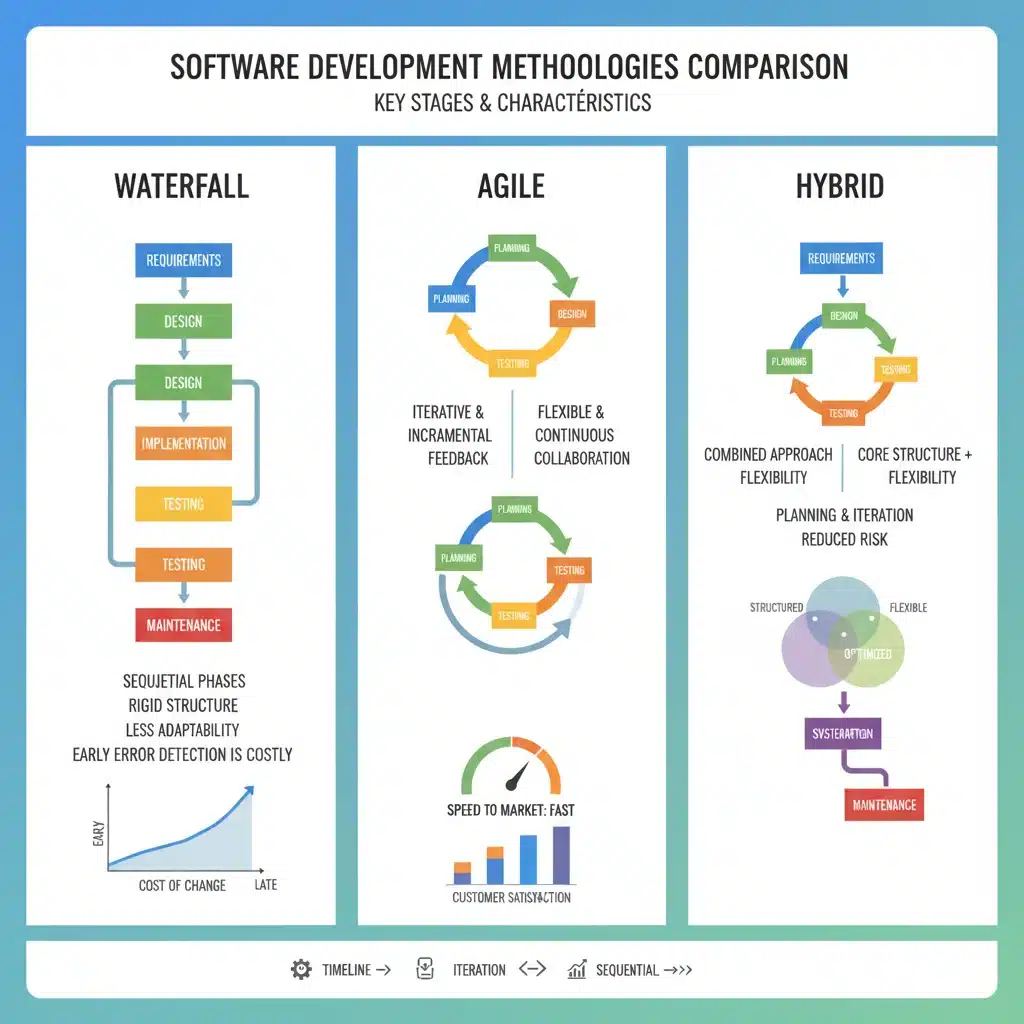
The Waterfall model is a linear, sequential approach where each phase of the software development lifecycle (SDLC) must be completed before the next begins. These phases typically include requirements gathering, design, implementation, testing, deployment, and maintenance. In the context of software review methodologies, Waterfall reviews are often conducted at the end of each major phase, with a comprehensive review occurring before deployment.
Advantages of Waterfall for Q1 2026 Reviews:
- Clear Documentation: Each phase produces extensive documentation, making reviews straightforward in terms of checking against predefined requirements and specifications.
- Predictability: The sequential nature allows for clear project timelines and budget estimations, which can be appealing for projects with stable requirements in Q1 2026.
- Structured Reviews: Formal review gates at the end of each phase ensure thorough inspection before proceeding, potentially catching major issues early in their respective stages.
- Suitability for Certain Projects: Ideal for projects with well-defined, unchanging requirements, common in highly regulated industries where meticulous planning and documentation are mandatory.
Disadvantages of Waterfall for Q1 2026 Reviews:
- Late Bug Detection: Major issues or misinterpretations of requirements might only be discovered during the testing phase, leading to costly and time-consuming rework.
- Lack of Flexibility: Adapting to changing requirements during the later stages is difficult and expensive, which can be a significant drawback in dynamic markets.
- Limited User Involvement: User feedback is often gathered primarily at the requirements phase and then again during final testing, potentially leading to a product that doesn’t fully meet evolving user needs.
- Review Bottlenecks: Large, infrequent review sessions can become bottlenecks, delaying project progress and making it harder to address issues incrementally.
Agile Methodology: Iterative and Continuous Review
Agile software review methodologies, encompassing frameworks like Scrum, Kanban, and Extreme Programming (XP), prioritize iterative development, flexibility, and continuous feedback. Instead of long, sequential phases, Agile projects are broken down into short cycles called sprints (typically 1-4 weeks), with reviews occurring frequently throughout the development process.
Advantages of Agile for Q1 2026 Reviews:
- Early and Continuous Feedback: Regular sprint reviews (demonstrations to stakeholders) and retrospectives (internal team reviews) provide ongoing opportunities for feedback and course correction. This is invaluable for generating actionable insights quickly.
- Flexibility and Adaptability: Agile processes are designed to embrace change, allowing teams to respond quickly to new requirements or market shifts, making it highly suitable for dynamic Q1 2026 projects.
- Higher User Satisfaction: Continuous stakeholder involvement ensures the product evolves in line with user needs and business value.
- Improved Quality: Frequent testing and integration within each sprint help identify and resolve issues early, reducing the accumulation of technical debt.
- Empowered Teams: Agile fosters a culture of self-organization and continuous improvement, where team members are actively involved in reviewing and refining their work.
Disadvantages of Agile for Q1 2026 Reviews:
- Less Predictability: Estimating fixed costs and timelines can be challenging due to the iterative nature and potential for shifting priorities.
- Requires Active Stakeholder Involvement: If stakeholders are not consistently engaged, the benefits of continuous feedback are diminished.
- Documentation Challenges: Agile prioritizes working software over comprehensive documentation, which might be a concern for highly regulated environments.
- Scope Creep Risk: Without strong product ownership and backlog management, there’s a risk of features being added incrementally without a clear overarching vision.
Hybrid Approaches: Blending Software Review Methodologies for Q1 2026
Recognizing that neither Waterfall nor pure Agile is a perfect fit for all scenarios, many organizations in the US are adopting hybrid software review methodologies. These approaches combine elements of both traditional and Agile models to leverage their respective strengths while mitigating their weaknesses. Hybrid models are particularly relevant for businesses seeking a balance between structure and adaptability for their Q1 2026 initiatives.
Common Hybrid Models:
- Wagile: A common hybrid approach where a Waterfall-like structure is used for initial requirements gathering and high-level design, followed by Agile sprints for development and testing. Reviews occur at the end of the initial planning phase and then iteratively during sprints.
- Scaled Agile Frameworks (SAFe, LeSS, DaD): For larger enterprises, these frameworks provide a structured way to apply Agile principles across multiple teams and projects. They often include formal review ceremonies at portfolio, program, and team levels, ensuring alignment and continuous feedback at scale.
- Iterative Waterfall: This involves breaking down a large Waterfall project into smaller, manageable Waterfall mini-projects, each with its own sequential phases. Reviews happen at the end of each mini-project, offering more frequent feedback than a single large Waterfall cycle.
Advantages of Hybrid Methodologies for Q1 2026 Reviews:
- Balanced Control and Flexibility: Hybrid models offer the predictability and structure of Waterfall for critical planning stages, combined with the adaptability and continuous feedback of Agile for execution.
- Risk Mitigation: By integrating reviews at key junctures, hybrid approaches can help identify and address risks earlier than pure Waterfall, while maintaining a clear project roadmap.
- Improved Stakeholder Engagement: They can facilitate varied levels of stakeholder involvement, accommodating those who prefer detailed upfront planning and those who thrive on iterative feedback.
- Tailored to Project Needs: Businesses can customize hybrid models to fit specific project complexities, team structures, and regulatory requirements, making them highly versatile for Q1 2026 projects.
Disadvantages of Hybrid Methodologies for Q1 2026 Reviews:
- Complexity: Integrating different methodologies can introduce complexity in terms of process definition, toolchains, and team coordination.
- Potential for Misalignment: If not carefully managed, there can be a disconnect between the Waterfall planning phase and the Agile execution, leading to friction.
- Requires Experienced Leadership: Successful implementation often depends on strong leadership capable of navigating the nuances of both approaches.
Key Considerations for Choosing Software Review Methodologies in Q1 2026
Selecting the optimal software review methodologies for your Q1 2026 projects requires careful consideration of several factors pertinent to your specific business context in the US. There is no one-size-fits-all solution; the best approach is the one that aligns most closely with your project’s characteristics, organizational culture, and desired outcomes.
Project Scope and Requirements Stability:
- Well-defined, stable requirements: If your project has clear, unchanging requirements (e.g., regulatory compliance software), Waterfall or a Waterfall-dominant hybrid might be efficient for review.
- Evolving, uncertain requirements: For innovative products, market-driven features, or projects with high ambiguity, Agile software review methodologies are superior due to their adaptability and continuous feedback loops.
Team Structure and Culture:
- Distributed teams: Agile practices, with their emphasis on communication tools and regular sync-ups, can be effective. Waterfall might require more stringent communication protocols for reviews.
- Organizational readiness for change: Agile requires a cultural shift towards collaboration, transparency, and continuous improvement. If your organization is more hierarchical, a hybrid approach might be a smoother transition.
- Team experience: Teams experienced with self-organization and iterative development will thrive in Agile review environments. Less experienced teams might benefit from the more structured guidance of Waterfall or hybrid models initially.
Stakeholder Involvement and Expectations:
- High stakeholder availability and desire for continuous input: Agile’s frequent review cycles are ideal for engaging stakeholders and incorporating their feedback throughout the project lifecycle.
- Limited stakeholder availability or preference for infrequent, formal updates: Waterfall’s gate-based reviews might be more suitable, provided stakeholders are committed to thorough review at those specific points.
Project Risks and Urgency:
- High-risk projects: Agile’s iterative nature allows for early identification and mitigation of risks, as reviews are built into each sprint.
- Time-sensitive projects: While Agile can deliver value quickly, strict deadlines might sometimes benefit from the clearer upfront planning of Waterfall for specific, non-negotiable deliverables, possibly within a hybrid framework.
Regulatory and Compliance Requirements:
- Strict regulatory environments: Industries like healthcare, finance, or defense often require extensive documentation and audit trails. Waterfall or hybrid models with robust documentation phases might be preferred for their ability to generate comprehensive review artifacts.
Generating Actionable Insights: Beyond the Methodology
Regardless of the software review methodologies chosen, the ultimate goal is to generate actionable insights. An insight is only actionable if it leads to a clear understanding of what needs to be done, by whom, and by when, with a measurable impact. Here’s how to ensure your reviews deliver truly actionable outcomes:
1. Define Clear Review Objectives:
Before any review, establish what you aim to achieve. Are you looking for performance bottlenecks, usability issues, security vulnerabilities, or alignment with new business strategies? Clear objectives guide the review process and ensure relevant insights are captured.
2. Focus on Data-Driven Decisions:
In Q1 2026, leverage analytics, telemetry, user feedback, and testing results to inform your reviews. Quantitative data provides objective evidence for identifying issues and measuring the impact of proposed changes. Qualitative data from user interviews and surveys offers crucial context.
3. Foster a Culture of Psychological Safety:
For reviews to be effective, team members must feel safe to express concerns, point out flaws, and suggest improvements without fear of blame. This is particularly vital in Agile retrospectives but applies to all software review methodologies.
4. Prioritize Findings and Recommendations:
Not all findings are equally important. Use a clear prioritization framework (e.g., based on impact, effort, and urgency) to focus on the most critical issues. Each finding should ideally be accompanied by a concrete, implementable recommendation.
5. Assign Ownership and Track Progress:
Actionable insights require owners. Assign specific individuals or teams responsibility for addressing each recommendation, and establish a system for tracking progress and verifying completion. This closes the feedback loop and ensures insights translate into tangible improvements.
6. Automate Where Possible:
Leverage automated testing, code analysis tools, and continuous integration/continuous delivery (CI/CD) pipelines to provide continuous, unbiased feedback. This frees up human reviewers to focus on more complex, subjective aspects of the software.

The Future of Software Review Methodologies in Q1 2026 and Beyond
Looking ahead to Q1 2026 and beyond, the evolution of software review methodologies will likely be driven by several key trends:
- AI and Machine Learning in Reviews: AI-powered tools will increasingly assist in code analysis, defect prediction, and even generating test cases, making reviews more efficient and comprehensive.
- DevOps Integration: The lines between development, operations, and quality assurance will continue to blur, with continuous feedback and review loops integrated throughout the entire software delivery pipeline.
- Focus on Value Stream Management: Reviews will increasingly look at the entire value stream, from idea to delivery and impact, ensuring that every step contributes to business value.
- Security by Design: Security reviews will become even more embedded early in the development lifecycle, rather than being an afterthought, using automated security testing and threat modeling.
- User Experience (UX) as a Core Metric: Reviews will place an even greater emphasis on user experience, leveraging advanced analytics and user behavior tracking to inform design and functionality improvements.
US businesses that embrace these trends and continuously refine their software review methodologies will be better positioned to innovate, deliver high-quality products, and maintain a competitive edge in the digital economy.
Conclusion: Strategic Selection of Software Review Methodologies for Q1 2026 Success
The choice of software review methodologies is a strategic decision that profoundly impacts the success of software projects and the ability of US businesses to generate actionable insights. Whether opting for the structured predictability of Waterfall, the agile adaptability of iterative frameworks, or a tailored hybrid approach, the key lies in understanding the unique demands of each project and the capabilities of your team.
For Q1 2026, the focus should not merely be on conducting reviews, but on transforming those reviews into a continuous learning cycle that fuels innovation, enhances product quality, and directly contributes to business objectives. By thoughtfully selecting and diligently applying the right software review methodologies, US businesses can ensure their software not only meets expectations but consistently exceeds them, delivering tangible value and sustainable growth.
Invest time in understanding your project’s nuances, fostering a culture of feedback, and leveraging data to guide your review processes. This proactive approach will empower your teams to build better software, faster, and with a clearer path to success in the competitive landscape of Q1 2026 and beyond.