Ransomware Attacks in US: Reduce Your Risk by 45% Next Quarter
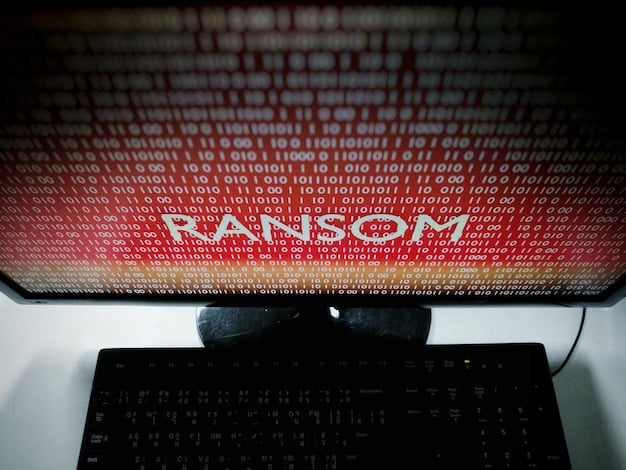
Ransomware attacks in the US are a growing threat, but by implementing a strategic cybersecurity plan focusing on employee training, robust data backups, and advanced threat detection, organizations can realistically aim to reduce their ransomware risk by 45% in the next quarter.
Is your organization prepared for the next wave of ransomware attacks in US? The threat landscape is constantly evolving, demanding proactive measures to safeguard your valuable data and maintain business continuity. Reducing your risk by 45% in the next quarter might seem ambitious, but with a focused and strategic approach, it’s an achievable goal.
Understanding the Ransomware Threat Landscape in the US
Ransomware has become a pervasive and costly problem for organizations across the United States. To effectively combat this threat, it’s crucial to understand the current landscape, including the types of ransomware attacks being deployed, the industries most frequently targeted, and the potential financial and reputational consequences.
Staying informed about the latest trends and tactics employed by cybercriminals is the first step in developing a robust defense strategy. Understanding the threat allows for better resource allocation and targeted security measures.
Common Types of Ransomware
Different ransomware variants exist, each with its own unique characteristics and methods of operation. Some of the most prevalent types include:
- Locky: One of the older ransomware strains, Locky encrypts files with a strong algorithm, demanding payment for decryption.
- Ryuk: Known for targeting high-profile organizations and demanding substantial ransom payments.
- WannaCry: A worm-like ransomware that spreads rapidly through networks, exploiting vulnerabilities in older Windows operating systems.
- REvil (Sodinokibi): A ransomware-as-a-service (RaaS) variant frequently used in large-scale attacks.
Industries Most Targeted by Ransomware
While no organization is entirely immune to ransomware attacks, certain industries are more frequently targeted than others. These include:
- Healthcare: Hospitals and healthcare providers are attractive targets due to the sensitive nature of patient data and the potential for disruption to critical services.
- Financial Services: Banks, credit unions, and other financial institutions hold vast amounts of sensitive financial data, making them prime targets for cybercriminals.
- Manufacturing: Manufacturing companies often rely on outdated systems and have complex supply chains, making them vulnerable to ransomware attacks that can disrupt production and operations.
- Government: Government agencies hold vast amounts of sensitive information and provide critical services, making them attractive targets for ransomware attacks aimed at disrupting operations or gaining access to classified data.

Understanding the specific types of ransomware and the industries most at risk provides valuable context for developing a tailored and effective security strategy. This allows organizations to prioritize their resources and implement the most relevant security measures.
Conducting a Comprehensive Risk Assessment
Before implementing any specific security measures, it’s essential to conduct a comprehensive risk assessment to identify vulnerabilities and prioritize areas for improvement. This assessment should evaluate both internal and external threats, as well as technical and human factors.
A thorough risk assessment provides a clear picture of an organization’s security posture, highlighting weaknesses that could be exploited by cybercriminals. This information is crucial for developing a targeted and effective remediation plan.
Identifying Vulnerabilities in Your Infrastructure
A key component of the risk assessment is identifying vulnerabilities in your existing IT infrastructure. This includes:
- Outdated Software: Regularly scan for and patch any outdated software, including operating systems, applications, and firmware.
- Weak Passwords: Enforce strong password policies and implement multi-factor authentication (MFA) for all users, especially those with privileged access.
- Unsecured Network Configurations: Review network configurations to identify and address any misconfigurations that could create vulnerabilities.
- Lack of Security Awareness Training: Assess the level of security awareness among employees and identify areas where additional training is needed.
Assessing the Potential Impact of a Ransomware Attack
In addition to identifying vulnerabilities, it’s also important to assess the potential impact of a ransomware attack on your organization. This includes:
- Financial Losses: Estimate the potential cost of a ransom payment, as well as the cost of downtime, data recovery, and legal fees.
- Reputational Damage: Consider the potential impact on your organization’s reputation if sensitive data is leaked or operations are disrupted.
- Operational Disruptions: Assess the potential for disruptions to critical business processes and services.
- Legal and Regulatory Compliance: Ensure compliance with all applicable legal and regulatory requirements related to data security and privacy.
By conducting a comprehensive risk assessment, organizations can gain a clear understanding of their risk exposure and develop a prioritized plan for mitigating those risks. This proactive approach is essential for minimizing the potential impact of a ransomware attack.
Implementing Robust Data Backup and Recovery Strategies
One of the most effective defenses against ransomware attacks is a robust data backup and recovery strategy. Regularly backing up your critical data and ensuring that you can quickly and reliably restore it in the event of an attack can minimize downtime and avoid the need to pay a ransom.
Effective data backup and recovery strategies provide a safety net, allowing organizations to quickly recover from a ransomware attack without suffering significant data loss or operational disruption. This can significantly reduce the financial and reputational impact of an attack.
The 3-2-1 Backup Rule
A widely recommended best practice for data backup is the 3-2-1 rule, which states that you should:
- Keep at least three copies of your data.
- Store the backups on at least two different types of storage media (e.g., hard drives, tape, cloud).
- Keep at least one copy of the backups offsite.
Regularly Testing Your Backup and Recovery Process
It’s not enough to simply back up your data; you also need to regularly test your backup and recovery process to ensure that it works as expected. This includes:
- Performing regular test restores to verify that backups are valid and can be restored quickly and reliably.
- Documenting your backup and recovery procedures.
- Training your IT staff on how to perform backups and restores.
By implementing a robust data backup and recovery strategy and regularly testing your recovery process, organizations can significantly reduce their vulnerability to ransomware attacks. This provides peace of mind and ensures business continuity in the face of a cyberattack.
Enhancing Employee Cybersecurity Awareness
Employees are often the weakest link in the cybersecurity chain. Cybercriminals frequently use phishing emails and other social engineering tactics to trick employees into clicking malicious links or providing sensitive information.
Investing in comprehensive cybersecurity awareness training for employees can significantly reduce the risk of successful phishing attacks and other social engineering scams. Empowered employees become a vital line of defense against cyber threats.
Phishing Simulation Exercises
One of the most effective ways to enhance employee cybersecurity awareness is through phishing simulation exercises. These exercises involve sending simulated phishing emails to employees to see who clicks on the links or provides sensitive information. Employees who fail the test can then be provided with additional training.
Educating Employees About Common Ransomware Tactics
In addition to phishing simulations, it’s also important to educate employees about common ransomware tactics, such as:
- Malicious Attachments: Warn employees not to open attachments from unknown senders.
- Suspicious Links: Teach employees to carefully examine links before clicking on them, looking for signs of phishing.
- Social Engineering: Explain how cybercriminals use social engineering to trick employees into divulging sensitive information.

By enhancing employee cybersecurity awareness through training programs and simulated phishing exercises, organizations can significantly reduce their risk of falling victim to ransomware attacks. A well-informed workforce is a powerful asset in the fight against cybercrime.
Implementing Advanced Threat Detection and Prevention Tools
In addition to the preventative measures outlined above, it’s also important to implement advanced threat detection and prevention tools to identify and block ransomware attacks before they can cause damage. These tools can provide real-time monitoring and analysis of network traffic and system activity, allowing you to quickly detect and respond to suspicious behavior.
Advanced threat detection and prevention tools add an extra layer of security, supplementing preventative measures and providing early warning of potential attacks. This allows organizations to react swiftly and minimize the impact of a ransomware infection.
Endpoint Detection and Response (EDR) Solutions
EDR solutions continuously monitor endpoints (e.g., computers, laptops, servers) for suspicious activity and provide automated responses to identified threats. EDR solutions can help to detect and contain ransomware attacks before they can spread throughout the network.
Network Intrusion Detection and Prevention Systems (IDS/IPS)
IDS/IPS systems monitor network traffic for malicious activity and can automatically block or quarantine suspicious connections. IDS/IPS systems can help to detect and prevent ransomware from entering the network or communicating with command-and-control servers.
Utilizing Threat Intelligence Feeds
Threat intelligence feeds provide up-to-date information about the latest ransomware threats and tactics. By subscribing to threat intelligence feeds, organizations can stay informed about emerging threats and proactively adjust their security measures.
By implementing advanced threat detection and prevention tools and leveraging threat intelligence feeds, organizations can significantly improve their ability to detect and respond to ransomware attacks. This proactive approach allows for a more effective and resilient security posture.
Creating an Incident Response Plan
Despite your best efforts, there’s always a chance that your organization may fall victim to a ransomware attack. That’s why it’s essential to have a well-defined incident response plan in place that outlines the steps to be taken in the event of an attack.
A comprehensive incident response plan ensures that your organization can react quickly and effectively to a ransomware attack, minimizing damage and restoring operations as quickly as possible. This proactive planning can make the difference between a minor disruption and a major crisis.
Key Components of an Incident Response Plan
An effective incident response plan should include the following key components:
- Roles and Responsibilities: Clearly define the roles and responsibilities of each member of the incident response team.
- Communication Plan: Establish a clear communication plan for keeping stakeholders informed about the incident.
- Containment Procedures: Outline the steps to be taken to contain the ransomware attack and prevent it from spreading.
- Eradication Procedures: Describe the process for removing the ransomware from infected systems.
Practicing Your Incident Response Plan
It’s not enough to simply create an incident response plan; you also need to regularly practice it through tabletop exercises and simulations. This will help to ensure that everyone knows their roles and responsibilities and that the plan works as expected.
By developing and practicing a comprehensive incident response plan, organizations can be prepared to respond quickly and effectively to a ransomware attack. This proactive approach minimizes damage and ensures business continuity in the face of a cyber event.
| Key Point | Brief Description |
|---|---|
| 🛡️ Risk Assessment | Identify vulnerabilities and prioritize security measures. |
| 💾 Data Backup | Implement the 3-2-1 backup rule for data protection. |
| 🧑💻 Employee Training | Enhance awareness through simulations and education. |
| 🚨 Incident Response | Create and practice a clear incident response plan. |
FAQ
▼
Ransomware is a type of malware that encrypts a victim’s files, making them inaccessible. Cybercriminals then demand a ransom payment in exchange for the decryption key. It often spreads through phishing emails or by exploiting software vulnerabilities.
▼
Key targets include healthcare, finance, manufacturing, and government sectors due to the sensitive data they manage and the critical services they deliver. Disrupting these sectors can lead to significant financial and operational repercussions.
▼
Protecting your business involves regular data backups, employee training, implementing strong security software, and keeping systems updated. A robust incident response plan is also critical for swift action in case of an attack.
▼
If hit by ransomware, isolate affected systems immediately to prevent further spread. Report the incident to law enforcement. Consider engaging cybersecurity experts to assess the damage and manage recovery processes effectively.
▼
Paying the ransom does not guarantee file recovery and may encourage further criminal activity. Law enforcement agencies often advise against it. Focus is preferable on restoring from backups after containing and investigating the incident.
Conclusion
Reducing the risk of ransomware attacks in US requires a multi-faceted approach that encompasses proactive risk assessments, robust data backup strategies, enhanced employee awareness, and advanced threat detection tools. By implementing these measures and developing a well-defined incident response plan, organizations can significantly reduce their vulnerability and minimize the potential impact of a successful attack.