Ransomware Defense 2026: Reducing Attack Surface by 25% with Advanced Endpoint Protection
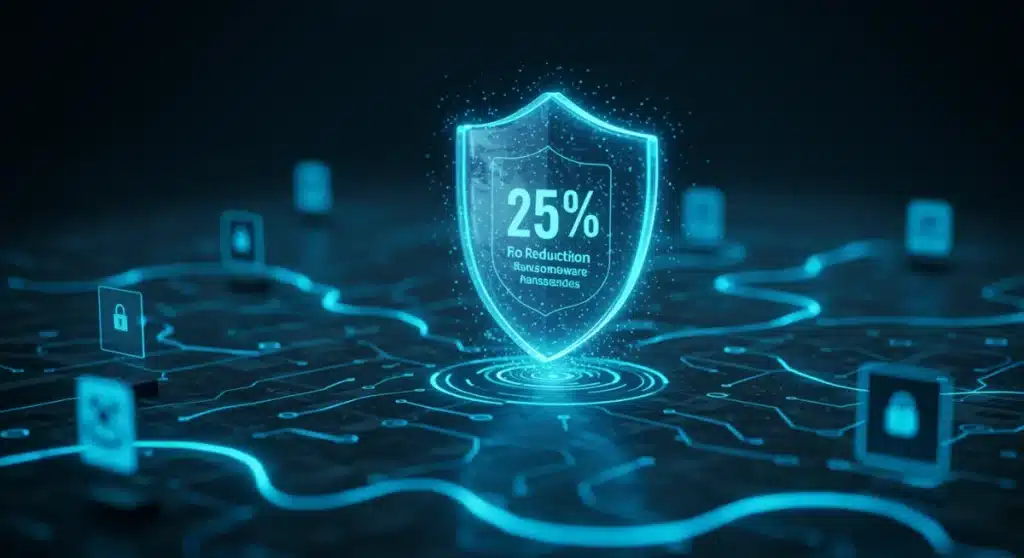
Advanced endpoint protection is poised to significantly reduce the attack surface by 25% by 2026, thereby strengthening ransomware defense strategies for organizations globally.
In an increasingly interconnected world, the threat of ransomware looms larger than ever. Organizations are constantly seeking robust strategies to protect their digital assets. By 2026, achieving a 25% reduction in the attack surface through advanced endpoint protection will be a critical benchmark in ransomware defense, fundamentally altering how we approach cybersecurity.
The evolving ransomware threat landscape
Ransomware attacks have grown exponentially in sophistication and frequency, moving beyond simple encryption to multi-faceted extortion schemes. These threats often target vulnerabilities at the endpoint, making traditional defenses often inadequate. Understanding this evolving landscape is the first step toward effective mitigation.
Attackers are now employing more advanced tactics, including living off the land binaries (LoLBins), supply chain compromises, and double extortion, where data is exfiltrated before encryption. This makes recovery more complex and damaging, pushing organizations to rethink their security postures significantly.
Understanding modern ransomware methodologies
Modern ransomware often initiates through phishing emails or exploiting unpatched vulnerabilities. Once inside, it seeks to escalate privileges and move laterally across the network, identifying critical systems and data for encryption. The goal is no longer just data encryption, but data exfiltration, creating additional leverage for attackers.
- Initial access via phishing or exploited vulnerabilities.
- Privilege escalation and lateral movement within the network.
- Data exfiltration prior to encryption.
- Encryption of critical files and systems.
- Demanding ransom, often in cryptocurrencies.
The complexity of these attacks demands a more proactive and intelligent defense. Simply backing up data is no longer a complete solution when sensitive information has potentially been stolen and could be leaked publicly.
The trend shows that attackers are increasingly targeting specific industries and critical infrastructure, demonstrating a shift towards more strategic and impactful campaigns. This necessitates a defense strategy that is not only reactive but also predictive and adaptive to new forms of attack vectors.
Defining attack surface reduction and its importance
Attack surface reduction refers to the practice of minimizing the number of potential entry points that an attacker can use to compromise a system or network. This involves identifying and eliminating vulnerabilities, misconfigurations, and unnecessary access points. A smaller attack surface means fewer opportunities for ransomware to gain a foothold.
This proactive approach helps organizations to limit the exposure of their assets to potential threats. It’s about making it harder for attackers to find and exploit weaknesses, rather than solely relying on detecting them once they’re already inside the perimeter.
Key strategies for minimizing exposure
Reducing the attack surface involves several interconnected strategies. These include rigorous patch management, network segmentation, and implementing the principle of least privilege. Each component plays a vital role in creating a more resilient security environment.
- Regularly patching and updating all software and operating systems.
- Implementing network segmentation to isolate critical systems.
- Enforcing the principle of least privilege for all users and applications.
- Disabling unnecessary services and ports.
By systematically addressing these areas, organizations can significantly decrease the pathways available to malicious actors. This isn’t a one-time task but an ongoing process that adapts to new threats and changes in the IT environment.
The importance of attack surface reduction cannot be overstated in the context of ransomware. Every vulnerability closed, every unnecessary service disabled, and every access point secured directly contributes to a stronger defense against these financially devastating attacks.
The role of advanced endpoint protection
Advanced endpoint protection (AEP) goes beyond traditional antivirus solutions by incorporating sophisticated technologies like artificial intelligence, machine learning, and behavioral analytics. These capabilities enable AEP to detect and prevent novel and polymorphic ransomware variants that often bypass signature-based defenses.
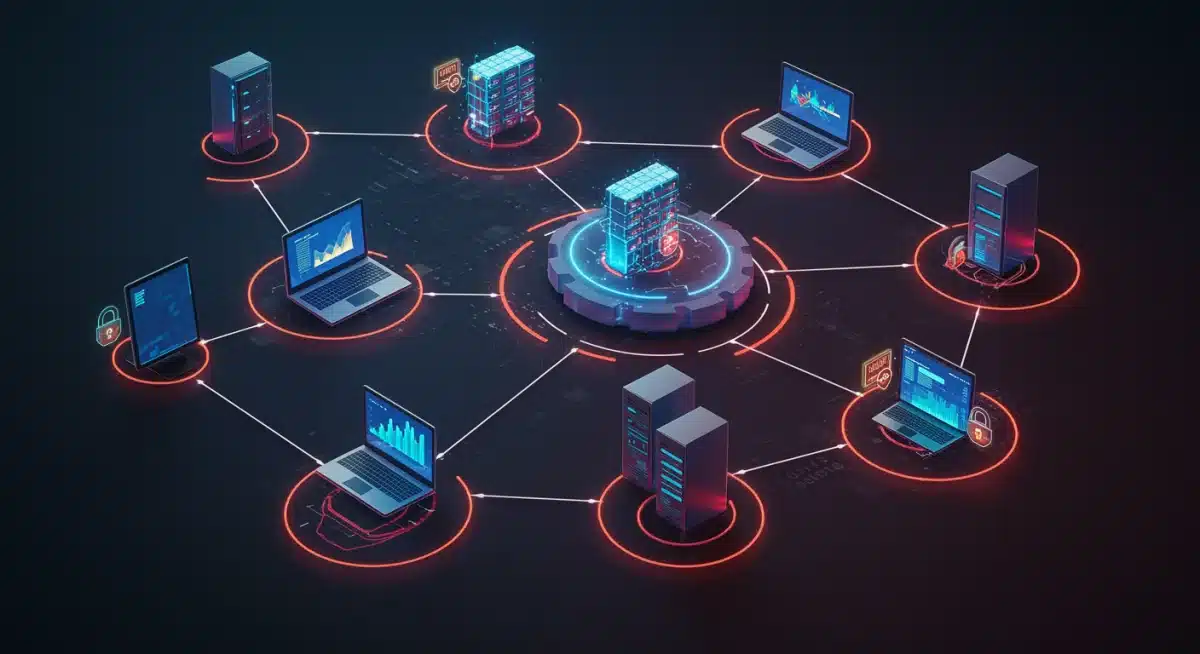
AEP solutions provide a comprehensive defense at the device level, monitoring activity, identifying suspicious patterns, and responding automatically to mitigate threats. This makes them a cornerstone of any modern ransomware defense strategy, especially when aiming for a significant reduction in attack surface.
How AEP enhances ransomware defense
AEP systems continuously analyze endpoint behavior, looking for anomalies that might indicate a ransomware attack in progress. This includes monitoring file access patterns, process execution, and network connections. If suspicious activity is detected, the system can automatically quarantine the threat, roll back changes, and alert security teams.
- Behavioral analysis to detect unknown threats.
- Real-time threat intelligence integration.
- Automated threat response and remediation.
- Application control and whitelisting.
This proactive and intelligent approach is crucial for combating ransomware, which often mutates rapidly to evade detection. AEP’s ability to learn and adapt provides a dynamic defense against evolving threats, ensuring endpoints remain secure even against zero-day exploits.
Furthermore, AEP solutions often integrate with other security tools, providing a unified view of the security posture. This integration facilitates better threat hunting and incident response, allowing organizations to react more swiftly and effectively to potential breaches.
Achieving a 25% attack surface reduction by 2026
The goal of reducing the attack surface by 25% by 2026 is ambitious but achievable with a focused strategy. This target requires a combination of technological advancements, process improvements, and a strong security culture. It’s not just about installing software, but about fundamentally transforming how an organization manages its digital risk.
To reach this goal, organizations must conduct thorough assessments of their current attack surface, identify major vulnerabilities, and prioritize remediation efforts. This involves a continuous cycle of identification, protection, detection, response, and recovery.
Strategic implementation roadmap
A clear roadmap is essential for achieving the 25% reduction target. This roadmap should include phased implementation of AEP solutions, regular security audits, and ongoing employee training. Each phase should build upon the last, steadily enhancing the overall security posture.
- Phase 1: Comprehensive attack surface mapping and vulnerability assessment.
- Phase 2: Deployment of advanced endpoint protection across all devices.
- Phase 3: Implementation of strict access controls and network segmentation.
- Phase 4: Continuous monitoring, threat hunting, and incident response drills.
Success also hinges on fostering a strong security-aware culture within the organization. Employees are often the first line of defense, and their vigilance can prevent many initial ransomware entry points. Regular training on phishing awareness and secure computing practices is paramount.
By systematically addressing known vulnerabilities and adopting advanced protective measures, organizations can realistically aim for and achieve a significant reduction in their attack surface, making them far less attractive targets for ransomware groups.
Integration with broader cybersecurity frameworks
Advanced endpoint protection does not operate in isolation; its effectiveness is amplified when integrated into a broader cybersecurity framework. This holistic approach ensures that all layers of defense work harmoniously, providing comprehensive protection against ransomware and other threats. Integrating AEP with security information and event management (SIEM) systems, security orchestration, automation, and response (SOAR) platforms, and identity and access management (IAM) solutions creates a powerful defense ecosystem.
Such integration allows for centralized visibility, automated response capabilities, and consistent policy enforcement across the entire IT infrastructure. This unified strategy is crucial for identifying complex attack patterns that might span multiple systems and for orchestrating a rapid, coordinated response.
Synergies with extended detection and response (XDR)
The emergence of Extended Detection and Response (XDR) platforms further enhances the value of AEP. XDR unifies security across endpoints, networks, cloud, and identity, providing a much broader context for threat detection and response. AEP acts as a critical data source for XDR, feeding rich telemetry data that helps in identifying sophisticated threats that might otherwise go unnoticed.
- Centralized data collection from diverse security layers.
- Enhanced threat correlation and contextualization.
- Automated investigation and response workflows.
- Reduced mean time to detect and respond (MTTD/MTTR).
By leveraging AEP within an XDR framework, organizations can move beyond siloed security operations to a more integrated and intelligent defense. This synergy enables faster and more accurate threat detection, reducing the window of opportunity for ransomware to cause significant damage.
The future of effective ransomware defense lies in these interconnected security ecosystems. As threats become more sophisticated, so too must our defenses, relying on integrated solutions that offer a complete picture of the threat landscape and the means to counter it effectively.
Future trends and predictive defense
Looking ahead to 2026 and beyond, the battle against ransomware will increasingly rely on predictive defense mechanisms. This involves leveraging artificial intelligence and machine learning not just for detection, but for anticipating potential attack vectors and vulnerabilities before they are exploited. AEP solutions are at the forefront of this evolution, constantly learning from global threat intelligence and adapting their protection strategies.
The shift towards a more predictive posture aims to move beyond reactive incident response to proactive threat mitigation. This includes advanced behavioral analytics that can identify emerging attack patterns and pre-emptively block them, even if they’re entirely novel.
AI-driven threat intelligence and automation
AI will play a pivotal role in analyzing vast amounts of threat data, identifying subtle indicators of compromise (IOCs), and predicting where the next attacks might originate. This intelligence will be fed directly into AEP solutions, allowing them to adapt their defenses in real time without human intervention.
- Proactive identification of vulnerable systems.
- Automated policy adjustments based on real-time threat intelligence.
- Self-healing endpoints that automatically remediate certain issues.
- Enhanced forensic capabilities for post-incident analysis.
Automation will also be key, enabling AEP systems to respond to threats at machine speed, significantly reducing the time attackers have to execute their payloads. This rapid response capability is critical against fast-moving ransomware campaigns that can encrypt an entire network in minutes.
Ultimately, the future of ransomware defense will be characterized by highly intelligent, autonomous, and integrated systems that can predict, prevent, and respond to threats with minimal human oversight. This evolution will be essential to maintaining a strong security posture against an ever-adapting adversary.
| Key Aspect | Brief Description |
|---|---|
| Attack Surface Reduction | Minimizing potential entry points for attackers to compromise systems, crucial for pre-emptive defense. |
| Advanced Endpoint Protection (AEP) | Next-generation security solutions using AI/ML to detect and prevent sophisticated ransomware at the device level. |
| 25% Reduction Goal | An achievable target by 2026 through strategic AEP deployment and robust security practices. |
| Predictive Defense | Leveraging AI and automation to anticipate and block threats before they can execute, shifting from reactive to proactive security. |
Frequently Asked Questions about Ransomware Defense
Ransomware defense encompasses strategies and technologies to protect against, detect, and respond to ransomware attacks. By 2026, it’s critical due to the increasing sophistication and financial impact of these attacks, necessitating robust, proactive measures to safeguard digital assets and ensure business continuity.
Advanced endpoint protection (AEP) reduces the attack surface by actively monitoring endpoint behavior, identifying and blocking malicious processes, and preventing unauthorized access. It uses AI/ML to detect novel threats, patch vulnerabilities, and enforce security policies, thereby closing off potential entry points for attackers.
A 25% reduction signifies a substantial decrease in your organization’s vulnerability to cyberattacks, particularly ransomware. It means fewer exploitable weaknesses, a lower likelihood of successful breaches, and ultimately, enhanced overall security posture, leading to reduced risk and potential financial losses.
Traditional antivirus software primarily relies on signature-based detection, which is often insufficient against modern, polymorphic ransomware that constantly evolves. Advanced endpoint protection, with its behavioral analytics and AI capabilities, is necessary to detect and prevent these sophisticated, previously unseen threats effectively.
Begin by conducting a comprehensive assessment of your current attack surface and existing endpoint security. Then, research and select an AEP solution that aligns with your organizational needs, followed by a phased deployment and integration with your broader cybersecurity framework, alongside continuous training for staff.
Conclusion
The journey towards robust ransomware defense in 2026 is intrinsically linked to the strategic adoption of advanced endpoint protection. By committing to a 25% reduction in the attack surface, organizations can proactively fortify their digital perimeters against increasingly sophisticated threats. This involves not only deploying cutting-edge technology but also fostering a culture of security awareness and integrating AEP within a comprehensive cybersecurity framework. The future of cybersecurity demands a predictive, adaptive, and integrated approach, ensuring that our defenses evolve faster than the threats they aim to counter, safeguarding critical data and maintaining operational integrity.