Reduce Ransomware Risk by 40% in 6 Months: A Business Guide
Reducing your business’s ransomware risk by 40% in the next 6 months involves implementing a multi-layered cybersecurity strategy, focusing on employee training, robust data backups, regular software updates, and advanced threat detection systems to safeguard critical assets.
Is your business a potential target for ransomware? The threat is real, but you can take control. Learn how to reduce your business’s ransomware risk by 40% in the next 6 months with practical, actionable steps that bolster your cybersecurity posture and protect your valuable data.
Understand the Current Ransomware Landscape
The ransomware landscape is constantly evolving, with new threats and attack vectors emerging regularly. Understanding this landscape is the first step in protecting your business.
The Rising Tide of Ransomware Attacks
Ransomware attacks are on the rise, targeting businesses of all sizes. These attacks can lead to significant financial losses, reputational damage, and operational disruptions. It is important to understand why these attacks are increasing and what steps you can take to mitigate the impact.
Common Ransomware Attack Vectors
Ransomware typically enters your network through phishing emails, compromised websites, or vulnerabilities in software. Understanding these attack vectors is crucial for implementing effective preventative measures and closing security gaps.
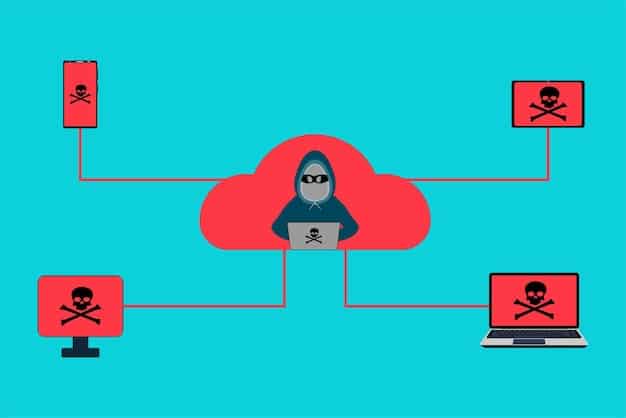
To better defend against these common attack vectors, consider these critical steps:
- Implement robust email filtering to block phishing attempts.
- Regularly patch software vulnerabilities to prevent exploitation.
- Secure remote access points with multi-factor authentication.
Staying informed about the latest ransomware threats and attack vectors is crucial for maintaining a strong security posture. By understanding how these attacks work, you can better protect your business from becoming a victim.
Assess Your Business’s Current Cybersecurity Posture
Before you can reduce your ransomware risk, you need to know where you stand. This involves assessing your current cybersecurity measures and identifying any vulnerabilities.
Conduct a Comprehensive Cybersecurity Audit
A cybersecurity audit will help you identify your business’s strengths and weaknesses. This includes evaluating your existing security policies, technologies, and procedures.
Identify Critical Assets and Data
Understanding what data is most critical to your business operations is vital. This allows you to prioritize security efforts and ensure that your most valuable assets are protected.
Here are key areas to focus on during the assessment phase:
- Evaluate employee security awareness through simulated phishing tests.
- Review data backup and recovery procedures to ensure they are adequate.
- Assess network segmentation to limit the impact of a potential breach.
By conducting a thorough assessment, you can gain a clear picture of your business’s current cybersecurity posture and identify the areas that require immediate attention.
Implement a Multi-Layered Security Strategy
A robust defense against ransomware requires a multi-layered security strategy. This approach involves implementing various security measures to protect against different attack vectors.
Endpoint Protection and Antivirus Software
Endpoint protection is the first line of defense against ransomware. It involves installing antivirus software on all devices, including computers, laptops, and mobile devices, to detect and remove malicious software.
Network Segmentation
Network segmentation involves dividing your network into smaller, isolated segments. This limits the impact of a ransomware attack by preventing it from spreading throughout the entire network.

Consider these measures to enhance your multi-layered security strategy:
- Implement intrusion detection and prevention systems (IDPS) to monitor network traffic for suspicious activity.
- Deploy a web application firewall (WAF) to protect web applications from attacks.
- Use data loss prevention (DLP) tools to prevent sensitive data from leaving the network.
By implementing a multi-layered security strategy, you can significantly reduce your business’s risk of falling victim to a ransomware attack. This comprehensive approach ensures that you have defenses in place at every level of your IT infrastructure.
Enhance Employee Training and Awareness
Employees are often the weakest link in a business’s cybersecurity defenses. Investing in employee training and awareness programs can greatly reduce the risk of ransomware attacks.
Conduct Regular Security Awareness Training
Regular training sessions can help employees recognize and avoid phishing emails and other common ransomware attack vectors. Training should cover topics such as password security, social engineering, and safe browsing habits.
Simulate Phishing Attacks
Simulated phishing attacks can help identify employees who are susceptible to phishing scams. This allows you to provide targeted training to those who need it most.
Effective employee training should include the following components:
- Real-world examples of phishing emails and ransomware attacks.
- Interactive exercises to reinforce key concepts.
- Regular updates on the latest threats and attack techniques.
By empowering your employees with the knowledge and skills they need to identify and avoid ransomware attacks, you can significantly reduce your business’s risk.
Implement Robust Data Backup and Recovery Procedures
In the event of a ransomware attack, having reliable data backups is crucial for minimizing downtime and preventing data loss. Implement robust data backup and recovery procedures to ensure that you can quickly restore your systems and data.
Regularly Back Up Critical Data
Regularly back up all critical data to a secure, offsite location. This ensures that you can restore your data even if your primary systems are compromised.
Test Your Recovery Procedures
Test your recovery procedures regularly to ensure that they work as expected. This includes verifying that you can restore your data quickly and effectively.
Key considerations for data backup and recovery include:
- Using the 3-2-1 backup rule: keep three copies of your data, on two different media, with one copy offsite.
- Implementing version control to restore previous versions of files.
- Using encryption to protect backups from unauthorized access.
By having a solid data backup and recovery plan in place, you can minimize the impact of a ransomware attack and ensure business continuity. This is a critical component of any comprehensive cybersecurity strategy.
Maintain and Update Your Security Measures
Cybersecurity is not a one-time task. It requires ongoing maintenance and updates to stay ahead of evolving threats. Regularly review and update your security measures to ensure they remain effective.
Regularly Patch Software Vulnerabilities
Software vulnerabilities are a common entry point for ransomware attacks. Regularly patch your software to address any known vulnerabilities and prevent exploitation.
Monitor Your Network for Suspicious Activity
Monitor your network for suspicious activity and investigate any potential threats promptly. This includes reviewing logs, analyzing network traffic, and monitoring user behavior.
Ongoing maintenance should also include:
- Conducting regular vulnerability scans to identify potential weaknesses.
- Staying informed about the latest cybersecurity threats and trends.
- Updating security policies and procedures as needed.
By maintaining and updating your security measures, you can ensure that your business remains protected against the latest ransomware threats. This proactive approach is essential for long-term cybersecurity.
| Key Point | Brief Description |
|---|---|
| 🛡️ Multi-Layered Security | Use various security measures to protect against different attack vectors. |
| 👨🏫 Employee Training | Educate employees to recognize and avoid phishing emails and malware. |
| 💾 Data Backup | Regularly back up critical data to a secure, offsite location. |
| Patches & Updates | Install software updates and security patches as soon as they are released. |
Frequently Asked Questions
▼
Ransomware is malicious software that encrypts a business’s data, rendering it inaccessible until a ransom is paid. It can lead to significant financial losses and operational disruptions.
▼
Data backups should be performed regularly, ideally daily or at least weekly, depending on the frequency with which your data changes. Automated backup solutions are recommended.
▼
Training should cover phishing recognition, password security, safe browsing habits, and the importance of reporting suspicious activity. Use real-world examples and interactive exercises.
▼
Network segmentation involves dividing a network into smaller, isolated segments. This limits the spread of a ransomware attack, preventing it from affecting the entire network.
▼
Conduct simulated phishing attacks, vulnerability scans, and penetration testing to identify weaknesses in your defenses. Regularly test your data backup and recovery procedures as well.
Conclusion
Reducing your business’s ransomware risk by 40% in the next six months is an achievable goal with a proactive and comprehensive approach. By understanding the threat landscape, assessing your current posture, implementing a multi-layered security strategy, training your employees, and maintaining your defenses, you can significantly improve your cybersecurity resilience.