AI Governance Frameworks: Secure Implementation Guide for US Tech

Implementing secure AI governance frameworks by mid-2025 is crucial for US tech companies to navigate evolving regulations, ensure ethical AI development, and protect sensitive data effectively.
As artificial intelligence continues its rapid integration into every facet of business, the need for robust oversight becomes paramount. For US tech companies, establishing secure AI governance frameworks by mid-2025 is not merely a regulatory compliance exercise but a strategic imperative. This guide offers practical, step-by-step solutions to help navigate this complex landscape, ensuring your AI initiatives are both innovative and responsible.
Understanding the imperative for AI governance
The acceleration of AI adoption brings unprecedented opportunities, yet it also introduces significant risks. Without a clear governance structure, organizations face potential pitfalls ranging from data breaches and biased algorithms to regulatory fines and reputational damage. The US regulatory landscape is rapidly evolving, with various federal and state bodies scrutinizing AI’s impact on privacy, civil liberties, and market competition.
Proactive implementation of AI governance allows tech companies to stay ahead of these challenges, transforming potential liabilities into competitive advantages. It demonstrates a commitment to ethical practices and secures stakeholder trust, which is invaluable in today’s data-driven economy.
Why governance is non-negotiable
- Regulatory Compliance: Adhering to emerging AI laws and guidelines, such as those proposed by NIST and forthcoming federal regulations.
- Risk Mitigation: Identifying and addressing vulnerabilities in AI systems, including data security flaws and algorithmic bias.
- Ethical AI Development: Ensuring AI systems are fair, transparent, and accountable, aligning with societal values.
Ultimately, a well-defined AI governance framework establishes clear lines of responsibility, promotes transparency, and embeds ethical considerations throughout the AI lifecycle. It’s about building trust and ensuring the long-term sustainability of AI innovation within your organization.
Phase 1: foundational assessment and strategy development
The journey to robust AI governance begins with a comprehensive understanding of your current AI landscape and a clear strategic vision. This initial phase involves evaluating existing AI initiatives, identifying potential risk areas, and defining the scope and objectives of your governance framework.
It’s vital to assemble a cross-functional team, including representatives from legal, compliance, engineering, data science, and ethics. This diverse expertise ensures that all angles are considered, from technical implementation to legal ramifications and ethical considerations.
Key steps in foundational assessment
- Inventory AI Systems: Document all AI applications, models, and data sources currently in use or under development.
- Risk Identification: Conduct a thorough assessment of potential risks associated with each AI system, focusing on data privacy, security, bias, and operational reliability.
- Stakeholder Alignment: Define roles and responsibilities for AI governance across the organization, ensuring clear accountability.
Developing a clear strategy involves setting measurable goals for your AI governance program. This includes defining key performance indicators (KPIs) for compliance, risk reduction, and ethical adherence, providing a roadmap for successful implementation.
Phase 2: designing the governance framework architecture
Once the foundational strategy is in place, the next step is to design the actual architecture of your secure AI governance framework. This involves establishing policies, procedures, and technical controls that will guide the development, deployment, and monitoring of AI systems. The architecture should be scalable, adaptable, and integrated seamlessly into existing organizational processes.
Consider leveraging existing cybersecurity and data governance structures to avoid redundant efforts and ensure consistency. The framework should encompass the entire AI lifecycle, from data acquisition and model training to deployment and continuous monitoring.
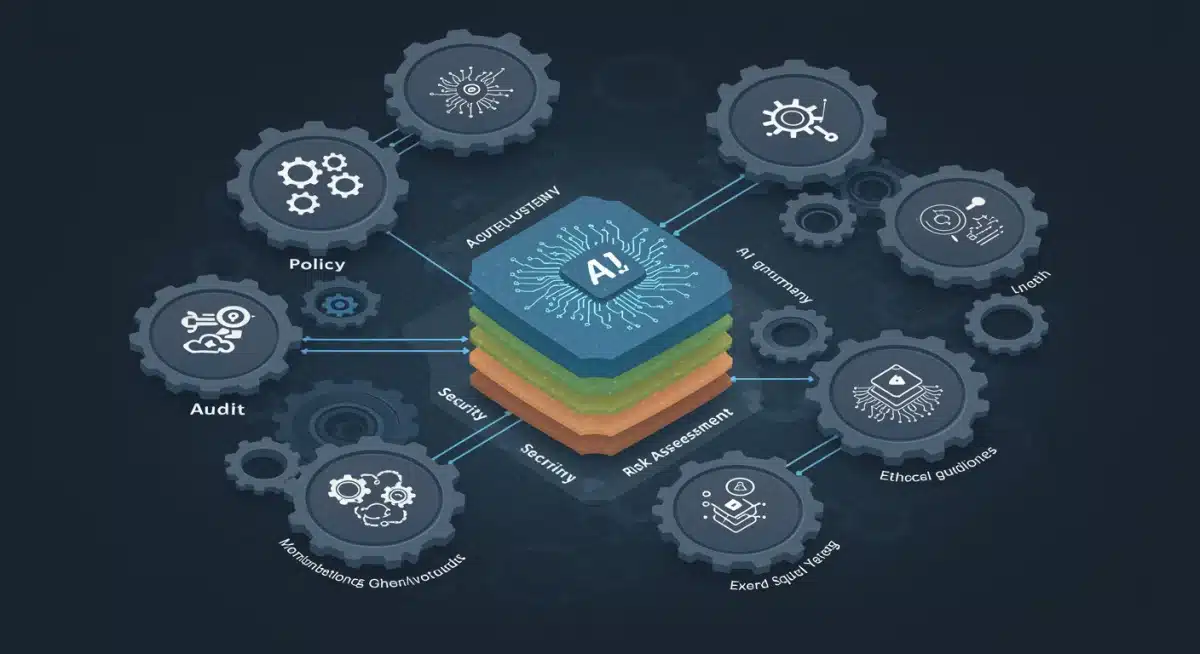
Policies should address critical areas such as data quality, model explainability, bias detection, and human oversight. Procedures must outline practical steps for developers and operators, ensuring they adhere to these policies in their day-to-day work.
Core components of the architecture
- Policy Development: Create clear, enforceable policies for data handling, model development, ethical use, and incident response.
- Technical Controls: Implement security measures like encryption, access controls, and secure coding practices specific to AI systems.
- Ethical Guidelines: Establish principles and practices to ensure fairness, transparency, and accountability in AI decision-making.
The framework architecture should also include mechanisms for regular review and updates, recognizing that both AI technology and regulatory environments are constantly evolving. This adaptive approach ensures the governance framework remains effective and relevant over time.
Phase 3: implementation and integration
With the framework designed, the focus shifts to practical implementation. This phase involves integrating the new policies, procedures, and technical controls into your existing operational workflows. Effective integration requires active participation from all relevant teams and clear communication about the new requirements.
Training and education are critical components of successful implementation. Employees across all levels, particularly those involved in AI development and deployment, must understand their roles and responsibilities within the new governance structure. This includes understanding ethical considerations and regulatory compliance requirements.
Facilitating smooth integration
- Employee Training: Develop and deliver comprehensive training programs on AI governance policies, tools, and ethical guidelines.
- Tooling and Automation: Implement AI governance platforms and automated tools to streamline compliance checks, risk assessments, and monitoring.
- Pilot Programs: Start with pilot projects to test the framework in a controlled environment, gather feedback, and refine processes before full-scale rollout.
Successful implementation also means documenting every step, from policy creation to training records. This not only aids in internal process management but also provides crucial evidence for future audits and compliance checks. The goal is to make secure AI governance an intrinsic part of your company’s operational DNA.
Phase 4: monitoring, auditing, and continuous improvement
Implementing an AI governance framework is not a one-time event; it’s an ongoing process of monitoring, auditing, and continuous improvement. This phase ensures that the framework remains effective, adapts to new challenges, and evolves with technological advancements and regulatory changes. Regular oversight is essential to maintain the integrity and security of your AI systems.
Establish clear metrics and reporting mechanisms to track the performance of your governance framework. This includes monitoring for compliance breaches, assessing the effectiveness of risk mitigation strategies, and evaluating the ethical impact of AI applications. Independent audits, both internal and external, provide an objective assessment of your framework’s robustness.
Ensuring ongoing effectiveness
- Continuous Monitoring: Implement automated systems for real-time monitoring of AI model performance, data integrity, and compliance with policies.
- Regular Audits: Conduct periodic internal and external audits to assess the effectiveness and adherence to the governance framework.
- Feedback Loops: Establish mechanisms for collecting feedback from developers, users, and stakeholders to identify areas for improvement.
Embracing a culture of continuous improvement means regularly reviewing and updating policies, procedures, and technical controls based on audit findings, feedback, and changes in the regulatory landscape. This proactive approach ensures your secure AI governance framework remains a dynamic and effective safeguard for your organization.
Addressing specific US regulatory considerations
US tech companies operate within a complex and fragmented regulatory environment concerning AI. While a comprehensive federal AI law is still evolving, several sector-specific regulations and state-level initiatives already impact AI development and deployment. Understanding and addressing these specific considerations is paramount for effective secure AI governance.
Key areas include data privacy laws like CCPA and emerging state-level privacy legislation, which often have implications for AI training data. Additionally, various federal agencies, such as the FTC and NIST, are issuing guidance and standards that, while not always legally binding, set industry best practices and can influence future regulations.
Navigating the US regulatory maze
- State-level Privacy Laws: Ensure AI systems comply with data privacy regulations in states where your company operates or where your users reside.
- NIST AI Risk Management Framework: Adopt the NIST AI RMF as a foundational guide for managing risks associated with AI, even if not yet mandated.
- Sector-Specific Regulations: Pay close attention to AI-related guidance from agencies relevant to your industry, such as FDA for healthcare AI or SEC for financial AI.
Proactively engaging with these regulatory considerations, rather than reacting to them, positions your company as a responsible leader in the AI space. It also minimizes legal exposure and builds greater trust with consumers and regulatory bodies. Staying informed about legislative developments is a continuous task for any US tech company deploying AI.
Building a culture of responsible AI
Beyond policies and technical controls, the most enduring aspect of secure AI governance is fostering a culture of responsible AI throughout the organization. This involves instilling ethical considerations and a sense of accountability in every employee involved with AI, from the executive suite to the front-line developer. A strong ethical culture acts as an internal compass, guiding decisions even when explicit rules might not yet exist.
Leadership plays a critical role in championing responsible AI. Executives must communicate the importance of ethical AI, allocate resources for governance initiatives, and model responsible behavior. This top-down commitment reinforces the message that AI ethics and security are core company values, not just compliance burdens.
Cultivating responsible AI practices
- Ethical AI Training: Provide ongoing education on AI ethics, bias awareness, and the societal impact of AI technologies for all relevant staff.
- Whistleblower Protections: Establish clear and safe channels for employees to report concerns about AI systems without fear of retaliation.
- Cross-functional Collaboration: Encourage open dialogue and collaboration between technical teams, legal, and ethics experts to address complex AI challenges holistically.
Ultimately, a culture of responsible AI transforms governance from a set of rules into a shared commitment. It empowers employees to make ethical choices, promotes innovation within secure boundaries, and strengthens the company’s reputation as a trustworthy and forward-thinking organization in the AI era.
| Key Point | Brief Description |
|---|---|
| Foundational Assessment | Inventory AI, identify risks, and define strategic goals for governance. |
| Framework Architecture | Design policies, technical controls, and ethical guidelines for AI lifecycle. |
| Monitoring & Auditing | Implement continuous oversight, regular audits, and feedback loops for improvement. |
| US Regulatory Focus | Address state privacy laws, NIST guidelines, and sector-specific AI regulations. |
Frequently asked questions about AI governance
Secure AI governance is crucial by mid-2025 due to rapid AI adoption, evolving regulatory landscapes, and the increasing risks of data breaches, algorithmic bias, and ethical concerns. Proactive frameworks ensure compliance, mitigate risks, and build public trust in AI technologies.
An effective framework includes robust policies for data handling and model development, technical controls for security, ethical guidelines for fairness and transparency, and continuous monitoring mechanisms. It also requires clear roles, responsibilities, and accountability across the organization.
Addressing algorithmic bias involves implementing rigorous data quality checks, using diverse training datasets, applying bias detection tools, and conducting regular fairness audits. Human oversight and transparent model explainability are also key to mitigating and addressing bias effectively.
The NIST AI Risk Management Framework provides a voluntary yet influential guide for managing risks associated with AI. It helps organizations incorporate trustworthiness considerations from design to deployment, offering a structured approach to identify, assess, and manage AI-related risks, influencing future regulatory standards.
Integrating AI governance into existing operations streamlines processes, avoids redundancy, and ensures consistency with broader corporate compliance efforts. It fosters a unified approach to risk management, enhances operational efficiency, and embeds responsible AI practices as a core part of the company’s culture.
Conclusion
The journey to implementing secure AI governance frameworks by mid-2025 is a complex yet critical endeavor for US tech companies. By systematically addressing foundational assessments, designing robust architectures, ensuring diligent implementation, and committing to continuous monitoring, organizations can navigate the evolving landscape of AI with confidence. Beyond mere compliance, establishing strong governance fosters innovation, mitigates significant risks, and builds a foundation of trust that is essential for the future of AI. Embracing these practical solutions will not only safeguard your company but also position it as a leader in responsible and ethical AI development.