IoT Device Security: A Step-by-Step Enterprise Guide for Q3 2026

In the rapidly evolving landscape of enterprise technology, the Internet of Things (IoT) has emerged as a transformative force, revolutionizing operations across nearly every industry. From smart sensors optimizing manufacturing processes to connected devices streamlining office environments, IoT offers unparalleled opportunities for efficiency, data collection, and innovation. However, this proliferation of interconnected devices also introduces a myriad of complex security challenges. Each new IoT device represents a potential entry point for cyber attackers, making robust security measures not just advisable, but absolutely critical for safeguarding sensitive data, maintaining operational continuity, and protecting an organization’s reputation. As we approach Q3 2026, the imperative to secure IoT devices within enterprise networks has never been more urgent. This comprehensive, step-by-step guide is designed to equip your organization with the knowledge and actionable strategies needed to build a resilient and secure IoT ecosystem.
The sheer diversity of IoT devices, ranging from low-power sensors to high-bandwidth cameras, makes securing them a unique challenge. Unlike traditional IT assets, many IoT devices have limited processing power, memory, and often lack the ability to run conventional security software. Furthermore, they frequently operate on specialized protocols and may have extended lifecycles, leading to potential vulnerabilities if not properly managed and updated. Without a structured approach, enterprises risk exposing their critical infrastructure, intellectual property, and customer data to sophisticated cyber threats. This guide will walk you through the essential phases of implementing and maintaining a robust security posture for your IoT devices, ensuring your enterprise is well-prepared for the challenges of the connected future.
Understanding the IoT Security Landscape
Before diving into specific solutions, it’s crucial to grasp the unique security landscape of IoT. Traditional IT security models often fall short when applied directly to IoT environments due to several key differences:
- Device Diversity and Scale: Enterprises can deploy hundreds, thousands, or even millions of IoT devices, each with varying capabilities, operating systems, and communication protocols. Managing and securing this scale and diversity is a significant undertaking.
- Resource Constraints: Many IoT devices are designed for specific functions with minimal processing power and memory to conserve energy and reduce costs. This limits the ability to run complex security agents or implement strong encryption algorithms.
- Extended Lifecycles: Unlike smartphones or laptops that are replaced every every few years, many industrial IoT devices are expected to operate for a decade or more. This long lifecycle presents challenges for ongoing patching, updates, and vulnerability management.
- Physical Vulnerabilities: IoT devices are often deployed in physically accessible locations, making them susceptible to tampering, theft, or unauthorized access.
- Supply Chain Risks: The components and software in IoT devices often come from multiple vendors, creating a complex supply chain with potential vulnerabilities at various stages.
- Data Privacy and Compliance: IoT devices collect vast amounts of data, much of which can be sensitive. Ensuring data privacy and compliance with regulations like GDPR, CCPA, and industry-specific standards is paramount.
Recognizing these distinct characteristics is the first step toward developing an effective strategy to secure IoT devices within your enterprise network.
Phase 1: Comprehensive IoT Device Inventory and Risk Assessment
The foundation of any robust IoT security strategy is knowing what you have and where your vulnerabilities lie. This phase is about discovery and evaluation.
Step 1.1: Identify and Document All IoT Devices
Begin by creating a comprehensive inventory of every IoT device connected to your network, or planned for connection. This inventory should include:
- Device Type: (e.g., smart thermostat, security camera, industrial sensor, medical device)
- Manufacturer and Model: Essential for tracking vulnerabilities and updates.
- Location: Physical placement within the enterprise.
- Owner/Department: Who is responsible for the device and its data.
- Network Connection Method: (Wi-Fi, Ethernet, Cellular, LoRaWAN, Zigbee, Bluetooth, etc.)
- Operating System/Firmware Version: Crucial for patch management.
- Purpose/Function: What data does it collect? What operations does it perform?
- Data Processed/Transmitted: Sensitivity and criticality of the data.
- Default Credentials: (If known, though these should be changed immediately)
Automated discovery tools can aid in this process, especially for large networks, but manual verification is often necessary for accuracy.
Step 1.2: Classify Devices by Risk Profile
Once inventoried, classify each device based on its potential impact if compromised. Consider:
- Criticality: How essential is the device to business operations? (e.g., a device controlling a production line is more critical than a smart light bulb).
- Data Sensitivity: Does the device handle sensitive personal data, intellectual property, or financial information?
- Exposure: Is the device externally facing or physically accessible?
- Vulnerability: Is the device known to have unpatched vulnerabilities or weak security controls?
Assigning risk levels (e.g., high, medium, low) will help prioritize security efforts and resource allocation to secure IoT devices most effectively.
Step 1.3: Conduct Vulnerability Assessments
Regularly scan IoT devices for known vulnerabilities. This can involve:
- Automated Vulnerability Scanners: Tools specifically designed to identify weaknesses in IoT protocols and firmware.
- Penetration Testing: Ethical hacking to simulate attacks and uncover exploitable flaws.
- Firmware Analysis: Examining device firmware for hardcoded credentials, backdoors, or insecure configurations.
The results of these assessments will directly inform your remediation strategies.
Phase 2: Implementing Robust Security Controls
With a clear understanding of your IoT landscape and associated risks, the next phase focuses on deploying practical security controls.
Step 2.1: Network Segmentation and Access Control
One of the most effective strategies to secure IoT devices is to isolate them from your main corporate network. Network segmentation creates logical boundaries, limiting the blast radius of a potential breach.
- Dedicated IoT Networks: Create separate VLANs or subnets specifically for IoT devices. This ensures that even if an IoT device is compromised, attackers cannot easily move laterally to critical business systems.
- Micro-segmentation: Further segmenting IoT networks based on device type, function, or risk profile. For example, industrial control systems could be in a separate segment from office automation devices.
- Firewall Rules: Implement strict firewall rules to control traffic between IoT segments and the rest of the network. Only allow necessary communication ports and protocols.
- Zero Trust Architecture: Adopt a Zero Trust model where no device, user, or application is inherently trusted, regardless of its location. Every access request must be authenticated and authorized.
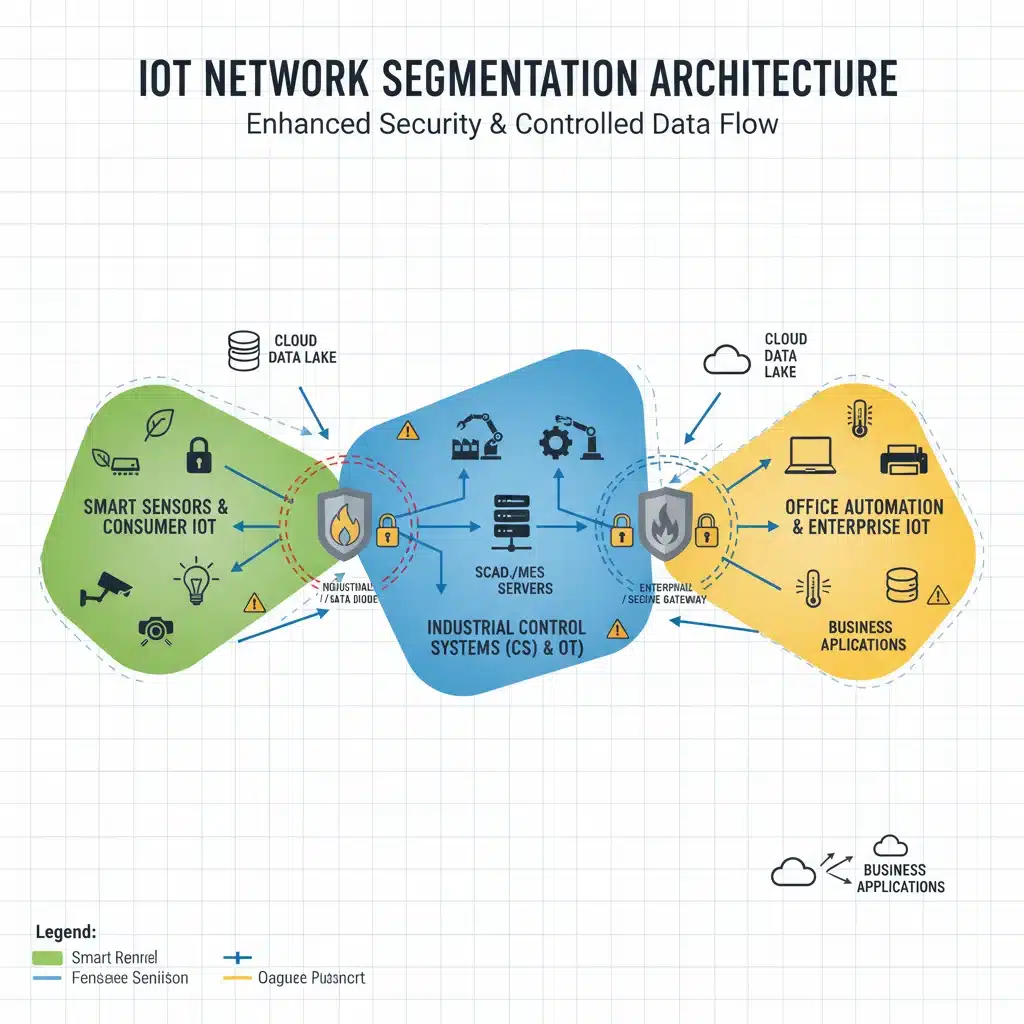
This layered approach significantly reduces the attack surface and makes it harder for attackers to compromise your entire infrastructure.
Step 2.2: Strong Authentication and Authorization
Weak or default credentials are a primary vector for IoT attacks. Implementing robust authentication and authorization mechanisms is non-negotiable.
- Change Default Credentials: Immediately change all default usernames and passwords on new IoT devices.
- Unique and Complex Passwords: Enforce the use of strong, unique passwords for each device and service.
- Multi-Factor Authentication (MFA): Where supported, enable MFA for accessing IoT device management interfaces and critical data.
- Certificate-Based Authentication: Utilize digital certificates for device authentication, making it harder for unauthorized devices to connect.
- Principle of Least Privilege: Grant IoT devices and users only the minimum necessary permissions to perform their functions.
Regularly reviewing and updating authentication policies is crucial to maintain a strong security posture for your IoT ecosystem.
Step 2.3: Data Encryption and Integrity
Protecting data both in transit and at rest is paramount, especially for sensitive IoT data.
- Encryption in Transit: Ensure all data transmitted by IoT devices uses strong encryption protocols (e.g., TLS 1.2/1.3, IPSec). Avoid devices that do not support modern encryption standards.
- Encryption at Rest: Where feasible, encrypt data stored on IoT devices or in associated cloud platforms.
- Data Integrity: Implement mechanisms (e.g., digital signatures, hashing) to ensure that data has not been tampered with during transmission or storage.
Choosing devices that support these encryption capabilities upfront is a critical consideration when expanding your IoT footprint.
Step 2.4: Secure Device Configuration and Hardening
Many IoT devices come with insecure default configurations. Hardening involves disabling unnecessary services, ports, and features.
- Disable Unused Services: Turn off any services or protocols on the device that are not essential for its operation.
- Close Unnecessary Ports: Restrict open network ports to only those required for device functionality.
- Secure Boot: Utilize devices that support secure boot mechanisms to ensure only trusted firmware can be loaded.
- Regular Firmware Updates: Establish a rigorous patch management process. Regularly check for and apply firmware updates and security patches from manufacturers. This is vital to secure IoT devices against newly discovered vulnerabilities.
Automated configuration management tools can help enforce consistent security settings across a large fleet of IoT devices.
Phase 3: Continuous Monitoring and Incident Response
Security is not a one-time setup; it’s an ongoing process. Continuous monitoring and a well-defined incident response plan are essential.
Step 3.1: Implement Centralized Logging and Monitoring
Visibility into IoT device activity is critical for detecting anomalies and potential threats.
- Centralized Log Management: Collect logs from all IoT devices, gateways, and network infrastructure into a Security Information and Event Management (SIEM) system.
- Anomaly Detection: Utilize behavioral analytics and machine learning to identify unusual patterns of activity that could indicate a compromise (e.g., a sensor suddenly communicating with an external IP address, unexpected data volumes).
- Real-time Alerts: Configure alerts for critical security events, such as failed login attempts, unauthorized access attempts, or deviations from normal device behavior.
- Network Traffic Analysis: Monitor network traffic patterns to and from IoT devices to detect suspicious communications or data exfiltration attempts.

Proactive monitoring allows your security team to respond quickly to threats and minimize potential damage, making it a cornerstone to secure IoT devices effectively.
Step 3.2: Develop an IoT-Specific Incident Response Plan
A generic incident response plan may not adequately address the unique characteristics of IoT attacks. Develop a tailored plan that includes:
- Identification: Procedures for detecting and confirming an IoT security incident.
- Containment: Steps to isolate compromised devices or segments to prevent further spread (e.g., disconnecting a device, blocking traffic).
- Eradication: Actions to remove the threat, such as patching vulnerabilities, reconfiguring devices, or reimaging compromised devices.
- Recovery: Restoring affected systems and data to normal operation.
- Post-Incident Analysis: Learning from the incident to improve future security measures.
- Communication Plan: Who needs to be informed internally and externally (e.g., legal, regulatory bodies, customers).
Regularly test and refine your incident response plan through tabletop exercises and simulations.
Step 3.3: Regular Audits and Compliance Checks
To ensure ongoing adherence to security policies and regulatory requirements, conduct regular audits.
- Security Audits: Periodically review security configurations, access controls, and logs to identify any drift from established baselines.
- Compliance Audits: Verify that your IoT security practices comply with relevant industry standards (e.g., NIST, ISO 27001) and data privacy regulations.
- Vulnerability Re-assessments: Re-run vulnerability scans and penetration tests periodically, especially after significant changes to the IoT environment.
These audits help maintain a high level of security assurance and demonstrate due diligence in protecting your IoT assets.
Phase 4: People, Policies, and Vendor Management
Technology alone cannot secure an IoT ecosystem. Human factors, strong policies, and careful vendor selection are equally important.
Step 4.1: Employee Training and Awareness
Your employees are often the first line of defense. Educate them on IoT security best practices.
- Security Awareness Training: Train all employees who interact with IoT devices on potential risks, secure usage, and how to report suspicious activity.
- Role-Specific Training: Provide in-depth training for IT, operations, and security teams responsible for managing and monitoring IoT devices.
- Phishing Awareness: Ensure employees can identify and avoid phishing attempts that could lead to compromised credentials for IoT management systems.
A security-aware workforce is a significant asset in the effort to secure IoT devices.
Step 4.2: Develop Comprehensive Security Policies
Formalize your IoT security strategy into clear, enforceable policies.
- IoT Device Onboarding/Offboarding Policy: Define procedures for securely integrating new devices and decommissioning old ones.
- Patch Management Policy: Outline responsibilities and timelines for applying firmware updates and security patches.
- Access Control Policy: Detail who can access which devices and under what conditions.
- Data Handling Policy: Govern the collection, storage, processing, and disposal of IoT data, ensuring privacy and compliance.
- Incident Response Policy: A formal document outlining the steps to take during a security incident.
Ensure these policies are communicated, understood, and regularly reviewed and updated.
Step 4.3: Secure Procurement and Vendor Management
The security of your IoT devices often begins with the vendor. Make security a key criterion in your procurement process.
- Security by Design: Prioritize devices that are designed with security in mind, offering features like secure boot, encryption, and robust authentication.
- Vendor Security Assessment: Evaluate the security practices of IoT device manufacturers and service providers. Ask about their vulnerability disclosure policies, patch cycles, and security certifications.
- Service Level Agreements (SLAs): Include security requirements and responsibilities in contracts with IoT vendors, particularly for cloud-based IoT platforms.
- Supply Chain Security: Understand the supply chain of your IoT devices to identify and mitigate potential risks from third-party components.
A proactive approach to vendor management can significantly reduce your exposure to supply chain vulnerabilities and help secure IoT devices from their inception.
Looking Ahead to Q3 2026 and Beyond
By Q3 2026, the adoption of IoT will have accelerated further, and with it, the sophistication of cyber threats. Organizations that proactively implement the strategies outlined in this guide will be far better positioned to leverage the benefits of IoT while mitigating its inherent risks. The journey to a fully secure IoT ecosystem is continuous, requiring ongoing vigilance, adaptation, and investment.
Emerging Trends and Future Considerations:
- AI and Machine Learning in Security: Leveraging AI/ML for advanced anomaly detection, predictive threat intelligence, and automated incident response will become even more critical.
- Blockchain for IoT Security: Decentralized ledger technologies could play a role in securing IoT device identities, data integrity, and supply chain transparency.
- Quantum-Resistant Cryptography: As quantum computing advances, organizations will need to transition to cryptographic algorithms that are resistant to quantum attacks.
- Edge Computing Security: Securing IoT devices and data at the network edge will become increasingly important as more processing shifts away from centralized clouds.
- Regulatory Evolution: Expect new and more stringent regulations specifically targeting IoT security and data privacy.
Your enterprise’s commitment to these best practices will not only secure IoT devices but also build a foundation of trust and resilience, enabling you to fully harness the transformative power of the Internet of Things while safeguarding your most valuable assets.
Conclusion
Securing IoT devices in an enterprise network by Q3 2026 is a multifaceted challenge that demands a strategic, layered, and continuous approach. It begins with a thorough understanding of your IoT footprint and associated risks, followed by the implementation of robust technical controls such as network segmentation, strong authentication, and data encryption. Crucially, this must be complemented by vigilant monitoring, a well-defined incident response plan, and empowered by comprehensive policies, informed personnel, and careful vendor management. By diligently following these steps, organizations can transform potential vulnerabilities into strengths, ensuring their IoT deployments are not just innovative, but also inherently secure. The future of enterprise efficiency and growth is inextricably linked to the secure adoption of IoT, and by taking these proactive measures, your business can confidently navigate the connected world.