Protecting Remote Workforces: Essential VPN and Network Segmentation Strategies for 2026

The landscape of work has fundamentally shifted. What was once a niche concept has become the norm for millions worldwide, with remote and hybrid models now deeply embedded in organizational structures. As we look towards 2026, the imperative to maintain a secure remote workforce is more critical than ever. Cyber threats are escalating in sophistication and frequency, targeting vulnerabilities often introduced by distributed work environments. This comprehensive guide delves into the essential strategies, focusing on Virtual Private Networks (VPNs) and Network Segmentation, crucial for fortifying your organization against the evolving threat landscape.
The transition to remote work brought undeniable benefits, from increased flexibility and employee satisfaction to access to a global talent pool. However, it also expanded the attack surface for cybercriminals. Traditional perimeter-based security models, designed for on-premise environments, proved inadequate for securing endpoints operating outside the corporate firewall. This necessitates a proactive and adaptive approach to cybersecurity, one that prioritizes identity, data, and access, regardless of location.
Understanding the Evolving Threat Landscape for a Secure Remote Workforce
Before diving into solutions, it’s vital to grasp the threats that specifically target a secure remote workforce. Phishing attacks have become more sophisticated, often leveraging current events or personalized information to trick remote employees. Malware, ransomware, and zero-day exploits continue to pose significant risks, with successful breaches having devastating consequences, including data loss, financial penalties, and reputational damage.
Common Vulnerabilities in Remote Work Environments:
- Unsecured Home Networks: Many remote employees operate on consumer-grade routers with default passwords or outdated firmware, making them easy targets for attackers.
- Personal Device Usage (BYOD): While convenient, employees using personal devices for work can introduce vulnerabilities if these devices lack adequate security controls or are exposed to risky personal activities.
- Lack of Physical Security: Home offices rarely have the same physical security measures as corporate offices, increasing the risk of device theft or unauthorized access to sensitive information.
- Human Error: Remote workers, often juggling personal and professional responsibilities, can be more susceptible to social engineering tactics or accidental data exposure.
- Shadow IT: Employees using unauthorized cloud services or applications can inadvertently create security gaps that IT departments are unaware of.
Addressing these vulnerabilities requires a multi-layered security strategy, with VPNs and network segmentation forming foundational pillars for a truly secure remote workforce.
The Indispensable Role of VPNs in Securing Remote Access
Virtual Private Networks (VPNs) have long been the go-to solution for providing secure remote access to corporate resources. A VPN creates an encrypted tunnel between a remote device and the corporate network, ensuring that all data transmitted through this tunnel is protected from eavesdropping and tampering. For a secure remote workforce, a well-implemented VPN solution is non-negotiable.
Key Benefits of VPNs for Remote Work:
- Data Encryption: All traffic passing through the VPN tunnel is encrypted, protecting sensitive information from interception, especially when employees are using public Wi-Fi networks.
- Secure Access to Internal Resources: VPNs allow remote users to securely access internal applications, file servers, and databases as if they were physically present in the office.
- IP Address Masking: By routing traffic through the corporate network, the user’s actual IP address is masked, enhancing privacy and making it harder for cybercriminals to track their online activities.
- Authentication and Authorization: Modern VPN solutions integrate with strong authentication mechanisms (e.g., multi-factor authentication) to verify user identity before granting access.
- Compliance: VPNs help organizations meet various regulatory compliance requirements by ensuring data privacy and secure access controls.
Best Practices for VPN Implementation in 2026:
- Mandatory Multi-Factor Authentication (MFA): This is perhaps the most critical security control. MFA adds an extra layer of security by requiring users to provide two or more verification factors to gain access, significantly reducing the risk of unauthorized access even if credentials are compromised.
- Implement Always-On VPN: Ensure that the VPN connection is automatically established and remains active whenever the user’s device is connected to the internet. This eliminates the risk of users forgetting to activate the VPN or bypassing it for convenience.
- Regularly Update VPN Software and Firmware: Keep VPN clients, servers, and associated hardware firmware up-to-date to patch known vulnerabilities and ensure optimal performance.
- Strong Encryption Protocols: Utilize robust encryption protocols (e.g., IKEv2/IPsec, OpenVPN with strong ciphers) to protect data in transit. Avoid outdated or weak protocols.
- Granular Access Controls: Configure VPNs to grant users only the minimum necessary access to resources based on their role and responsibilities (principle of least privilege).
- Endpoint Security Integration: Ensure that VPN clients integrate seamlessly with endpoint detection and response (EDR) solutions, antivirus software, and firewalls on remote devices.
- User Training and Awareness: Educate remote employees on VPN usage, security best practices, and how to identify potential threats like phishing attempts targeting VPN credentials.
- Monitoring and Logging: Implement comprehensive logging and monitoring of VPN connections to detect unusual activity, failed login attempts, and potential security incidents.
While VPNs are fundamental, they are not a silver bullet. A compromised VPN credential or an infected endpoint could still provide an attacker with a foothold into the corporate network. This is where network segmentation becomes crucial.
Network Segmentation: The Next Frontier for a Secure Remote Workforce
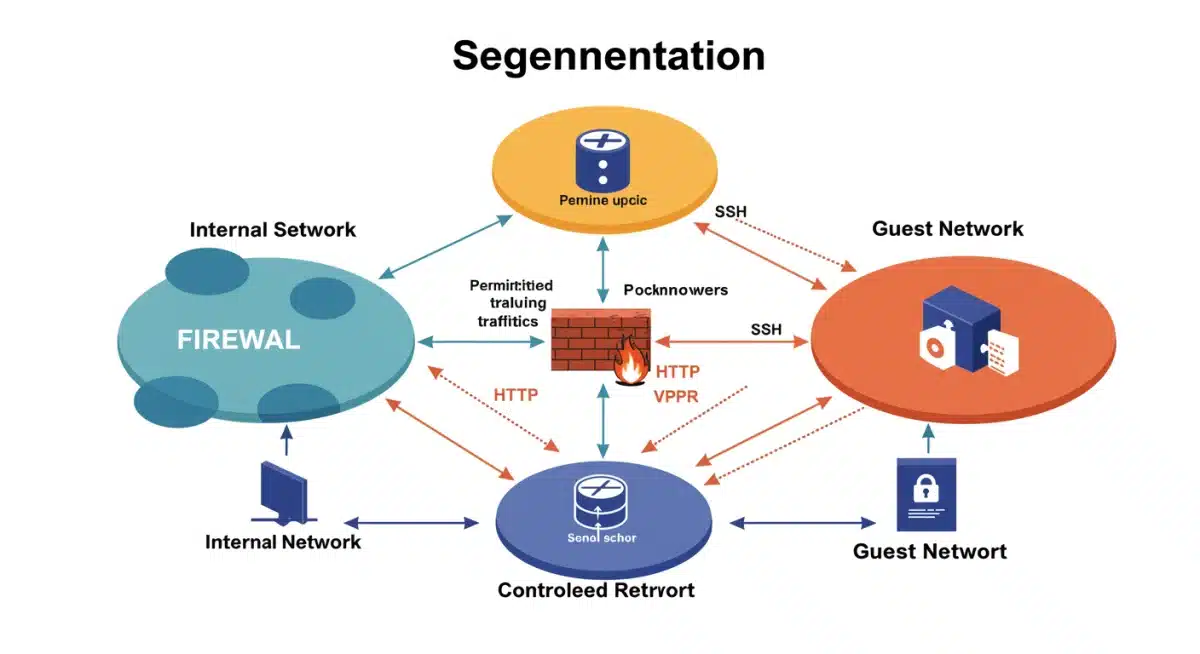
Network segmentation involves dividing a computer network into smaller, isolated sub-networks or segments. The primary goal is to limit the lateral movement of threats within the network, even if an attacker manages to breach one segment. For a secure remote workforce, network segmentation acts as a critical defense layer, compartmentalizing risks and protecting sensitive assets.
Why Network Segmentation is Essential for Remote Work:
- Limit Lateral Movement: If an attacker compromises a remote worker’s device or a less critical segment, segmentation prevents them from easily moving to other, more sensitive parts of the network.
- Reduce Attack Surface: By isolating critical systems and data, organizations reduce the overall attack surface exposed to potential threats.
- Contain Breaches: In the event of a breach, segmentation helps contain the incident to a specific segment, minimizing the damage and facilitating quicker recovery.
- Improve Compliance: Many regulatory frameworks (e.g., PCI DSS, HIPAA, GDPR) mandate or strongly recommend network segmentation to protect sensitive data.
- Enhanced Performance: By reducing broadcast traffic and localizing network issues, segmentation can sometimes improve network performance.
- Zero Trust Architecture Enabler: Network segmentation is a cornerstone of Zero Trust security, which assumes no user or device, inside or outside the network, should be trusted by default.
Types of Network Segmentation:
Organizations can implement various forms of network segmentation:
- Physical Segmentation: Using separate hardware (routers, switches) to create distinct physical networks. Less common for remote work but relevant for data centers.
- VLAN Segmentation: Virtual Local Area Networks (VLANs) allow logical segmentation of a network using software on switches, regardless of physical location.
- Firewall-Based Segmentation: Using firewalls to enforce access control policies between different network segments. This is a common and effective method.
- Micro-segmentation: The most granular form, where security policies are applied to individual workloads or applications, often at the hypervisor or host level. This is particularly powerful for cloud and virtualized environments.
- Software-Defined Segmentation (SDN/SD-WAN): Leveraging software-defined networking principles to dynamically create and manage network segments and policies.
Implementing Network Segmentation for a Secure Remote Workforce:
- Identify and Classify Assets: Begin by cataloging all critical assets (data, applications, servers) and classifying them based on sensitivity and business impact.
- Map Network Flows: Understand how data flows between different applications, users, and segments. This helps define appropriate segmentation boundaries.
- Define Zones and Policies: Create logical segments (e.g., HR, Finance, Development, Guest Wi-Fi, Remote Worker VPN segment) and define strict access control policies between them. The principle of least privilege should always apply.
- Isolate Remote Worker Access: Create a dedicated network segment for remote worker VPN access. This segment should have tightly controlled access to other internal resources, only allowing what’s absolutely necessary for their roles.
- Implement Micro-segmentation for Critical Applications: For highly sensitive applications or data stores, consider micro-segmentation to isolate individual workloads and apply granular security policies.
- Leverage Next-Generation Firewalls (NGFWs): NGFWs offer advanced capabilities like intrusion prevention, deep packet inspection, and application-aware controls, which are vital for enforcing segmentation policies.
- Regularly Audit and Test: Periodically review segmentation policies and test their effectiveness to ensure they remain relevant and secure against new threats.
- Integrate with Identity and Access Management (IAM): Ensure that segmentation policies are tied to user identities and roles, allowing for dynamic policy enforcement based on who is accessing what.
The Synergy of VPNs and Network Segmentation: A Zero Trust Approach
For the most robust and secure remote workforce, VPNs and network segmentation should not be viewed as standalone solutions but as complementary components of a broader Zero Trust security architecture. Zero Trust operates on the principle of ‘never trust, always verify.’ It assumes that any user, device, or application, whether inside or outside the traditional network perimeter, could be a potential threat.
How VPNs and Network Segmentation Support Zero Trust:
- VPNs as Secure Access Gates: VPNs serve as the initial secure gateway for remote users, ensuring encrypted and authenticated access to the network. However, under Zero Trust, this access is just the first step.
- Segmentation for Post-Authentication Control: Once a user is authenticated via VPN, network segmentation ensures that they only have access to the specific resources they need, and nothing more. This prevents lateral movement even if the VPN connection is legitimate but the endpoint is compromised.
- Continuous Verification: Zero Trust demands continuous verification. Even after gaining access via VPN and entering a segmented zone, user and device posture are continuously monitored and re-evaluated.
- Granular Policy Enforcement: The combination allows for extremely granular access controls. For example, a remote sales representative might access the CRM system via VPN, but network segmentation ensures they cannot access the HR payroll system, even if both are technically ‘inside’ the corporate network.
Beyond VPNs and Segmentation: Comprehensive Strategies for 2026
While VPNs and network segmentation are foundational, a truly secure remote workforce in 2026 requires a more holistic approach. Organizations must consider a range of other security controls and strategies:
Endpoint Security:
- Advanced Endpoint Protection: Deploy next-generation antivirus (NGAV) and endpoint detection and response (EDR) solutions on all remote devices to detect and respond to sophisticated threats.
- Patch Management: Implement a robust patch management system to ensure all operating systems and applications on remote devices are kept up-to-date.
- Device Hardening: Configure remote devices with strong security settings, including firewalls, disk encryption, and secure boot.
- Device Management (MDM/UEM): Utilize Mobile Device Management (MDM) or Unified Endpoint Management (UEM) solutions to manage, secure, and monitor corporate-owned and BYOD devices.
Identity and Access Management (IAM):
- Single Sign-On (SSO): Streamline user access to multiple applications while strengthening security through centralized authentication.
- Privileged Access Management (PAM): Secure, manage, and monitor privileged accounts to prevent misuse and reduce the risk of insider threats.
- Adaptive Authentication: Implement authentication mechanisms that adapt based on context, such as user location, device posture, and access patterns.
Cloud Security:
- Cloud Access Security Brokers (CASB): CASBs provide visibility, compliance, data security, and threat protection for cloud applications and services.
- Secure Cloud Configurations: Ensure that all cloud services are configured securely, following best practices and regularly audited for misconfigurations.
- Data Loss Prevention (DLP): Implement DLP solutions to prevent sensitive data from leaving the corporate network or being stored in unauthorized cloud locations.
Security Awareness Training:
- Continuous Training: Regular and engaging security awareness training is crucial to educate employees about evolving threats, phishing, social engineering, and their role in maintaining a secure remote workforce.
- Simulated Phishing Attacks: Conduct regular simulated phishing campaigns to test employee vigilance and identify areas for further training.
Incident Response Planning:
- Remote-Ready Incident Response: Develop and regularly test an incident response plan that accounts for the unique challenges of a remote workforce.
- Communication Channels: Establish clear communication channels for reporting security incidents and disseminating critical security information to remote employees.
Challenges and Considerations for 2026
While these strategies are powerful, their implementation is not without challenges. Budget constraints, lack of skilled cybersecurity personnel, and the complexity of integrating diverse security tools can be significant hurdles. Furthermore, the rapid pace of technological change means that security strategies must be continuously reviewed and adapted.
Key Considerations:
- Scalability: Solutions must be scalable to accommodate fluctuating remote work demands and organizational growth.
- User Experience: Security measures should not unduly hinder productivity. A balance must be struck between security and usability.
- Cost-Effectiveness: Organizations need to invest in security solutions that provide the best return on investment while addressing their specific risk profile.
- Regulatory Compliance: Staying abreast of and complying with evolving data privacy and security regulations is paramount.
- Threat Intelligence: Leveraging up-to-date threat intelligence helps organizations anticipate and prepare for emerging cyber threats.
Conclusion: Building a Resilient and Secure Remote Workforce
As we move deeper into 2026, the concept of a secure remote workforce will remain a top priority for organizations worldwide. The combination of robust VPN solutions for secure access and intelligent network segmentation to contain threats forms the bedrock of a resilient cybersecurity posture. By adopting a Zero Trust mindset and complementing these foundational strategies with advanced endpoint protection, strong identity management, comprehensive cloud security, and continuous security awareness training, businesses can confidently navigate the complexities of the modern hybrid work environment.
Investing in these critical security measures is not just about protection; it’s about enabling business continuity, fostering innovation, and maintaining trust with employees and customers in an increasingly interconnected and threat-filled world. The future of work is remote and hybrid, and the future of security must be equally adaptive, comprehensive, and proactive.