Smart TV Spying? 2026 Privacy Audit for Connected Devices

Understanding if your smart TV is collecting your data in 2026 is crucial for digital privacy, as these connected devices continuously gather information, impacting user security and personal data control.
Have you ever wondered if your television is watching you back? In today’s hyper-connected world, the question, Is Your Smart TV Spying on You? A 2026 Privacy Audit for Connected Devices, is more relevant than ever. As smart TVs become central to our home entertainment, their data collection practices warrant serious scrutiny, making a comprehensive privacy audit essential for every user.
The Evolution of Smart TV Data Collection
Smart televisions have transformed from simple display devices into sophisticated data-gathering hubs. The convenience of streaming services, personalized recommendations, and voice assistants comes at a potential cost: your privacy. Understanding how this data is collected is the first step in safeguarding your digital footprint.
Manufacturers and third-party developers employ various technologies to collect information, often disguised within user agreements that few people thoroughly read. This data can range from viewing habits to demographic information, creating detailed profiles of users.
What Kind of Data Is Collected?
Smart TVs collect a wide array of data points, often without explicit, granular user consent. This information is invaluable for targeted advertising and product development.
- Viewing Habits: What you watch, when you watch it, and for how long.
- App Usage: Which applications you open, how frequently, and your interactions within them.
- Voice Commands: Recordings and transcripts of requests made to voice assistants.
- Demographic Information: Data inferred from your viewing patterns or provided during setup.
The continuous evolution of smart TV technology means that data collection methods are constantly being refined. From advanced content recognition (ACR) to biometric data analysis, the scope of information gathered is expanding rapidly. Users must remain vigilant and informed about these evolving practices to maintain control over their personal data.
Understanding Advanced Content Recognition (ACR)
Advanced Content Recognition (ACR) is a primary technology enabling smart TVs to collect detailed viewing data. It works by identifying what is being displayed on your screen, whether it’s broadcast TV, streaming content, or even content from external devices like gaming consoles. This powerful tool allows manufacturers and advertisers to gain unprecedented insights into consumer behavior.
ACR technology typically operates by taking digital fingerprints of the video and audio content being played. These fingerprints are then matched against a database to identify the specific program, commercial, or movie. The implications for privacy are significant, as this data can be used to build highly detailed profiles of household viewing habits.
How ACR Works and Its Implications
ACR scans every pixel and sound byte, creating a comprehensive log of your media consumption. This constant monitoring raises questions about surveillance and data ownership.
- Passive Monitoring: ACR often operates in the background, making it hard for users to detect.
- Data Brokerage: Collected data is frequently sold to data brokers, who then package and resell it to advertisers.
- Personalized Ads: The primary use of ACR data is to deliver highly targeted advertisements across various platforms.
While ACR offers benefits like personalized content recommendations and interactive advertising, the lack of transparency regarding its operation and data sharing practices remains a major concern. Many users are unaware of the extent to which their viewing habits are being monitored and monetized, making informed consent a critical issue in the smart TV ecosystem.
The Role of Voice Assistants in Data Collection
Voice assistants, such as those integrated into smart TVs, offer convenience and hands-free control, yet they also introduce another layer of privacy concerns. These assistants rely on always-on microphones to detect wake words, meaning they are constantly listening for your commands. While manufacturers claim recordings are only sent to servers after a wake word is detected, the potential for accidental recordings or unauthorized listening remains a significant worry.
The data collected through voice commands typically includes audio recordings, transcripts of conversations, and contextual information. This data is used to improve the accuracy of the voice assistant and personalize user experiences. However, the storage and security of these recordings are often opaque, raising questions about who has access to them and how they are protected from breaches.
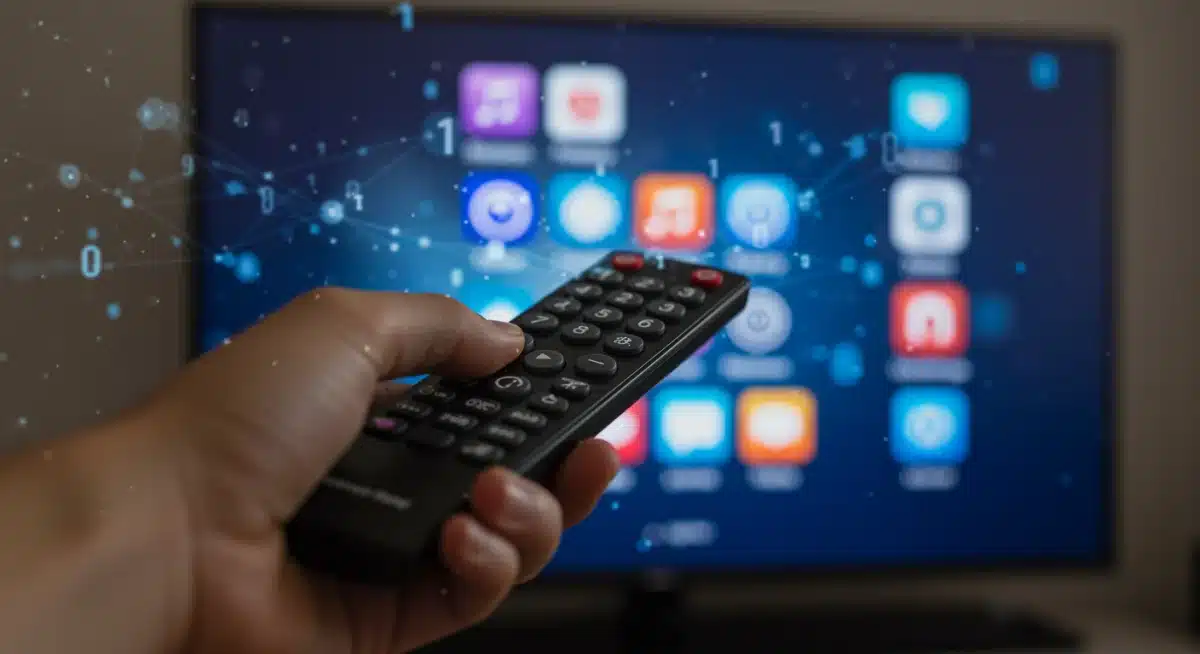
The rise of generative AI further complicates this landscape, as voice data can be used to train sophisticated language models, potentially exposing personal speech patterns or sensitive information. Users should be aware that every interaction with a voice assistant contributes to a larger dataset, which can have long-term privacy implications.
Security Vulnerabilities and Cyber Threats
Beyond intentional data collection, smart TVs are susceptible to various security vulnerabilities that can expose user data to cybercriminals. Like any internet-connected device, smart TVs can be targets for hacking, malware, and other cyber threats. Outdated software, weak default passwords, and insecure network configurations can all create entry points for malicious actors.
A compromised smart TV can serve as a gateway to your home network, allowing hackers to access other connected devices, such as computers, smartphones, and smart home systems. This interconnectedness means that a vulnerability in one device can have a cascading effect on your entire digital ecosystem, potentially leading to identity theft, financial fraud, or even physical intrusion if smart locks are connected.
Common Security Risks
Several factors contribute to the vulnerability of smart TVs, making regular security audits crucial for protection.
- Outdated Firmware: Many users neglect to update their TV’s software, leaving known vulnerabilities unpatched.
- Malware Attacks: Malicious software can be downloaded through compromised apps or websites, leading to data exfiltration.
- Phishing Scams: Attackers can use the TV’s browser or apps to display deceptive messages, tricking users into revealing sensitive information.
- Insecure Wi-Fi: Weak Wi-Fi passwords or unencrypted networks can allow unauthorized access to the TV and other devices.
Manufacturers are continuously working to improve the security of their devices, but users bear a significant responsibility in maintaining their own digital hygiene. Regular software updates, strong passwords, and careful consideration of app permissions are essential steps in mitigating these risks. The proactive management of smart TV security is paramount in 2026 to prevent it from becoming a weak link in your home’s cybersecurity defenses.
Legal & Regulatory Landscape in 2026
The legal and regulatory environment surrounding smart TV privacy is continually evolving, reflecting the growing concerns over data collection and user rights. In 2026, various jurisdictions have implemented or are developing stricter data protection laws, aiming to provide consumers with greater control over their personal information. These regulations often mandate clear consent, data transparency, and robust security measures from manufacturers.
However, the global nature of smart TV manufacturing and content delivery means that regulatory frameworks can be complex and fragmented. What is permissible in one country might be illegal in another, creating challenges for both consumers and companies. Understanding the key regulations that apply to your region is crucial for assessing your smart TV’s privacy compliance.
Key Privacy Regulations Impacting Smart TVs
Several significant regulations shape how smart TV manufacturers handle user data, impacting privacy practices worldwide.
- GDPR (General Data Protection Regulation): While European, its influence extends globally, promoting principles of consent, data minimization, and user rights.
- CCPA/CPRA (California Consumer Privacy Act/California Privacy Rights Act): Provides California residents with robust data privacy rights, including the right to know, delete, and opt out of the sale of personal information.
- Sector-Specific Laws: Emerging regulations specifically targeting IoT devices and connected technologies are expected to further define data handling practices.
Despite these developments, enforcement can be challenging, and companies sometimes find loopholes or interpret regulations in ways that favor their business models. Consumers must actively engage with these legal frameworks by exercising their rights, demanding transparency, and supporting initiatives that advocate for stronger data privacy protections. Staying informed about legislative changes is vital for anyone concerned about their smart TV’s data practices.
Performing Your Own Smart TV Privacy Audit
Taking control of your smart TV’s privacy settings is an empowering step in protecting your personal data. A comprehensive privacy audit involves reviewing settings, understanding permissions, and making informed decisions about data sharing. This proactive approach can significantly reduce the amount of information your device collects and transmits.
Start by accessing your TV’s privacy settings menu, which can often be found within the general settings or a dedicated privacy section. Here, you’ll typically find options to disable ACR, limit personalized advertising, and manage app permissions. Be prepared to navigate through various menus, as manufacturers often make these settings less prominent.
Practical Steps for a Privacy Audit
A thorough audit involves several key actions to enhance your smart TV’s privacy and security profile.
- Review Privacy Policies: Read the privacy policies of your TV manufacturer and any installed apps, paying close attention to data collection and sharing practices.
- Disable ACR: Locate and disable Advanced Content Recognition (ACR) features, often labeled as ‘Smart TV Services’ or ‘Viewing Information Services.’
- Manage App Permissions: Restrict unnecessary permissions for installed applications, especially those requesting access to your microphone or camera.
- Opt-Out of Personalized Ads: Turn off options for targeted or interest-based advertising within your TV’s settings and associated accounts.
- Secure Your Network: Use a strong, unique password for your Wi-Fi network and consider implementing a guest network for smart devices.
- Regular Software Updates: Ensure your TV’s firmware is always up-to-date to patch known security vulnerabilities.
By diligently performing these steps, you can significantly reduce the risk of your smart TV inadvertently spying on you. Remember, privacy is an ongoing effort, and regular check-ups of your device settings are recommended, especially after software updates or new app installations. Empowering yourself with knowledge and action is the best defense against unwanted data collection in the connected era.
The Future of Smart TV Privacy: Trends and Predictions
Looking ahead to 2026 and beyond, the landscape of smart TV privacy is expected to undergo significant transformations. As consumer awareness of data privacy grows, so too will the demand for more transparent and user-centric data practices from manufacturers. This shift is likely to drive innovation in privacy-enhancing technologies and stricter regulatory enforcement.
One major trend will be the integration of privacy-by-design principles into smart TV development. This means that privacy considerations will be built into devices from the initial design phase, rather than being an afterthought. We can anticipate more granular control over data sharing, clearer consent mechanisms, and easier-to-understand privacy dashboards.
Emerging Privacy Technologies and Standards
New technologies and industry standards are poised to redefine smart TV privacy, offering users greater control and protection.
- Decentralized Identity: Blockchain-based solutions could give users sovereign control over their digital identities and data.
- Homomorphic Encryption: This advanced encryption allows data to be processed while remaining encrypted, enhancing privacy for cloud-based services.
- Standardized Privacy Labels: Similar to nutrition labels, clear, concise privacy labels could inform consumers about a device’s data practices at a glance.
- AI for Privacy Protection: AI tools could be developed to monitor and alert users to unauthorized data collection attempts by smart devices.
Furthermore, the increasing focus on ethical AI will likely extend to how smart TVs use artificial intelligence for personalization and data analysis. Manufacturers will face greater pressure to ensure their AI systems are fair, unbiased, and respect user privacy. The future of smart TV privacy hinges on a collaborative effort between regulators, manufacturers, and informed consumers, all working towards a more secure and transparent connected device ecosystem. Staying informed about these trends will be key to navigating the evolving privacy landscape.
| Key Aspect | Brief Description |
|---|---|
| Data Collection | Smart TVs gather viewing habits, app usage, and voice commands for personalization and advertising. |
| ACR Technology | Advanced Content Recognition identifies on-screen content for targeted advertising, often operating discreetly. |
| Cybersecurity Risks | Vulnerabilities like outdated software and weak passwords can expose home networks to threats. |
| Privacy Audit Steps | Review settings, disable ACR, manage app permissions, and secure your network to enhance privacy. |
Frequently Asked Questions About Smart TV Privacy
Most smart TVs, by their very nature, are designed to collect some form of user data to enable features like personalized recommendations, voice control, and targeted advertising. However, the extent and type of data collected can vary significantly between manufacturers and models. Users typically have options to limit this collection.
While it’s challenging to achieve 100% data collection prevention without disconnecting your TV from the internet, you can significantly reduce it. Disabling ACR, opting out of personalized ads, and reviewing app permissions are crucial steps. Some data might still be collected for basic functionality or anonymized analytics.
ACR identifies everything shown on your screen, creating a detailed log of your viewing habits. This data can be sold to advertisers to build comprehensive consumer profiles, leading to highly targeted ads across your devices. Disabling ACR is a primary recommendation for enhancing privacy.
Voice assistants are designed to listen for a ‘wake word’ to activate. While manufacturers state recordings are only sent after activation, the microphone is technically ‘always on’ to detect this. Concerns exist regarding accidental recordings or potential vulnerabilities. Users can usually disable the voice assistant feature if preferred.
Key security practices include regularly updating your TV’s firmware, using strong and unique Wi-Fi passwords, enabling two-factor authentication where available, reviewing app permissions, and disabling features like ACR and personalized advertising. Consider placing your smart TV on a separate guest network for added isolation.
Conclusion
The journey into understanding whether your smart TV is truly spying on you reveals a complex interplay between convenience, technology, and personal privacy. In 2026, connected devices, particularly smart TVs, represent both incredible advancements in entertainment and significant challenges in data protection. While manufacturers strive to offer personalized experiences, users must remain vigilant and proactive in managing their digital footprint. By performing regular privacy audits, understanding data collection mechanisms like ACR and voice assistants, and staying informed about the evolving regulatory landscape, you can take meaningful steps to safeguard your personal information. Ultimately, the power to control your privacy lies in informed choices and diligent action, ensuring that your smart TV remains a source of entertainment, not surveillance.