Smartwatch Health Tracking in 2025: Accuracy You Can Trust
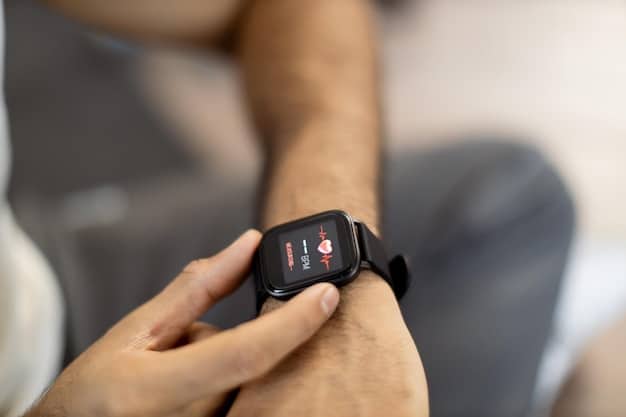
Smartwatches in 2025 are expected to offer advanced health tracking, but accuracy remains a key concern; this article explores which features, like heart rate monitoring and sleep analysis, are likely to provide reliable data and how technology advancements will impact their precision.
The landscape of wearable technology is rapidly evolving, and by 2025, smartwatches are poised to become even more integral to our health and wellness routines. But with a plethora of health tracking features packed into these devices, a crucial question arises: when considering smartwatches in 2025: Which Health Tracking Features Are Actually Accurate? Let’s dive in.
Smartwatch Evolution: From Novelty to Necessity
Smartwatches have transitioned from being mere gadgets to essential tools for health monitoring. This evolution brings increased expectations regarding the accuracy and reliability of their health tracking capabilities. Understanding this journey helps set realistic expectations for 2025.
The Rise of Health-Focused Smartwatches
Early smartwatches focused on basic functions like notifications and step tracking. However, the demand for comprehensive health insights has driven manufacturers to incorporate advanced sensors and algorithms.
Today’s smartwatches offer a suite of health features that were once exclusive to medical devices. This shift reflects a growing consumer interest in proactive health management.
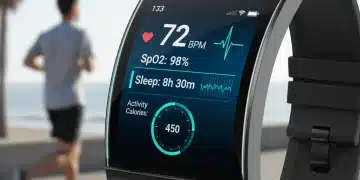
- Heart Rate Monitoring: Accurate measurements of heart rate during exercise and rest.
- Sleep Tracking: Detailed analysis of sleep stages and sleep quality.
- Activity Tracking: Comprehensive tracking of various physical activities and workouts.
As we approach 2025, the integration of AI and machine learning will further enhance the accuracy and personalization of these features. This technological leap promises more reliable and actionable health data.
The evolution of smartwatches underscores the increasing importance of accurate health tracking. By 2025, users will expect and demand even higher levels of precision from these devices, influencing their purchasing decisions and daily routines. Manufacturers must prioritize accuracy to maintain consumer trust and market relevance.
Heart Rate Monitoring: The Core of Smartwatch Accuracy
Heart rate monitoring has been a foundational element of smartwatches, but its accuracy can vary significantly. Factors such as sensor technology, algorithms, and even skin tone can influence the reliability of heart rate data. By 2025, advancements aim to mitigate these variables.
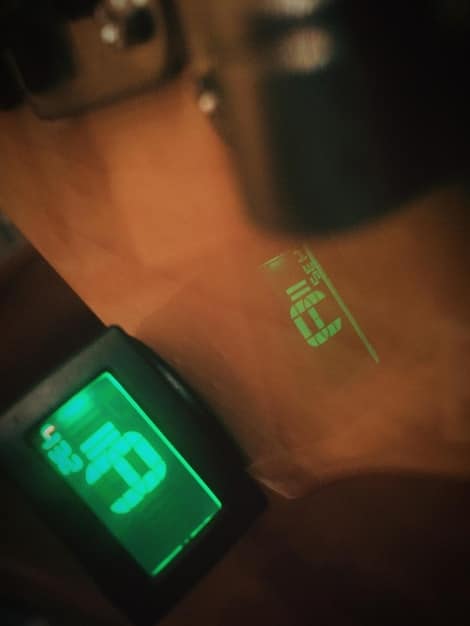
The accuracy of heart rate monitoring is critical for various applications, from fitness tracking to early detection of potential cardiac issues. Continuous monitoring provides valuable insights into cardiovascular health.
Advancements in photoplethysmography (PPG) sensors are enhancing accuracy. These sensors use light to measure blood flow variations, enabling more precise heart rate detection.
Algorithms play a crucial role in filtering out noise and artifacts in the data. Sophisticated algorithms reduce inaccuracies caused by movement or other external factors.
- Improved Sensor Technology: More sensitive and precise sensors.
- Advanced Algorithms: Enhanced noise reduction and data filtering.
- Personalized Calibration: Individualized calibration for more accurate readings.
In 2025, expect heart rate monitoring to be more reliable and consistent, driven by technological advancements and personalized calibration methods. This increased accuracy will make smartwatches even more valuable tools for managing cardiovascular health and optimizing fitness routines.
Accurate heart rate monitoring remains a cornerstone of smartwatch functionality. Continuous improvements in sensor technology and algorithms are making these devices increasingly reliable for tracking and managing cardiovascular health. By 2025, users can expect even greater precision and actionable insights.
Sleep Tracking: Unlocking the Secrets of Rest
Sleep tracking is another popular feature in smartwatches, providing insights into sleep duration, sleep stages, and sleep quality. Accurate sleep tracking can help users identify sleep disorders and improve their sleep habits. But, how accurate will these features be in 2025?
Smartwatches use a variety of sensors, including accelerometers and heart rate monitors, to estimate sleep patterns. These sensors track movement and heart rate variations during the night.
Accuracy in sleep tracking is essential for providing meaningful insights. Inaccurate data can lead to flawed interpretations and ineffective strategies for improving sleep quality.
One of the key challenges in sleep tracking is differentiating between light sleep, deep sleep, and REM sleep stages. Current smartwatches use algorithms to estimate these stages based on movement and heart rate data.
- Advanced Sensor Fusion: Combining data from multiple sensors for better accuracy.
- AI-Powered Analysis: Using AI to interpret sleep data and identify sleep patterns.
- Integration with Sleep Apps: Seamless integration with apps for personalized sleep recommendations.
Moving forward, expect AI-powered analysis to enhance the accuracy and usefulness of sleep tracking data. This will lead to more personalized recommendations for improving sleep quality and addressing sleep disorders.
Accurate sleep tracking is critical for understanding and improving sleep quality. As technology advances, smartwatches are poised to offer even more precise and personalized insights into sleep patterns, helping users optimize their rest and overall well-being.
Activity Tracking: Beyond Steps and Calories
Activity tracking has evolved from simply counting steps to providing a comprehensive overview of physical activity levels. Modern smartwatches utilize GPS, accelerometers, and gyroscopes to track a wide range of activities, from walking and running to swimming and cycling.
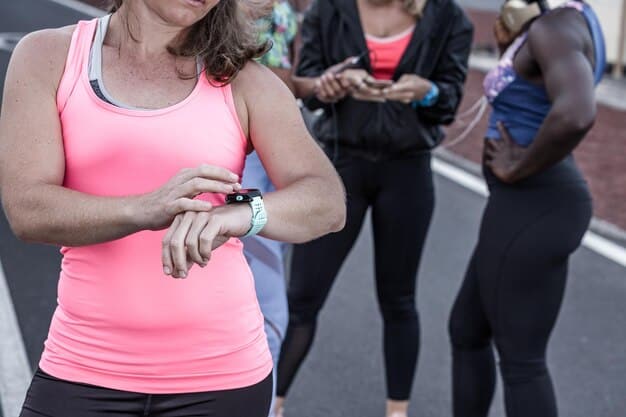
One of the key challenges in activity tracking is accurately identifying and categorizing different types of activities. Algorithms must differentiate between various movements to provide specific and relevant data.
GPS technology enables accurate tracking of distance and speed for outdoor activities. However, GPS accuracy can be affected by environmental factors, such as tall buildings and dense foliage.
Innovations in Activity Recognition
Activity recognition algorithms use machine learning to identify different types of activities based on movement patterns. These algorithms are trained on vast datasets to improve accuracy.
By analyzing movement data, smartwatches can distinguish between walking, running, cycling, swimming, and other activities. This level of detail provides users with a more comprehensive understanding of their physical activity levels.
- AI-Driven Activity Recognition: More accurate and nuanced activity detection.
- Integration with Fitness Platforms: Seamless data sharing with popular fitness apps.
- Personalized Activity Recommendations: Tailored suggestions for workouts and activities.
By 2025, expect AI-driven activity recognition to provide even more accurate and personalized insights into your fitness habits. Smartwatches will be able to identify a wider range of activities and provide tailored recommendations for optimizing your workouts.
Accurate activity tracking is essential for promoting a healthy lifestyle. As technology advances, smartwatches are becoming increasingly sophisticated in their ability to track and analyze physical activity, providing users with valuable insights and motivation.
Emerging Health Features: The Future of Smartwatch Capabilities
Beyond the established features, smartwatches are incorporating new health monitoring capabilities that could revolutionize personal health management. These emerging features aim to detect early signs of illness and provide proactive health recommendations.
Blood Oxygen Saturation (SpO2) Monitoring
Blood oxygen saturation (SpO2) monitoring measures the percentage of oxygen in your blood. This metric is an indicator of respiratory health and can be helpful in detecting conditions like sleep apnea and respiratory infections.
SpO2 sensors use light to estimate the amount of oxygen in your blood. The accuracy of these sensors can be affected by factors such as skin tone, circulation, and movement.
Electrocardiogram (ECG) Monitoring
Electrocardiogram (ECG) monitoring records the electrical activity of your heart. This feature can detect irregular heart rhythms, such as atrial fibrillation, which can increase the risk of stroke.
ECG monitoring requires users to place their finger on a sensor for a specific period. The smartwatch then analyzes the electrical signals from your heart to detect any abnormalities.
- Non-Invasive Glucose Monitoring: Continuous and painless blood sugar monitoring.
- Blood Pressure Monitoring: Cuffless blood pressure measurements.
- Stress Level Tracking: Advanced heart rate variability analysis to assess mental stress.
In the near future, smartwatches may offer non-invasive glucose monitoring, cuffless blood pressure measurements, and advanced stress level tracking using heart rate variability. These advancements will make smartwatches even more valuable tools for managing chronic conditions and promoting overall well-being.
Emerging health features are expanding the capabilities of smartwatches and turning them into powerful tools for personal health management. These features hold the potential to detect early signs of illness and provide proactive health recommendations, ultimately leading to improved health outcomes.
Accuracy Challenges and Future Improvements
While smartwatches offer an impressive array of health tracking features, accuracy remains a significant concern. Understanding the challenges and potential improvements is crucial for setting realistic expectations for 2025.
One of the main challenges is the inherent variability in human physiology. Factors such as skin tone, age, fitness level, and underlying health conditions can affect the accuracy of smartwatch sensors.
Another challenge is the reliance on algorithms to interpret sensor data. These algorithms are trained on specific datasets, and their accuracy may vary depending on the individual user.
- AI-Driven Calibration: Personalized calibration based on individual physiology.
- Integration with Medical Devices: Comparative accuracy checks with clinical-grade equipment.
- Transparent Accuracy Reporting: Clear disclosure of accuracy limitations.
By 2025, expect to see more advanced algorithms that take into account individual physiology and environmental factors. This should lead to more personalized and accurate health tracking. Also expect greater transparency on accuracy limitations.
Addressing accuracy challenges is crucial for building trust in smartwatch health tracking features. Continuous improvements in sensor technology, algorithms, and calibration methods will be essential for realizing the full potential of these devices in promoting health and well-being.
| Key Point | Brief Description |
|---|---|
| ❤️ Heart Rate Accuracy | Enhanced sensors & algorithms for precise heart rate monitoring. |
| 😴 Sleep Tracking | AI-powered sleep analysis provides personalized insights. |
| 🏃 Activity Recognition | AI identifies activities, integrates with fitness platforms. |
| 🌡️ Emerging Features | Non-invasive glucose & BP monitoring will enhance health management. |
Frequently Asked Questions
▼
Accuracy varies. Newer models use improved sensors and algorithms for better readings, especially during steady-state activities. However, intense workouts can still pose challenges. It is best to compare with a medical device for more reliability.
▼
Smartwatches estimate sleep stages through movement and heart rate. They’re useful for spotting trends but aren’t as precise as clinical sleep studies. They’re best for gauging sleep patterns rather than precise sleep staging.
▼
SpO2 readings are generally helpful for providing a general idea of oxygen saturation levels. But external factors, such as movement and skin tone, can impact accuracy. For accurate medical diagnosis, a medical device is preferrable.
▼
While smartwatches are advancing, they aren’t yet replacements for medical devices. They are useful for personal tracking and early detection, but clinical-grade equipment provides more accurate and reliable data for medical purposes.
▼
Ensure a snug fit, keep the sensor clean, and update the smartwatch software regularly. Also, calibrate the device according to the manufacturer’s instructions. These tips can enhance sensor performance and data reliability.
Conclusion
In conclusion, **smartwatches in 2025** promise significant advancements in health tracking accuracy and capabilities. While these devices may not replace medical equipment entirely, they are poised to become indispensable tools for proactively managing health and wellness, giving users valuable insights into their well-being like never before.