Uncovering Hidden Software Costs: 3 Metrics Reviewers Miss for 2026 Savings

In the rapidly evolving landscape of business technology, selecting the right software is paramount. It’s not just about functionality; it’s about long-term value, efficiency, and ultimately, your bottom line. While countless software reviews exist, meticulously detailing features, usability, and pricing, many often miss the critical nuances that can lead to significant, unforeseen costs or savings. For businesses aiming to optimize their operations and financial health starting in 2026, understanding these overlooked software review metrics is no longer optional – it’s essential.
Imagine investing in a seemingly perfect software solution, only to discover months later that its true cost far exceeds the initial price tag due to hidden inefficiencies or unexpected demands on your resources. This scenario is far too common, primarily because traditional software reviews tend to focus on superficial aspects rather than delving into the deeper, more impactful metrics that truly reflect total cost of ownership and operational impact. This article will shed light on three such crucial software review metrics that, when properly evaluated, can save your business thousands annually, starting as early as 2026.
These aren’t merely technical specifications; they are strategic indicators that influence everything from employee productivity to system scalability and vendor dependency. By incorporating these insider insights into your software evaluation process, you’ll not only make more informed decisions but also gain a competitive edge in your industry. Let’s dive deep into these often-neglected software review metrics and equip your business with the knowledge to thrive.
The Illusion of Low Upfront Cost: Why Traditional Reviews Fall Short
Many businesses, when evaluating software, are naturally drawn to solutions with a lower upfront cost. Reviewers often highlight this as a key selling point, making it a significant factor in purchasing decisions. However, this focus on initial expenditure can be misleading. The true cost of software extends far beyond the license fee or subscription model. It encompasses implementation, training, maintenance, potential downtime, and the broader impact on your team’s productivity and morale. Traditional reviews, while valuable for feature comparisons, frequently skim over these critical, long-term financial implications.
Consider a scenario where Software A costs $50 per user per month, and Software B costs $80. On the surface, Software A appears to be the more economical choice. However, if Software A requires extensive, costly custom development for integration, demands frequent, time-consuming manual data entry due to poor automation, or has a steep learning curve that cripples employee productivity for weeks, its actual cost could quickly eclipse Software B. Software B, despite its higher monthly fee, might offer seamless integrations, superior automation, and an intuitive interface that drastically reduces training time and boosts efficiency from day one.
This is where the first set of overlooked software review metrics comes into play: the Total Cost of Ownership (TCO) beyond the sticker price. TCO isn’t just a buzzword; it’s a holistic financial model that accounts for all direct and indirect costs associated with a software asset over its entire lifecycle. Expert reviewers often fail to provide a comprehensive TCO analysis, leaving businesses vulnerable to unexpected expenses. By 2026, businesses that prioritize TCO in their software evaluations will be significantly better positioned to manage their budgets and maximize their technological investments.
Metric 1: Employee Productivity Impact & Training Overhead
The most significant hidden cost in software adoption often lies in its impact on employee productivity and the associated training overhead. While a new software promises to streamline operations, an unintuitive interface, complex workflows, or insufficient documentation can lead to a substantial drain on employee time and resources. Traditional reviews might mention ease of use, but they rarely quantify its financial impact.
Quantifying the Cost of Learning Curves
Every hour an employee spends learning new software is an hour they’re not spending on core business tasks. If a software has a steep learning curve, requiring weeks of intensive training, the cumulative cost of lost productivity can be staggering. For a team of 50 employees, if each spends an extra 40 hours (one full work week) getting up to speed on a complex system, that’s 2,000 lost productive hours. Multiply that by your average employee hourly rate, and you’re looking at a substantial, unbudgeted expense.
When evaluating software, dig deeper than just ‘user-friendly.’ Ask:
- What is the average ramp-up time for a new user to become proficient? Seek out case studies or user testimonials that speak to this directly.
- What training resources are provided? Are they self-paced tutorials, live webinars, or comprehensive documentation? Is there an additional cost for advanced training?
- How intuitive are common workflows? Does the software align with your existing business processes, or will it force significant changes and retraining?
- What is the quality of in-app help and support? Good contextual help can drastically reduce the need for formal training sessions.
By 2026, businesses should demand that software reviews provide more granular data on these aspects. Look for reviews that discuss the availability of free trials that allow you to assess the learning curve with your actual team, or those that detail the structure and cost of vendor-provided training programs. A software that initially seems more expensive but offers a significantly shorter learning curve and higher intuitive use can deliver a far superior ROI.
The Productivity Dividend of Seamless Integration
Beyond the learning curve, consider how well the new software integrates with your existing tech stack. Poor integration leads to data silos, manual data transfers, and redundant tasks – all significant drains on productivity. A software that integrates seamlessly with your CRM, ERP, or accounting systems can eliminate hours of manual work daily, translating into massive savings. Reviewers often mention integrations, but rarely quantify the potential productivity gains or losses.
Key questions for your software review metrics checklist:
- Does the software offer native integrations with your core systems? If so, how robust are they?
- Are API options available for custom integrations? What is the complexity and cost of using these APIs?
- What is the typical time investment for maintaining these integrations? Are they prone to breaking with updates?
A software solution that costs more upfront but eliminates hours of manual data entry and reconciliation across departments can quickly pay for itself through increased efficiency and reduced errors. This productivity impact is a crucial, yet often underestimated, component of the true cost of ownership.
Beyond Features: The Operational Resilience Factor
When software reviews evaluate a product, they typically focus on its features and functionalities: what it does, how well it performs specific tasks, and its overall utility. While these are undoubtedly important, they often overshadow the crucial aspect of operational resilience. How reliable is the software? How quickly can issues be resolved? What happens when things go wrong? These questions point to the second set of overlooked software review metrics that can significantly impact your business’s continuity and financial stability.
Metric 2: System Uptime & Vendor Support Responsiveness
Downtime is a silent killer of productivity and revenue. Every minute your critical software is down, your business is losing money, missing opportunities, and potentially damaging customer relationships. While software providers often boast about 99.9% uptime, the reality can be more complex, and the impact of even minor outages can be substantial. Similarly, the quality and responsiveness of vendor support can make or break your experience with a software solution.
The Real Cost of Downtime
A software review might mention a vendor’s uptime guarantee, but rarely does it translate that into a financial risk assessment for your specific business. For a small business, a few hours of downtime might be an inconvenience. For an e-commerce giant, it could mean millions in lost sales. Even brief, frequent outages can chip away at employee morale and customer satisfaction.
When evaluating software, seek out information on:
- Historical uptime metrics: Beyond the stated guarantee, what is the actual track record? Are there public status pages that detail past incidents?
- Disaster recovery and backup protocols: How quickly can the vendor restore service in a catastrophic event?
- Redundancy measures: Does the vendor have mechanisms in place to prevent single points of failure?
By 2026, businesses should incorporate a calculation of potential revenue loss per hour of downtime into their software evaluation framework. A software with a slightly higher subscription cost but a proven track record of superior uptime can offer a far greater return by safeguarding your operations and revenue streams.
Vendor Support: Beyond the Tiered System
The quality of vendor support is another critical, yet often superficially reviewed, metric. Most reviews will mention whether support is available via phone, email, or chat, and perhaps list response times. However, the true value lies in the efficacy and expertise of that support.
Consider these often-missed aspects of vendor support when reviewing software:
- First-contact resolution rate: How often are issues resolved during the initial interaction, rather than requiring multiple follow-ups?
- Technical depth of support staff: Do support agents merely follow scripts, or do they possess a deep understanding of the software and its integration points?
- Availability of dedicated account managers: For enterprise-level solutions, a dedicated point of contact can be invaluable for strategic planning and issue escalation.
- Community forums and knowledge bases: Are there active user communities or comprehensive self-service resources that can help resolve common issues quickly?
A software solution with excellent features but abysmal support can quickly become a bottleneck, leading to frustrated employees, delayed projects, and ultimately, financial losses. Investing in software from a vendor known for responsive, knowledgeable support is a strategic move that can save thousands in troubleshooting costs and lost productivity. This is a crucial software review metrics point often overlooked.

The Long-Term View: Scalability, Flexibility, and Vendor Lock-in
Many software reviews provide a snapshot of a product’s current capabilities. However, businesses operate in dynamic environments, and what works today might not be sufficient tomorrow. The third set of critical software review metrics focuses on the long-term viability and adaptability of a software solution: its scalability, flexibility, and the potential for vendor lock-in. Overlooking these aspects can lead to costly migrations, limitations on growth, and a loss of strategic control down the line.
Metric 3: Scalability, Customization Limitations & Exit Strategy Costs
As your business grows, your software needs will inevitably evolve. A software solution that cannot scale with your operations, adapt to new requirements, or allows for easy data migration when you outgrow it, can become a significant impediment rather than an asset. This is where the often-ignored metrics of scalability, customization limitations, and exit strategy costs become paramount.
Scalability: Growing with Your Business
A software review might mention that a product is ‘scalable,’ but what does that truly mean in practice for your business? Does it only mean adding more users, or can it also handle increased data volume, transaction loads, and complex workflows without performance degradation?
When evaluating scalability, consider:
- User capacity: What are the practical limits on the number of users or concurrent sessions the software can support without performance issues?
- Data volume handling: Can the database and infrastructure efficiently manage your projected data growth over the next 3-5 years?
- Performance under load: Are there case studies demonstrating the software’s performance with businesses similar in size and scope to your projected future state?
- Cost of scaling: What are the pricing tiers for increased usage, and do they remain economical as you grow?
Investing in software that can seamlessly scale with your business avoids the costly and disruptive process of migrating to an entirely new system every few years. This long-term perspective is a vital software review metrics consideration for 2026 and beyond.
Customization Limitations: The Agility Factor
No off-the-shelf software will perfectly fit every business process. The ability to customize or configure the software to your unique needs is crucial for maximizing its value. However, excessive customization can lead to higher maintenance costs, difficulty with updates, and increased vendor dependency. On the other hand, a lack of flexibility can force your business to adapt its processes to the software, rather than the other way around, stifling innovation.
Key customization considerations for your software review:
- Configuration vs. Custom Code: Does the software allow for extensive configuration through settings, or does it require custom coding for even minor adjustments?
- Ecosystem and integrations: Does the software have a marketplace of apps or extensions that can extend its functionality without custom development?
- Impact on upgrades: How do customizations affect future software upgrades? Will they break, or are they designed to be forward-compatible?
By carefully evaluating these points, businesses can avoid solutions that are either too rigid or too reliant on expensive, difficult-to-maintain custom development. The sweet spot lies in software that offers robust configuration options and a healthy ecosystem of integrations.
Exit Strategy Costs: Avoiding Vendor Lock-in
Perhaps the most neglected of all software review metrics is the cost and complexity of an exit strategy. What happens if you need to switch vendors? How easy is it to get your data out of the system? Many businesses discover too late that their data is held hostage or that migrating it is an astronomically expensive and time-consuming endeavor.
When reviewing software, ask:
- Data export capabilities: Can you easily export all your data in a standard, portable format (e.g., CSV, XML, JSON) without additional fees?
- Data ownership: Does the contract clearly state your ownership of the data, even after termination of service?
- API access for migration: Are there robust APIs that can facilitate programmatic data extraction and migration to a new platform?
- Contractual obligations and termination clauses: What are the penalties or processes for early termination?
A clear, cost-effective exit strategy is a hallmark of a confident vendor and a wise investment for your business. By scrutinizing these aspects starting in 2026, you can avoid becoming dependent on a single vendor and maintain control over your valuable business data, saving potentially hundreds of thousands in future migration costs and legal fees.
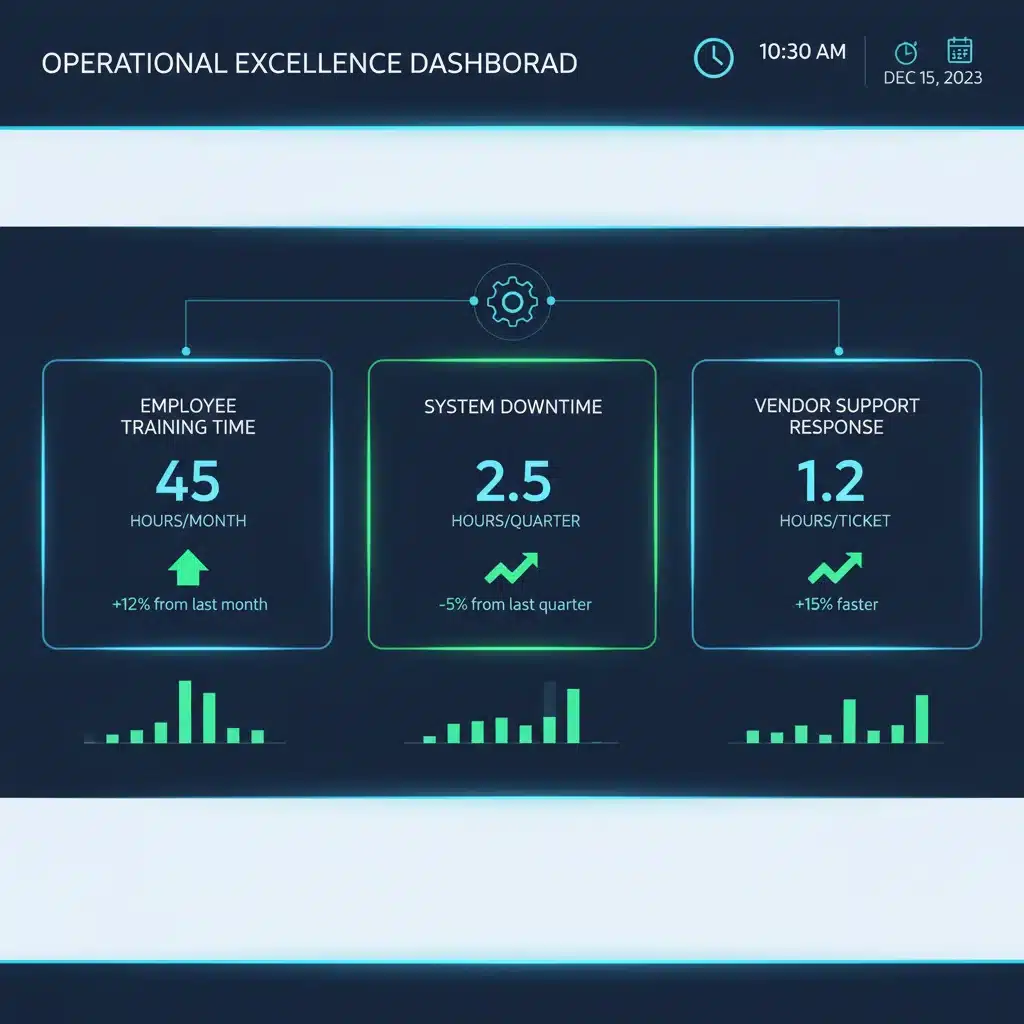
Implementing These Metrics for 2026 and Beyond
Now that you’re aware of these crucial, often-overlooked software review metrics, the next step is to integrate them into your software evaluation process. This isn’t about discarding traditional reviews, but rather augmenting them with a more strategic, long-term perspective. Here’s how to do it:
1. Develop a Comprehensive TCO Model:
Go beyond the subscription fee. Create a spreadsheet that accounts for:
- Initial setup/implementation costs
- Training costs (time and resources)
- Integration costs (if custom work is needed)
- Ongoing maintenance and support fees
- Potential productivity gains/losses (quantified)
- Estimated downtime costs
- Future scaling costs
- Potential exit costs
This holistic view will reveal the true financial impact of each software option.
2. Prioritize Demos and Pilot Programs:
Don’t rely solely on marketing materials or even third-party reviews. Insist on thorough demos that focus on your specific workflows, and if possible, run a pilot program with a subset of your team. This allows you to directly assess the learning curve, ease of use, and real-world productivity impact within your own organizational context. Pay close attention to how your employees interact with the software and their feedback on intuitive design and workflow efficiency.
3. Engage with Existing Users (Beyond Testimonials):
While testimonials are useful, try to connect with current users of the software through professional networks or dedicated forums. Ask specific questions about their experiences with uptime, support responsiveness, and any challenges they’ve faced with scalability or customization. Unfiltered feedback can provide invaluable insights that formal reviews often miss.
4. Scrutinize Service Level Agreements (SLAs):
Don’t just glance at the uptime guarantee. Read the entire SLA carefully. What are the definitions of downtime? What are the penalties for not meeting the SLA? What are the support response and resolution time guarantees? A robust SLA is a strong indicator of a vendor’s commitment to operational resilience.
5. Plan for the Future:
Always consider your business’s growth trajectory. Will the software still be a good fit in 3-5 years? Discuss scalability with the vendor, and explore their roadmap for future features and integrations. Understand how your data can be retrieved if you decide to switch providers down the line. This forward-thinking approach will prevent costly migrations and data lock-ins.
Conclusion: A Smarter Approach to Software Investment for 2026
The landscape of software acquisition is changing. As businesses become increasingly reliant on technology, the stakes for making the right choices have never been higher. By moving beyond superficial feature comparisons and delving into these three critical, often-overlooked software review metrics – Employee Productivity Impact & Training Overhead, System Uptime & Vendor Support Responsiveness, and Scalability, Customization Limitations & Exit Strategy Costs – you empower your organization with truly insider knowledge.
Starting in 2026, businesses that adopt this more comprehensive and strategic approach to software evaluation will not only avoid hidden costs but will also unlock significant annual savings, foster greater operational efficiency, and build a more resilient technological foundation. Make these metrics a cornerstone of your software review process, and transform your technology investments from potential liabilities into powerful engines of growth and profitability. The future of smart business technology decisions starts now.