Solid-State Batteries: Doubling Smartphone Lifespan by 2026?
Solid-state batteries are poised to revolutionize smartphone technology, potentially doubling battery lifespan by 2026 through increased energy density, enhanced safety, and faster charging capabilities, offering a significant upgrade over current lithium-ion technology.
Are you tired of your smartphone’s battery draining before the day is over? A potential game-changer is on the horizon: Battery Breakthrough: How New Solid-State Batteries Could Double Your Smartphone’s Lifespan by 2026. This innovation promises longer-lasting power, enhanced safety, and quicker charging times, potentially transforming our mobile experience.
The Current Smartphone Battery Landscape: Limitations
Smartphones have become indispensable tools in our daily lives, but their reliance on lithium-ion batteries presents inherent limitations. These batteries degrade over time, suffer from safety concerns, and offer limited energy density. Understanding these issues is crucial to appreciate the significance of solid-state battery technology.
Lifespan and Degradation
Lithium-ion batteries degrade with each charge cycle, gradually reducing their capacity. This means that a phone that once lasted a full day may struggle to make it through the afternoon after a year or two. Factors such as heat and charging habits further accelerate this degradation.
Safety Concerns
Lithium-ion batteries contain a flammable liquid electrolyte, which can lead to thermal runaway and even explosions if damaged or overheated. This risk, although relatively low, is a persistent concern for consumers and manufacturers alike.
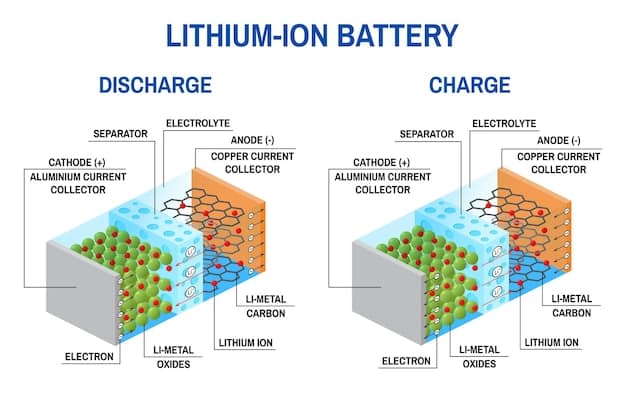
Solid-state batteries address these limitations directly, offering a more robust and efficient alternative. They replace the liquid electrolyte with a solid material, enhancing safety, increasing energy density, and potentially extending battery lifespan.
Here are some factors that contribute to the overall limitations of current smartphone batteries:
- Limited energy density: Current batteries cannot store enough energy for extended use.
- Degradation over time: Battery capacity decreases with each charge cycle.
- Safety risks: Flammable electrolytes pose a risk of thermal runaway.
- Long charging times: Current technology requires considerable time to fully charge a device.
In conclusion, the quest for better smartphone batteries is driven by the need to overcome the limitations of current lithium-ion technology. Solid-state batteries offer a promising solution, paving the way for longer-lasting, safer, and more efficient mobile devices.
Solid-State Batteries: A Technological Overview
Solid-state batteries represent a significant advancement in battery technology, primarily due to their replacement of the traditional liquid electrolyte with a solid one. This fundamental change offers several advantages, including enhanced safety, higher energy density, and improved lifespan.
How Solid-State Batteries Work
In a solid-state battery, ions move between the electrodes through a solid electrolyte. This solid material can be made of various materials, such as ceramics, polymers, or glass. The absence of a liquid electrolyte mitigates the risk of leaks and thermal runaway, making the battery inherently safer.
Advantages Over Lithium-Ion
Solid-state batteries offer several key advantages over their lithium-ion counterparts. These include:
- Increased Energy Density: Solid electrolytes allow for the use of more energy-dense electrode materials.
- Enhanced Safety: The solid electrolyte eliminates the risk of leaks and reduces the likelihood of thermal runaway.
- Improved Lifespan: Solid-state batteries tend to degrade more slowly than lithium-ion batteries.
- Faster Charging: The solid electrolyte facilitates faster ion transport, enabling quicker charging times.
Challenges and Development
Despite their potential, solid-state batteries face several challenges. Manufacturing them at scale is complex and costly. Researchers are actively working to overcome these hurdles, with numerous companies investing heavily in solid-state battery development.
Here are some of the leading companies driving innovation in solid-state battery technology:
- Toyota: Has invested significantly in solid-state battery research.
- QuantumScape: Is developing solid-state batteries for electric vehicles.
- Solid Power: Is focused on producing high-performance solid-state batteries.
In summary, solid-state batteries hold immense promise for revolutionizing energy storage. While challenges remain, ongoing research and development efforts are bringing this technology closer to widespread adoption.
Doubling Smartphone Lifespan: The Potential Impact
The advent of solid-state batteries has the potential to dramatically extend the lifespan of smartphones. By increasing energy density and reducing degradation, these batteries could allow devices to operate for twice as long on a single charge, significantly enhancing user experience.
Increased Energy Density
Solid-state batteries can pack more energy into the same volume compared to lithium-ion batteries. This means that smartphones equipped with solid-state batteries could have significantly longer battery life without increasing the device size.
Reduced Degradation
Solid-state batteries degrade more slowly than lithium-ion batteries, maintaining their capacity for a longer period. This translates to a longer overall lifespan for the device, as the battery will hold a charge more effectively over time.

These improvements have numerous practical benefits for smartphone users. One of those practical benefits is the reduction of range anxiety, which will allow users not to worry about their device running out of power during critical moments.
The potential real-world impact of doubled smartphone lifespan includes:
- Extended Usage: Users can enjoy their devices for longer periods without needing to recharge.
- Reduced Charging Frequency: Fewer charge cycles can prolong the overall lifespan of the battery.
- Enhanced Convenience: Users can rely on their phones throughout the day without worrying about battery drain.
Impact on Usage Patterns
With longer battery life, users might change the way they use their smartphones. They might be more likely to engage in activities such as streaming video, playing games, or using GPS navigation without concern for battery drain. This could lead to increased engagement and greater satisfaction with their devices.
In conclusion, the prospect of doubling smartphone lifespan through solid-state batteries is a game-changer. This innovation promises to transform the mobile experience, making smartphones more reliable, convenient, and enjoyable to use.
Estimated Timeline: 2026 and Beyond
The timeline for the widespread adoption of solid-state batteries in smartphones is subject to various factors, including technological advancements, manufacturing capabilities, and market demand. While predicting the future is always challenging, current estimates suggest that solid-state batteries could begin appearing in smartphones by 2026.
Current Development Status
Several companies are actively developing solid-state battery technology for various applications, including electric vehicles and consumer electronics. While progress has been made in recent years, several hurdles remain before mass production can be achieved.
Factors Influencing Adoption
The rate at which solid-state batteries are adopted in smartphones will depend on several factors. These include:
- Cost: Solid-state batteries are currently more expensive to produce than lithium-ion batteries.
- Manufacturing Scalability: Scaling up production to meet the demands of the smartphone market will require significant investment and infrastructure.
- Performance Validation: Real-world testing is needed to validate the performance and reliability of solid-state batteries in smartphones.
Assuming these challenges can be overcome, it is reasonable to expect that solid-state batteries will begin appearing in high-end smartphones by 2026. Over time, as production costs decrease and manufacturing processes improve, this technology could become more widespread, eventually replacing lithium-ion batteries in most smartphones.
Potential Roadblocks
It is important to acknowledge that there are potential roadblocks that could delay the adoption of solid-state batteries. These include:
- Technological Breakthroughs: Unexpected advancements in lithium-ion technology could make it more competitive with solid-state batteries.
- Supply Chain Issues: Disruptions in the supply chain of key materials could constrain production capacity.
- Regulatory Hurdles: New regulations or standards could require additional testing and certification.
In summary, while the timeline for the widespread adoption of solid-state batteries in smartphones remains uncertain, current estimates suggest that 2026 is a realistic target. However, it is important to monitor progress closely and be aware of potential roadblocks that could affect the timeline.
Consumer Benefits: More Than Just Longer Life
The benefits of solid-state batteries extend beyond just longer battery life. These advanced batteries offer several advantages that could significantly enhance the overall smartphone user experience.
Enhanced Safety
One of the most significant benefits of solid-state batteries is their enhanced safety. By replacing the flammable liquid electrolyte with a solid material, the risk of leaks and thermal runaway is greatly reduced. This makes solid-state batteries inherently safer than lithium-ion batteries.
Faster Charging Times
Solid-state batteries can often be charged more quickly than lithium-ion batteries. This is because the solid electrolyte facilitates faster ion transport, allowing the battery to reach full capacity in a shorter amount of time. Faster charging times can save users valuable time and make their smartphones more convenient to use.
Reduced Environmental Impact
The production and disposal of lithium-ion batteries have significant environmental impacts. Solid-state batteries have the potential to reduce these impacts by using more sustainable materials and lasting longer, reducing the need for frequent replacements.
Other potential consumer benefits of solid-state batteries include:
- Improved Durability: Solid-state batteries may be more resistant to physical damage, making smartphones more robust.
- Wider Operating Temperature: Solid-state batteries typically perform better in extreme temperatures.
- Smaller Form Factor: Solid-state batteries have the potential to be more compact, allowing for thinner and lighter smartphones.
In conclusion, the consumer benefits of solid-state batteries are far-reaching. From enhanced safety to faster charging times and reduced environmental impact, these batteries promise to transform the smartphone experience in numerous ways.
Navigating the Hype: Realistic Expectations
While solid-state batteries hold immense promise for revolutionizing smartphone technology, it is important to approach the topic with realistic expectations. The technology is still in its early stages of development, and several challenges remain before it can be widely adopted.
Performance Variations
Not all solid-state batteries are created equal. Different materials and designs can result in varying levels of performance. It is important to differentiate between hype and demonstrable results.
Cost Considerations
As with any new technology, solid-state batteries are initially more expensive than their predecessors. It may take several years before the cost of solid-state batteries comes down to a level that makes them competitive with lithium-ion batteries. Early adopters may need to pay a premium.
While several companies are working on solid-state batteries, potential drawbacks can be seen in the technology’s early stages. These drawbacks include:
- Limited Availability: Early smartphones equipped with solid-state batteries may be available only in limited quantities or specific regions.
- Unknown Longevity: While solid-state batteries are generally expected to have a longer lifespan, real-world testing is needed to confirm this.
- Charging Limitations: Some solid-state batteries may have specific charging requirements or limitations.
In summary, while solid-state batteries represent a significant step forward in battery technology, it is important to manage expectations. Initially, the technology may be expensive, have limited availability, and exhibit varying levels of performance. However, as the technology matures and production costs decrease, solid-state batteries are poised to become a ubiquitous part of our mobile devices.
| Key Point | Brief Description |
|---|---|
| 🔋 Longer Lifespan | Solid-state batteries could double your phone’s battery life. |
| ⚡ Faster Charging | Solid electrolytes allow for quicker ion transport. |
| 🛡️ Enhanced Safety | Eliminates flammable liquid electrolytes. |
| 🌱 Reduced Impact | Uses sustainability materials, reducing replacements. |
Frequently Asked Questions
▼
Solid-state batteries replace the traditional liquid electrolyte found in lithium-ion batteries with a solid electrolyte, enhancing safety and energy density. This change promises to improve lifespan and charging speed.
▼
Solid-state batteries have the potential to double the battery life of smartphones compared to current lithium-ion technology. This means you could use your phone for twice as long before needing to recharge.
▼
Yes, solid-state batteries are generally considered safer. The solid electrolyte eliminates the risk of leaks and thermal runaway, making them less prone to overheating or catching fire compared to lithium-ion batteries.
▼
Current estimates suggest that solid-state batteries could start appearing in high-end smartphones by 2026. Widespread adoption will depend on factors like cost, scalability, and performance validation.
▼
Initially, it’s likely that smartphones with solid-state batteries will be more expensive due to the higher production costs. However, as the technology matures, the cost is expected to decrease.
Conclusion
The promise of significantly improved smartphone battery life through solid-state technology is an exciting prospect. While challenges remain, the potential benefits in terms of safety, longevity, and performance make it a development worth watching closely as we approach 2026.