Strategies for building a passive income portfolio effectively

Strategies for building a passive income portfolio include diversifying investments across real estate, stocks, and bonds, while avoiding common mistakes like neglecting research and underestimating initial efforts.
Strategies for building a passive income portfolio can seem overwhelming, but they offer a pathway to financial independence. Ever wondered how to make your money work for you while you sleep? Let’s dive into effective methods that anyone can start exploring.
Understanding passive income
Understanding passive income is essential for anyone looking to boost their financial health. It’s about earning money without needing to actively work all the time.
Many people wonder how to get started with passive income. One effective way is to explore various avenues such as real estate investments, dividend stocks, and peer-to-peer lending. Each option has its own benefits and risks.
Types of Passive Income
When considering passive income, you should know the types available. Here are some popular sources:
- Real estate rental income
- Dividend income from stocks
- Interest from savings accounts or bonds
- Royalties from creative work, like books or music
Each type of passive income requires an initial investment of time or money, but once established, they can generate cash flow with minimal effort. Many investors build a diversified portfolio to balance risk and reward effectively. This should include a mix of assets to enhance financial stability.
Benefits of Passive Income
Engaging in passive income strategies can lead to financial freedom. With multiple sources of income, you can create a safety net against job loss or economic downturns. Moreover, the more you invest in passive income, the greater your earning potential becomes over time.
However, achieving true passivity can take time and strategy. Be prepared to conduct thorough research and possibly manage investments actively at first. Many successful investors find that starting small helps them learn while minimizing risks.
Investment vehicles for passive income
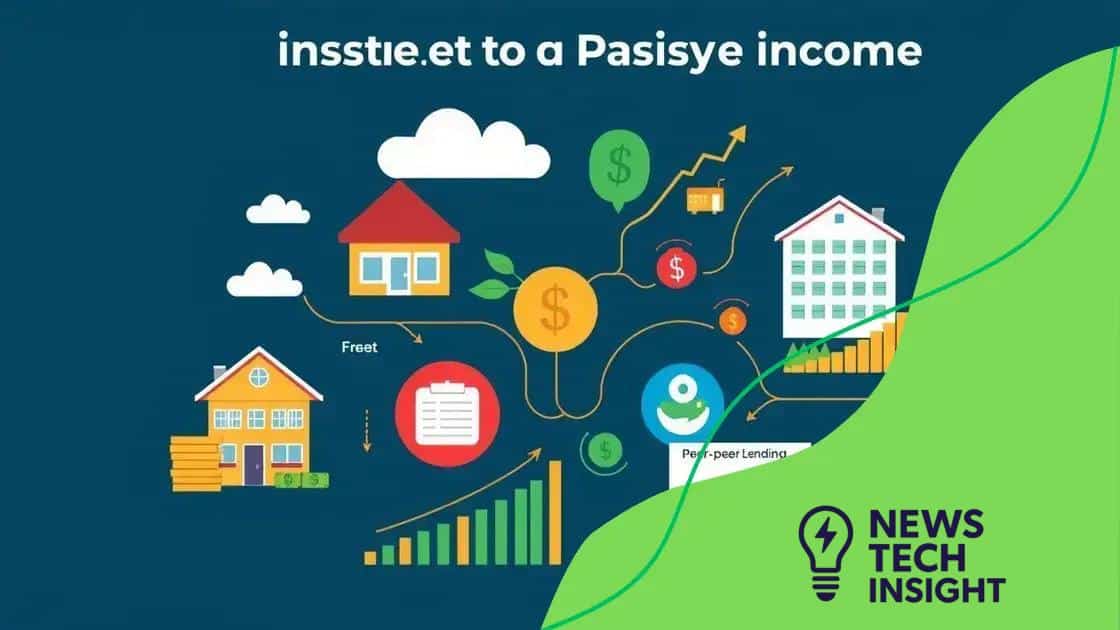
Investment vehicles for passive income are essential tools for anyone looking to grow their wealth over time. These vehicles allow you to earn money with minimal ongoing effort. Understanding your options can help you select the right investments for your financial goals.
Several types of investment vehicles are popular for generating passive income. Some of the most effective options include:
Real Estate
Investing in real estate can be a great way to earn passive income. You can buy rental properties, which provide a steady stream of rental income. Additionally, real estate investment trusts (REITs) offer a more hands-off approach, allowing you to invest in real estate markets without owning physical property.
Stocks and Dividends
Another excellent option is investing in stocks, particularly those that pay dividends. Dividend stocks reward you with regular payments based on the company’s earnings. This can create a reliable income stream while you hold onto your investments.
Bonds
Bonds are another investment vehicle that can generate passive income. When you purchase a bond, you are lending money to an entity for a set period. In return, you receive interest payments, which can provide a reliable source of income. Government and corporate bonds each come with different risk levels and returns.
- Consider government bonds for lower risk.
- Corporate bonds may offer higher yields but can be riskier.
- Municipal bonds are often tax-exempt.
- Ensure you diversify your bond investments to manage risk.
Peer-to-peer lending has also gained popularity as a passive income source. This involves lending money to individuals or businesses through online platforms. You earn interest on the loan, making it a potential source of income.
Ultimately, the right investment vehicle for you will depend on your financial situation and risk tolerance. It’s important to research each option thoroughly and consider how they fit into your overall investment strategy.
Tips for diversifying your income portfolio
Tips for diversifying your income portfolio are crucial for maximizing earnings from passive sources. A well-diversified portfolio can decrease risk and increase potential returns. It is wise to spread your investments across different asset classes.
One effective strategy for diversification is to invest in various types of income-generating assets. Here are some key areas to consider:
Real Estate and Stocks
Including both real estate and stocks in your portfolio helps balance potential gains and risks. Real estate can provide stable rental income, while stocks can offer growth and dividends. By investing in both, you create a more resilient income stream.
Bonds and Mutual Funds
Bonds are typically less volatile than stocks, making them an excellent addition for stability. A mix of government and corporate bonds can offer reliable interest income. Also, mutual funds can allow you to invest in a diversified group of stocks and bonds, minimizing individual investment risks while still generating returns.
- Focus on low-cost index funds for broad market exposure.
- Consider sector-specific ETFs (Exchange-Traded Funds) for targeting growth areas.
- Regularly review your portfolio to ensure it remains balanced.
- Reinvest dividends to maximize growth potential.
Another crucial aspect of diversification is to assess geographical coverage. Investing in international markets can provide additional opportunities. This not only spreads risk associated with local economic downturns but also taps into emerging markets that may offer higher growth potential.
Lastly, it is vital to remain adaptable. Market conditions can change, and your portfolio needs to adapt as well. Periodically reassess your investments to ensure they meet your changing financial goals and risk tolerance. Remember, diversification does not eliminate risk but helps manage it more effectively.
Common mistakes to avoid when building passive income

Common mistakes to avoid when building passive income can save you time, money, and stress. Many individuals jump into passive income opportunities without proper research, leading to avoidable pitfalls.
One significant mistake is failing to diversify your investments. Relying too heavily on one source can lead to financial trouble if that source underperforms. Instead, explore different income streams like real estate, stocks, and bonds. A varied portfolio helps balance risks.
Ignoring Research
Another mistake is neglecting to conduct thorough research. Each investment type has its unique risks and rewards. Without understanding how they work, you may invest in unsuitable options. Take the time to learn about the market dynamics and potential returns of any opportunity you are considering.
Underestimating Initial Efforts
Some people think passive income requires no work at all. This is misleading. Most passive income streams require an initial investment of time and effort. For instance, if you want to invest in rental properties, you need to actively manage them at first. Ignoring the work needed can lead to poor outcomes.
- Make sure to set realistic expectations for your income.
- Actively monitor your investments to ensure they are performing as expected.
- Stay informed about market trends that may affect your income.
- Know when to be hands-on and when to let your investments run.
Additionally, be wary of scams. The promise of high returns with low risk is often a red flag. Always verify the credibility of any investment before putting your money into it. Look for transparent information and reviews from other investors.
Lastly, failing to set clear goals can lead to confusion and disappointment. Define what you want to achieve with your passive income investments and regularly assess your progress. It’s important to keep your financial objectives in mind.
In summary, building a passive income portfolio requires careful planning and awareness of common mistakes. By diversifying your investments, conducting thorough research, and setting clear goals, you can increase your chances of success. Remember to stay vigilant about market trends and maintain a proactive approach. With the right strategies in place, passive income can become a reliable source of financial freedom.
FAQ – Common Questions About Building a Passive Income Portfolio
What is passive income?
Passive income is money earned with little to no ongoing effort, often through investments like real estate, stocks, or bonds.
How can I start building passive income?
You can start by researching different investment options, setting clear financial goals, and gradually investing in assets that generate income.
Why is diversification important?
Diversification helps reduce risk by spreading investments across different asset classes, which can balance potential losses with gains.
What mistakes should I avoid when pursuing passive income?
Common mistakes include not doing enough research, failing to diversify, underestimating the initial effort, and ignoring scams.