Supply Chain Security: Vet Vendors in 2026 with Our 4-Point Framework
Implementing a strategic 4-point framework is essential for US businesses to fortify their supply chain security and ensure diligent vendor vetting by 2026, proactively addressing the complex landscape of cyber threats.
In an increasingly interconnected global economy, the integrity of your business hinges not just on your internal defenses, but critically, on the security posture of your partners. As we approach 2026, the imperative for US businesses to master supply chain security: a 4-point framework for US businesses to vet vendors in 2026 becomes undeniable, moving beyond mere compliance to strategic resilience.
The evolving threat landscape for supply chains
The digital age has brought unprecedented efficiency but also exposed businesses to a sophisticated array of cyber threats that specifically target the supply chain. Attackers recognize that a company’s weakest link often lies with its third-party vendors, who may not possess the same level of security infrastructure or expertise. This reality mandates a proactive and comprehensive approach to risk management, particularly for US businesses operating within critical sectors.
Gone are the days when a simple questionnaire sufficed for vendor assessment. Today’s threats are multi-faceted, ranging from data breaches and intellectual property theft to ransomware attacks and the insertion of malicious code. The interconnectedness of modern supply chains means a compromise at one point can rapidly propagate, causing widespread disruption and significant financial and reputational damage. Understanding this dynamic threat landscape is the first step toward building a resilient defense.
The rise of sophisticated cyber-attacks
Cybercriminals are continually refining their tactics, moving beyond generic phishing attempts to highly targeted and persistent attacks. Supply chain attacks often exploit trusted relationships, using a compromised vendor to gain unauthorized access to a larger, more secure organization. This method leverages the inherent trust between business partners, making detection and prevention particularly challenging.
- Targeted phishing and social engineering: Crafting highly convincing emails or communications to trick vendor employees into revealing credentials or installing malware.
- Software supply chain attacks: Injecting malicious code into software updates or components distributed by a trusted vendor, affecting all downstream users.
- Data exfiltration: Stealing sensitive customer data, intellectual property, or strategic business information through compromised vendor networks.
The regulatory environment is also tightening, with frameworks like NIST, CMMC, and various state-level privacy laws placing greater responsibility on organizations to secure their entire supply chain. Non-compliance can result in hefty fines and legal repercussions, adding another layer of complexity to vendor management. Businesses must not only protect themselves but also ensure their vendors adhere to stringent security standards.
In conclusion, the threat landscape for supply chains is no longer a peripheral concern but a central pillar of enterprise risk. US businesses must acknowledge the pervasive nature of these threats and recognize that their security is inextricably linked to the security of their entire vendor ecosystem. A robust framework for vetting vendors is not just good practice; it is a business imperative for survival and sustained growth in 2026 and beyond.
Framework point 1: comprehensive vendor risk assessment
The foundation of any effective supply chain security strategy lies in a thorough and continuous vendor risk assessment. This isn’t a one-time checklist but an ongoing process that evaluates potential vulnerabilities and threats associated with every third-party provider. For US businesses, understanding the depth of this assessment is crucial to protecting sensitive data and maintaining operational integrity.
A comprehensive risk assessment goes beyond surface-level inquiries, delving into a vendor’s security controls, compliance certifications, incident response capabilities, and even their own supply chain dependencies. It requires a systematic approach to identify, analyze, and prioritize risks based on their potential impact and likelihood. This point of the framework ensures that businesses are not only aware of their risks but are also equipped to make informed decisions about vendor engagement.
Establishing clear security standards
Before engaging with any vendor, US businesses must define their minimum security standards. These standards should be clearly communicated and form the basis of all vendor contracts. They should cover areas such as data encryption, access controls, employee training, and adherence to relevant industry regulations and best practices.
- Data protection policies: Mandating specific data handling, storage, and transmission protocols.
- Access control requirements: Defining strict role-based access to sensitive systems and data.
- Employee security awareness training: Ensuring vendor employees are regularly trained on cybersecurity best practices.
The assessment process itself should involve a combination of questionnaires, technical audits, and on-site inspections where appropriate. Modern tools can automate much of this, providing continuous monitoring and flagging potential issues before they escalate. It’s about building a holistic view of a vendor’s security posture, not just accepting their assurances at face value.
Ultimately, comprehensive vendor risk assessment is about creating a transparent and accountable relationship with your suppliers. It’s a continuous loop of evaluation, feedback, and improvement designed to minimize exposure to external threats. By embedding this rigorous assessment into the vendor lifecycle, US businesses can significantly enhance their supply chain security and foster a culture of shared responsibility.
Framework point 2: continuous monitoring and threat intelligence integration
Once vendors are onboarded, the task of securing the supply chain doesn’t end. In fact, it shifts to continuous monitoring and the proactive integration of threat intelligence. This second point of our framework emphasizes that the cyber threat landscape is dynamic, and a vendor’s security posture can change rapidly. For US businesses, staying vigilant means constantly observing, analyzing, and adapting to new information.
Continuous monitoring involves deploying tools and processes that constantly check a vendor’s security controls, network activity, and public security posture. This goes beyond annual audits, providing real-time insights into potential vulnerabilities or compromises. Integrating threat intelligence means leveraging external data sources to identify emerging threats that could impact your vendors, allowing for preemptive action rather than reactive damage control.
Leveraging automated monitoring tools
Manual checks are no longer sufficient in the face of sophisticated and rapidly evolving threats. Automated monitoring tools offer several advantages, including scalability, consistency, and the ability to detect anomalies that might otherwise go unnoticed. These tools can track various metrics, from patch management status to dark web mentions of a vendor’s compromised assets.
- Security ratings platforms: Providing objective, data-driven security scores for vendors, similar to credit ratings.
- Vulnerability scanning: Regularly checking vendor systems for known vulnerabilities and misconfigurations.
- Dark web monitoring: Alerting to any signs of vendor data being sold or discussed in illicit online forums.
Integrating threat intelligence involves subscribing to feeds from cybersecurity research firms, government agencies, and industry consortiums. This information provides context on new attack vectors, malware campaigns, and geopolitical events that could pose a risk to specific vendors. Proactive intelligence allows businesses to issue warnings, recommend specific countermeasures, or even temporarily suspend engagement with a high-risk vendor.
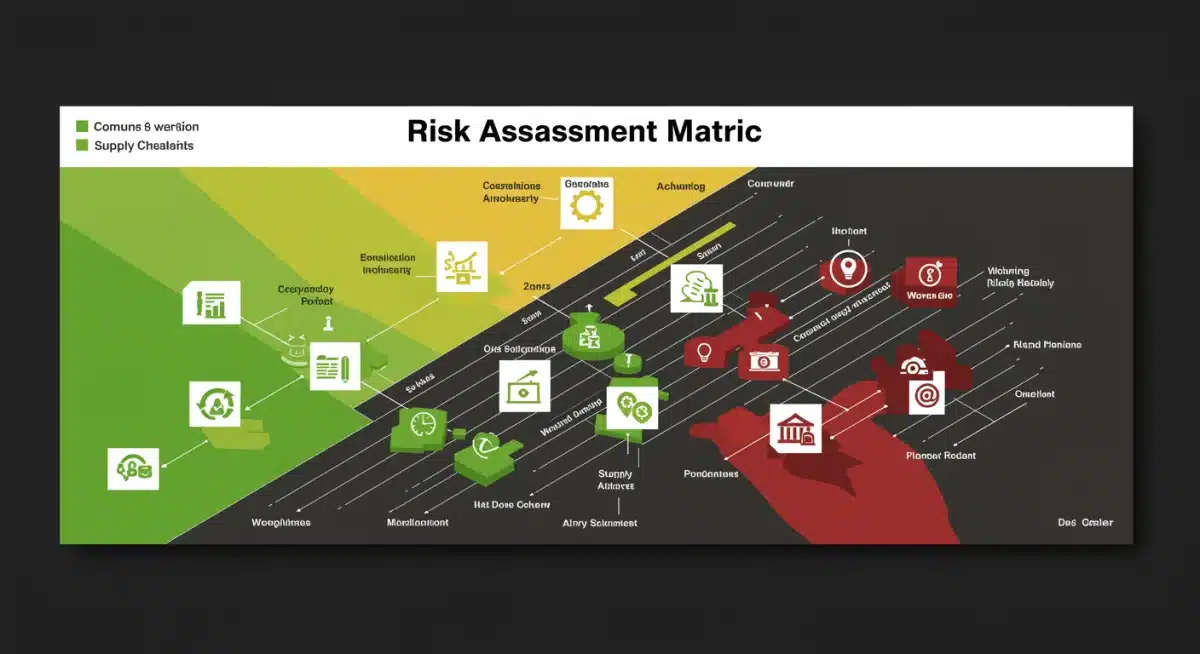
Ultimately, continuous monitoring and threat intelligence integration transform supply chain security from a static exercise into a living, breathing defense mechanism. It ensures that US businesses are not only aware of the current state of their vendor’s security but are also prepared for what’s coming next. This proactive stance is critical for maintaining resilience and trust in an unpredictable digital world.
Framework point 3: robust incident response and recovery planning
Even with the most rigorous vetting and continuous monitoring, incidents can and will occur. The third critical point of our framework for US businesses in 2026 is the establishment of robust incident response and recovery planning, not just for internal systems, but specifically tailored for supply chain compromises. This means having clear protocols in place to swiftly identify, contain, eradicate, and recover from security incidents involving third-party vendors.
An effective incident response plan for supply chain security extends beyond technical measures. It encompasses communication strategies, legal considerations, and business continuity plans that account for vendor disruption. US businesses must work collaboratively with their vendors to ensure alignment in these critical areas, understanding that a coordinated response is far more effective than isolated efforts.
Defining roles and responsibilities
Clarity in roles and responsibilities is paramount. Both the business and its vendors need to understand who is responsible for what during a security incident. This includes reporting requirements, escalation paths, and decision-making authority. Ambiguity in these areas can lead to delays, exacerbate damage, and erode trust.
- Designated incident response teams: Clearly identifying internal and vendor contacts for security incidents.
- Communication protocols: Establishing how and when information will be shared during an event.
- Legal and compliance review: Ensuring incident response activities adhere to contractual obligations and regulatory requirements.
Recovery planning is equally vital. This involves having backup and restoration procedures, alternative vendor options, and strategies to minimize business disruption. For US businesses, this might mean diversifying their vendor base for critical services or implementing escrow agreements for essential software. The goal is to reduce single points of failure and ensure rapid restoration of operations after an incident.
Furthermore, post-incident analysis is crucial. Every incident, regardless of its severity, offers valuable lessons. Businesses should conduct thorough post-mortems with affected vendors to identify root causes, improve security controls, and refine incident response plans. This iterative process strengthens the overall security posture and builds a more resilient supply chain over time.
In essence, robust incident response and recovery planning for supply chain security is about preparing for the worst while hoping for the best. It’s an acknowledgment that perfection is unattainable, but preparedness is achievable. By developing and regularly testing these plans, US businesses can significantly mitigate the impact of supply chain compromises and safeguard their future.
Framework point 4: contractual agreements and accountability mechanisms
The final pillar of our 4-point framework for US businesses to vet vendors in 2026 focuses on solidifying security through legally binding contractual agreements and robust accountability mechanisms. Without clear, enforceable terms, even the most diligent assessments and monitoring can fall short when a breach occurs. This point ensures that security expectations are not just understood but are formally mandated and subject to consequences.
Contractual agreements should explicitly outline security requirements, data protection clauses, incident response expectations, and audit rights. Beyond the initial contract, accountability mechanisms ensure ongoing adherence and provide recourse in the event of non-compliance or a security incident. This creates a powerful deterrent and reinforces the shared responsibility for supply chain security.
Key contractual clauses for security
Businesses must ensure their vendor contracts include specific clauses that address cybersecurity. These are not merely boilerplate additions but carefully crafted provisions designed to protect your organization’s assets and reputation.
- Data processing agreements (DPAs): Detailing how personal and sensitive data will be handled, stored, and protected.
- Security audit rights: Granting your business the right to conduct security audits or request third-party audit reports from vendors.
- Incident notification and response clauses: Mandating timely notification of security incidents and outlining the vendor’s responsibilities in the response effort.
- Indemnification and liability: Specifying financial and legal responsibility in the event of a breach caused by vendor negligence.
Accountability mechanisms extend beyond the initial contract. This includes regular performance reviews, security scorecards, and the establishment of service level agreements (SLAs) that incorporate security metrics. Non-compliance with these metrics or a failure to meet security standards should trigger predefined penalties or corrective actions, up to and including contract termination.
Furthermore, fostering a culture of transparency and open communication is vital. While contracts provide the legal backbone, a strong working relationship built on trust and shared security goals often prevents issues from escalating. Regular meetings, joint security exercises, and clear channels for reporting concerns contribute to this environment.
In conclusion, robust contractual agreements and accountability mechanisms transform abstract security expectations into tangible, enforceable obligations. For US businesses, this means having the legal leverage and operational frameworks to ensure vendors uphold their end of the security bargain, thereby significantly strengthening the overall supply chain security posture for 2026 and beyond.
Integrating the framework: a holistic approach
While each point of the framework—comprehensive vendor risk assessment, continuous monitoring and threat intelligence, robust incident response, and strong contractual agreements—is vital on its own, their true power emerges when integrated into a holistic, synergistic approach. For US businesses tackling the complexities of supply chain security in 2026, this integration is not optional but essential for building truly resilient operations.
A holistic approach means that information gathered during the initial risk assessment feeds into the continuous monitoring strategy. Insights from monitoring inform updates to contractual agreements and refine incident response plans. Lessons learned from incidents, in turn, enhance future risk assessments and vendor selection criteria. It’s a cyclical process of continuous improvement, where each component strengthens the others.
Establishing a central governance model
To effectively integrate these framework points, US businesses should consider establishing a central governance model for supply chain security. This involves a dedicated team or committee responsible for overseeing vendor relationships from a security perspective, ensuring consistency across all departments and vendor types.
- Cross-functional collaboration: Bringing together legal, procurement, IT security, and business unit leaders to define and enforce policies.
- Standardized processes: Developing uniform procedures for vendor onboarding, assessment, monitoring, and offboarding.
- Regular policy reviews: Periodically updating security policies and contractual templates to reflect the evolving threat landscape and regulatory changes.
Technology plays a crucial role in this integration. Vendor risk management (VRM) platforms can centralize vendor data, automate assessments, track compliance, and manage incident responses. These platforms provide a single pane of glass for monitoring the security posture of the entire vendor ecosystem, enabling proactive management and rapid response.
Furthermore, fostering a culture of security awareness across the entire organization, from the executive suite to every employee involved in vendor interactions, is paramount. Everyone needs to understand their role in maintaining supply chain security and the potential consequences of negligence. This human element is often the strongest or weakest link in any security chain.
In summary, integrating the 4-point framework into a holistic strategy transforms individual security measures into a powerful, unified defense. For US businesses, this means not just reacting to threats but proactively building a secure and resilient supply chain that can withstand the challenges of 2026 and beyond, safeguarding operations, data, and reputation.
Best practices for implementation in 2026
Successfully implementing the 4-point framework for supply chain security isn’t just about understanding its components; it’s about executing them effectively within the dynamic business environment of 2026. For US businesses, this means adopting a set of best practices that ensure the framework is not only robust but also adaptable, scalable, and integrated into the core operational fabric.
One of the foremost best practices is to treat supply chain security as an ongoing journey, not a destination. The threat landscape, regulatory requirements, and technological capabilities are constantly evolving. Therefore, the framework itself must be subject to regular review, testing, and refinement to remain effective against emerging risks. This requires a commitment to continuous improvement and investment in the necessary resources.
Prioritizing critical vendors
Not all vendors pose the same level of risk. A key best practice is to tier vendors based on the criticality of the services they provide and the sensitivity of the data they access. This allows US businesses to allocate resources more efficiently, applying the most stringent vetting and monitoring to high-risk partners.
- Risk-based categorization: Classifying vendors into tiers (e.g., high, medium, low risk) based on potential impact.
- Tailored assessment: Customizing the depth of assessments and frequency of monitoring according to vendor tier.
- Focus on inherent risk: Considering the inherent risks associated with a vendor’s industry, location, and technology stack.
Another crucial best practice is to embrace automation and advanced analytics. Manual processes are prone to errors and cannot keep pace with the volume and complexity of modern vendor ecosystems. AI-powered tools can help identify anomalies, predict potential vulnerabilities, and streamline the assessment and monitoring processes, freeing up human analysts for more strategic tasks.
Furthermore, fostering strong, collaborative relationships with vendors is indispensable. Security should be a partnership, not an adversarial relationship. Regular communication, shared threat intelligence, and joint training exercises can significantly enhance the collective security posture. Building trust and mutual understanding encourages vendors to be more transparent about their security challenges and proactive in addressing them.
In essence, implementing the supply chain security framework in 2026 requires a strategic, adaptive, and technology-driven approach. By prioritizing critical vendors, leveraging automation, and cultivating strong partnerships, US businesses can move beyond mere compliance to achieve true resilience, safeguarding their operations and maintaining competitive advantage in an increasingly complex global marketplace.
| Key Framework Point | Brief Description |
|---|---|
| Comprehensive Vendor Risk Assessment | Thoroughly evaluate vendor security controls, compliance, and incident response capabilities before engagement. |
| Continuous Monitoring & Threat Intelligence | Implement real-time tracking of vendor security posture and integrate external threat data for proactive defense. |
| Robust Incident Response & Recovery | Develop clear plans for identifying, containing, and recovering from security incidents involving vendors. |
| Contractual Agreements & Accountability | Enforce security requirements through legally binding contracts and mechanisms for ongoing compliance and recourse. |
Frequently asked questions about supply chain security
Supply chain security is critical due to the increasing sophistication of cyberattacks targeting third-party vendors, who often serve as entry points to larger organizations. A single compromise can lead to widespread data breaches, operational disruptions, and significant financial and reputational damage, making robust defenses essential for business continuity and trust.
It involves a deep, ongoing evaluation of a vendor’s security controls, compliance with regulations, incident response capabilities, and their own supply chain. This includes questionnaires, technical audits, and sometimes on-site inspections, moving beyond basic checks to gain a holistic view of potential vulnerabilities and risks.
Continuous monitoring provides real-time insights into a vendor’s security posture, detecting anomalies or vulnerabilities as they emerge. By integrating threat intelligence, businesses can identify new attack vectors and proactively address risks, shifting from reactive responses to anticipatory defense against evolving cyber threats.
Contractual agreements are crucial for legally binding vendors to specific security requirements, data protection clauses, and incident response protocols. They establish clear accountability, define audit rights, and outline liabilities, providing a legal framework that reinforces security expectations and offers recourse in case of non-compliance or a breach.
A holistic approach integrates all four framework points, creating a synergistic defense where each component strengthens the others. This ensures that information flows seamlessly, leading to continuous improvement and a more resilient security posture. It moves beyond isolated measures to a unified, adaptive strategy against complex cyber threats.
Conclusion
The journey towards robust supply chain security for US businesses in 2026 is complex, yet imperative. By diligently implementing this 4-point framework—encompassing comprehensive vendor risk assessment, continuous monitoring and threat intelligence integration, robust incident response and recovery planning, and strong contractual agreements with clear accountability—organizations can significantly fortify their defenses. This integrated approach not only mitigates the escalating risks posed by sophisticated cyber threats but also builds a foundation of trust and resilience essential for sustained growth and operational integrity in a deeply interconnected global economy. Proactive engagement with this framework is no longer an option but a strategic necessity for safeguarding critical assets and maintaining competitive advantage.