Top 5 Consumer Tech Trends: Shaping Your Digital Life Next 6 Months
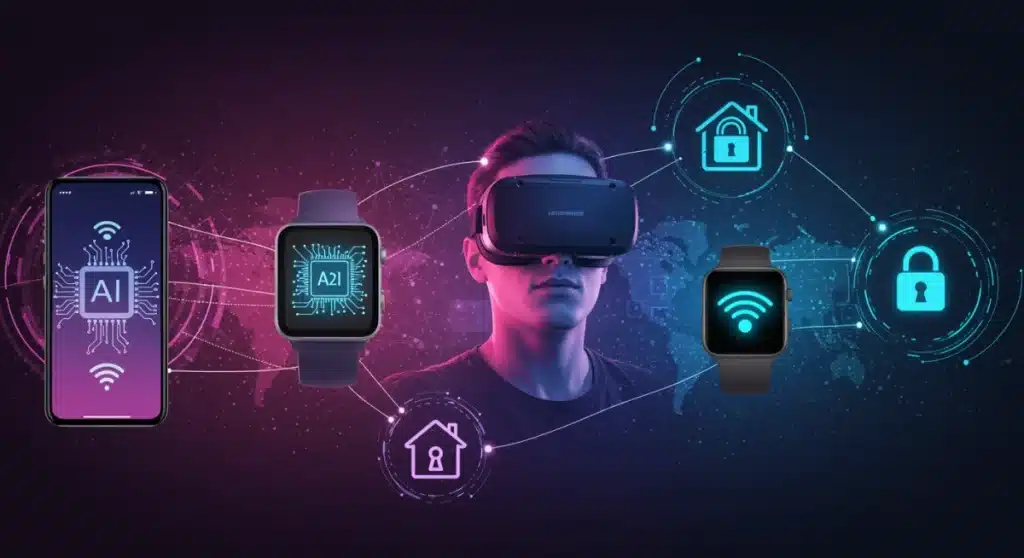
The next six months will witness a transformative evolution in how we interact with technology, as consumer tech trends like advanced AI integration, immersive metaverse experiences, sophisticated wearables, sustainable gadgets, and enhanced cybersecurity redefine our daily digital lives.
In the rapidly evolving landscape of innovation, understanding the shifts in how technology integrates into our daily routines is crucial. The next six months promise a dynamic transformation, with several key advancements set to redefine our digital interactions. This article delves into the Top 5 Consumer Tech Trends Shaping Your Digital Life in the Next 6 Months, offering insights into what to expect and how these innovations will impact your world, from personal devices to immersive digital realms.
The Ascent of Hyper-Personalized AI Everywhere
Artificial Intelligence is no longer a futuristic concept; it’s an embedded reality, and its personalization capabilities are set to reach new heights. Over the next half-year, expect AI to become even more intuitive and tailored to individual user behaviors and preferences. This isn’t just about recommendations; it’s about AI anticipating needs and proactively optimizing experiences across various devices.
The integration of AI will deepen within everyday gadgets, making them smarter and more responsive. Consider your smartphone learning your morning routine to adjust your smart home settings before you even wake up, or your fitness tracker providing hyper-specific recovery advice based on your sleep patterns and daily activity. This level of personalization moves beyond generic algorithms, utilizing vast amounts of individual data to create truly bespoke digital environments.
Intelligent Personal Assistants
The next generation of personal assistants will move beyond simple command execution to offer proactive support. They will learn from your habits and preferences, anticipating your needs and offering solutions before you even articulate them. This could range from managing your calendar more effectively to suggesting optimal routes based on real-time traffic and your personal driving style.
- Predictive Scheduling: AI will analyze your workflow and suggest optimal times for tasks or meetings.
- Contextual Awareness: Assistants will understand the nuances of your requests based on your location, time of day, and past interactions.
- Proactive Problem Solving: From ordering groceries when supplies are low to alerting you about potential device issues.
This personalized AI will also extend to entertainment, curating content that perfectly matches your taste, or even generating unique experiences based on your mood. The goal is to make technology feel less like a tool and more like an extension of yourself, seamlessly integrating into every facet of your digital and physical life, making interactions smoother and more efficient.
Immersive Metaverse Experiences and Extended Reality
The concept of the metaverse, while still in its nascent stages, will see significant strides in consumer adoption over the next six months. This trend focuses on creating more immersive digital environments where users can interact, work, and play in ways that blur the lines between the physical and virtual. Extended Reality (XR), encompassing Virtual Reality (VR), Augmented Reality (AR), and Mixed Reality (MR), will be the primary gateway to these new dimensions.
Expect to see more accessible and affordable XR headsets, along with a proliferation of content that makes these experiences compelling. From virtual concerts and social gatherings to collaborative workspaces and interactive learning platforms, the metaverse offers a new frontier for digital engagement. The focus will be on enhancing social presence and making these virtual interactions feel as natural as possible.
Advancements in VR Hardware
New VR headsets will boast improved resolution, wider fields of view, and more comfortable designs, making prolonged use more enjoyable. Haptic feedback technology will also become more sophisticated, offering a greater sense of touch and presence within virtual worlds. This evolution aims to reduce motion sickness and increase the overall realism of virtual environments.
- Lighter, More Ergonomic Headsets: Designed for extended wear without discomfort.
- Enhanced Visual Fidelity: Sharper images and more vibrant colors for a realistic experience.
- Improved Haptic Feedback: More nuanced and realistic tactile sensations in virtual interactions.
Beyond gaming, AR will find its way into practical applications such as enhanced shopping experiences, interactive navigation, and even remote assistance for technical tasks. Imagine trying on clothes virtually before purchasing, or receiving real-time augmented instructions for assembling furniture. These advancements will make digital interactions more tangible and integrated into our physical surroundings, pushing the boundaries of what we perceive as reality.
The Rise of Proactive Health and Wellness Wearables
Wearable technology has moved beyond basic fitness tracking to become sophisticated health monitoring devices. In the coming six months, this trend will accelerate, with wearables offering more proactive health insights and integrating deeper into personalized wellness routines. The emphasis will shift from simply collecting data to providing actionable intelligence that empowers users to take charge of their health.
Next-generation smartwatches, rings, and other devices will feature advanced sensors capable of continuous monitoring of vital signs, sleep patterns, stress levels, and even early detection of potential health issues. This data, combined with AI analytics, will offer highly personalized recommendations for exercise, nutrition, and mental well-being, moving towards a preventative healthcare model.

Advanced Biometric Monitoring
Expect wearables to incorporate more sophisticated biometric sensors, including continuous glucose monitoring (CGM) for non-diabetics, more accurate blood pressure readings, and advanced ECG capabilities. These features will provide a comprehensive snapshot of your health, accessible directly from your wrist or finger.
- Continuous Glucose Monitoring: For general wellness and dietary optimization.
- Precision Heart Rate Variability: Offering deeper insights into stress and recovery.
- Sleep Stage Analysis: More accurate tracking of sleep cycles and quality.
Furthermore, these devices will integrate seamlessly with telehealth platforms, allowing for remote consultations and data sharing with healthcare professionals. This integration will make healthcare more accessible and personalized, enabling individuals to manage chronic conditions more effectively and maintain optimal health proactively. The future of wearables is about providing a continuous, informed dialogue with your body.
Sustainable Tech and Circular Economy Focus
As environmental concerns grow, consumers are increasingly demanding eco-friendly products. The next six months will see a significant push towards sustainable technology, with manufacturers focusing on the circular economy principles throughout the product lifecycle. This means not only energy-efficient devices but also products designed for longevity, repairability, and responsible recycling.
This trend will manifest in several ways: increased use of recycled materials in device manufacturing, modular designs that allow for easy component replacement, and software updates that extend the lifespan of gadgets. Companies will also be more transparent about their supply chains and environmental impact, appealing to a growing segment of environmentally conscious consumers.
Modular Design and Repairability
The concept of modular design will gain traction, allowing users to easily replace or upgrade individual components of their devices rather than discarding the entire unit. This not only reduces electronic waste but also offers consumers more flexibility and cost savings in the long run. Right-to-repair movements will also gain momentum, pushing manufacturers to provide easier access to spare parts and repair manuals.
- User-Replaceable Batteries: Extending device lifespan and reducing waste.
- Modular Components: Easily upgradeable cameras, storage, or processors.
- Extended Software Support: Ensuring older devices remain functional and secure.
Beyond hardware, software will also play a role in sustainability, with energy-efficient operating systems and applications. The industry will move towards a model where sustainability isn’t an afterthought but a core design principle, driving innovation in materials science, manufacturing processes, and product longevity. This shift reflects a broader societal movement towards responsible consumption and production.
Enhanced Cybersecurity and Privacy Tools
With our digital lives becoming increasingly interconnected, the importance of cybersecurity and privacy cannot be overstated. Over the next six months, expect a surge in sophisticated tools and features designed to protect personal data and enhance digital security. This trend is a direct response to the growing threat of cyberattacks and the increasing awareness among consumers about their digital rights.
New consumer tech will come equipped with advanced encryption, multi-factor authentication, and privacy-centric design principles baked in from the ground up. Beyond individual devices, there will be a greater emphasis on network security for smart homes and IoT ecosystems, ensuring that all connected devices are protected from vulnerabilities. The goal is to provide users with greater control and peace of mind over their digital footprint.
Decentralized Identity Solutions
The concept of decentralized identity will become more prevalent, giving individuals greater control over their digital credentials. Instead of relying on centralized authorities, users will be able to manage and share their personal data securely, choosing what information to disclose and to whom. This will significantly reduce the risk of identity theft and data breaches.
- Biometric Authentication: More secure and convenient access to devices and services.
- Privacy-Enhancing Browsers: Offering advanced tracking protection and data anonymization.
- Secure Messaging Protocols: Ensuring end-to-end encryption for all communications.
Furthermore, regulations around data privacy are likely to become more stringent, forcing companies to adopt robust security measures and transparent data handling practices. Consumers will have more tools at their disposal to audit and manage their data, fostering a healthier and more secure digital environment. This proactive approach to security is essential for building trust in the ever-expanding digital ecosystem.
Seamless Connectivity and Edge Computing Growth
The demand for instant, reliable connectivity continues to drive innovation, and the next six months will see further advancements in how our devices communicate. Beyond 5G, the focus will shift towards optimizing connectivity for a vast network of IoT devices and leveraging edge computing to process data closer to its source, reducing latency and improving efficiency.
Expect to see more devices designed with integrated cellular capabilities, reducing reliance on Wi-Fi and enabling truly ubiquitous connectivity. Edge computing will play a crucial role in smart home automation, autonomous vehicles, and real-time health monitoring, allowing for quicker decision-making and enhanced responsiveness without sending all data to distant cloud servers.
Ubiquitous 5G and Beyond
The rollout of 5G will continue to expand, offering faster speeds and lower latency across a wider geographical area. This will unlock new possibilities for mobile gaming, high-definition streaming, and real-time augmented reality applications. Beyond 5G, research into 6G will accelerate, promising even more transformative connectivity in the longer term.
- Enhanced Mobile Gaming: Cloud gaming becoming more viable with ultra-low latency.
- Real-time IoT Data Processing: Faster insights from connected devices.
- Improved AR/VR Streaming: Seamless delivery of complex immersive content.
The integration of edge computing will also lead to more resilient and private systems, as sensitive data can be processed locally without being exposed to the broader internet. This localized processing capability will be particularly beneficial for critical applications where immediate responses are necessary, such as in industrial automation and precision agriculture. The future of connectivity is about speed, reliability, and intelligent data management at the edge.
| Key Trend | Brief Description |
|---|---|
| Hyper-Personalized AI | AI becomes more intuitive, anticipating user needs across devices for bespoke digital experiences. |
| Immersive Metaverse | Enhanced XR hardware and content creating more compelling virtual and augmented realities. |
| Proactive Health Wearables | Wearables offering advanced biometric monitoring and actionable health insights for preventative care. |
| Sustainable Tech Focus | Emphasis on eco-friendly products, circular economy, repairability, and transparent manufacturing. |
Frequently Asked Questions About Consumer Tech Trends
AI personalization will streamline routines by anticipating needs, from adjusting smart home settings to curating entertainment. Devices will learn your habits, offering proactive assistance and making interactions more intuitive and efficient across all your connected technologies.
Expect more accessible VR/AR hardware and a richer variety of content. This includes virtual social gatherings, interactive learning, and collaborative workspaces. The focus is on making these digital environments feel more natural and socially engaging, blurring reality’s boundaries.
Next-gen wearables offer continuous monitoring of vital signs, sleep, and stress, providing actionable health insights. They move beyond data collection to offer personalized recommendations for wellness and integrate with telehealth, promoting a preventative healthcare approach for users.
Sustainable tech means more eco-friendly products made with recycled materials, modular designs for easier repair, and longer software support. Consumers can expect greater transparency from manufacturers regarding environmental impact and a shift towards durable, repairable gadgets.
Expect enhanced encryption, advanced multi-factor authentication, and privacy-centric design in new devices. There will be a greater emphasis on decentralized identity solutions and network security for smart homes, giving users more control and peace of mind over their digital footprint.
Conclusion
The next six months are poised to be a period of significant evolution in consumer technology. From the profound personalization offered by advanced AI to the expanding horizons of the metaverse, the proactive insights from health wearables, the ethical considerations of sustainable tech, and the critical advancements in cybersecurity, our digital lives are becoming more integrated, intelligent, and secure. Staying informed about these trends allows us to not only adapt but also to actively shape our engagement with the technologies that define our modern world. Embrace these changes, and prepare for a more connected, personalized, and intuitively smart digital future.