Unlocking USB-C: Power, Data, and Modern Connectivity
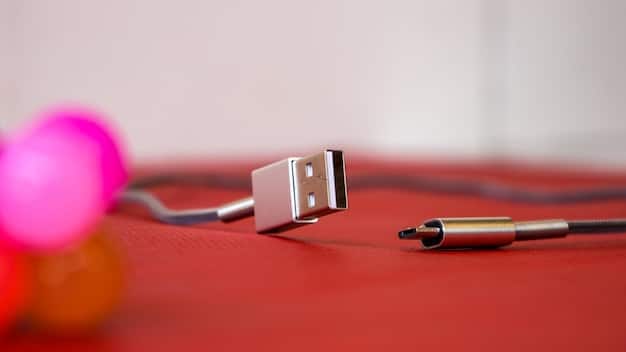
Unlocking the Potential of USB-C: Power Delivery, Data Transfer, and More involves understanding its versatile functionality, enabling faster charging, high-speed data transmission, and seamless connectivity across various devices, making it an essential technology in today’s consumer electronics.
The future of connectivity is here, and it’s called USB-C. Unlocking the Potential of USB-C: Power Delivery, Data Transfer, and More can revolutionize how you interact with your devices, offering unparalleled speed and convenience.
Understanding the USB-C Revolution
USB-C has rapidly become the standard for connectivity in modern devices. Its compact, reversible design offers enhanced functionality over previous USB versions.
Let’s delve into what makes USB-C so groundbreaking.
The Rise of USB-C
The USB-C connector emerged as a solution to several limitations of older USB types. Its key feature is its reversibility, meaning you can plug it in either way.
Key Features of USB-C
- Reversible Connector: No more struggling to plug it in the right way.
- Compact Size: Its small form factor allows for thinner and lighter devices.
- Multi-functionality: USB-C supports data transfer, power delivery, and video output.
The design of the USB-C port and connector allows for a single cable to handle various types of data and power, simplifying connections.
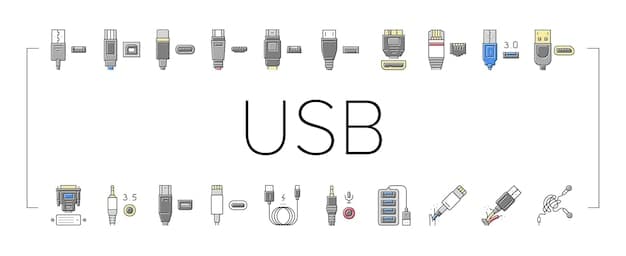
USB-C is set to only become more important as device manufacturers look for universal solutions.
Power Delivery Capabilities of USB-C
One of the most significant advantages of USB-C is its power delivery (PD) capability. This allows for faster and more efficient charging of devices.
Let’s examine how USB-C PD works and its real-world applications.
What is USB-C Power Delivery?
USB-C Power Delivery enables devices to draw more power than standard USB ports. This means faster charging times for laptops, smartphones, and other gadgets.
Benefits of USB-C PD
- Faster Charging: Devices charge much quicker compared to traditional USB charging.
- Higher Wattage: Supports up to 100W, enough to power laptops and other large devices.
- Bi-directional Power: Devices can both receive and provide power.
With the advancements in USB-C PD, charging becomes more versatile and efficient, allowing for optimized power management.
USB-C PD is particularly useful for devices that require a significant amount of power, such as high-performance laptops which previously needed charging bricks.
Data Transfer Speeds and Protocols
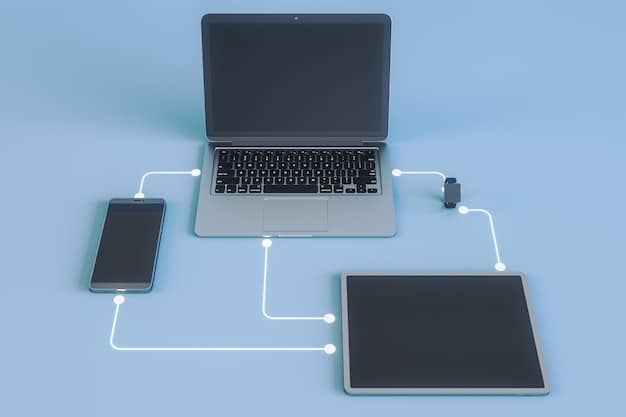
Beyond power delivery, USB-C excels in data transfer speeds. It utilizes protocols like USB 3.1, USB 3.2, and Thunderbolt to achieve impressive data transmission rates. These protocols allow for transferring data up to 40Gbps.
Understanding these protocols is crucial to maximizing the data transfer capabilities of USB-C.
USB 3.1 and USB 3.2
USB 3.1 and USB 3.2 are data transfer protocols supported by USB-C. USB 3.1 Gen 1 offers speeds up to 5Gbps, while USB 3.1 Gen 2 doubles that to 10Gbps. USB 3.2 can support up to 20Gbps.
Thunderbolt 3 and Thunderbolt 4
Thunderbolt 3 and Thunderbolt 4 protocols, also using the USB-C connector, offer even faster speeds, up to 40Gbps. Thunderbolt supports data, video, and power over a single connection.
- High Bandwidth: Ideal for transferring large files quickly.
- Video Support: Can handle high-resolution displays and multiple monitors.
- Daisy Chaining: Allows connecting multiple devices in a sequence.
These protocols provide unparalleled flexibility and performance, making USB-C an excellent choice for demanding data applications.
The high data transfer speeds make USB-C an invaluable tool for professionals who work with large media files.
USB-C as a Universal Connector
The push for USB-C as a universal connector aims to simplify the world of cables and ports. By standardizing on USB-C, manufacturers are reducing the need for multiple types of connectors.
Let’s explore the advantages of USB-C’s universal adoption.
Reducing Cable Clutter
With USB-C, one cable can replace many others, decluttering your workspace and travel bag. This single-cable solution simplifies connectivity.
Cross-Device Compatibility
- Smartphones: Many Android phones now use USB-C for charging and data.
- Laptops: Most new laptops feature USB-C ports for charging and connectivity.
- Tablets: Tablets are increasingly adopting USB-C for versatility.
Future Trends
The European Union, for example, is standardizing on USB-C for charging ports on electronic devices by the end of 2024, further cementing its role as a universal connector.
The EU’s push for USB-C reduces e-waste by making chargers interchangeable.
Navigating the USB-C Ecosystem
While USB-C offers numerous benefits, navigating its ecosystem requires awareness of different standards and capabilities. Not all USB-C ports and cables are created equal.
Let’s look into how to make the most of the USB-C ecosystem.
Understanding USB-C Standards
USB-C ports and cables support various standards like USB 3.1, USB 3.2, Thunderbolt 3, and Thunderbolt 4. Ensure your devices and cables support the desired standards for optimal performance.
Choosing the Right Cables
Select USB-C cables that are certified for the specific functions you need – power delivery, data transfer, or video output. Poor-quality cables can limit performance or even damage devices.
- Check Certifications: Look for certifications like USB-IF to ensure quality.
- Consider Length: Shorter cables generally offer better performance.
- Read Reviews: Check user reviews for reliability and performance feedback.
Selecting the correct USB-C accessories is essential for maximum compatibility.
Purchasing high-quality cables and adapters ensures the longevity of and proper functionality of your USB-C devices.
The Future of USB-C and Connectivity
The future of USB-C looks promising, with continuous advancements in speed, power delivery, and functionality. As technology evolves, USB-C will play a pivotal role in shaping the future of connectivity.
Let’s explore what the future holds for USB-C.
Enhancements in Speed and Power
Future iterations of USB-C are expected to offer even faster data transfer speeds and higher power delivery capabilities, further enhancing device performance.
Integration with New Technologies
USB-C is likely to integrate with emerging technologies such as augmented reality (AR) and virtual reality (VR), providing seamless connectivity for these devices.
The development of the USB4 standard will continue to improve the performance and capabilities of USB-C connections.
USB-C should continue to be a technology to watch as it continues to integrate itself into more and more devices.
| Key Aspect | Brief Description |
|---|---|
| ⚡ Power Delivery | Enables faster charging for devices, supporting up to 100W. |
| 💾 Data Transfer | Supports high-speed data transfer protocols up to 40Gbps. |
| 🔄 Reversibility | Reversible design allows easy and convenient plug-in. |
| 📱 Universal Connector | Simplifies connections across various devices, reducing cable clutter. |
Frequently Asked Questions About USB-C
▼
USB-C is a type of connector that is reversible and can be used for charging, data transfer, and video output. Its compact size and versatile functionality have made it a popular choice for many modern devices.
▼
USB-C Power Delivery (PD) is a charging protocol that allows devices to charge faster than traditional USB ports. It supports higher wattage, enabling devices like laptops and tablets to charge quickly.
▼
USB-C supports varying data transfer speeds depending on the protocol it uses. USB 3.1 Gen 1 offers up to 5Gbps, Gen 2 up to 10Gbps, while Thunderbolt 3 and 4 can reach speeds of up to 40Gbps.
▼
No, not all USB-C cables and ports are the same. They support various standards like USB 3.1, USB 3.2, Thunderbolt 3, and Thunderbolt 4. Ensure your devices and cables support the desired standards for optimal performance.
▼
USB-C is becoming a universal connector because it simplifies connections and reduces cable clutter. One USB-C cable can replace many others, making it more convenient and user-friendly across different devices.
Conclusion
Unlocking the Potential of USB-C: Power Delivery, Data Transfer, and More showcases how USB-C is revolutionizing modern connectivity. Its versatility in power delivery, data transfer, and universal compatibility makes it an essential feature in contemporary consumer electronics, promising even more advancements in the future.