US State AI Regulations: Key Changes & 2025 Tech Impact
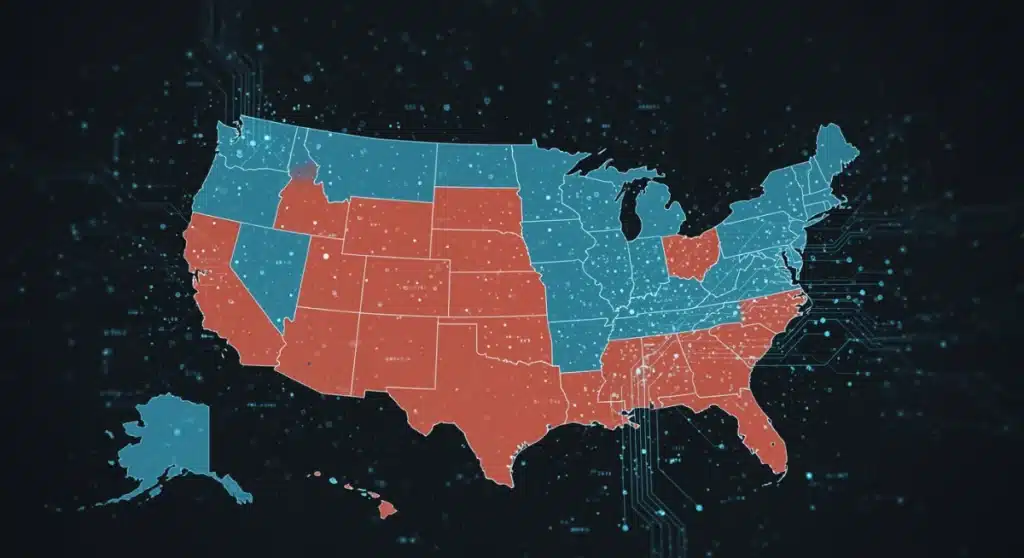
Recent US state-level AI regulations have introduced significant changes, particularly in data governance and algorithmic accountability, profoundly influencing tech development strategies for 2025.
The landscape of artificial intelligence is not just about innovation; it’s increasingly about regulation. In the last three months, we’ve seen a flurry of activity at the state level across the US, introducing new complexities and considerations for tech companies. Understanding these US state AI regulations is paramount for anyone involved in developing or deploying AI systems, as they will undoubtedly shape the trajectory of tech development into 2025 and beyond.
The Accelerating Pace of State-Level AI Legislation
The federal government has been deliberating on AI regulation, but states are not waiting. Many have taken proactive steps, introducing their own legislative frameworks to address the rapid advancements and potential societal impacts of artificial intelligence. This decentralized approach creates a dynamic and often challenging environment for businesses operating across state lines.
This acceleration is driven by a combination of factors, including public concern over AI ethics, data privacy, and the desire to foster responsible innovation. States are eager to establish themselves as leaders in the AI economy while also protecting their citizens.
Key Drivers Behind State AI Initiatives
- Consumer Protection: Safeguarding individuals from algorithmic bias, discrimination, and privacy breaches.
- Data Governance: Establishing clearer rules for how AI systems collect, process, and use personal data.
- Economic Competitiveness: Balancing innovation with regulation to attract and retain AI businesses responsibly.
- Ethical Concerns: Addressing the broader societal implications of AI, including job displacement and autonomous systems.
The diverse motivations behind these state initiatives mean that regulations can vary significantly from one jurisdiction to another, leading to a complex web of compliance requirements. Companies must remain vigilant and adaptable to navigate this evolving legal environment effectively.
Emerging Trends in State AI Regulatory Frameworks
Over the past quarter, several key trends have emerged in state-level AI regulation. These trends highlight the areas where states are focusing their legislative efforts, providing a roadmap for what tech companies can expect in the coming year. Understanding these patterns is crucial for strategic planning.
One prominent trend involves the expansion of existing data privacy laws to specifically encompass AI applications. States like California, with its pioneering California Consumer Privacy Act (CCPA) and California Privacy Rights Act (CPRA), are now looking at how these frameworks apply to AI-driven data processing and decision-making.
Focus on Algorithmic Transparency and Explainability
Many new proposals emphasize the need for greater transparency in how AI systems make decisions. This includes requirements for companies to explain the logic behind certain algorithmic outputs, especially in high-stakes areas like employment, credit, and healthcare.
- Disclosure Requirements: Mandating that businesses disclose when AI is being used to make significant decisions affecting individuals.
- Impact Assessments: Requiring companies to conduct assessments to identify and mitigate potential biases or discriminatory outcomes.
- Human Oversight: Ensuring that there is a human element in critical AI-driven processes to prevent unchecked algorithmic control.
Another significant trend is the growing emphasis on specific sectors. While some regulations aim for broad applicability, others target particular industries, such as healthcare, finance, or education, where AI’s impact is particularly sensitive. This targeted approach allows states to address unique challenges within these sectors more effectively.
Significant Regulatory Updates from Key States
In the last three months, several states have either passed new AI-related legislation or advanced significant bills through their legislative processes. These updates provide concrete examples of the evolving regulatory landscape and offer insights into the types of requirements businesses will face.
For instance, states such as Colorado and Connecticut have been particularly active, building upon their existing privacy laws to include provisions specifically addressing automated decision-making and profiling. These states are often seen as bellwethers for broader national trends in data and AI governance.
Notable State Actions and Their Implications
Colorado’s recently enacted AI accountability framework, for example, places a strong emphasis on risk assessments for high-risk AI systems. This means companies deploying AI in areas like credit scoring or hiring will need to demonstrate that their systems are fair, transparent, and non-discriminatory.
Meanwhile, New York has been exploring legislation focused on the use of AI in employment decisions, aiming to prevent bias in hiring processes. This move reflects a growing concern about AI’s potential to perpetuate or even amplify existing societal inequities.


Other states are focusing on the ethical implications of AI. Washington, for instance, has been considering bills that would establish an AI ethics board to provide guidance and oversight for AI development and deployment within the state. These initiatives underscore a shift towards a more holistic approach to AI governance beyond mere data privacy.
These individual state actions, while varied, collectively signal a clear direction: AI can no longer be developed and deployed without significant legal and ethical considerations built into the process from the outset. Companies must monitor legislative developments in all states where they operate or plan to operate.
Impact on Tech Development and Innovation in 2025
The burgeoning patchwork of US state AI regulations is set to profoundly influence tech development and innovation in 2025. Companies will need to adapt their strategies, product roadmaps, and internal processes to ensure compliance, which can be both a challenge and an opportunity.
One immediate impact is the increased demand for AI governance experts and legal counsel specializing in AI law. Companies will need robust internal teams or external partners to help them navigate the complexities of compliance, risk assessment, and ethical AI development.
Challenges for Tech Innovators
- Increased Compliance Costs: Adhering to diverse state regulations can lead to higher operational expenses for legal reviews, audits, and system modifications.
- Slower Development Cycles: The need for extensive impact assessments and regulatory approvals may prolong product development timelines.
- Fragmented Market: Different rules in different states could make it challenging to deploy a single AI solution nationwide, potentially leading to state-specific versions.
However, these regulations also present opportunities. Companies that proactively embrace ethical AI principles and build transparent, accountable systems from the ground up may gain a competitive advantage. Consumers and businesses are increasingly prioritizing trust and responsibility when choosing AI products and services.
Furthermore, the focus on explainability and bias mitigation can lead to the development of more robust, fair, and reliable AI systems, ultimately benefiting users and fostering greater public trust in AI technology. Innovation, when guided by strong ethical and legal frameworks, can be more sustainable and impactful.
Strategies for Businesses Navigating the Regulatory Maze
With the rapid evolution of US state AI regulations, businesses must adopt proactive and comprehensive strategies to ensure compliance and maintain their competitive edge. A reactive approach is unlikely to be sufficient given the speed and breadth of legislative changes.
Central to any effective strategy is the establishment of an internal AI governance framework. This framework should outline policies and procedures for the ethical development, deployment, and monitoring of AI systems, aligning with both current and anticipated regulatory requirements.
Essential Strategies for Compliance
Companies should begin by conducting a thorough audit of their existing AI systems to identify potential areas of non-compliance with new or proposed state laws. This includes assessing data handling practices, algorithmic decision-making processes, and transparency mechanisms.
- Cross-Functional Teams: Establish teams composed of legal, technical, and ethical experts to oversee AI governance and compliance.
- Continuous Monitoring: Implement systems to continuously track legislative developments across relevant states and adapt internal policies accordingly.
- Privacy by Design: Integrate privacy and ethical considerations into the very design of AI systems, rather than treating them as afterthoughts.
- Stakeholder Engagement: Engage with policymakers, industry groups, and civil society organizations to contribute to the development of balanced and effective AI regulations.
Investing in explainable AI (XAI) technologies can also be a significant advantage, helping companies meet transparency requirements and build trust with users. These technologies allow for a clearer understanding of how AI models arrive at their conclusions.
Ultimately, a robust compliance strategy is not just about avoiding penalties; it’s about building a foundation of trust and responsibility that will be crucial for long-term success in the AI era. Proactive engagement with regulations can transform potential obstacles into opportunities for leadership in responsible AI.
The Future Outlook: Harmonization vs. Fragmentation
Looking ahead to 2025 and beyond, a critical question for the AI industry is whether the current trend of state-level regulatory fragmentation will continue, or if there will be a push towards greater harmonization. Both outcomes have significant implications for how AI is developed and deployed across the US.
The current patchwork approach, while allowing states to tailor regulations to their specific needs and values, creates significant operational challenges for businesses. Compliance across 50 different regulatory regimes is a daunting and costly prospect, potentially stifling innovation for smaller companies.
Potential Scenarios for AI Regulation
One scenario involves continued fragmentation, where states independently develop and enforce their own AI laws. This could lead to a highly complex and potentially contradictory legal landscape, making it difficult for companies to scale their AI solutions nationally.
Another possibility is a move towards federal preemption, where a comprehensive federal AI law supersedes state regulations. This would offer greater clarity and consistency for businesses but might also face political hurdles and concerns about states’ rights.
A third, more likely scenario, is a hybrid approach. This could involve federal guidelines setting a baseline, with states having the flexibility to enact stricter or more specific regulations in certain areas. This model is common in other regulated industries and could offer a balance between consistency and local responsiveness.
Regardless of the exact path, the dialogue around AI regulation is intensifying. Industry leaders, policymakers, and academics are increasingly advocating for a more coordinated approach to avoid a regulatory quagmire. The coming years will be crucial in determining whether the US can strike a balance between fostering innovation and ensuring responsible AI development.
| Key Regulatory Area | Brief Impact on Tech Development |
|---|---|
| Algorithmic Transparency | Requires explainable AI (XAI) and disclosure of AI decision-making processes. |
| Data Privacy Expansion | Extends existing privacy laws to cover AI data collection and usage. |
| Bias Mitigation | Mandates impact assessments and measures to prevent discriminatory outcomes. |
| Sector-Specific Rules | Introduces tailored regulations for AI use in sensitive sectors like employment and healthcare. |
Frequently Asked Questions About State AI Regulations
Primary concerns include data privacy, algorithmic bias, transparency in automated decision-making, and consumer protection. States aim to ensure AI systems are fair, accountable, and do not infringe on individual rights, balancing innovation with societal safeguards.
State regulations often address specific local concerns and can be more granular. Federal laws, if enacted, would likely provide a broader framework, potentially preempting or setting a baseline for state-level rules, aiming for national consistency in AI governance.
Algorithmic transparency refers to the ability to understand how AI systems make decisions. It’s crucial for accountability, identifying biases, and building public trust, especially when AI impacts critical aspects like employment, credit, or healthcare outcomes.
Companies should establish robust internal AI governance frameworks, conduct regular impact assessments, prioritize privacy-by-design principles, and continuously monitor legislative developments in all relevant states. Proactive engagement is key to compliance and ethical development.
While compliance costs and complexities are challenges, well-crafted regulations can foster responsible innovation. By requiring ethical and transparent AI, states can build greater public trust, which is essential for the long-term adoption and success of AI technologies, ultimately driving sustainable growth.
Conclusion
The recent surge in US state AI regulations underscores a critical inflection point for the technology sector. As states continue to forge their own paths in AI governance, tech companies face a complex, yet navigable, regulatory environment. Success in 2025 will hinge on proactive engagement with these evolving laws, a commitment to ethical AI development, and strategic adaptation to ensure both compliance and continued innovation. The interplay between state legislative efforts and the rapid advancement of AI will define the future of technology in America, emphasizing the need for vigilance and responsible stewardship from all stakeholders.