Will 8K TVs Be Worth Buying in 2025? New Standards & Future Tech
Will the new 8K TV standards finally make upgrading worth it in 2025? The advancements in display technology, upscaling capabilities, and the increasing availability of 8K content could make investing in an 8K TV worthwhile for consumers seeking the ultimate viewing experience.
Are you wondering if 2025 will be the year to finally make the leap to 8K? With evolving standards and promises of enhanced viewing experiences, the question, “Will the new 8K TV standards finally make upgrading worth it in 2025?” is on the minds of many tech enthusiasts. Let’s delve into what the future holds for 8K televisions.
Understanding 8K Resolution and Its Evolution
8K resolution represents a significant leap from 4K, offering four times the number of pixels. It’s not just about more pixels, though; it’s about a more immersive and detailed viewing experience. Let’s explore its development and how it might evolve by 2025.
The Technical Specifications of 8K
8K resolution means 7680 x 4320 pixels. This high pixel density allows for a clearer, more detailed picture, especially on larger screens. The higher resolution also benefits from being viewed closer without perceiving pixelation.
Historical Development of Display Technologies
From standard definition to high definition, and now 4K and 8K, the evolution of display technology has been continuous. Each step has brought improvements in color accuracy, contrast, and resolution. This historical progression demonstrates the ongoing quest for visual perfection.
- Increased pixel density for sharper images.
- Advances in color and contrast technologies.
- Improved upscaling capabilities to enhance lower-resolution content.
The 8K technology is consistently improving, promising better picture and enhanced features as the technology advances in both hardware and software.
New 8K TV Standards: What to Expect
Coming to new standards, what will they be offering to improve 8K TVs viewing experiences? The new 8K TV standards in 2025 are expected to bring improvements in areas like HDR, color accuracy, and connectivity. These enhancements aim to make 8K content look even more spectacular.

HDMI 2.1 and Enhanced Connectivity
HDMI 2.1 is crucial for transmitting 8K content at higher frame rates. It supports features such as eARC (enhanced Audio Return Channel) for better audio transmission and VRR (Variable Refresh Rate) for smoother gaming.
HDR and Color Volume Improvements
High Dynamic Range (HDR) enhances the contrast and color range, making images more lifelike. The new standards are expected to incorporate improved HDR formats like Dolby Vision and HDR10+, offering a wider range of colors and more detailed highlights and shadows.
These incoming new upgrades will give users better image quality, improved connectivity, and better viewing experience. They will overall improve the user satisfaction.
The Availability and Quality of 8K Content
One of the main challenges for 8K adoption has been the limited availability of native 8K content. While streaming services and physical media have been slow to adopt 8K, there are signs that this is changing.
Streaming Services and 8K Content
Some streaming services have started offering limited 8K content, mainly nature documentaries and short films. The challenge involves the infrastructure to stream 8K content efficiently, given the high bandwidth requirements.
Upscaling Technology and Its Role
Upscaling technology plays a significant role in making lower-resolution content look better on 8K TVs. Modern 8K TVs use sophisticated algorithms to enhance the detail and reduce artifacts when upscaling 4K or 1080p content. The quality of upscaling algorithms has improved significantly, making older content look surprisingly good on 8K screens.
The content has been an issue and can vary for viewers. As the infrastructure improves, more content will be available. The development of upscaling technology has also helped in improving the user satisfaction.
The Cost Factor: Is 8K Affordable?
The price of 8K TVs has been a barrier for many consumers. These TVs have typically been in the high-end segment, making them unaffordable for average users. However, as technology matures, prices are expected to come down, making 8K TVs more accessible.
Comparison with 4K TV Prices
When 4K TVs first came out, they were also very expensive. Now, 4K TVs are mainstream, and prices have dropped significantly. A similar trend is expected for 8K TVs as production costs decrease and competition increases.
Factors Affecting 8K TV Pricing
Several factors influence the price of 8K TVs, including panel technology (OLED, QLED), screen size, brand, and additional features like smart TV capabilities. As more manufacturers enter the 8K market, increased competition will likely drive prices down.
- Panel technology affects the cost significantly.
- Screen size is a major factor in pricing.
- Brand reputation and additional features add to the cost.
Cost is an important factor that users consider before making the step to buy an 8K TV. Users are expected to analyze various factors to justify the amount they are paying for their 8K TVs.
Gaming on 8K TVs: A Next-Gen Experience?
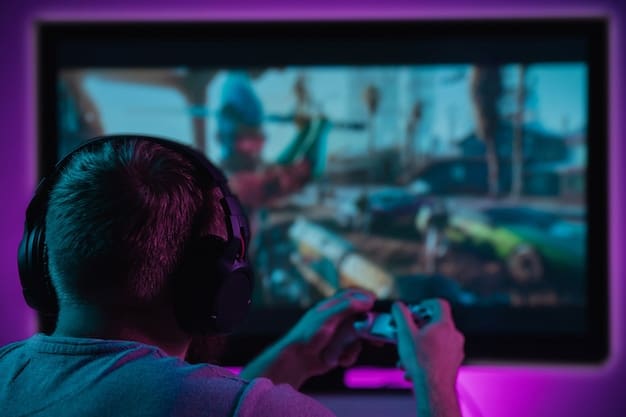
For gamers, the prospect of playing games at 8K resolution is very appealing. The higher resolution can provide gamers with a more immersive experience with sharper textures and more detailed environments. However, there are challenges to overcome.
Hardware Requirements for 8K Gaming
Gaming at 8K requires powerful hardware, including high-end graphics cards and fast processors. Most current-generation consoles and PCs struggle to deliver consistent frame rates at 8K resolution without significant compromises in graphical settings.
The Role of HDMI 2.1 in Gaming
HDMI 2.1 is crucial for gaming at 8K resolution because it supports higher bandwidths and features like VRR (Variable Refresh Rate). VRR helps to eliminate screen tearing and stuttering, providing a smoother gaming experience.
Gaming can provide users with enhanced frame rates, sharper textures, better gaming experience. However, to fully utilize 8K, gamers need to have upgraded hardware.
Expert Opinions and Consumer Expectations for Upgrading to 8K
What are the experts saying about 8K technology? Experts in the display industry have expressed mixed opinions about the immediate benefits of 8K for the average consumer. Some argue that the difference between 4K and 8K is not noticeable on smaller screen sizes, while others emphasize the importance of future-proofing.
Industry Analyst Predictions
Industry analysts predict that 8K TV adoption will continue to grow but at a slower pace than 4K. They expect prices to decline steadily and more 8K content to become available, making 8K TVs a more attractive option in the coming years.
Consumer Surveys and Preferences
Consumer surveys indicate that while many people are aware of 8K technology, a smaller percentage are actively considering upgrading. The main reasons for hesitation include price, lack of content, and uncertainty about the visible benefits over 4K.
Experts have varying views based on different factors. Their opinion remains mixed and largely depends on the user requirements and what they are hoping to gain from an 8K TV.
| Key Point | Brief Description |
|---|---|
| 📺 Resolution | 8K offers four times the pixels of 4K. |
| 📈 Standards | HDMI 2.1, improved HDR enhance picture quality. |
| 🎬 Content | Limited native 8K but upscaling improves older content. |
| 💰 Cost | Prices are declining but still higher than 4K TVs. |
Frequently Asked Questions
▼
8K resolution offers four times the number of pixels as 4K, providing a significantly sharper and more detailed picture, especially noticeable on larger screens.
▼
Yes, 8K TVs use upscaling technology to enhance the quality of lower-resolution content, making it look better than it would on a native 4K or 1080p screen.
▼
Yes, HDMI 2.1 is important for transmitting 8K content at higher frame rates and supports features like eARC and VRR, which enhance both audio and gaming experiences.
▼
Currently, 8K TVs are more expensive than 4K TVs, but prices are expected to decrease as technology matures and production costs decline, making them more accessible.
▼
8K gaming requires high-end graphics cards and fast processors to deliver consistent frame rates. HDMI 2.1 is also essential for the best gaming visuals and performance.
Conclusion
In conclusion, whether upgrading to an 8K TV in 2025 is worth it depends on individual priorities and circumstances. The advancements in display technology will provide an enhanced viewing experience due to great picture quality. However, factors such as the availability of 8K content, display of lower resolution media, and the cost still need to be considered.