XR Headsets 2025: Top Picks for Gaming and Entertainment

Extended Reality (XR) headsets are poised to revolutionize gaming and entertainment by 2025, offering immersive experiences that blend virtual and augmented realities; this article compares the top devices expected to lead this technological shift.
Are you ready to step into the future of entertainment? Extended Reality (XR) headsets: A comparison of the top devices for gaming and entertainment in 2025 promises a revolutionary experience, merging the virtual and real worlds. Let’s explore what’s on the horizon.
What to Expect from XR Headsets in 2025
The landscape of Extended Reality (XR) headsets is rapidly evolving. By 2025, we can expect significant advancements in display technology, processing power, and user comfort, making these devices more accessible and appealing to a broader audience.
Several key trends are shaping the future of XR headsets, including:
- Improved display resolution and refresh rates for more realistic visuals.
- Enhanced processing power to support complex XR applications and games.
- Wireless connectivity for greater freedom of movement.
- More ergonomic and lightweight designs for increased comfort.
These advancements will not only improve the user experience but also open up new possibilities for gaming, entertainment, and various other applications. Get ready for a transformative shift in how we interact with technology.
Meta Quest 3 vs. Apple Vision Pro: A Head-to-Head Comparison
Two giants in the XR space, Meta and Apple, are set to release cutting-edge headsets that will redefine immersive experiences. The Meta Quest 3 and the Apple Vision Pro are poised to be major contenders in 2025.
Here’s a closer look at their key features and differences:
Meta Quest 3: Affordable and Versatile
The Meta Quest 3 is expected to focus on delivering high-quality VR experiences at a more affordable price point. Key features include:
- Improved Graphics: Enhanced processing power for smoother and more detailed graphics.
- Expanded Content Library: Access to a vast library of VR games and experiences on the Meta platform.
- Mixed Reality Capabilities: Integration of passthrough cameras for basic mixed reality applications.
Apple Vision Pro: Premium and Feature-Rich
The Apple Vision Pro aims to provide a premium XR experience with advanced features and seamless integration into the Apple ecosystem. Key features include:
- High-Resolution Displays: Micro-OLED displays for stunning visuals and clarity.
- Advanced Eye Tracking: Precise eye-tracking technology for intuitive interaction.
- Seamless Integration: Integration with Apple devices and services for a cohesive user experience.
While the Meta Quest 3 focuses on accessibility and versatility, the Apple Vision Pro targets the high-end market with its premium features and performance. Both headsets are set to push the boundaries of XR technology in different ways.
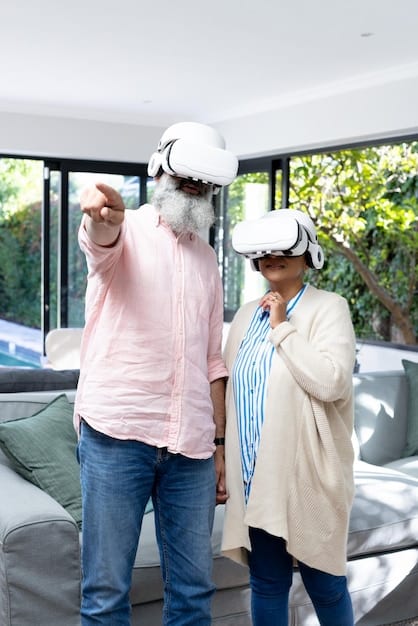
Gaming on XR Headsets: What to Expect in 2025
Gaming is one of the most promising applications of XR technology. By 2025, XR headsets will offer gamers unprecedented levels of immersion and interactivity.
Expect to see:
- More realistic and detailed game environments with enhanced graphics and audio.
- Intuitive motion controls that allow players to physically interact with the game world.
- Multiplayer experiences that bring players together in shared virtual spaces.
Developers are already exploring new ways to create compelling XR gaming experiences, leveraging the unique capabilities of these headsets to deliver innovative gameplay mechanics and immersive stories.
Entertainment Beyond Gaming: XR for Movies, Music, and More
XR headsets are not just for gaming; they also have the potential to revolutionize other forms of entertainment. By 2025, expect to see XR transforming how we watch movies, listen to music, and experience other forms of media.
Imagine:
- Watching movies in a virtual cinema with a giant screen and immersive surround sound.
- Attending live music concerts in virtual venues with dynamic visuals and interactive elements.
- Exploring virtual museums and art galleries from the comfort of your own home.
The possibilities are endless. XR headsets can create entirely new entertainment experiences that are more immersive, engaging, and personalized than ever before.
Comfort and Ergonomics: Key Considerations for XR Headsets
One of the biggest challenges for XR headset manufacturers is ensuring user comfort. Early XR headsets were often bulky and uncomfortable to wear for extended periods, but advancements in design and materials are addressing these issues.
Expect:
- Lighter and more ergonomic designs that distribute weight evenly and reduce strain.
- Adjustable headbands and facial interfaces that accommodate a wider range of head shapes and sizes.
- Improved ventilation to prevent overheating and discomfort during extended use.
As XR headsets become more comfortable to wear, they will become more appealing to a wider audience, paving the way for wider adoption and mainstream use.
Price and Accessibility: Making XR Headsets Mainstream
Price has always been a barrier to entry for XR technology. Early XR headsets were prohibitively expensive for many consumers, but prices are gradually coming down as technology matures and competition increases.
Consider these aspects:
Affordable Options
The Meta Quest 3 is expected to be a more affordable option, making XR technology accessible to a wider audience.
Premium Experiences
The Apple Vision Pro, while more expensive, will offer a premium XR experience with advanced features and performance.
As prices continue to fall and more affordable options become available, XR headsets will become more mainstream and accessible to consumers worldwide. By 2025, XR technology will no longer be confined to early adopters and tech enthusiasts.
The Future of XR: Beyond Gaming and Entertainment
While gaming and entertainment are driving much of the initial excitement around XR headsets, the technology has the potential to impact many other industries and applications.
Some possibilities include:
- Education: Immersive learning experiences that bring concepts to life.
- Healthcare: Virtual simulations for training and therapy.
- Manufacturing: Augmented reality tools for design and maintenance.
As XR technology continues to evolve, we can expect to see it integrated into more aspects of our lives, transforming how we work, learn, and interact with the world around us.
| Key Point | Brief Description |
|---|---|
| 🎮 Gaming Evolution | XR headsets offer immersive and interactive gaming experiences. |
| 🎬 Entertainment Revolution | Transforms movies, music, and virtual experiences. |
| 💰 Price Accessibility | Prices are decreasing, making XR more available. |
| 💡 Wider applications | Education, healthcare and manufacturing are embracing XR. |
FAQ
▼
XR headsets offer gamers a more immersive and interactive experience, enhancing realism and engagement, providing intuitive motion controls to physically interact with the game world.
▼
XR headsets can transform how we watch movies, listen to music, and engage with virtual art, offering experiences like virtual cinemas and live concert venues in a personalized setting.
▼
Expect lighter designs, adjustable headbands, breathable facial interfaces, and improved ventilation to prevent discomfort during long sessions, aiming to increase the accessibility and user experience.
▼
XR headset prices are expected to become more affordable, making the technology more mainstream. While premium options will exist, more affordable models will offer access to a broader audience.
▼
Besides gaming and entertainment, XR technology will impact education, healthcare, and manufacturing. Interactive learning, practical training simulations, and augmented reality tools will become more prevalent.
Conclusion
As we look to 2025, Extended Reality (XR) headsets are set to transform the landscape of gaming and entertainment. With advancements in technology, design, and accessibility, these devices promise a future where immersive experiences are within everyone’s reach.